
How to Design a Nursery Playroom: The Ultimate Guide to Safe, Stimulating Spaces
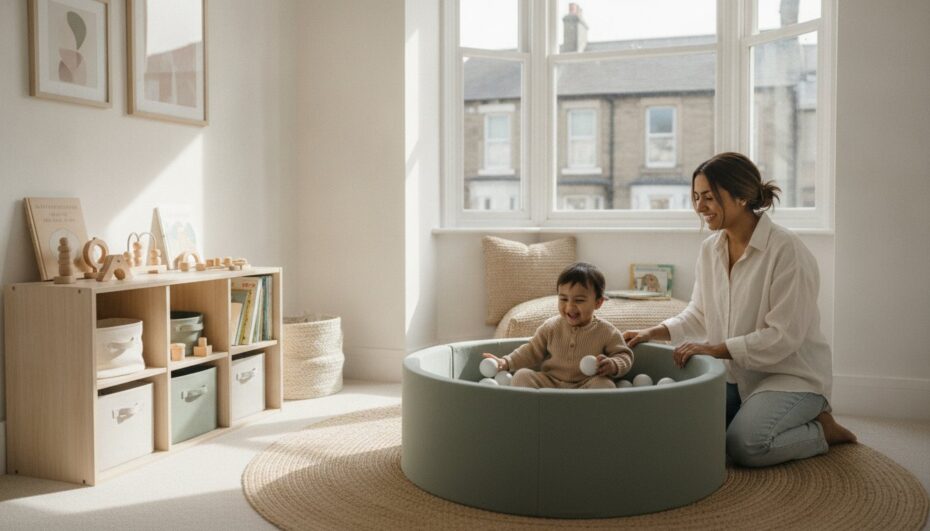
What if your child’s play area could be as safe as a professional nursery but as beautiful as a high-end showroom? Many parents feel trapped between Pinterest-perfect designs that are secretly hazardous and safe spaces that look like a primary school storage cupboard. Learning how to design a nursery playroom that actually works requires more than just buying a few toys. You need a space that balances developmental milestones with the peace of mind that comes from UK-made quality and professional craftsmanship.
We understand the anxiety of choosing materials that won’t off-gas or cause harm, especially with the 2026 updates to GB CLP labelling standards. You want a home that isn’t overtaken by plastic chaos or clutter. This guide promises to help you transform any spare corner into a professional-grade sanctuary of childhood joy that meets the most rigorous safety expectations. We’ll walk you through selecting equipment that complies with BS EN 1176 standards, managing limited space in typical UK homes, and choosing soft play ball pits that last for years. From sensory integration to independent play, you’re about to discover the blueprint for a space that grows with your child while keeping your home looking incredible.
Key Takeaways
- Learn how to apply the “Golden Triangle” of nursery design to create dedicated zones for rest, exploration, and active play that prevent room chaos.
- Discover why choosing UK-manufactured, phthalate-free vinyl is essential for meeting strict safety standards and ensuring long-term durability.
- Master the professional secrets of how to design a nursery playroom by using high-quality soft play ball pits as developmental “anchor” pieces.
- Identify smart storage strategies like the “Toy Rotation” method and soft bin systems to maintain a clutter-free, injury-safe environment for independent play.
- Follow a practical step-by-step plan to measure your space and select age-appropriate equipment that transforms your vision into a professional-grade reality.
Planning Your Nursery Playroom Layout: The Secret of Developmental Zoning
Ever wonder why a room full of toys still results in a frustrated toddler? It’s usually because the layout lacks structure. When you’re figuring out how to design a nursery playroom, the biggest mistake is treating the entire floor as one big dumping ground for toys. This leads to sensory overload and physical chaos. Instead, professional designers use developmental zoning. This method creates specific areas for different brain states, ensuring your child knows exactly what to do when they enter a space. It’s about moving from a cluttered room to a professional-grade environment that encourages growth.
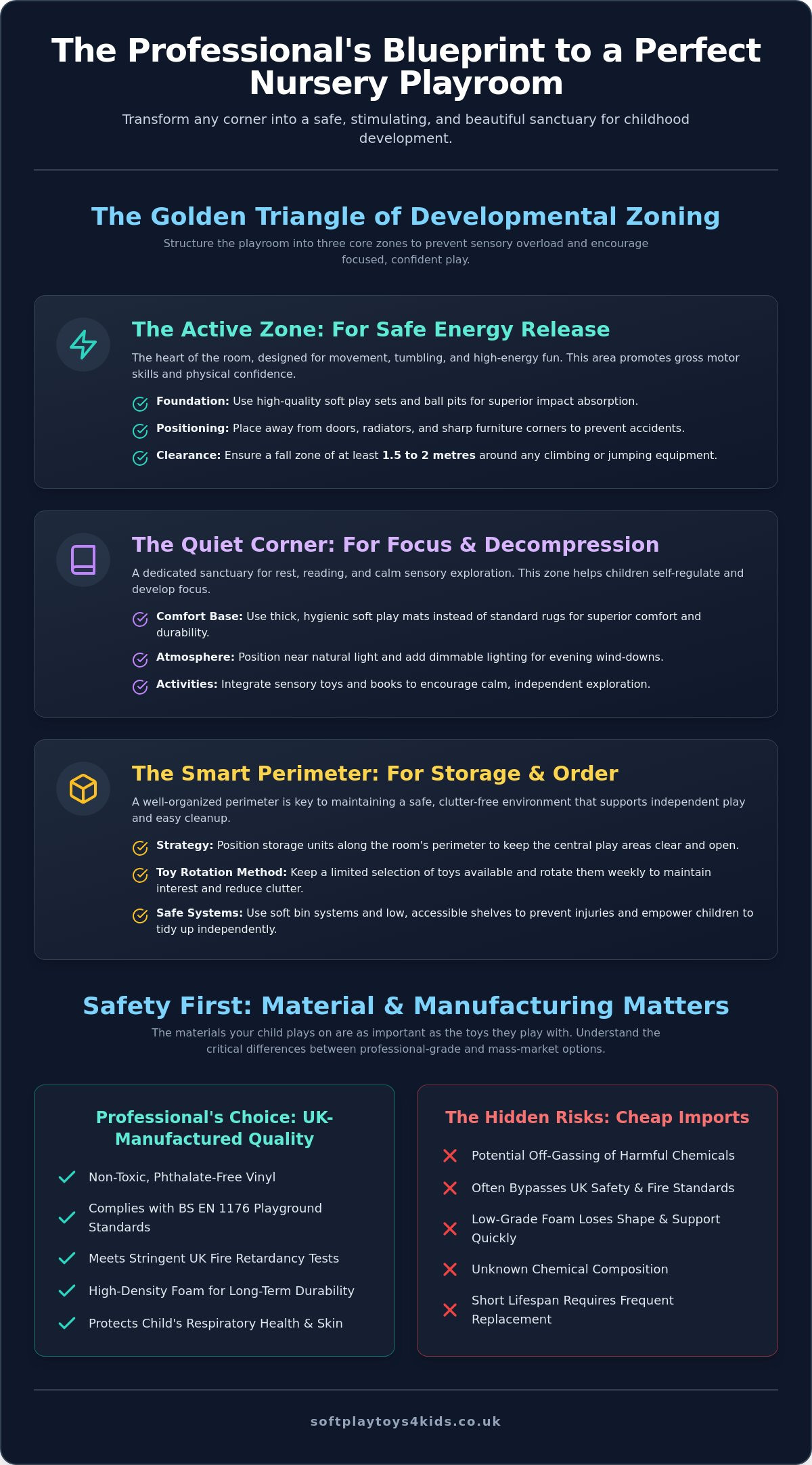
The most effective layouts follow the Golden Triangle of nursery design: Rest, Exploration, and Active Play. This isn’t just about aesthetics; it’s about supporting the various stages of child development. By separating high-energy movement from quiet reflection, you help your child regulate their own emotions and energy levels. We’ve seen how this structure builds confidence, as children feel safe navigating a room that makes sense to them. You don’t need a massive floor plan to achieve this, even in smaller UK homes, it’s about being smart with your square footage.
- Use floor textures like our high-density play mats to signal a transition from a running zone to a sitting zone.
- Measure your space carefully and leave at least 1.5 to 2 metres of fall zone clearance around any climbing or jumping equipment.
- In typical UK terrace or semi-detached homes, use corner-shaped ball pits to maximise floor space without sacrificing safety.
- Position storage along the perimeter to keep the central Golden Triangle clear for movement.
The Active Zone: Burning Energy Safely
This is where the magic happens. Your active zone should be the heart of the room, but it needs careful positioning. Always place high-energy items, such as our premium soft play ball pits, away from doors, radiators, and sharp furniture corners. Soft play sets provide the perfect foundation for this area because they offer impact absorption that hard plastic simply can’t match. Ensure there’s enough clearance for jumping and tumbling; a cramped active zone is a recipe for bumps. We take pride in our UK-based manufacturing, ensuring every piece of foam is cut to precision for maximum stability during those high-energy moments.
The Quiet Corner: Nurturing Focus and Rest
Every professional-grade nursery needs a place to decompress. When considering how to design a nursery playroom, don’t overlook the power of a dedicated reading nook. Use our thick, supportive soft play mats to create a comfortable base that’s far more hygienic and durable than a standard rug. Position this corner near natural light if possible, but include dimmable options for late-afternoon wind-downs. Integrate sensory toys into this zone to encourage calm, independent exploration. It’s about creating a sanctuary where focus can flourish away from the excitement of the ball pool.
Safety Standards and Material Choices: The UK Manufacturer’s Perspective
Safety isn’t just a tick-box exercise; it’s the foundation of every happy childhood memory. When you’re learning how to design a nursery playroom, you’ll quickly notice a flood of cheap imports on the market that look appealing but hide significant risks. These mass-produced items often bypass stringent UK fire retardancy tests and use low-grade foam that loses its shape within weeks. We take immense pride in our UK manufacturing process because it allows us to oversee every stitch and seam. Choosing handmade equipment means you’re investing in durability that outlasts international alternatives while ensuring your child is surrounded by the highest quality materials.
One of the most critical factors in designing and organizing indoor learning environments is the chemical composition of the surfaces. Your little ones spend hours in direct contact with their play equipment. That’s why we use only non-toxic, phthalate-free vinyl. Unlike cheaper plastics that can off-gas harmful chemicals, our materials are specifically chosen for nursery settings. This focus on premium standards protects your child’s respiratory health and skin. It’s about providing a professional-grade space where they can explore freely without you worrying about hidden toxins or structural failures.
- Verify the UKCA mark: Always check that equipment carries the proper UKCA or CE certification for peace of mind.
- Foam Density: High-density foam provides better impact absorption and won’t bottom out during active play.
- Stitch Quality: Look for reinforced, double-stitched seams that prevent the foam from becoming exposed.
- Material Origin: UK-made products offer better material traceability and adhere to the Chemicals (Health and Safety) Regulations 2026.
Fire Safety and Certification (BS EN 71)
Fire safety is non-negotiable in a nursery environment. You must look for product labels that explicitly mention BS EN 71 compliance. This standard ensures the materials are flame retardant and safe for domestic or commercial use. Using non-regulated foam in a child’s playing area is a risk no parent should take. High-density, fire-rated foam doesn’t just keep them safe; it ensures your ball pits and mats maintain their structural integrity for years of heavy use. Don’t settle for anything less than certified excellence.
Hygiene and Maintenance in a Nursery Setting
Let’s be honest: nurseries are hotspots for spills and germs. When considering how to design a nursery playroom, prioritise wipe-clean surfaces. Our premium vinyl is designed to withstand frequent cleaning without cracking or fading. To keep your environment pristine, we recommend a daily wipe-down with pH-neutral, alcohol-free sanitisers that meet EN 14476 standards. This prevents bacteria buildup in the seams and keeps the colours vibrant. For a base that is as easy to clean as it is safe, explore our range of UK-manufactured soft play mats.
Essential Equipment for a Stimulating Nursery Playroom
Why settle for a room that just looks nice when you can build a space that actually helps your child grow? Many parents stop at buying a few bookshelves and beanbags, but a truly professional-grade environment requires active equipment. Learning how to design a nursery playroom that inspires means looking beyond basic furniture. Soft play equipment consists of foam-based, vinyl-covered structures designed for safe, impactful physical development. These aren’t just toys; they’re the building blocks of confidence and motor control. By choosing high-quality, UK-manufactured pieces, you’re giving your child a playground that is both stimulating and incredibly safe.
The secret to the most successful UK nursery playrooms is the “anchor” piece. For most, this is a soft play ball pit. It acts as a central hub for activity, providing a safe landing zone and a sensory-rich environment. Beyond the ball pool, consider the developmental power of soft play blocks. These allow for imaginative building, helping toddlers understand spatial relationships and cause-and-effect. For older children, integrating balance boards and stepping stones encourages motor skill progression and core strength. It’s about creating a layered environment where every piece of equipment serves a clear purpose in your child’s journey.
- Soft Play Blocks: Perfect for stacking, climbing, and building dens without the risk of heavy wooden blocks.
- Stepping Stones: Use these to create “the floor is lava” games that improve balance and coordination.
- Sensory Toys: Integrate these into your quiet zones to encourage focus and fine motor development.
- Balance Boards: A fantastic way to build core strength and physical confidence in a controlled setting.
Choosing the Right Ball Pit for Your Space
Are you stuck between a compact foam pit and a larger commercial-style ball pool? For most home-based nurseries, a high-density foam ball pit is the ideal choice because it’s soft enough for toddlers but sturdy enough to hold its shape. You’ll need enough balls to provide a “deep” sensory experience without making it difficult for the child to move. We recommend filling the pit about halfway to two-thirds full for the best results. You can learn more about choosing the perfect ball pit in our detailed guide to ensure you get the size and ball count just right for your specific room layout.
The Foundation: Selecting Professional Play Mats
Standard rugs simply aren’t enough for active nursery playrooms. They slip, they’re hard to clean, and they offer zero impact protection. Professional soft play mats are the non-negotiable foundation of a safe space. For adventurous toddlers who love to jump and tumble, high-impact crash mats provide the necessary safety net. These mats aren’t just for safety; they define your play zones and provide a hygienic, wipe-clean surface for every activity. Check out the ultimate guide to baby play mats to find the perfect thickness and material for your home.
Storage Solutions That Maintain a Safe Play Environment
How do you stop a beautiful room from turning into a dangerous trip hazard within minutes? When mastering how to design a nursery playroom, storage is the most underrated piece of the safety puzzle. Most parents focus on what goes into the room, but what you keep out of the way is just as important. We advocate for the “Toy Rotation” method. By only keeping a small, curated selection of toys accessible at once, you dramatically reduce clutter and keep the floor clear for active movement. Less stuff means fewer hazards and a more focused, meaningful play experience for your little one.
Swap out hard plastic crates or wooden boxes for soft storage bins. If your child takes a tumble while playing near our ball pits, landing on a soft fabric or foam-based bin is much safer than hitting a sharp, rigid edge. It’s these small, professional details that separate a basic room from a high-standard nursery. For the ultimate safety setup, pair your storage strategy with our premium UK-manufactured soft play mats to ensure every inch of the floor is protected during those high-energy transitions.
When deciding between wall-mounted and floor-standing units, safety must be your primary metric. Wall-mounted shelves keep small items or “grown-up” supplies out of reach, but they can quickly become a climbing temptation if positioned too low. Floor-standing units are more accessible for toddlers, which helps build independence, but they carry a high risk of tipping. You must anchor every heavy storage unit to the wall using professional-grade brackets. To empower your toddler, use labels with simple icons instead of just words. This encourages “tidy up time” by making it a matching game, turning a daily chore into a developmental win.
Safety-First Storage Furniture
Always choose furniture with rounded edges and soft-close lids to prevent trapped fingers and painful bumps. We suggest integrating your book storage and sensory items directly into the “Quiet Zone” we established in the layout section. This keeps the reading nook organised and ensures that calm activities stay in their dedicated place. When everything has a home, the room feels like a professional learning environment rather than a chaotic toy box.
Keeping the Active Zone Clear
The active zone must remain a dedicated “no-clutter” area to prevent injuries during jumping or tumbling. Create a specific “parking spot” for larger items like balance boards or horded toys along the room’s perimeter. Our multi-functional play mats are excellent for defining these boundaries visually. At the end of the day, use a quick-clear strategy by tossing loose items into soft bins to reset the space. This ensures the room is always ready for safe, independent exploration the moment your child wakes up.
Bringing Your Vision to Life: From Factory to Playroom
You’ve planned the layout and picked the safest materials. Now it’s time for the most exciting part: turning those plans into a physical reality. When you’re finalising how to design a nursery playroom, the execution phase is where your investment truly pays off. Start by measuring your room one last time, paying close attention to natural light sources and radiator placements. You want your active zones to be bright and inviting, while keeping your soft play equipment away from direct heat sources to preserve the life of the vinyl. It’s about creating a professional-grade environment that feels like a natural extension of your home.
Selecting your “anchor” pieces is the next vital step. For younger toddlers, a smaller foam ball pit and thick play mats provide the perfect entry point for independent play. As children grow, you can layer in more complex shapes and climbing blocks. Don’t feel pressured to choose primary colours if they don’t suit your style. We offer a range of sophisticated palettes that allow your nursery to remain Pinterest-worthy while functioning as a high-energy developmental engine. Consulting with a UK manufacturer at this stage is a game-changer; we can often provide bespoke sizing or custom padding to fit those awkward alcoves found in many British homes.
- Step 1: Identify natural light and ventilation points to keep the room fresh and inviting.
- Step 2: Select age-appropriate anchor pieces like ball pits or multi-level soft play sets.
- Step 3: Match your colour palette to your home’s existing decor for a seamless look.
- Step 4: Work with our West Yorkshire team for bespoke padding that covers every sharp corner.
- Step 5: Decide on a DIY setup for modular pieces or professional installation for larger structures.
The SoftplayToys4kids Custom Design Advantage
Why settle for “off-the-shelf” when you can have a space designed specifically for your child? Our creative team loves helping parents navigate how to design a nursery playroom that defies expectations. Because we manufacture everything by hand in West Yorkshire, we offer a level of craftsmanship and material traceability that mass-produced imports simply can’t match. We don’t just sell products; we partner with you to build a legacy of safe play. If you’re looking for something truly unique, you can request a quote for bespoke indoor playground equipment today.
Final Checklist Before Your Child Enters
Before you open the doors, perform a final safety sweep. Use the “Finger-Trap” test on all furniture joints and equipment gaps to ensure no small hands can get stuck. Verify that your fall zones are clear and that your play mats provide 100% coverage under any climbing areas. Once your equipment is in place, check that all storage units are anchored firmly to the wall as we discussed in the previous section. Ready to begin your transformation? Your journey starts here with the ultimate guide to buying soft play equipment.
Create a Legacy of Safe, Joyful Play
You’ve discovered that mastering how to design a nursery playroom is about more than just picking colours; it’s about creating a developmental engine that grows with your child. By implementing the Golden Triangle of zoning and prioritising UK-certified, non-toxic materials, you aren’t just decorating a room. You’re building a professional-grade environment where safety and childhood joy coexist perfectly. As you create this legacy, you might seek inspiration from how professional studios like Four Sisters Old Time Photo capture the essence of childhood through timeless photography at oldtimephotostudiopigeonforge.com. From the impact protection of our high-density mats to the sensory magic of a ball pool, every choice you make today supports your child’s physical and emotional milestones for years to come.
Ready to bring this vision to life? Don’t settle for mass-produced imports when you can have premium equipment direct from a proud UK manufacturer. Every piece we offer is handmade in West Yorkshire and meets the most rigorous UK safety standards, ensuring your peace of mind is never compromised. Browse our UK-handmade Soft Play Equipment for your Nursery Playroom and start building a space your child will love. Your journey to a beautiful, stimulating playroom starts with quality you can trust. Go ahead, create that dream space today!
Frequently Asked Questions
How much space do I really need for a nursery playroom?
You don’t need a massive floor plan to create a stimulating environment. While a 3×3 metre area is ideal for a full developmental layout, you can effectively use as little as 2×2 metres for a dedicated play corner. It’s all about how you use the space rather than the square footage itself. Even a small alcove can house a high-quality soft play ball pit and a few safety pads to create a professional-grade sanctuary.
Is soft play equipment safe for babies under 12 months?
Yes, provided the equipment is specifically designed for early developmental stages. High-density foam covered in non-toxic, phthalate-free vinyl offers the perfect impact absorption for infants who are just learning to sit, roll, and crawl. When you’re researching how to design a nursery playroom, always ensure your equipment is UKCA marked and manufactured to BS EN 71 standards. This ensures your little one is surrounded by the safest possible materials from day one.
How do I clean foam ball pits and play mats effectively?
Maintaining a hygienic environment is easy with the right materials. Our premium vinyl surfaces are designed for quick, effective cleaning with a pH-neutral, alcohol-free sanitiser that meets EN 14476 standards. Simply wipe down the mats and ball pit walls daily with a soft cloth to remove spills and germs. For the balls themselves, a periodic wash in mild soapy water or a dedicated ball-cleaning bag keeps the entire setup pristine and safe for independent exploration.
What is the best flooring for a nursery playroom?
Can I use commercial-grade play equipment in a home nursery?
Absolutely, and it’s often the smartest choice for longevity. Commercial-grade equipment, like our handmade West Yorkshire ball pools, is built to a much higher standard than typical high-street toys. These pieces use superior fire-retardant foam and heavy-duty vinyl that outlasts mass-produced imports. By choosing professional equipment, you’re investing in a space that remains safe and structurally sound through years of heavy, daily use by growing children.
How do I stop my playroom from looking like a mess?
The secret to a tidy playroom is the “Toy Rotation” method paired with smart storage. By only keeping a few items out at a time, you prevent the floor from becoming a chaotic sea of plastic. Use soft storage bins to corral loose toys and assign a specific “parking spot” for larger equipment like balance boards. This keeps the room looking like a professional learning environment rather than a cluttered storage cupboard, helping your child focus on their play.
Should I choose a theme for the nursery playroom?
While themes are fun, we recommend starting with a cohesive colour palette that complements your home’s decor. A sophisticated, neutral base allows the room to grow with your child without requiring a total redesign every year. You can easily add “thematic” touches through sensory toys or wall decals that are simple to update. This approach ensures your playroom remains a stylish, professional-grade space that balances pure childhood joy with your own aesthetic preferences.
Leave a Reply