
Home Soft Play Area Safety: The Parent’s Essential Guide for 2026
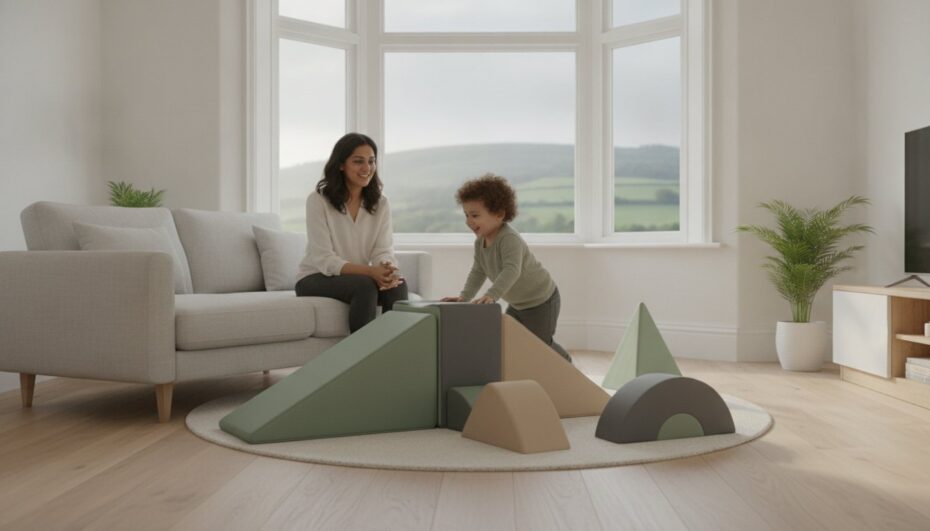
Did you know that falls are the single largest cause of accidental death in UK homes, accounting for a staggering 46% of incidents? It’s a sobering statistic that highlights why every parent feels that sharp pang of anxiety when their toddler starts climbing the furniture. You want to provide a space for boundless energy and physical growth, but the hidden chemicals in cheap, imported foam and the fear of entrapment in poorly designed sets are real concerns that can keep you up at night. We understand that your child’s happiness should never come at the cost of your peace of mind.
This guide is your roadmap to mastering home soft play area safety by utilizing the highest UK manufacturing standards and expert layout strategies. You’ll discover how to navigate the new BS EN 71-1:2026 regulations with absolute confidence. We’re diving into the essential safety checklists, the benefits of choosing premium British craftsmanship over cut-price alternatives, and the specific spatial design tips that transform any room into a risk-free adventure zone. Get ready to build a play space that’s as secure as it is exciting.
Key Takeaways
- Learn how to navigate the latest 2026 British safety standards to protect your children from hidden chemicals and entrapment risks.
- Discover why choosing medical-grade materials and high-density foam is the secret to lasting home soft play area safety.
- Master the 1.5-metre clearance rule to ensure your layout prevents dangerous collisions with hard furniture and sharp corners.
- Get a professional maintenance checklist to spot equipment wear and tear before it impacts your child’s playtime.
- Understand the unique benefits of UK-made soft play sets, from direct factory oversight to guaranteed compliance with the newest regulations.
What is Home Soft Play Area Safety and Why is it Critical?
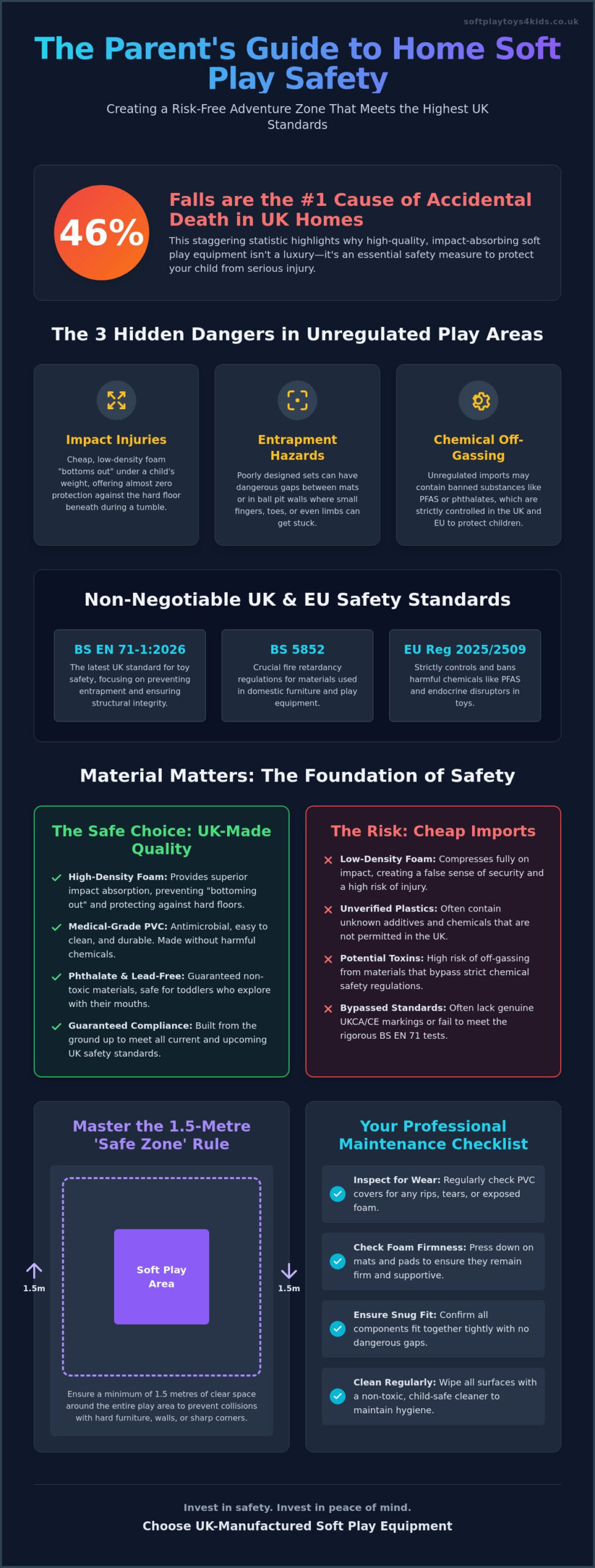
What exactly defines home soft play area safety? It is much more than just throwing a few cushions on a carpeted floor. In 2026, safety is defined as a rigorous set of manufacturing standards and layout practices designed to prevent three major threats: high-impact falls, limb entrapment, and toxic chemical exposure. While a product might feel squishy to the touch, “soft” does not automatically mean “safe.” Low-quality foam often “bottoms out” under the weight of a jumping child, offering almost zero protection against the hard floor beneath. True safety comes from high-density, impact-absorbing materials that meet the latest UK requirements.
Creating a certified safe zone offers a massive psychological win for parents. When you know every corner is padded and every mat is non-toxic, you can finally relax. This “Yes Space” allows your little ones to explore their physical limits, like climbing and jumping, without you needing to hover every single second. If you want a broader Playground safety overview, you will see that falls are the primary concern in any active environment; managing that risk at home is the key to stress-free play.
Common Risks in Unregulated Home Play Areas
Don’t be fooled by cheap, unbranded imports found on giant marketplaces. These products often bypass the strict BS EN 71-1:2026 standards, leading to several “hidden” dangers. We see three common issues that can turn a fun afternoon into a trip to the hospital:
- Impact Injuries: Mats that are too thin to absorb the force of a tumble from a ball pit wall.
- Entrapment Hazards: Dangerous gaps between mats or poorly fitted ball pool sides where small fingers or toes can get stuck.
- Chemical Off-gassing: Dangerous substances like PFAS or endocrine disruptors found in non-UK regulated plastics, now strictly controlled under the EU Toy Safety Regulation 2025/2509.
The Difference Between Commercial and Domestic Safety
Understanding what soft play actually is helps you spot the difference between a simple toy and a safety-critical installation. Commercial centers follow BS EN 1176 standards, which are designed for huge structures and hundreds of daily users. At home, we focus on BS EN 71 standards for domestic use. While your home setup is smaller, it requires a different kind of vigilance. You don’t have a team of trained staff on-site, so your equipment must be inherently safer from the moment it leaves our factory. High-quality home soft play area safety ensures that even in a smaller living room, the principles of impact attenuation and structural integrity remain non-negotiable.
Choosing Safe Equipment: Quality Standards to Look For
How do you know if that ball pit is actually safe? The answer lies in where and how it was made. UK-based manufacturing provides a level of accountability that anonymous international imports simply can’t match. When you choose a British manufacturer, you’re getting equipment that’s been built to survive the rigorous demands of active play while meeting strict domestic laws. This local oversight is the foundation of home soft play area safety. Every piece of equipment, from our ball pools to our safety pads, undergoes direct quality control in a way that mass-produced alternatives don’t.
Fire safety is another critical pillar. Ensure your equipment meets BS 5852 standards. This regulation governs the fire retardancy of materials used in domestic furniture and play sets. Don’t settle for “compliant-ish” labels. Genuine safety markings like the UKCA or CE marks should be permanently attached to the product, not just a flimsy sticker that can be peeled away. If you can’t find a clear, permanent record of compliance, it’s a major red flag for your child’s environment.
Non-Toxic Materials: Beyond the Surface
Toddlers explore their world with their mouths, making non-toxic materials a top priority. Phthalate-free and lead-free PVC is essential to prevent harmful chemical exposure during those inevitable teething phases. We recommend looking for medical-grade, antimicrobial PVC covers that are easy to wipe clean, as hygiene is a core component of overall safety. For international benchmarks on material integrity, you can refer to the CPSC safety standards. High-density foam is the gold standard for impact absorption. It provides the necessary resistance to stop a child from hitting the hard floor underneath during a tumble.
Stitching and Seams: The Hidden Safety Feature
Poorly made seams are more than just an eyesore; they’re a genuine hazard. Reinforced, internal stitching ensures that the foam remains securely encased, preventing curious fingers from picking at the filling and creating a choking risk. Check that all zips are heavy-duty and either hidden behind a fabric flap or “locked” to keep them out of reach. Investing in home soft play area safety means looking at these small details like seam strength. If you’re feeling overwhelmed by the choices, our The Ultimate Guide to Buying Soft Play Equipment breaks down every detail you need to know. You’ll find that investing in quality now saves a lot of worry later. Why not browse our range of Soft Play Mats to see what professional-grade craftsmanship looks like?
Designing a Safe Layout: Step-by-Step Room Setup
Creating a safe play environment isn’t just about what you buy; it’s about where you put it. A cramped layout is a recipe for bumped heads and bruised knees. To master home soft play area safety, you need a strategic approach to spatial design that accounts for the “energy” of a child’s movement. By following these steps, you’re not just setting up a room; you’re engineering a risk-free zone where your child can thrive.
Step 1: The 1.5-Metre Rule. Before unboxing, measure your designated area. You must maintain a “clearance zone” of at least 1.5 metres between the equipment and any hard furniture, radiators, or walls. This prevents a child from tumbling off a soft block and hitting a sharp corner. Step 2: Build the Foundation. Never place equipment directly on a hard floor. Install high-quality baby play mats as a foundational safety layer to absorb minor impacts. Step 3: Eliminate Gaps. Secure all equipment using heavy-duty Velcro connectors. Gaps between mats or ball pit walls are entrapment hazards waiting to happen. Step 4: Look Up. Conduct a “head-height” check. Ensure there are no low-hanging light fixtures, shelves, or picture frames that a climbing toddler could reach or strike. Step 5: The Stability Test. Before letting the kids loose, give everything a vigorous push and pull. Larger pieces like steps and slides must remain rock-solid under pressure.
Managing the ‘Fall Zone’
The “Fall Zone” is the area where a child is most likely to land after a jump or accidental tumble. Many parents underestimate the padding thickness required for taller equipment. As a rule of thumb, the higher the equipment, the denser the matting should be. For any high-velocity exit points, like the bottom of a slide or the edge of a climbing block, high-impact crash mats are essential. These specialized pads offer superior energy absorption compared to standard flooring. For technical guidance on managing these zones, the CPSC Public Playground Safety Handbook provides excellent benchmarks on impact attenuation that we use in our own design processes.
Lighting and Ventilation
Visibility is a safety feature. Dimly lit rooms lead to misjudged distances and clumsy jumps. Ensure the area is flooded with bright, even light so your child can clearly see every edge and surface. Temperature control is equally vital. Overheated rooms make foam overly soft and cause children to sweat, which can turn PVC surfaces into a slippery hazard. Maintaining floor-level ventilation is the secret to keeping ball pit air fresh and ensuring the play environment remains hygienic and comfortable for long sessions of active fun.
Maintenance and Supervision: Ensuring Long-Term Safety
Safety is not a “set it and forget it” task. Even the most premium, UK-manufactured equipment requires a dedicated routine to stay in peak condition. To uphold home soft play area safety, you must commit to weekly inspections. We take immense pride in our West Yorkshire craftsmanship, but active play is naturally demanding on materials. Every Sunday, take five minutes to run your hands over the PVC surfaces. Are there any small nicks? Is the internal stitching still tight? If you spot a seam split, remove the item immediately. A split seam is an entrapment hazard for tiny fingers and a sign that the structural integrity is compromised.
Supervision is your most powerful safety tool, but there is a massive difference between passive presence and active supervision. Passive presence is sitting in the same room while scrolling on your phone. Active supervision means watching your child’s physical choices. Are they attempting a jump that’s too high? Are they getting overexcited in the ball pool? By being engaged, you can redirect risky behavior before a tumble occurs. Eventually, all foam loses its “bounce.” If you notice a mat or block feels soft, “mushy,” or fails to spring back instantly after pressure, it has lost its impact-absorbing properties. It’s time to retire that piece to ensure the floor remains a distant memory during a fall.
Cleaning for Safety
Hygiene and safety are two sides of the same coin. A dirty play area isn’t just gross; it’s dangerous. Dust and sweat can turn a grippy PVC surface into a literal slip-and-slide. Use mild, pH-neutral soapy water or specialized antimicrobial sprays that won’t degrade the PVC coating. Never use bleach, as it can make the material brittle and prone to cracking. Drying is the most overlooked step. If you put equipment back together while damp, you risk internal mould growth that can trigger allergies. For those with larger setups, learning the best ways to deep-clean ball pits is essential for keeping thousands of plastic balls sanitary and safe for face-to-face contact.
Establishing Playroom Rules
Consistency is key for a happy, injury-free playroom. Establish a “no shoes, no sharp objects” rule from day one. Shoes carry grit that acts like sandpaper on PVC, while hair clips or toy cars with metal axles can cause punctures. Teach your children safe exit and entry methods; for example, always going down a slide feet-first. If you have multiple children, manage multi-age play by setting boundaries. Toddlers don’t have the same spatial awareness as older siblings, so ensure the “big kids” understand the 1.5-metre clearance rule we discussed earlier. Ready to upgrade your protective gear? Explore our professional-grade Safety pads to keep your home environment as secure as a commercial centre.
Why UK-Manufactured Soft Play is the Safest Choice
Why settle for a “one size fits all” approach when your child’s security is on the line? Choosing UK-manufactured equipment is the ultimate commitment to home soft play area safety. At our West Yorkshire factory, we don’t just assemble products; we craft them with a level of oversight that international exporters simply can’t provide. Because we control the entire process from the first cut of the foam to the final stitch of the PVC, we ensure immediate compliance with the latest BS EN 71-1:2026 regulations. This isn’t just about following rules. It’s about providing a product that won’t fail when your child needs it most.
Our durability surpasses mass-produced imports by using higher-grade materials designed for longevity. Sudden equipment failure, like a collapsing ball pool wall or a split mat, is a significant risk with cheaper alternatives. By choosing a local manufacturer, you’re investing in craftsmanship that stands up to years of enthusiastic play. We also offer personalised design support, helping you translate the layout tips from earlier in this guide into a practical, safe reality for your specific room. We invite you to compare our build quality with any mass-market alternative; the difference in density and seam strength is immediate, much like the premium material standards maintained by The Mattress Boutique for their high-quality bedding.
The SoftplayToys4kids Quality Promise
Our creative team inspects every single seam and corner with handmade precision. We don’t hide behind complex supply chains. You’ll have total transparency regarding what goes into the high-density foam and medical-grade fabric your child touches every day. We’re proud to be a local manufacturer that remains hands-on and accessible, offering high-quality craftsmanship at prices that remain competitive with the high street. It’s about blending parental emotion with professional, industrial-grade performance. We believe that every child deserves a premium play experience that doesn’t compromise on material integrity.
Custom Safety Solutions
Every home is different, and sometimes standard sets don’t quite fit your floor plan. We provide bespoke padding solutions, including specialised column padding and lamp post protectors, to cover those awkward room corners that standard mats might miss. Whether you need a specific ball pool size or expert advice on which sensory toys suit your child’s current developmental stage, we’re here to help. Our goal is to be your trusted partner in creating a space that inspires joy and physical growth without the hidden risks. Don’t leave your child’s home soft play area safety to chance. Browse our range of UK-made safe soft play equipment today!
Ready to Build Your Risk-Free Play Zone?
Creating a safe sanctuary for your child doesn’t have to be a source of stress. By prioritizing home soft play area safety through British-made quality and strategic room design, you’re giving your little ones the freedom to explore without the worry. Remember to stick to the 1.5-metre clearance rule and commit to those weekly equipment checks to keep the environment in top shape. It is about combining parental love with professional standards to create a space where memories are made, not accidents.
We take immense pride in our West Yorkshire roots, where every piece is handmade with precision. Our equipment isn’t just for living rooms; it’s trusted by UK schools and nurseries for its durability and full compliance with BS EN safety standards. Why settle for anything less than the best for your family? You deserve the peace of mind that comes from knowing exactly what materials your child is touching. Shop our range of safety-certified, UK-made soft play equipment and feel the difference that premium craftsmanship makes. Your child’s next big adventure is just a click away, and we’re here to make it as safe as it is exciting!
Frequently Asked Questions
Is soft play safe for babies under 6 months old?
Soft play is safe for babies under 6 months old when used specifically for supervised tummy time or gentle rolling. You shouldn’t place very young infants in ball pits or on high climbing blocks due to suffocation and fall risks. Stick to flat, high-quality play mats that provide a cushioned surface for developing neck muscles. Always maintain one-to-one supervision to ensure your baby stays in a safe position.
What are the most important UK safety standards for home soft play?
The primary standard for 2026 is BS EN 71-1:2026, which covers the mechanical and physical properties of toys. You should also look for BS 5852 compliance to ensure the materials meet strict UK fire retardancy laws for domestic use. Choosing equipment that meets these benchmarks is the only way to guarantee home soft play area safety and protect your family from unregulated materials and hidden chemicals.
How do I know if the foam in my soft play set is high quality?
High-quality foam must be high-density to provide proper impact absorption. You can test this by pressing down firmly; the material should offer resistance and spring back to its original shape instantly. If the foam feels mushy or lets you feel the hard floor underneath, it’s low-quality and won’t protect your child during a fall. Our West Yorkshire factory uses only premium, durable foam for all our safety pads and mats.
Can soft play equipment be used as a safe sleep surface for naps?
No, soft play equipment is never a safe substitute for a cot or firm mattress. While the materials are soft, they don’t provide the flat, rigid support required to prevent SIDS or suffocation during sleep. Once playtime is over and your little one gets sleepy, always move them to a dedicated sleep environment—specialists like Belfast Bed Superstore can help you find the right mattress for long-term comfort and safety. Safety standards for play and sleep are entirely different; mixing them creates unnecessary risks for your infant.
How often should I check my home soft play area for safety issues?
You should perform a quick visual safety check every time your child plays and a thorough inspection once a week. Look for any loose stitching, PVC tears, or thinning foam that might compromise home soft play area safety. Catching these small issues early prevents them from becoming major hazards. A monthly deep clean is also recommended to remove bacteria and maintain the “grip” of the PVC surfaces for safer movement.
How do I secure soft play mats so they don’t slide on hard floors?
The most effective way to secure mats is by using heavy-duty Velcro connectors that join the pieces together into a single, solid unit. This prevents the mats from spreading apart and creating dangerous gaps. If you’re playing on laminate or tile, ensure your mats have an integrated anti-slip base. For extra stability, you can place a dedicated non-slip rug pad underneath the entire play zone to keep everything anchored.
What is the recommended ‘fall zone’ for a toddler slide?
A toddler slide requires a clear fall zone of at least 1.5 metres in all directions from the exit point. This area must be kept completely free of hard toys, furniture, or walls. We strongly recommend placing high-impact crash mats at the base of the slide to absorb the force of a landing. This spatial buffer is a non-negotiable part of a safe indoor layout and prevents most common collision injuries.
Are ball pits safe for children with sensory processing sensitivities?
Ball pits are generally very safe and highly beneficial for children with sensory sensitivities. They provide “deep pressure” input that can be incredibly calming for a child who feels overstimulated. However, you should monitor for signs of sensory overload, such as extreme restlessness or distress. Choosing a ball pool with soft, high-quality balls ensures the tactile experience remains positive and therapeutic rather than overwhelming for their developing nervous system.
Leave a Reply