
Foam Wedges for Toddlers That Build Confidence
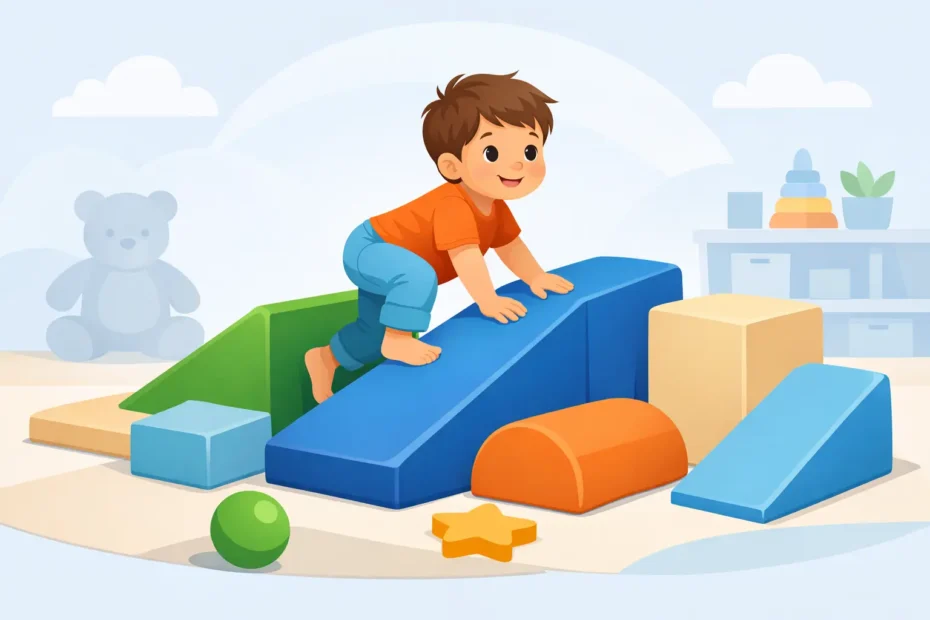
A toddler who keeps climbing the sofa cushions is not simply making a mess – they are looking for a safe way to test balance, strength and bravery. Foam wedges for toddlers give that urge a proper place to go, turning energetic indoor play into purposeful movement without hard edges, unstable piles or constant warnings to get down.
For parents, nurseries and playgroups, a well-made foam wedge is one of the most useful pieces in a soft play setup. It can be a gentle ramp for a newly confident crawler, a climbing challenge for a busy two-year-old, or part of a larger obstacle course that keeps a room full of children moving. The right choice comes down to size, firmness, cover quality and how the wedge will be used every day.
Why foam wedges for toddlers earn their place
Toddlers learn through their bodies. Climbing up a slope, crawling over a low incline and stepping down from a raised surface all ask them to judge distance, shift their weight and coordinate both sides of the body. These are practical early movement skills, but to a child it simply feels like exciting play.
A foam wedge creates a more predictable climbing surface than furniture. Its gradual incline lets children choose their own pace, while the soft foam provides a more forgiving landing area than a wooden step or tiled floor. That does not remove the need for adult supervision, but it gives parents and practitioners a much better foundation for active indoor play.
Wedges are especially valuable when outdoor play is limited by wet weather, short winter days or a compact home. Rather than expecting toddlers to sit still, you can offer a physical outlet that fits naturally into a lounge, playroom, nursery room or dedicated soft play corner.
For commercial settings, the benefit is flexibility. One wedge can connect to a step, platform, tunnel, ball pit or soft play slide unit. Rearrange the pieces and the same equipment feels new again, helping settings refresh activities without continually buying more toys.
Choosing the right size and incline
There is no single best foam wedge for every toddler. A low, broad wedge suits young crawlers and children who are just learning to climb. It feels less intimidating and gives them plenty of room to place their hands and knees. A steeper or taller wedge brings more challenge for confident walkers, but it needs enough clear floor space around it and closer supervision.
At home, measure the available area before ordering. Allow room for the wedge itself, plus a clear landing zone at the bottom and space at the sides for an adult to assist. A wedge squeezed between a coffee table and a wall is unlikely to get used properly, however attractive it looks in a product photo.
Nurseries and soft play venues should also think about flow. If several children will use the wedge at once, choose a wider format or position it as part of a route with a clear direction of travel. A narrow ramp can work brilliantly for individual play, while a wider wedge is often more practical for busy sessions where children naturally want to copy one another.
The gradient matters as much as the height. Gentle slopes encourage crawling and early climbing. A sharper incline can be excellent for older toddlers who need more challenge, especially when linked to a sturdy soft platform. The trade-off is simple: greater challenge needs more space, stronger supervision and a setup suited to the children’s current abilities.
What good toddler foam wedges are made from
A wedge needs to feel soft enough for play but supportive enough to hold its shape. Foam that is too soft can collapse under a child’s weight, making climbing frustrating and less stable. Foam that is overly hard defeats much of the purpose of soft play. Quality play equipment should provide firm, supportive structure with a cushioned finish.
The outer cover matters just as much. For family homes, nurseries and commercial environments, look for a hard-wearing wipe-clean cover that can cope with daily use. Spills, sticky hands and muddy socks are normal parts of toddler life. A practical surface means the equipment can be cleaned promptly and returned to play, rather than becoming another difficult household job.
Strong stitching, neatly finished seams and dependable zip protection are signs worth checking. Toddlers explore with hands, feet and occasionally teeth, so covers should be securely fitted and regularly inspected. If a cover becomes torn or a seam starts to open, remove the item from use until it has been repaired or replaced.
Colour is not only decorative either. Bright primary shades can create an energetic activity area, while softer neutral or coordinated colours may suit a home interior or a carefully designed nursery room. Bespoke colour choices are particularly useful for commercial buyers creating a branded or themed play space.
Set up a safer climbing area
Foam play equipment is designed to soften play, not to make it unsupervised. Place wedges on a level, stable surface and keep the area clear of hard furniture, radiators, sharp corners and loose toys. If the floor is hard, surrounding safety mats can add useful protection and create a clearer boundary for active play.
Teach toddlers a few simple expectations from the start: climb one way, keep feet away from another child’s hands, and wait if someone is already coming down. They will not follow every rule perfectly, particularly in a lively group, but repeated routines make shared play calmer and safer.
Check the wedge before each session. Look for damage to the cover, exposed foam, loose joins and movement on the floor. In a nursery or play centre, build these checks into the opening routine. At home, a quick visual check before play is usually enough, but it should become a habit.
Age and ability should guide use more than the label on a product. Some children are ready to crawl up a low slope well before they are ready to walk down it. Others may be physically confident but impulsive. Stay close, encourage rather than push, and adapt the setup when a child needs a simpler challenge.
Ways to keep a wedge interesting
The best soft play pieces do more than one job. Start by placing the wedge on its own and let a toddler investigate. They may crawl over it, roll cars down the slope, sit at the top or use it as a stage for favourite toys. This unstructured discovery is valuable because it lets children build confidence without being told there is only one correct way to play.
As confidence grows, pair the wedge with other soft shapes. A low step leading to the wedge makes a simple climbing route. Put a tunnel at the bottom for a crawl-and-go course, or position a ball pit nearby so children can climb, slide and then land in a new activity. In group settings, this kind of rotation helps avoid queues and gives children different movement choices.
For a more focused activity, invite toddlers to carry a beanbag up the slope and place it in a basket, or follow a simple instruction such as crawl, stop, turn and come back. Keep directions short. The aim is movement, confidence and enjoyment, not turning soft play into a formal lesson.
Home play or commercial use: buy for the real workload
A home setup may only see one or two children using it each day, so compact dimensions, easy storage and colours that suit the room may lead the decision. It is still worth buying well. Cheap foam shapes can lose form quickly, leaving parents to replace them sooner than expected.
For nurseries, schools, playgroups and soft play businesses, durability and layout flexibility usually matter more. Equipment may be climbed on repeatedly across a full week, wiped down several times a day and moved during room changes. Choosing commercial-quality materials, practical covers and pieces that work together is usually better value than buying mismatched shapes one at a time.
Softplay Toys4Kids manufactures soft play equipment in the UK and can help customers consider practical sizes, colour combinations and larger configurations for both domestic and commercial spaces. That matters when a standard wedge is close to right but a particular room, age group or play plan calls for something more specific.
A foam wedge should not sit in a corner waiting for a special occasion. Choose one that suits your space, supervise play sensibly and give children permission to climb, crawl and try again. The small victories at the top of the slope are often where real confidence starts.
Leave a Reply