
Foam Climbing Blocks for Toddlers: The Ultimate 2026 Buyer’s Guide
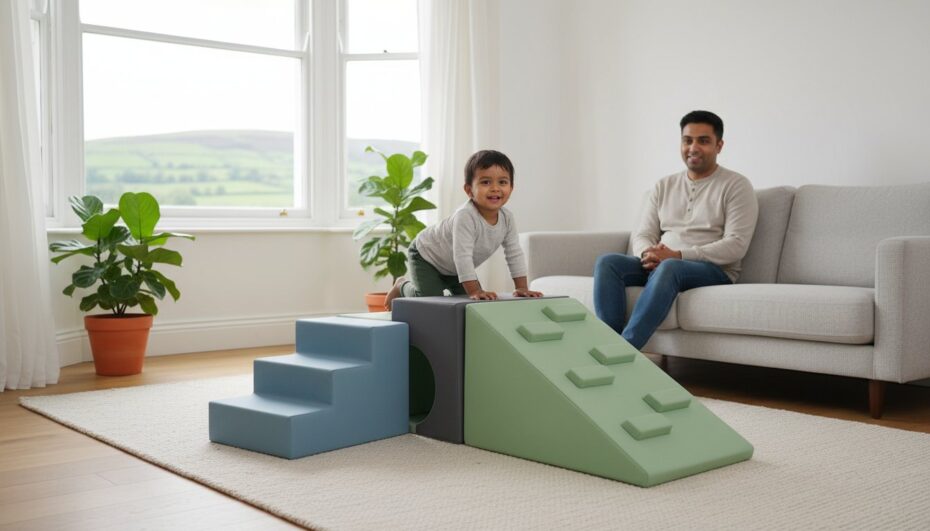
Have you ever watched your toddler scale the back of your sofa like it’s a mountain peak and felt your heart skip a beat? It’s a universal parenting moment where pride in their physical milestones meets absolute terror for your furniture and their safety. You want a way to channel that incredible energy into something productive, but you’re tired of bargain toys that arrive smelling of chemicals or squash flat after just a few play sessions. We agree that your home should be a sanctuary for growth, not a source of constant stress over climbing accidents and ruined cushions.
This ultimate 2026 guide is here to help you find the perfect foam climbing blocks for toddlers that actually last. We’ll show you how to choose premium, UK-manufactured sets that provide a safe indoor gym experience while surviving years of heavy use and the inevitable spills. You’re about to discover how to transform your living space into a developmental powerhouse with aesthetic gear that looks as good as it performs. We’ll explore high-density foam standards and easy-wipe covers, giving you the tools to compare our British-made quality against any competitor and see why local craftsmanship wins every time.
Key Takeaways
- Master the developmental science behind the climbing phase to support your toddler’s balance and spatial awareness milestones.
- Identify high-quality foam climbing blocks for toddlers by checking for high-density CME foam that maintains its shape over time.
- Learn how to mix and match modular shapes like wedges, steps, and tunnels to create a custom indoor gym for any room size.
- Unlock active play strategies that turn your living room into a safe obstacle course for burning off endless energy.
- Discover the benefits of choosing UK-manufactured soft play equipment that meets strict UKCA safety standards for your family.
Why Toddlers Need to Climb: The Developmental Case for Foam Blocks
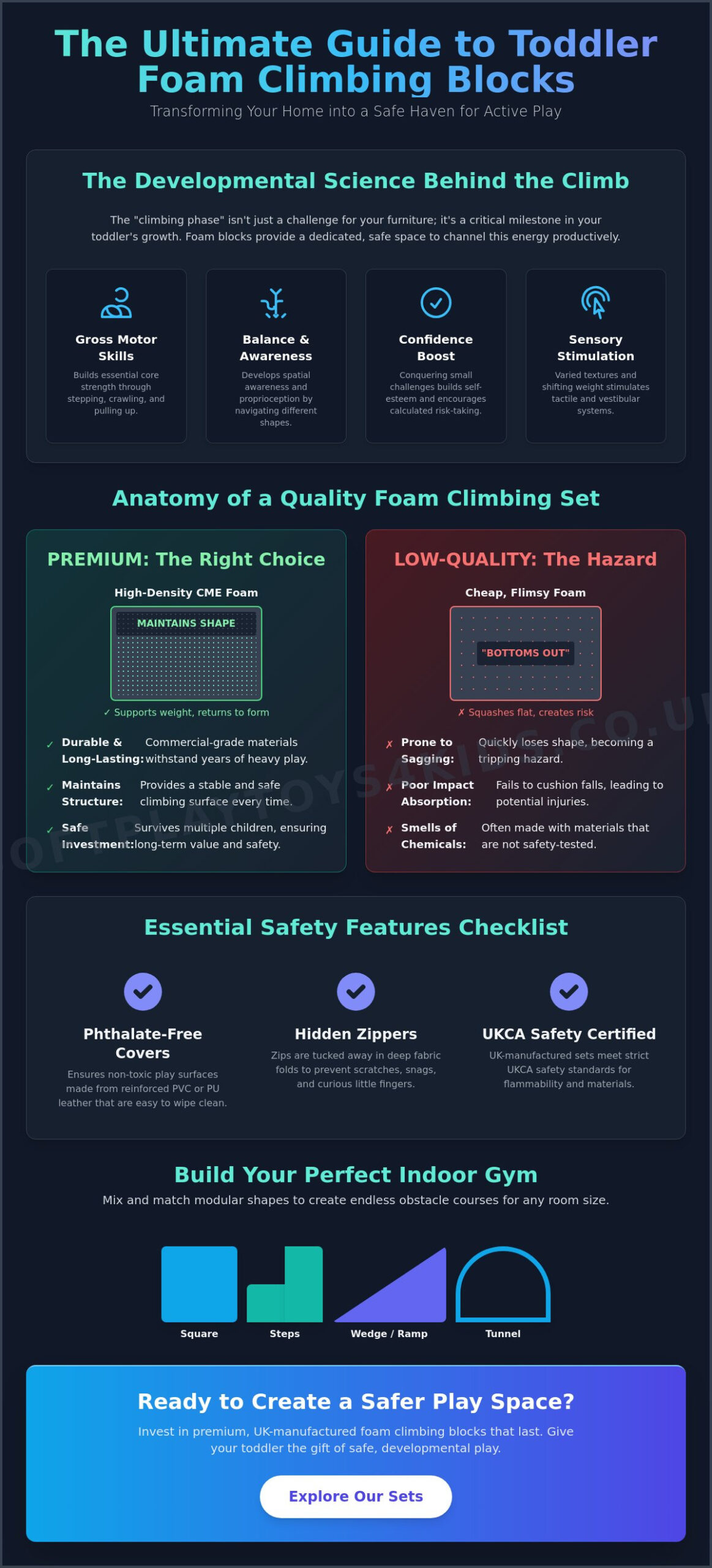
Ever wonder why your little one is suddenly obsessed with summiting the kitchen chairs? This “climbing phase” isn’t just a test of your patience; it’s a critical developmental milestone. Foam climbing blocks for toddlers provide the perfect solution. These are modular, high-density foam shapes crafted specifically to support gross motor development. By using these blocks, you’re giving them a dedicated space to explore their physical limits without the risks associated with household furniture.
Extensive research into learning through play highlights how physical activity directly impacts cognitive growth. When toddlers climb, they’re developing spatial awareness and balance. They’re learning where their body is in relation to the objects around them. It’s a foundational skill that sets the stage for future sports, coordination, and even classroom focus. These aren’t just physical tools; they’re also excellent sensory toys that stimulate a child’s tactile and vestibular systems. The varied textures and the feeling of shifting weight provide rich sensory input that helps regulate a child’s mood and energy levels.
Boosting Gross Motor Skills and Confidence
Stepping, crawling, and pulling up on these blocks builds essential core strength. Every time your child navigates a slope, they’re improving their proprioception, which is the body’s ability to sense its own position and movement. Conquering a wedge or a set of steps feels like summiting a mountain to a two-year-old. This success builds incredible self-confidence. They learn to take calculated “risk-play” in a controlled environment, discovering what their bodies can do safely. By mastering these small challenges at home, they become more resilient and physically capable when they head out to the local park.
Soft Play vs. Hard Furniture: The Safety Argument
Let’s be honest: coffee tables and sofa arms weren’t built for gymnastics. They have sharp edges and zero impact absorption. Quality foam climbing blocks for toddlers are made from combustion-modified polyether (CME) foam, designed to cushion every tumble. This creates a vital bridge between the high-energy chaos of a public soft play centre and the safety of your home. We call this “Active Home Therapy.” This provides a way to let high-energy kids burn off steam indoors without the constant fear of a trip to A&E. You get peace of mind, and they get a playground that survives their most adventurous days. It’s an investment in their safety that keeps your living room looking like a home rather than a danger zone.
Anatomy of a Quality Foam Climbing Set: Materials and Standards
What makes one set of foam climbing blocks for toddlers superior to the rest? It isn’t just the bright colours or the clever shapes. The real value lies in the engineering beneath the surface. The core of any premium set is high-density, combustion-modified polyether (CME) foam. This isn’t the flimsy, air-filled sponge found in bargain-bin toys. Cheap foam is prone to “bottoming out,” where the block squashes flat under a child’s weight. This leads to sagging and creates a tripping hazard or potential for impact injuries. Our commercial-grade foam is specifically selected to maintain its structural integrity through years of heavy play, ensuring every climb is as stable as the first.
Safety extends to the exterior too. Quality sets feature reinforced PVC or PU leather covers that are entirely phthalate-free. You should also look for hidden zips. These are tucked away in deep fabric folds to prevent skin scratches or snags during a fast-paced crawl. When you invest in British manufacturing, you’re getting craftsmanship that prioritises these small but vital safety details. These standards ensure your play equipment isn’t just fun, but a professional-grade tool for development.
The Importance of High-Density Foam
There’s a big difference between density and firmness. A block can feel firm to the touch but lack the density required to support a toddler’s weight over time. High-density foam ensures the blocks retain their shape for years, not just months. This is why commercial-grade materials are the gold standard for home use. They withstand the constant pressure of climbing, jumping, and stacking without losing their “bounce back” ability. If you want a set that survives multiple children and remains a safe “indoor gym,” checking the foam grade is non-negotiable. Our foam is sourced specifically for its resilience and long-term performance.
Wipe-Clean Covers and Hygiene
Hygiene is a top priority for any parent, especially when dealing with spills or “accidents.” Medical-grade, wipe-clean surfaces are vastly superior to cotton or fabric covers. Fabric traps dust mites and liquids, making them nearly impossible to sanitise deeply without a washing machine. With reinforced PVC, a quick spray of child-safe disinfectant and a wipe with a cloth is all you need. This is essential after playdates or during the winter sniffle season. The reinforced stitching ensures that even with daily sanitising, the seams won’t split or fray. To keep your play area safe and spotless, consider pairing your blocks with our durable soft play mats for extra floor protection and comfort.
Choosing the Right Set: Sizes, Shapes, and Room Layouts
How do you decide which configuration will actually get used and which will just gather dust in the corner? Selecting the right foam climbing blocks for toddlers depends entirely on your child’s current mobility and the physical limits of your home. If you have a crawler just starting to explore, focus on low-profile blocks and gentle inclines that build confidence without being intimidating. For a confident three-year-old, you’ll want vertical challenges and tunnels that test their spatial reasoning and core strength. It’s about matching the equipment to their stage of development while ensuring the set can grow alongside them.
Every quality set should revolve around a few essential shapes that serve specific purposes. The wedge acts as a safe indoor slide or a challenging ramp for crawling up. Steps are vital for teaching toddlers how to alternate their feet and build leg strength. Tunnels encourage core-intensive crawling and help children overcome spatial anxieties in enclosed spaces. Finally, the humble block serves as the foundational piece for stacking, building, and even creative roleplay. To create the ultimate sensory sanctuary, try positioning your climbing circuit so it leads directly into a ball pit. This provides a high-reward “landing zone” that keeps toddlers engaged and moving for longer periods.
Modular vs. Fixed Sets: Which is Better?
Modular sets are the ultimate choice for modern families who value flexibility. You can reconfigure the layout daily to keep the “novelty factor” high, which prevents kids from getting bored with the same routine. While fixed sets offer a bit more stability for very vigorous, high-impact climbing, modularity allows you to tuck individual pieces away when you need your living room back for evening relaxation. We recommend starting with a basic three or four-piece set and expanding your collection as your child’s skills and your available space allow. This ensures you aren’t overwhelmed by equipment that your toddler isn’t quite ready for yet.
Maximising Small Spaces in UK Homes
Don’t let a smaller lounge stop you from creating a developmental powerhouse. You can create a high-impact “corner gym” in less than 1.5 square metres by using the walls to anchor your layout. Placing taller blocks in the corner and tapering down to flat mats keeps the play area contained and safe. Many of our customers even use the blocks as multi-functional furniture, serving as temporary seats or side tables when the kids are in bed. Just remember to measure your clear floor area carefully before buying soft play equipment. You need to ensure there is enough “fall zone” space around the blocks to keep every tumble safe and controlled.
Building the Perfect Obstacle Course: Active Play Ideas
Ready to turn your living room into the ultimate adventure zone? Once you’ve invested in high-quality foam climbing blocks for toddlers, the real fun begins. The magic of modular soft play is that it never has to stay the same. By rotating shapes and creating new challenges, you keep the “gym” feeling fresh and exciting for your little explorer. One of the most popular ways to use these sets is the classic “Floor is Lava” circuit. In this game, the floor is off-limits, and your child must navigate from one block to the next to reach safety. This isn’t just fun; it’s a brilliant way to build spatial confidence and problem-solving skills.
The “Living Room Gym” Circuit
Setting up a structured circuit helps toddlers understand sequence and direction. Follow these three steps to create a high-energy flow:
- Step 1: Place the foam steps leading up to a raised platform or the edge of a sturdy sofa. This encourages the “pull and climb” motion that builds upper body strength.
- Step 2: Use the wedge as a safe “exit slide” on the other side. This provides a high-reward finish to the climb and teaches them how to transition their weight safely.
- Step 3: Position individual blocks as hurdles or “stepping stones” back to the start. This forces them to lift their legs higher and practice their balance on smaller surface areas.
Progressive Difficulty for Growing Toddlers
As your child’s balance improves, you can safely increase the height of the structures. Try stacking two blocks to create a taller platform, but always ensure they are placed on one of our impact-absorbing play mats to keep every tumble controlled. You can also introduce “Building Challenges” to mix physical play with cognitive skills. Ask your toddler: “Who can build the tallest tower before it topples?” or “Can you find the red block and crawl through the tunnel to get it?”
Using foam climbing blocks for toddlers for colour recognition and counting games adds another layer of value to your investment. Your role as a parent is to be the “coach.” Encourage independent play by letting them figure out how to bridge gaps between blocks, but always maintain close supervision. This balance allows them to master their environment while you have the peace of mind that they are playing on professional-grade, UK-made equipment designed for their safety. Unlike cheap imports that lose their shape, our blocks provide a stable foundation for years of imaginative and active play.
Why SoftplayToys4kids is the UK’s Premier Choice for Foam Climbers
Choosing the right equipment for your child is a decision rooted in trust. While the market is flooded with generic imports, we take a different approach. We believe that foam climbing blocks for toddlers should be more than just colourful shapes; they should be a legacy of quality that stays in your family for years. By controlling every stage of production, from the initial foam cut to the final stitch, we ensure that every piece leaving our floor meets the highest possible standards. We don’t just meet UKCA safety requirements. We aim to exceed them because we know exactly who is playing on our products.
One of our biggest advantages is our “Direct from Manufacturer” model. Because we make everything ourselves, there are no middleman markups or expensive international shipping costs passed on to you. You get premium, commercial-grade equipment at a price that makes sense for a family home. We invite you to compare our build quality and material density with any mass-produced alternative. You’ll quickly see why local craftsmanship and high-grade materials make all the difference in durability and child safety.
Handmade in West Yorkshire
Every single block is cut and stitched by local experts at our factory in Bradford. This regional focus allows us to maintain a low carbon footprint compared to brands that ship containers across the globe. We’re proud to support the local economy and continue the rich textile heritage of West Yorkshire. When you buy from us, you aren’t just getting a toy. You’re supporting British jobs and receiving a product that has been hand-checked for quality by someone who cares about the finished result. It’s this personal touch that ensures your seams are straight, your zips are hidden, and your foam is flawless.
Commercial Grade Quality for the Home
We don’t believe in “watering down” our products for domestic use. The foam climbing blocks for toddlers we sell to parents use the exact same high-density foam and reinforced covers as our indoor playground equipment found in professional nurseries and play centres. This “Buy Once, Play Forever” philosophy means your investment won’t squash, tear, or lose its shape even after thousands of climbs. Our gear is built to survive the toughest environments, making it more than a match for a busy playroom. Don’t settle for flimsy alternatives that end up in a landfill within six months. Transform your home into a safe, developmental powerhouse today with a handmade UK set that’s built to last.
Ready to Transform Your Toddler’s Playtime?
You now have the roadmap to turn your home into a safe, developmental powerhouse. We’ve explored why high-density foam is the only choice for long-term safety and how modular layouts keep active toddlers engaged. By choosing the right foam climbing blocks for toddlers, you’re investing in “Active Home Therapy” that burns energy and builds essential confidence. You don’t have to worry about sagging foam or difficult spills when you choose equipment built to commercial standards.
Why settle for flimsy imports when you can have handmade quality from our West Yorkshire factory? We cut out the middleman to bring you direct-from-manufacturer prices on UKCA safety-certified gear that survives years of heavy play. Our commitment to local craftsmanship means every block is a durable, hygienic, and beautiful addition to your living room. Take the next step in your child’s physical journey and see the difference that British manufacturing makes.
Browse our handmade UK foam climbing blocks today!
Your little explorer is ready for their next big adventure. Let’s make it a safe one together!
Frequently Asked Questions
Are foam climbing blocks safe for a 1-year-old?
Yes, foam climbing blocks for toddlers are incredibly safe for one-year-olds who are just beginning to pull themselves up and crawl. At this age, it’s best to use low-profile blocks and wedges that allow them to practice mobility without significant fall heights. Always ensure you have a soft play mat underneath and maintain constant supervision to guide their first climbing adventures safely.
How do I clean foam play blocks if my toddler spills something?
Cleaning is a breeze thanks to the medical-grade PVC covers used on our premium sets. Simply wipe away spills immediately with a damp cloth and a mild, child-safe detergent. For deeper sanitisation after a playdate, you can use a gentle disinfectant spray. Avoid abrasive scrubbers or harsh chemicals that might damage the reinforced stitching or the vibrant cover finish.
Will these foam blocks squash if an adult sits on them?
Our high-density CME foam is built to be resilient, but these blocks are engineered specifically for toddler-weight loads. While an adult sitting on a block occasionally shouldn’t cause permanent damage, they aren’t designed to be adult seating. Frequent heavy weight can eventually stress the seams or the foam’s rebound ability over several years. It’s best to keep the heavy-duty climbing to the little ones!
What is the best way to store foam climbing sets in a small house?
The best storage solution is to utilise their modular nature by stacking them into a “play tower” in the corner of a room. This keeps the floor clear while creating a fun visual feature. Alternatively, many parents use the flat blocks as temporary footstools or low seats for toddlers during story time. This allows the equipment to serve a dual purpose when active play is over for the day.
Do foam climbing blocks meet UK fire safety regulations?
Absolutely, every block we manufacture uses combustion-modified polyether (CME) foam that strictly adheres to UK fire safety standards. This is a non-negotiable safety feature for any soft play equipment used in a domestic or commercial setting. We prioritise these rigorous standards so you can feel confident that your indoor gym is as safe as it is fun for your family.
How much space do I need for a full 5-piece soft play set?
You generally need a clear floor area of approximately 2 metres by 2 metres to set up a full 5-piece circuit safely. This measurement allows for the blocks themselves plus a small “clearance zone” around them to prevent bumps against walls or hard furniture. Remember that modular sets can be split across different rooms if you’re tight on space in a single area.
Can these blocks be used outdoors in the garden?
What is the difference between high-density and low-density foam?
High-density foam contains more material per cubic metre, providing the structural strength needed to support a child’s weight without “bottoming out.” Low-density foam is often found in cheaper imports; it feels soft and squishy but offers very little actual support. Choosing high-density foam climbing blocks for toddlers ensures the equipment retains its shape and safety benefits for years instead of just a few weeks.
Leave a Reply