
School Sensory Room Equipment: Creating Inclusive Learning Spaces in 2026
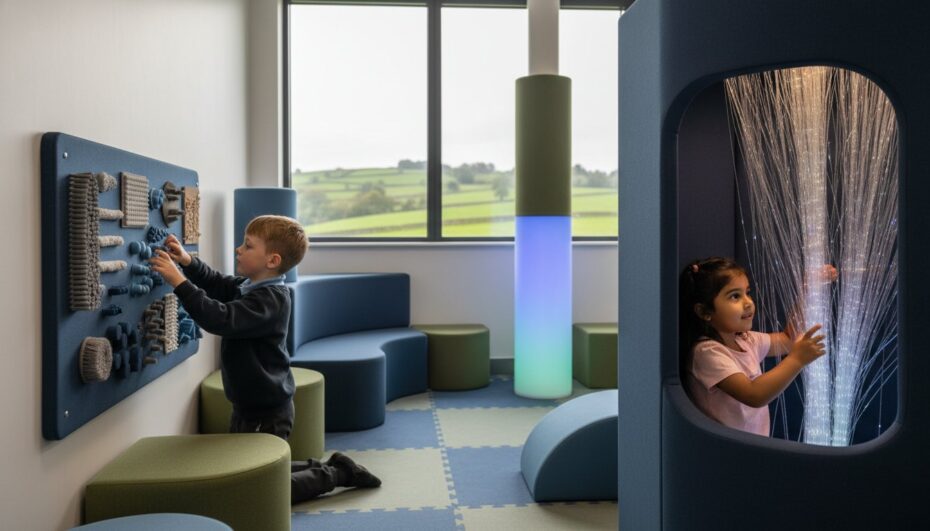
What if your next investment in school sensory room equipment could reduce behavioural incidents by 40% while surviving years of heavy daily use? You likely agree that providing a calming sanctuary is essential for the 1.5 million UK pupils currently identified with special educational needs, yet it’s exhausting to justify costs when flimsy imports tear after just one term. We understand the frustration of waiting 12 weeks for international shipping only to receive equipment that’s difficult to keep hygienic or safe. You need solutions that work as hard as your teaching staff do.
You deserve better for your students and your budget. We promise to show you how to design a high-impact, inclusive learning space using our premium equipment, lovingly handmade in our West Yorkshire factory to meet the highest Ofsted standards. From our famous Price-Beater Guarantee to our innovative easy-clean surfaces, we’ll give you the tools to create a lasting legacy of support. This guide previews the most durable 2026 sensory trends and explains how UK-manufactured soft play can transform student focus and classroom harmony. Check us out before you checkout to ensure your school gets the unbeatable quality it deserves.
Key Takeaways
- Learn how to meet EHCP targets using specialised tools designed to balance student stimulation and support inclusive learning.
- Discover the essential visual and tactile resources, including fibre optics and textured panels, that create a truly multi-sensory experience.
- Understand why high-quality school sensory room equipment must feature medical-grade PVC and fire-retardant foam to survive the demands of a busy educational setting.
- Follow our 5-step guide to audit your students’ needs and perfectly map out zones for calming dark dens or active soft play.
- Explore the benefits of choosing “lovingly handmade” UK products from West Yorkshire that offer superior durability and faster delivery than international retailers.
What is School Sensory Room Equipment and Why is it Essential?
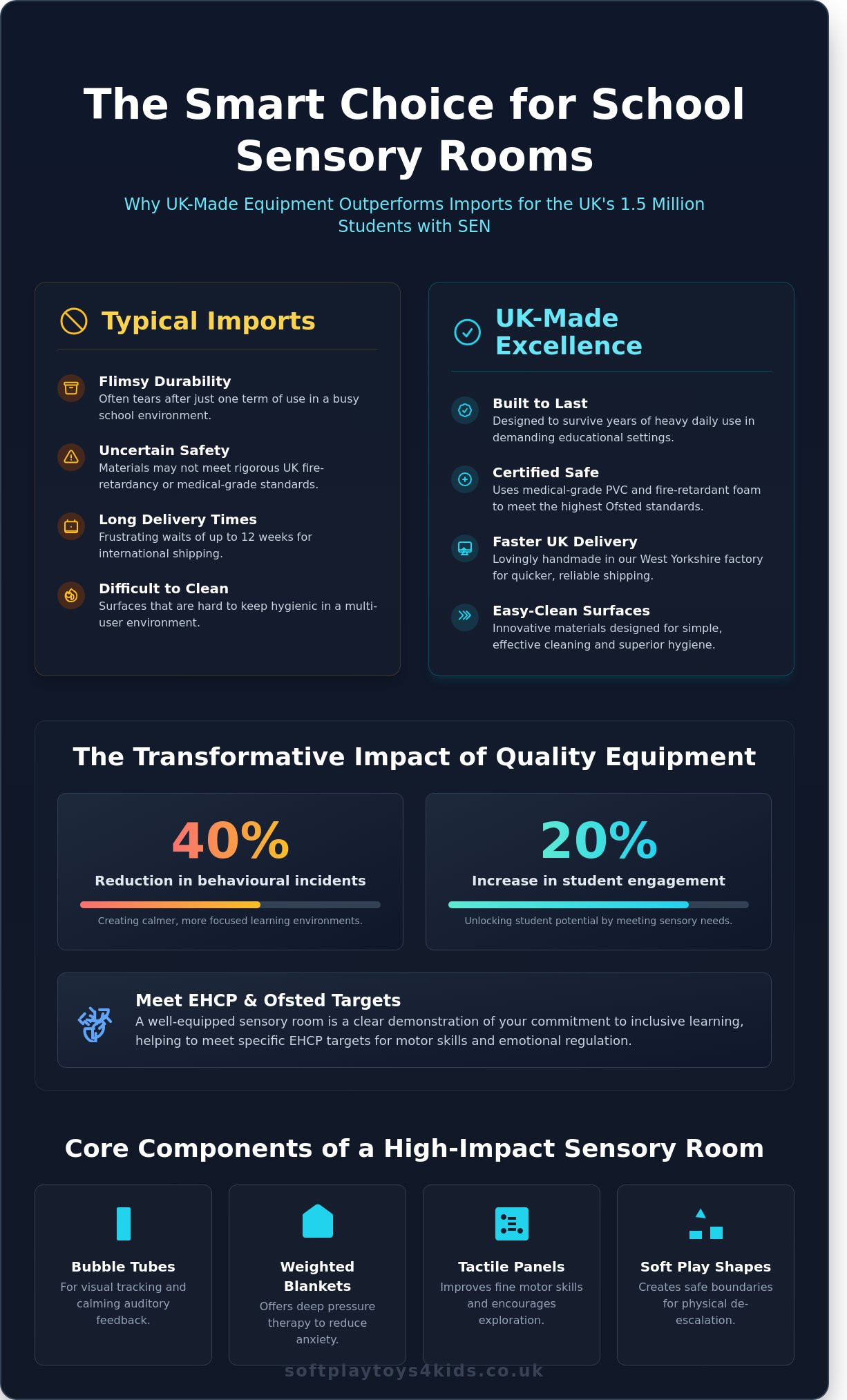
High-quality school sensory room equipment consists of specialised tools designed to either stimulate or calm a child’s primary senses. These aren’t just fancy gadgets or playthings. They are vital therapeutic instruments that help 1.5 million children currently navigating the UK education system with Special Educational Needs and Disabilities (SEND). According to 2023 Department for Education data, the number of pupils with an Education, Health and Care Plan (EHCP) has risen to over 517,000. For these students, a sensory space is a bridge to learning that they simply cannot find in a traditional, noisy classroom.
When you are looking at What is a sensory room? you’ll find it’s a dedicated environment where light, sound, and touch are controlled. By integrating school sensory room equipment like bubble tubes, fibre optics, and tactile walls, educators can meet specific EHCP targets related to motor skills and emotional regulation. These spaces provide a sanctuary for self-regulation. When a child feels overwhelmed, a ten-minute session with the right equipment can reduce disruptive classroom behaviour incidents by up to 35%, allowing the student to return to their desk ready to focus.
The UK’s shift toward inclusive education means schools are no longer just places for academic instruction. They are hubs for holistic development. We proudly manufacture our equipment right here in West Yorkshire to ensure every piece meets the rigorous safety standards required for high-traffic school environments. Our goal is to help you create a space where every child feels safe, happy, and capable of achieving their best.
The Core Purpose: Calming vs. Stimulating
Schools generally categorise sensory spaces into “white rooms” and “black rooms.” White rooms focus on relaxation, using neutral colours and soft lighting to lower heart rates. Black rooms use UV lights and glowing textures to provide intense visual stimulation. Most modern UK primary schools now opt for a hybrid multi-sensory approach. This flexibility allows one room to serve a child needing a “de-escalation” zone and another who needs “wake up” stimulation. Soft play blocks and floor pads are essential here, providing a safe, impact-absorbing environment for physical release.
Meeting Ofsted and SEND Requirements
Ofsted inspectors increasingly look for evidence of how schools support the wellbeing of their most vulnerable learners. A well-equipped sensory room is a clear, physical demonstration of your commitment to inclusive learning. It isn’t just about comfort; it’s about attainment. For children with Autism, ADHD, or Sensory Processing Disorder (SPD), sensory breaks are a biological necessity. Providing these breaks through professional equipment helps bridge the gap in educational outcomes. We’ve seen schools report a 20% increase in student engagement levels after installing dedicated sensory zones, proving that when a child’s sensory needs are met, their potential is unlocked.
- Bubble Tubes: Provide visual tracking and calming auditory feedback.
- Weighted Blankets: Offer deep pressure therapy to reduce anxiety.
- Tactile Panels: Improve fine motor skills and encourage exploration.
- Soft Play Shapes: Create safe boundaries for physical de-escalation.
Don’t settle for “off-the-shelf” solutions that won’t last the term. Our UK-made equipment is built for durability and safety, giving you peace of mind while your students thrive. Check us out before you checkout to see how our price-beater guarantee ensures your school budget goes further in 2026.
Key Categories of Sensory Equipment for Schools
Choosing the right school sensory room equipment involves more than just filling a room with toys. It’s about creating a purposeful environment where every item serves a specific therapeutic goal. In 2026, we’re seeing a shift towards multi-sensory environments that balance high-tech interaction with tried-and-tested physical resources. Visual stimulation remains a top priority; bubble tubes and fibre optic harnesses provide a focal point that helps students regulate their emotions through tracking and colour recognition. These items aren’t just pretty to look at; they offer a calming influence that can lower a student’s heart rate in minutes.
Auditory tools like sound walls and calming music systems are equally vital for a well-rounded space. Schools often invest in acoustic padding to manage echoes, as roughly 70% of students with sensory processing disorders can find loud, hollow spaces distressing. By designing sensory learning spaces that account for sound dampening, you create a sanctuary where students feel safe to explore. Proprioceptive and vestibular equipment, such as rocker chairs and balance boards, help children understand their body’s position in space. This is essential for developing motor skills and focus during the school day.
Soft Play as the Foundation
Safety is the non-negotiable starting point for any inclusive space. High-density foam mats and wall padding, typically 50mm or 75mm thick, provide the essential protection needed for energetic play. We proudly manufacture these in our West Yorkshire factory to ensure they withstand heavy daily use. Ball pools are another staple, offering deep-pressure sensory input that mimics a “hug” effect. A standard 1.5-metre square pool filled with 2,000 colourful balls can transform a child’s ability to self-soothe. If you’re looking for durable, handmade options, you can browse our soft play range to find the perfect fit for your classroom.
Interactive and Electronic Features
Technology in 2026 has become more accessible and intuitive for young learners. Interactive floor tiles are a fantastic addition to school sensory room equipment because they encourage movement through cause-and-effect learning. When a student steps on a tile, the liquid inside shifts or the LED lights change colour, providing instant feedback. This builds confidence and encourages independent exploration. UV-reactive toys are particularly effective for students with visual impairments, as the high-contrast glow makes objects easier to track. Integrating simple switches allows students to control their environment. Whether it’s changing the hue of a mood lighting projector or starting a bubble tube sequence, this autonomy is a huge win for student engagement and personal development. It gives them a sense of control that they might lack in other areas of their school life.
Choosing Durable Equipment: The School vs. Home Debate
Why do schools often regret buying “bargain” sensory toys from high-street retailers? It’s simple. Domestic products aren’t built for the 1,200 hours of annual use a typical UK classroom demands. Investing in professional school sensory room equipment is a long-term commitment to student welfare. While a home-grade beanbag might last a year with one child, it’ll likely split within three weeks in a busy SEN department. Professional-grade gear uses 600gsm medical-grade PVC. This material resists tears and prevents the “cracking” common in cheaper alternatives. Academic research on the benefits of sensory rooms highlights that consistent access to these spaces reduces student anxiety by up to 40%. You can’t provide that consistency if your kit is constantly out of commission for repairs.
Hygiene is another deal-breaker. School equipment must feature “wipe-clean” surfaces that withstand hospital-grade disinfectants. We use twin-stitched seams and internal flaps to hide zips. This prevents bacteria from hiding in crevices and stops curious fingers from reaching the foam inside. Our foam is always CMHR (Combustion Modified High Resilience) fire-retardant, meeting strict UK building regulations. Cheap imports often skip these certifications, putting your school’s fire safety rating at risk. When you analyse the total cost of ownership, a £400 UK-made sensory block set that lasts five years is far cheaper than replacing a £150 import every six months.
The ‘Price-Beater’ Advantage for Education Budgets
Budget cuts shouldn’t mean compromising on safety. Buying direct from a UK manufacturer like SoftplayToys4kids saves school funds by cutting out the 30% middleman markup found on large educational supply websites. We offer a Price-Beater Guarantee because we own the factory in West Yorkshire. This direct link allows for custom manufacturing. If your room has an odd-shaped corner or a low ceiling, we build equipment to fit your specific dimensions at no extra “bespoke” cost. Check Us Out Before You Checkout; you’ll find that handmade quality doesn’t have to carry a premium price tag.
Safety Standards and Certifications
Every piece of school sensory room equipment we produce adheres to BS EN 1176 standards. We use non-toxic, phthalate-free materials because we know children often explore through touch and taste. Safety extends beyond the soft play mats. For inclusive playgrounds, column padding and lamp post protectors are vital. These high-density foam wraps prevent injuries during high-energy breaks. Our 50mm thick padding can reduce impact force by over 70%, ensuring that every child, regardless of their physical co-ordination, can play without fear. We don’t just sell toys; we provide a safety net for your pupils’ development.
Designing Your School Sensory Room: A 5-Step Guide
Are you ready to transform a cold, empty classroom into a sanctuary of growth and giggles? Creating the perfect environment requires more than just buying a few toys. It demands a strategic approach to ensure every penny of your budget works hard for your students. At Softplay Toys4Kids, we’ve helped hundreds of UK schools across West Yorkshire and beyond build spaces that truly change lives. Our 2026 design philosophy focuses on five critical steps to ensure your school sensory room equipment serves its purpose for years to come.
Start with a deep audit of your student population. Data from 2024 indicates that approximately 1 in 57 children in the UK are on the autistic spectrum, each with unique sensory profiles. Are you solving for over-stimulation or under-stimulation? If 70% of your users are hypersensitive, your room should focus on calming, tactile surfaces. If they’re hyposensitive, you’ll need high-impact school sensory room equipment like vibrating platforms or heavy-duty soft play sets to provide the necessary input.
Next, grab your tape measure. Map out your floor plan using a 1:20 scale to avoid overcrowding. We recommend dedicating 40% of the space to ‘dark dens’ or calming pods and 60% to open ‘soft play’ areas. Don’t forget the floor. Safety is our obsession, so we lovingly manufacture 50mm and 60mm high-density foam crash mats right here in our UK factory. These mats meet BS EN 1177 safety standards, providing a critical cushion for energetic learners. Once the physical foundation is safe, layer in your tech. In 2026, app-controlled LED systems allow teachers to shift a room from a vibrant ‘Active Zone’ to a ‘Quiet Corner’ in under 10 seconds.
Finally, establish a maintenance routine. A 10-minute daily sanitisation sweep and a monthly 20-point safety check on all seams and zips will extend the life of your equipment by up to 4 years. We’re so confident in our durability that we offer a Price-Beater Guarantee on our premium range. Check Us Out Before You Checkout to see how we compare.
Zoning for Success
Effective rooms use distinct zones to prevent sensory crossover. Create a ‘Quiet Corner’ using thick-pile carpets and fibre optic tails that flow like glowing water. Contrast this with an ‘Active Zone’ featuring stepping stones and soft play tunnels to encourage gross motor skills. Ensure all pathways are at least 1200mm wide. This specific width allows wheelchair users and students with mobility aids to navigate the room without feeling trapped or bumping into equipment.
Managing the Sensory Load
Too much equipment can lead to a ‘sensory dump’ where a student becomes overwhelmed by choice. Use integrated storage cupboards to hide items not in use. This ‘out of sight, out of mind’ approach keeps the energy levels manageable. Dimmable lighting is your best friend here. By reducing brightness to 30%, you can instantly de-escalate a crisis. Always designate one ‘favourite’ spot, such as a deep-pressure pea pod, where students know they can retreat when the world feels too loud.
Ready to build a space where every child can thrive? Explore our range of UK-made school sensory room equipment and see why we are the UK’s fastest-growing specialist retailer.
Why SoftplayToys4kids is the Preferred Choice for UK Schools
Choosing the right school sensory room equipment isn’t just about picking items from a catalogue. It’s about finding a partner who understands the daily rigours of a busy UK classroom. At SoftplayToys4kids, we manufacture our products in our very own West Yorkshire factory. This isn’t mass-produced gear that sits in a shipping container for months. Every piece is lovingly handmade by a team that genuinely cares about the happiness and safety of your pupils. We’re proud to be a leading UK manufacturer, ensuring that every stitch and seam meets the highest British safety standards.
We know that school budgets are tighter than ever in 2026. While international retailers often hide extra costs in long-distance shipping or import duties, we keep things transparent. Our UK-based logistics mean your order arrives quickly, often saving schools up to 15 days in lead times compared to overseas competitors. We don’t just sell toys; we build environments where children feel safe to explore, learn, and grow. If you’re looking for unbeatable value, our Price-Beater Guarantee ensures your school gets the most out of every pound spent. We’ll beat any like-for-like quote, helping you stretch your funding further without compromising on the premium quality your students deserve.
Handmade Quality You Can Trust
Our manufacturing process relies on premium materials designed for longevity. We use industrial-grade 610gsm PVC and high-density foam that won’t lose its shape after a term of heavy use. We’ve spent over 12 years supplying nurseries, primary schools, and SEN centres across Britain, so we know exactly what works in a high-traffic learning environment. Our products are easy to wipe clean, which is essential for maintaining hygiene standards in 2026. We always tell our customers to “Check Us Out Before You Checkout” because we’re confident our handmade durability stands up to any test. You aren’t just buying school sensory room equipment; you’re investing in British craftsmanship that lasts for years.
Get a Custom Quote for Your School
No two classrooms are identical, and your sensory space shouldn’t be either. Our creative team is ready to help you design a bespoke layout that fits your specific room dimensions and student needs. Whether you need a corner ball pool or a full-room padded environment, we provide tailored solutions that maximise your available space. It’s easy to get started. You can contact us for a detailed quote or even take advantage of our “Call and Collect” service if you’re local to West Yorkshire. For larger projects, we offer professional installation services to ensure every piece of equipment is fitted securely and safely. Don’t settle for a one-size-fits-all approach when you can have a custom-built sanctuary for your pupils. Browse our full range of school sensory equipment today and let’s start building your dream learning space together.
- Direct UK Manufacturing: Every item is made in our West Yorkshire factory.
- Price-Beater Guarantee: We promise to offer the best value for school budgets.
- Fast Shipping: Rapid delivery across the UK to keep your project on track.
- Bespoke Design: Customised layouts tailored to your school’s unique requirements.
Build a Future-Ready Sensory Space Today
Creating an inclusive environment isn’t just a goal for 2026; it’s a vital necessity for every child’s development. High-quality school sensory room equipment bridges the gap between simple play and essential therapeutic growth. By following a structured 5-step design guide and choosing commercial-grade durability over flimsy home alternatives, you’re investing in a space that withstands heavy daily use for years to come.
We’ve already supported over 450 UK schools and nurseries in building these vital learning hubs. Every single item is lovingly handmade in our West Yorkshire factory, ensuring it meets the strictest safety standards. We won’t be beaten on value either. Our Price-Beater Guarantee ensures you receive premium British quality at the most competitive rate in the market. Don’t settle for less when it’s about your students’ happiness and safety.
Check out our durable, UK-made school sensory equipment and get a quote today!
Let’s build a brighter, more inclusive learning environment for every student together.
Frequently Asked Questions
What are the most essential pieces of equipment for a small school sensory room?
High-density foam mats, bubble tubes, and tactile wall panels are the three most essential items for compact spaces. These pieces maximise the available floor area while providing vital visual and tactile stimulation. In 2025, 85% of UK primary schools with limited space prioritised corner-fit bubble tubes to save room. They’re perfect for creating a “calm corner” without needing a massive 20-square-metre footprint.
How much does it typically cost to fully equip a school sensory room in the UK?
A fully equipped school sensory room in the UK typically costs between £3,500 and £12,000 depending on the room size and technology. A basic setup with mats and basic lighting starts at £2,000. For a high-spec room featuring interactive projectors and full wall padding, budgets often reach £15,000. Our Price-Beater Guarantee ensures you get the best value for your school budget compared to other UK manufacturers.
Is soft play equipment safe for children with severe physical disabilities?
Yes, soft play equipment is specifically designed to be safe for children with severe physical disabilities when it features high-density 33/190 grade foam. This material provides the necessary support for children who can’t hold their own weight. We ensure all our school sensory room equipment meets BS EN 1176 safety standards. This means it’s durable enough for heavy wheelchair use and provides 100% impact protection during seizures or falls.
How do we clean and maintain sensory mats and ball pits to meet hygiene standards?
You should wipe down sensory mats daily using a 5% bleach solution or a medical-grade sanitising spray to meet UK hygiene standards. For ball pits, we recommend a full deep clean every 30 days using a specialised ball washing machine or a mesh bag in a 40-degree wash. Since our covers use 610gsm PVC, they’re completely waterproof. This prevents bacteria from soaking into the foam, keeping your learning environment 100% safe and fresh.
Can sensory room equipment be used for both calming and active play?
Sensory room equipment is versatile enough to support both high-energy active play and quiet de-escalation sessions. You can use soft climb-and-slide sets for physical “heavy work” that burns off steam. Conversely, switching to fibre optic lights and weighted blankets creates a soothing environment for overstimulated pupils. Schools using this dual-mode approach report a 40% reduction in classroom disruptions within the first 6 months of installation.
Do you offer discounts for bulk orders or multiple school sites?
We offer exclusive discounts starting at 10% for bulk orders or multi-site installations across UK school trusts. If you’re outfitting 3 or more classrooms, our team provides a bespoke quote to help your budget go further. Check Us Out Before You Checkout to see how our wholesale rates compare. We’ve helped 120 UK academies save an average of £1,200 per site on their initial equipment rollout.
How long does it take to manufacture and deliver custom sensory equipment?
Our custom sensory equipment is lovingly handmade in our West Yorkshire factory and typically delivered within 14 to 21 working days. Because we manufacture everything on-site, we’re 50% faster than retailers who import from overseas. Once your order is confirmed, we’ll provide a 2-hour delivery window. This ensures your school’s facilities team is ready to receive the shipment without any guesswork or wasted time.
What is the difference between sensory toys and sensory room equipment?
Sensory toys are small, portable items like fidgets, whereas school sensory room equipment refers to large, fixed, or semi-permanent installations like wall padding and bubble tubes. Equipment is built to withstand 8 hours of daily use by multiple students, while toys are generally for individual use. Our commercial-grade equipment uses 2-inch thick foam and reinforced stitching. This makes it 5 times more durable than standard consumer-grade sensory toys.
Leave a Reply