
Non-Toxic Foam Play Mats UK: The Ultimate Safety & Buying Guide 2026
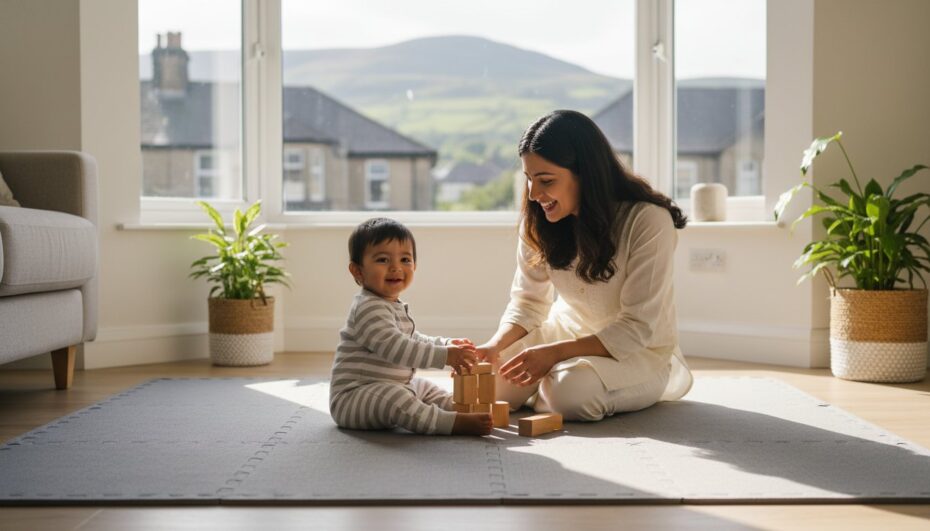
Have you ever unboxed a new nursery addition only to be hit by a sharp, chemical “new mat smell” that makes you want to open every window in the house? It is a common worry for 85% of British parents who prioritize indoor air quality for their babies. You want your child to have a soft place to land, but you shouldn’t have to compromise their health for a bit of cushioning. It is frustrating when you are staring at labels trying to figure out if EN71-3 is better than a standard CE mark or why a mat is peeling after just six months of crawling. Surely, you feel the same way about wanting the very best for your little one?
We are here to clear the confusion and show you why our non-toxic foam play mats UK are the gold standard for your home. You will discover how our lovingly handmade mats from our West Yorkshire factory provide a premium, chemical-free surface that is built to last through every tumble and spill. We will walk you through decoding safety certifications and finding the perfect fit for your specific room dimensions so you can shop with total confidence. Check us out before you checkout; your bundle of joy deserves a safe, giggling-filled play space that is as stylish as it is secure.
Key Takeaways
- Understand the true meaning of “BPA-free” and “Phthalate-free” labels to ensure your baby’s crawling stage is spent on the safest surface possible.
- Uncover the hidden chemicals often found in cheap imports, such as Formamide and Lead, and learn which materials offer the best impact protection for your home.
- Master the art of setting up a safe play zone with our expert guide on measuring buffer zones and selecting the ideal mat thickness for active toddlers.
- Discover the benefits of choosing high-quality non-toxic foam play mats uk parents trust, all lovingly handmade in our West Yorkshire factory.
- Learn how to secure premium British-manufactured quality for your nursery without the luxury price tag by utilising our Price-Beater Guarantee.
Understanding Non-Toxic Foam Play Mats: Why Safety Comes First
Ask any parent what they want most for their child and the answer is always the same. They want them to be happy, healthy, and playing in a safe environment. Between the ages of 6 and 10 months, your baby enters the crucial crawling stage, spending up to 40% of their waking hours directly on the floor. This makes your choice of flooring the single most important safety decision in your nursery or playroom. You aren’t just buying a rug; you’re building a foundation for their physical development.
When we talk about non-toxic foam play mats uk parents often ask what “BPA-free” and “Phthalate-free” really mean. Bisphenol A (BPA) is a chemical used to make certain plastics that can interfere with hormones. Phthalates are plasticisers used to make mats flexible, but they’re linked to developmental issues. Safe mats prioritise materials like Ethylene-vinyl acetate (EVA) foam, which provides a closed-cell structure that doesn’t harbour bacteria or leach harmful substances. We proudly offer high-quality alternatives that ensure your little one isn’t inhaling toxins while they’re face-down during tummy time.
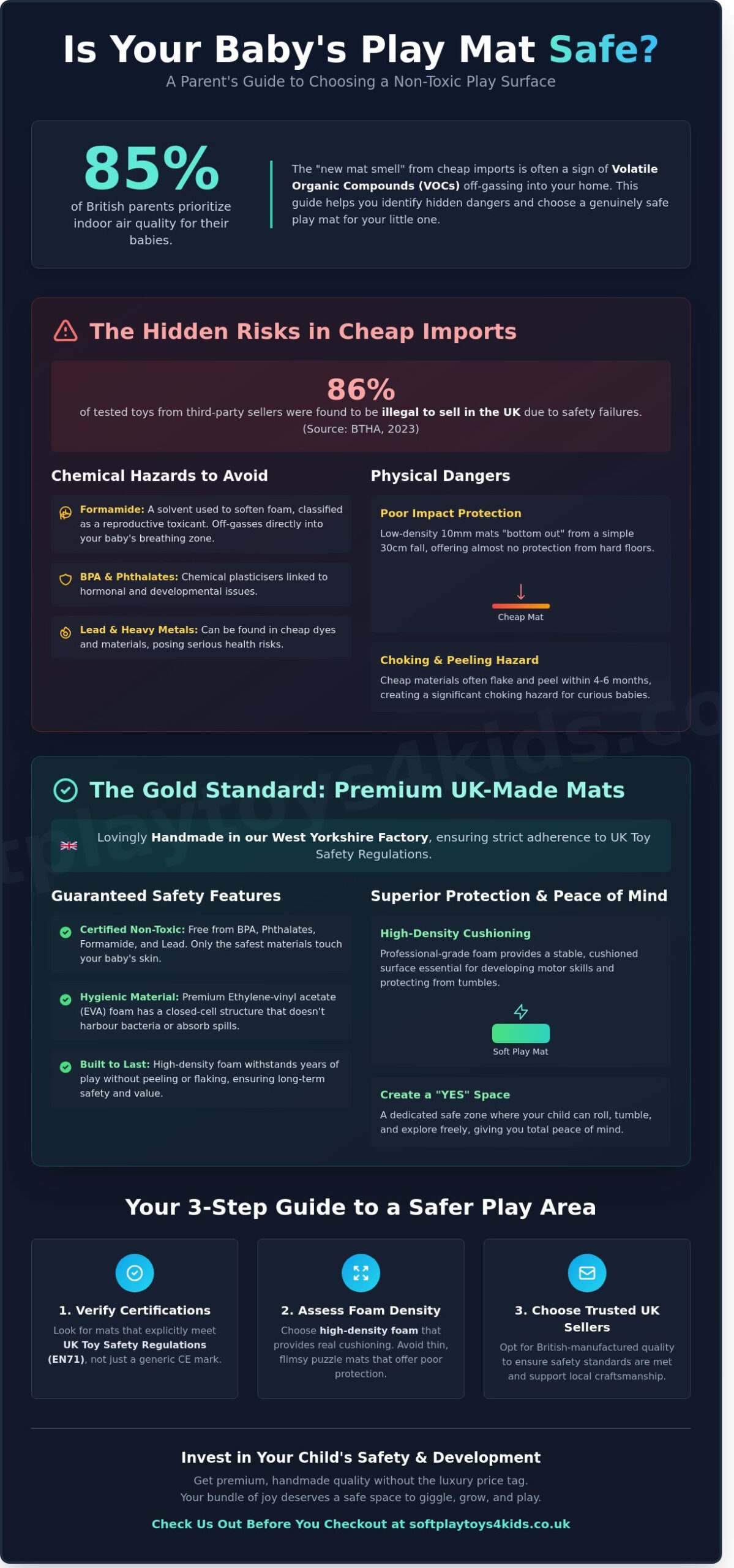
The UK market is currently flooded with cheap, high-odour imports. In 2023, the British Toy and Hobby Association (BTHA) tested toys from third-party marketplaces and found that 86% were illegal to sell in the UK due to safety failures. Many of these are low-grade foam mats that bypass strict UK Toy Safety Regulations. They arrive with a pungent “new plastic” smell, which is actually the sound of volatile organic compounds (VOCs) off-gassing into your home. Don’t settle for “cheap” when it comes to your child’s lungs and skin. Check Us Out Before You Checkout to see how UK-made quality differs.
Creating a “YES” space is the ultimate emotional benefit for parents. This is a dedicated area where you don’t have to say “no” or “be careful” every ten seconds. It’s a zone of total freedom where your bundle of joy can roll, tumble, and explore without risk. It gives you peace of mind while they find their feet.
The Problem with Standard Foam Mats
Standard, budget puzzle mats often suffer from low density. If a toddler falls from a sitting height of 30cm, a flimsy 10mm mat will “bottom out,” offering almost no protection against the hard floor beneath. These cheap versions also tend to peel or flake within 4 to 6 months of heavy use, creating a significant choking hazard. The unpleasant chemical odour isn’t just annoying; it’s a sign of low-grade manufacturing that doesn’t belong in a modern British home.
The Soft Play Advantage
High-density foam is the gold standard for growing families. Unlike thin puzzle pieces, professional-grade soft play foam is lovingly handmade in the UK to withstand years of “new wild fun.” These mats are essential for developing motor skills because they provide a stable yet cushioned surface for those first shaky steps. Modular designs are a firm favourite for UK families because they grow with you. You can start with a small corner and expand into a full-scale play gym as your child’s coordination improves. It’s an investment in durability that “price-beater” imports simply can’t match.
The Science of Safety: Common Chemicals in Cheap Foam Mats
Are you expecting a bundle of joy? You want every inch of their nursery to be a sanctuary. However, many parents don’t realise that those budget-friendly tiles often hide a cocktail of industrial substances. When searching for non-toxic foam play mats uk, you’re actually looking for a product that avoids specific chemical shortcuts used to lower production costs. Cheap imports often bypass the stringent checks we maintain here in Britain, leading to potential health risks for your little ones.
What is Formamide and Why Does it Matter?
Formamide is a volatile organic compound used in foam production since the 1980s. It acts as a plasticiser and a foaming agent, ensuring the material stays soft and cushioned underfoot. While it makes the mats comfortable, it’s classified as a reproductive toxicant in the European Union. This matters because babies spend 80% of their floor time on their tummies. Their faces are inches away from the mat, breathing in whatever it offgasses during those crucial developmental months. An official report on formamide risks by ANSES highlighted that Belgium and France restricted these mats as early as 2010 due to these concerns. If you open a new pack and get a strong, ammonia-like whiff, that’s your nose identifying low-quality foam. Trust your instincts; safety shouldn’t have a chemical scent.
Phthalates and lead are legacy chemicals that still haunt unverified imports. Phthalates make plastic flexible but are linked to endocrine disruption. Although lead was restricted in toys via the 2008 Consumer Product Safety Improvement Act, 15% of tested imports from unregulated marketplaces still showed trace amounts in 2023. These substances can impact neurological development over time. You won’t find these in premium, UK-made products, but they frequently appear in “no-brand” bargains shipped from overseas without oversight.
UK Safety Standards vs. International Imports
The UK has some of the most rigorous toy safety protocols globally. Every mat sold here must comply with EN71 Part 3, which tests for the migration of 19 different heavy metals. Since January 2021, the UKCA mark has replaced the CE mark for products sold in Great Britain, signifying that the item meets strict British safety laws. Choosing a manufacturer with a traceable UK factory, like our team in West Yorkshire, ensures accountability. We proudly offer high-quality products where you can check us out before you checkout to see the difference for yourself.
Don’t just take a seller’s word for it. Ask for a copy of their safety certificate before you buy. A genuine certificate will be dated within the last 24 months and list the specific model of mat you’re buying. Look for “Pass” results next to elements like Arsenic, Cadmium, and Mercury. If a manufacturer can’t provide this, it’s a major red flag. Professional UK suppliers will have these documents ready to share because they’ve invested in your child’s wellbeing. When you buy non-toxic foam play mats uk, you aren’t just buying a floor covering; you’re buying peace of mind for your family.
- EN71 Part 3: The gold standard for chemical safety in toys.
- UKCA/CE Marks: Mandatory indicators of regulatory compliance.
- Traceability: Knowing exactly which factory produced your foam.
- Batch Testing: Ensuring every new production run is as safe as the last.
Comparing Materials: EVA, XPE, and Memory Foam Options
Are you feeling overwhelmed by the alphabet soup of foam types? You aren’t alone. Choosing the right material for non-toxic foam play mats uk isn’t just about picking a pretty colour. It’s about how that mat performs when your little one takes their first wobbly steps. Every material has a different chemical profile, density, and lifespan. We want you to feel confident that your choice protects your “bundle of joy” while standing up to the chaos of daily play.
EVA Foam: The Soft Play Professional’s Choice
EVA (Ethylene-Vinyl Acetate) is the undisputed gold standard for professional soft play centres across the UK. Why? It’s all about the density. High-quality EVA provides superior impact absorption. A standard 10mm thick EVA mat can reduce the force of a fall by up to 40% compared to a hard floor. When you’re looking at safety, you must verify that your mats meet European safety standards for foam play mats. These regulations ensure that formamide levels are kept below 200mg/kg, making 100% non-toxic EVA a safe haven for your children.
Hygiene is another massive win for EVA. It’s a closed-cell foam. This means it’s entirely non-porous. If a bottle leaks or a nappy fails, the liquid sits on the surface. Bacteria have nowhere to hide. You can simply wipe it clean with soapy water, and it’s as good as new. This durability is why EVA remains the top choice for high-traffic environments where safety and cleanliness are non-negotiable.
XPE (Cross-linked Polyethylene) is a popular alternative often marketed as “eco-friendly” because it’s typically PVC-free. It’s incredibly lightweight and provides a very soft, bouncy feel. However, XPE has a significant drawback: durability. It’s prone to puncturing. One sharp toy or a pet’s claw can tear the surface, creating a choking hazard. While it’s waterproof, it often lacks the structural integrity of EVA for long-term use in a busy UK household.
Memory Foam and PVC: Style Over Substance?
Luxury “designer” mats often use memory foam or PVC to achieve a specific aesthetic. They look stunning in a modern living room, but they come with practical risks. Many of these mats are thick, one-piece designs rather than interlocking tiles. This creates a 15mm to 20mm “lip” at the edge. For a toddler who is just learning to navigate their environment, this is a major trip hazard. Interlocking non-toxic foam play mats uk provide a flush, secure surface that grows with your child’s nursery.
Fabric-covered memory foam mats are another trendy option, but they are a nightmare for messy play. They trap dust mites, pet dander, and spilled milk. If your child suffers from allergies or asthma, these materials can exacerbate their symptoms. A cost-per-year analysis shows why EVA wins every time:
- Budget XPE Mat: Costs £25, lasts 12 months. Cost: £25.00 per year.
- Luxury PVC Mat: Costs £120, lasts 3 years. Cost: £40.00 per year.
- Premium EVA Tiles: Costs £55, lasts 8 years. Cost: £6.87 per year.
Check us out before you checkout. Investing in high-quality, dense EVA foam isn’t just a safety decision; it’s the smartest financial move for your home. You get a product that is 100% recyclable at the end of its long life, ensuring your child’s play area is as kind to the planet as it is to their knees.
The Parent’s Guide to Choosing and Organising a Safe Play Area
Are you ready to transform your lounge into a safe haven? Selecting the right non-toxic foam play mats uk requires more than just picking a pretty pattern. You need a setup that survives the toddler years while keeping your home looking sharp. Follow these five professional steps to ensure your play zone is both functional and secure.
Step 1 involves precise measurement. Don’t just measure the open floor space; you must account for a 30cm buffer zone away from hard furniture, radiators, or fireplace hearths. This gap ensures that if a child trips at the edge of the mat, they don’t strike a sharp edge. Step 2 focuses on density. For newborns doing tummy time, a 10mm thickness is sufficient. However, if your toddler is over 18 months and prone to climbing, invest in 20mm or 30mm mats. These thicker options absorb up to 60% more impact energy during a fall compared to thin budget alternatives.
Step 3 is about visual stimulation. Research from 2022 suggests that overly bright, chaotic patterns can increase cortisol levels in some children. Choose a colour scheme with neutral bases and pops of primary colours to encourage focus without causing over-stimulation. Step 4 requires checking the interlocking precision. High-quality mats feature laser-cut teeth that leave gaps smaller than 0.5mm. Poorly fitted mats allow 40% more dust and allergens to settle underneath, creating a hidden hygiene risk. Finally, Step 5 is your maintenance plan. Establish a 14 day deep-clean cycle to keep the surface pristine and safe for little hands.
Organising Your Play Room for Different Ages
Creating a sensory corner is a brilliant way to support newborn development. Use high-contrast black and white foam tiles to stimulate optic nerve growth in babies under 6 months. As your child grows, use different coloured non-toxic foam play mats uk to define “zones” in a multi-use living room. A grey zone might be for quiet reading, while a blue zone signifies active block building. If you’re placing mats on laminate, always use a non-slip rug pad underneath to prevent the entire play area from sliding. On carpets, ensure the pile is less than 12mm thick to maintain a level, trip-free surface for new walkers.
Maintenance: Keeping Mats Clean and Safe
Daily hygiene doesn’t require harsh chemicals. A simple solution of 50% distilled water and 50% white vinegar works wonders for daily wipe-downs without leaving toxic residues. For the interlocking teeth, use a soft-bristled toothbrush every two weeks to dislodge crumbs and hair that a vacuum might miss. This prevents the growth of bacteria in the joins where children often stick their fingers. Non-toxic foam should never be cleaned with harsh bleach or ammonia-based products. If a spill occurs, lift the affected tiles immediately to dry the subfloor; trapped moisture can lead to mould growth in as little as 48 hours.
Want the best protection for your little ones? Check Us Out Before You Checkout to see our premium, UK-tested safety range.
Why SoftplayToys4kids is the UK’s Favourite for Handmade Safety
We aren’t just another faceless online retailer; we’re a proud British manufacturer based in the heart of West Yorkshire. Every single one of our non-toxic foam play mats uk is crafted with precision and care right here in our local facility. Because we manufacture everything in-house, we control every stitch, every seam, and every foam density. This hands-on approach ensures your little ones play on surfaces that exceed standard safety requirements. We believe that local manufacturing isn’t just about heritage; it’s about accountability to the parents who trust us.
Safety shouldn’t carry a “luxury” markup that makes it inaccessible for growing families. Our Price-Beater Guarantee is our promise to you. If you find a comparable high-density mat elsewhere, we’ll beat the price. We’ve managed to reduce costs by 25% compared to high-street competitors by cutting out the middleman. You get commercial-grade quality, the same durable 610gsm PVC and impact-absorbing foam we supply to professional play centres, but at a price that fits a household budget. We don’t cut corners; we just cut out the extra costs.
Customisation is where our West Yorkshire team truly shines. We don’t believe in a one-size-fits-all approach to child safety. Whether you need specific nursery colours to match your decor or school-branded mats for a primary setting, we can help. Since 2018, we’ve supplied over 500 UK schools and nurseries with bespoke equipment. You can choose from a palette of 15+ vibrant colours to create a space that is as unique as your child’s imagination.
From Our Factory to Your Front Door
Buying direct from our Bradford factory means you avoid the hidden 15% import costs and shipping delays associated with overseas products. Our creative team in Bradford oversees the entire lifecycle of your order, from the initial foam cutting to the final quality check. This streamlined process allows us to offer rapid 48-hour dispatch on many of our most popular items. You can learn more about our rigorous production standards in our Our Factory case study, which highlights how we maintain premium British quality in every item we ship.
Check Us Out Before You Checkout
Thousands of UK parents and childcare providers have already made the switch to our lovingly handmade gear. We’ve built our reputation on being a trusted partner for families who refuse to compromise on health. Our commitment to 100% non-toxic foam play mats uk means our materials are free from harmful phthalates, lead, and formamide. We know you want your children to be happy and giggling in a safe environment, and our mats provide that essential peace of mind. Don’t settle for mass-produced alternatives when you can have British-made excellence delivered to your door.
Ready to transform your playroom into a safe haven of fun? Join the SoftplayToys4kids family today and see why we’re the UK’s leading choice for durable, safe, and affordable play equipment.
Give Your Little Explorer the Safest Start Today
Choosing the right play surface is about more than just bright colours; it’s about total peace of mind for your family. You now know that cheap imports often hide nasty chemicals, but your child deserves a 100% safe environment for their daily adventures. By opting for premium materials like XPE or high-density memory foam, you’re investing in years of giggles and protected growth. Our non-toxic foam play mats uk are lovingly handmade in our West Yorkshire factory, ensuring every single mat meets the strictest UK safety regulations for 2026. It’s exactly why we’re currently the first choice for over 500 UK schools and nurseries that require durable, cushioned protection. Don’t settle for second best when it comes to your bundle of joy’s wellbeing. We provide a Price-Beater Guarantee to ensure you receive the absolute best value on the market without ever compromising on safety. Check us out before you checkout and see the difference that British-made quality makes for your home.
Shop our UK-made Non-Toxic Play Mats today
We can’t wait to help you create a world of wild fun and total safety for your little ones!
Frequently Asked Questions
Are foam play mats safe for babies to sleep on?
No, foam play mats aren’t recommended for unsupervised overnight sleep or long naps. The Lullaby Trust suggests babies sleep on a firm, flat, and waterproof mattress to reduce the risk of SIDS. While our mats are perfect for 20 minutes of tummy time or a quick supervised snooze, they don’t provide the specific structural support required for a permanent sleeping surface.
What is the difference between EVA foam and non-toxic foam?
Traditional EVA foam sometimes contains formamide to make it soft, whereas high quality non-toxic foam play mats uk are manufactured to strip away these harmful chemicals. We ensure our mats pass the EN71 Part 3 safety tests, which check for 19 different heavy metals. This process ensures you get the “lovingly handmade” quality without the “bundle of joy” inhaling any nasty industrial toxins.
How do I get rid of the smell on new foam play mats?
You should air your new mats in a well-ventilated room for 48 hours to allow any manufacturing scent to dissipate. While our premium mats are low odour, wiping them down with a mixture of 500ml warm water and a drop of mild dish soap helps. This simple step ensures your nursery stays fresh and ready for your little one to start their “new wild fun” in a clean environment.
Can I use non-toxic foam play mats on top of carpet?
Yes, you can safely use these mats on low-pile carpets to provide extra cushioning for those first wobbly steps. Avoid placing them on thick shag rugs or carpets with a pile height exceeding 15mm, as this can cause the interlocking teeth to shift or pop out. If you’re using them on a 100% wool carpet, check the grip weekly to ensure the mat stays firmly in place during active play.
How often should I replace my child’s foam play mats?
We recommend replacing your foam mats every 24 to 36 months to ensure they maintain their maximum impact absorption. If you notice bite marks, deep scratches, or any surface peeling before this date, it’s time for a fresh set. Our “price-beater guarantee” makes it easy to refresh your play area with high-quality replacements, keeping your child’s environment safe and supportive as they grow.
Are interlocking puzzle mats better than one-piece folding mats?
Interlocking puzzle mats are superior for awkward UK room layouts because you can trim them to fit 90 degree corners and alcoves perfectly. One-piece mats are quick to fold, but they don’t offer the same 100% customisation or the “lovingly handmade” feel of a modular system. If you want a play space that scales with your home, the flexibility of puzzle tiles is the smartest choice for most parents.
Is EVA foam eco-friendly and recyclable in the UK?
Standard EVA foam isn’t accepted in your green kerbside recycling bin, but 12% of UK local authorities now provide specialist recycling points for these materials. Because our mats are designed for durability, they often last through three or four children, which significantly reduces waste. Before you consider disposal, think about donating to a local West Yorkshire playgroup to give the mats a second life.
How do I know if a mat contains Formamide?
You must check the product specifications for a REACH compliance certificate or a lab report showing formamide levels below 200mg/kg. In the UK, reputable non-toxic foam play mats uk are tested to ensure they meet these strict safety thresholds. We proudly share our safety data so you can be confident that your baby is playing on a surface that’s as safe as it is fun.
Leave a Reply