
Post Protectors for Playgrounds That Last
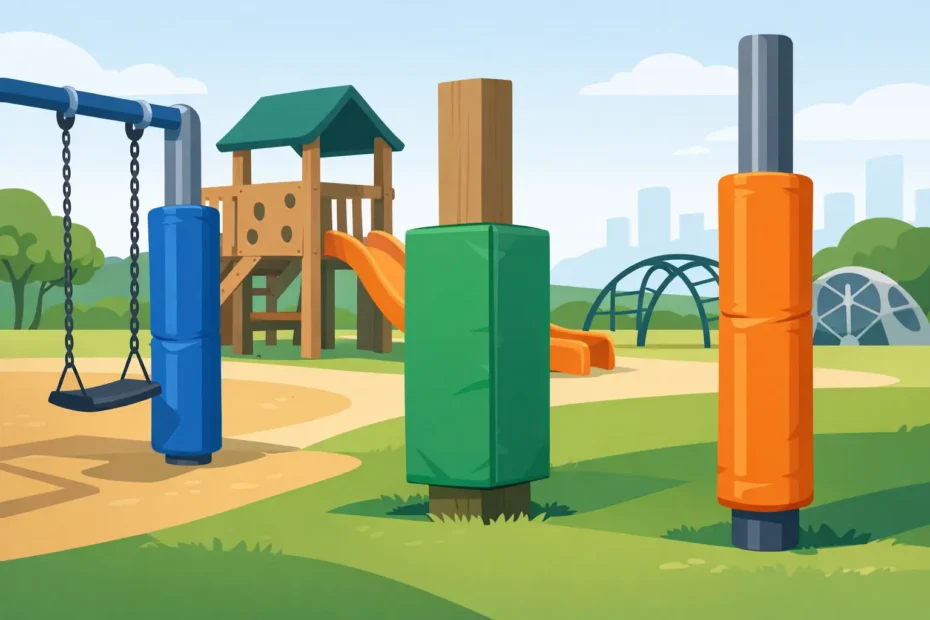
A play area can look complete, colourful and well planned, but if hard structural posts are left exposed, the job is only half done. Post protectors for playgrounds are one of those simple safety upgrades that make a real difference, whether you are setting up a home soft play corner, fitting out a nursery or improving a busy commercial play centre. They help reduce impact against hard surfaces, improve the overall finish of the space and give parents, staff and operators more confidence in the environment children are using every day.
Why post protectors for playgrounds matter
Children do not move carefully when they are excited. They run, turn sharply, tumble, climb and misjudge distances, especially in active play settings. That is exactly why exposed posts, poles and supports can become a problem. A hard knock against a bare post is the sort of accident most buyers want to avoid before it happens, not after.
Post protectors create a softer barrier around fixed structures. In practical terms, that means less direct contact with hard materials and a lower risk of painful bumps in high-traffic play zones. For commercial venues, this is not just about presentation. It is about sensible risk reduction in spaces where children are moving constantly. For parents building a play setup at home, it is a smart way to make a room feel safer without turning it into a major building project.
There is also the visual side. A fitted protector gives a cleaner, more professional finish than leaving structural posts exposed. In nurseries, schools and indoor play centres, that matters. Safety equipment should not look like an afterthought.
Where playground post protectors are most useful
Not every play space needs the same level of padding, and that is where a lot of buyers get stuck. The right choice depends on how the space is used, the age of the children and how close the posts are to active movement.
In home playrooms, post protectors are often most useful around support poles, room features and frame elements that sit close to soft play equipment, ball pits or climbing pieces. Toddlers rarely play in a straight line, so anything within reach of a stumble or sideways fall deserves attention.
In nurseries and preschools, they become even more valuable. Younger children are still developing balance and spatial awareness, which means accidental collisions are common. A busy early years room with mixed activity stations can quickly become a high-contact environment, especially during free play.
Commercial indoor play settings usually need the toughest solution of all. These areas deal with repeated daily use, higher footfall and more energetic movement. Padding around posts in entrances, climbing zones, transition areas and the edges of soft play structures helps maintain both safety and appearance over time. Cheap padding can split, flatten or come loose. That may save money at the start, but it rarely saves money in the long run.
Home buyers and commercial buyers need different things
This is one of the biggest trade-offs in the market. A parent buying for occasional domestic use may prioritise cost, compact sizing and a colour that suits the room. A nursery manager or leisure operator is usually thinking about durability, wipe-clean surfaces, repeated impact and how the protectors will hold up over months and years.
Neither approach is wrong. The key is buying for the environment you actually have, not the one you imagine. Over-specifying can waste budget, but under-specifying can lead to fast wear, replacement costs and a play area that no longer looks safe or cared for.
What to look for when buying post protectors for playgrounds
The first thing to check is fit. A protector needs to suit the dimensions and shape of the post it covers. If the size is wrong, you can end up with gaps, unstable fitting or padding that shifts during use. That defeats the point.
Material quality matters just as much. Good post protectors should feel firm enough to absorb contact while still offering proper cushioning. The outer cover needs to be durable and easy to clean, particularly in nurseries and commercial settings where hygiene and appearance are under constant pressure.
You should also think about finish. Bright, clean colours can help a play area feel more inviting and coordinated, which is useful if you are matching existing soft play pieces or planning a branded commercial space. Bespoke sizing and colour options are especially valuable when standard off-the-shelf products do not suit the layout.
Fixing method is another detail buyers sometimes overlook. If protectors are awkward to fit or easy to dislodge, they become more hassle than help. A reliable, secure fit saves time on maintenance and keeps the area looking tidy. In a busy setting, that is worth paying attention to from day one.
Cheap options can cost more later
Price always matters, and buyers are right to compare. But with post protectors, the lowest figure on the page is not always the best value. Thin padding, poor stitching or weak covers can wear out quickly, especially in high-use environments. Once that happens, you are replacing products sooner than expected and spending more overall.
A better approach is to weigh up price against longevity, finish and suitability for the setting. For a domestic room used a few times a week, an entry-level option may do the job perfectly well. For a nursery or soft play business, heavier-duty construction usually pays for itself.
Safety, maintenance and day-to-day practicality
One reason post protectors are such a sensible buy is that they offer more than one benefit at once. They improve impact protection, but they also make the environment easier to manage. Wipe-clean surfaces help with regular cleaning. A neat fitted look helps maintain trust with parents and visitors. In commercial settings, presentation and safety work together.
Maintenance should be straightforward. Protectors should be easy to inspect for wear and simple to clean as part of the normal routine. If a product makes that difficult, it adds pressure to staff and becomes less practical over time. Buyers often focus on the first day the equipment is installed, but the better question is how it will still perform after months of regular use.
There is also a planning benefit. Once posts are padded properly, it becomes easier to organise the play area around them. Instead of treating structural features as hazards to work around, you can integrate them more confidently into the wider layout.
Bespoke sizes make more sense than forcing a standard fit
A lot of play spaces are not built to neat standard measurements. Posts vary. Layouts vary. The distance between equipment and structural features varies. That is why custom options are often the smarter route, particularly for commercial buyers or parents trying to make the most of an awkward room.
Trying to make a standard protector fit an unusual post can leave exposed edges or loose sections. That is not ideal visually and it is not ideal from a safety point of view either. Bespoke sizing gives a more professional result and avoids the compromise that comes with buying whatever is closest.
This is where a UK manufacturer has a clear advantage. Faster communication, practical support and the ability to produce to order can make the whole buying process more straightforward. For schools, nurseries and soft play operators working to a timetable, that matters. For parents, it means less guesswork and a better chance of getting exactly what suits the room.
Choosing the right supplier matters as much as the product
There is no shortage of sellers offering children’s play equipment, but not all of them understand what buyers actually need from a safety product. Post protectors should not be treated like a generic add-on. They need to be made with real play environments in mind.
That means clear sizing, dependable construction, child-safe design and sensible pricing. It also means support when a buyer needs a custom order, matching colours or advice on what will work best in a particular setting. Softplay Toys4Kids focuses strongly on that mix of affordability, practical safety and bespoke UK manufacturing, which is exactly what many home and commercial buyers are looking for.
If you are comparing suppliers, look beyond the headline price. Ask whether the product is built for domestic use, commercial use or both. Check whether custom sizes are available. Consider how easy it will be to maintain, how well it will match your existing equipment and whether the supplier can actually help if your space is not straightforward.
Making your play space safer without overcomplicating it
Not every safety improvement needs to be dramatic or expensive. Sometimes the smartest purchases are the ones that deal with a very obvious risk in a simple, effective way. Post protectors for playgrounds do exactly that. They soften hard contact points, improve the look of the area and help create a play space that feels properly finished.
For homes, they add reassurance where children play most energetically. For nurseries and schools, they support safer everyday use. For commercial venues, they show that safety and presentation are being taken seriously. If a post sits where a child can hit it, protecting it is a straightforward decision that makes the whole space work better.
Leave a Reply