
Your Guide to Toddler Crash Mats at Home
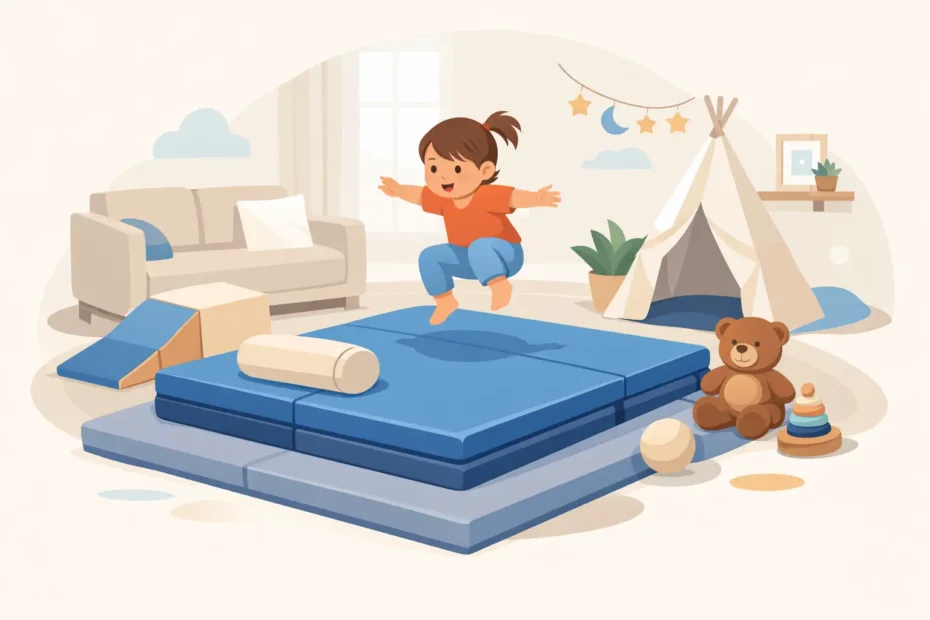
A toddler launching themselves off the sofa may look like everyday family life, but hard floors, sharp furniture edges and repeated tumbles can quickly turn active play into a worry. This guide to toddler crash mats helps parents, nurseries and playgroups choose practical soft landing protection that supports confident movement without filling the room with unsuitable equipment.
A good crash mat gives little ones a forgiving place to land while they crawl, roll, climb, balance and practise jumping. It is not a substitute for adult supervision, nor does it make unsafe heights safe. Used properly, however, it can make energetic indoor play far more manageable for children and far less stressful for adults.
Guide to Toddler Crash Mats: Start With the Job
The word “crash mat” covers more than one type of product. Some mats are designed for general floor play, some sit beneath climbing equipment, and others are made for gymnastic-style landing practice. The right choice depends on what your toddler is doing, where the mat will sit and how much impact it needs to absorb.
For early walkers and climbers, a mat placed beside a low foam step, slide or climbing shape is usually about reducing the impact of an accidental tumble. For a busy nursery or soft play corner, it may also define the play area, cushion group activity and protect the floor beneath. At home, it may need to fold away after use or fit neatly into a spare-room play set-up.
Be realistic about the activity. A thin padded play mat is useful for sitting, crawling and gentle rolling, but it is not the same as a deeper crash mat for landing from low climbing equipment. Equally, a very thick mat can make a toddler unsteady if it is used as the main surface for learning to walk. Match the mat to the job rather than simply choosing the biggest or softest option.
Choose the Right Thickness, Foam and Size
Thickness is one of the first details to compare. More depth generally provides more cushioning, but the best thickness depends on the height and type of equipment involved. For floor-based toddler play, a slimmer safety pad may be enough. For a low climbing frame, step-and-slide arrangement or active soft play set, a deeper foam mat gives better reassurance where little feet are likely to miss their landing.
Foam quality matters just as much as thickness. A mat that feels soft when brand new but compresses flat after regular use will not offer the support you paid for. Look for firm, resilient foam that cushions impact while returning to shape. This is particularly important in nurseries, preschools and commercial venues, where the same landing area may be used by dozens of children each day.
Size needs careful thought too. The landing zone should extend beyond the most obvious place a child is expected to land. Toddlers do not jump in straight lines, and a child stepping down from a foam block can easily wobble sideways. Measure the usable floor space, nearby walls and furniture, then consider the full movement around the equipment rather than its footprint alone.
At home, a compact mat may be the sensible choice if it can be repositioned easily. In a playgroup or nursery, a larger continuous padded area can reduce gaps between equipment and create a clearer active-play zone. Bespoke sizing is especially useful for awkward corners, wall-to-wall spaces and commercial layouts where standard dimensions leave exposed floor areas.
Think About Mat Height Around Equipment
A crash mat should sit securely against the equipment it is protecting. A gap between a slide, climbing shape or balance beam and the mat can become a trip point or expose hard flooring. On the other hand, a mat that is too high against a low platform can create an awkward step for small children.
Check the finished set-up from a toddler’s eye level. Can they climb on and off comfortably? Are there edges they could catch a foot on? Does the mat move when they land? These simple checks are more useful than relying on a product photograph alone.
Covers Should Be Tough, Wipe-Clean and Child-Friendly
Toddlers bring snack crumbs, muddy socks, paint, drink spills and the occasional nappy accident. A crash mat cover needs to cope with real family and setting use, not just look good on delivery day. Wipe-clean PVC-style covers are a popular choice because they are practical, easy to maintain and suited to frequent use.
Look closely at the construction. Strong seams, secure stitching and a durable zip arrangement all affect how well a mat stands up to daily handling. The foam should remain enclosed, and the cover should fit properly without loose material that can bunch up or become tempting for little hands to pull.
For shared environments, hygiene routines matter. Wipe mats down after busy sessions and clean spills promptly, following the supplier’s care guidance. Avoid soaking foam cores or storing mats while damp, as this can shorten their lifespan and create unpleasant odours. In a nursery, assigning a quick mat check to the daily opening routine makes it easier to spot damage before children arrive.
Colour is not only decorative. Bright colours can make a play zone feel inviting, while contrasting shades can help show the edge of a landing area. For commercial spaces, matching mats to existing soft play shapes, wall pads or brand colours creates a smarter, more professional finish. For home use, neutral or coordinated colours may work better in a lounge or shared family room. The best option is the one you will be happy to keep out and use often.
Safe Placement Makes a Bigger Difference Than You Think
Even the best toddler crash mat will not perform properly if it is placed on an unsuitable surface or allowed to slide around. Position it on level flooring, away from radiators, doors, hard furniture corners and busy walkways. If the mat is used below climbing equipment, make sure it covers the likely landing direction as well as the immediate base.
Avoid building tall towers of foam shapes beside a crash mat just because the landing feels padded. Toddlers are still developing judgement, balance and coordination. Keep climbing challenges low and age-appropriate, and change the arrangement as their confidence grows. A child who can scramble up a low block safely may not be ready for a higher platform or a fast slide exit.
Supervision remains essential. Mats reduce risk, but they cannot prevent collisions between children, stop unsafe behaviour or replace sensible boundaries. In group settings, separate very active climbing play from babies and younger toddlers who are crawling or sitting nearby. In the home, it is worth teaching simple routines: one child on the slide at a time, feet first, and no jumping from furniture.
Check the Mat Before Every Busy Play Session
You do not need a complicated inspection process, but a quick visual check is worth doing. Make sure the mat lies flat, seams are intact, the cover has no tears and there are no gaps between pads or equipment. If the foam feels unusually compressed, the cover is damaged or the mat slides repeatedly, remove it from use until the issue is resolved.
Commercial buyers should also consider how mats will be stored, moved and cleaned between sessions. Folding mats can save space, but repeated folding needs durable hinges and covers. Larger single-piece mats may offer a smoother landing surface, yet they need a dedicated storage area when not in use. There is no single correct format – it depends on available space and how often the equipment is moved.
Buying for Home, Nurseries and Soft Play Areas
Parents often need one or two mats that work around a compact indoor soft play set. Prioritise a sensible size, reliable foam, wipe-clean cover and a colour that suits your room. You may not need commercial-scale thickness, but do not compromise on secure construction simply to save a small amount.
Nurseries, schools and playgroups should think longer term. Daily use, multiple children and cleaning requirements place greater demands on the equipment. It is often better value to buy durable mats designed for repeated use than to replace light-duty products after a short period. Consider the full layout, including wall protection, floor coverage and safe routes between activity zones.
For commercial venues or unusual spaces, custom-made pads can be the smarter option. A properly measured mat can cover exposed floor around fixed equipment, fit beneath a bespoke climbing area and create a cleaner finish than several mismatched pieces. As a UK manufacturer, Softplay Toys4Kids can help customers plan made-to-measure soft play and safety padding around the space they actually have.
Price matters, especially when fitting out a nursery or creating a home play area on a budget. But compare what is included: foam depth, cover quality, dimensions, construction, delivery expectations and whether the mat is suitable for the intended activity. The cheapest option is not always affordable if it soon flattens, splits or fails to cover the landing area properly.
A toddler crash mat should give children room to try, tumble and try again while giving adults confidence that the play space has been planned with care. Choose for the activity, position it properly and keep it in good condition, and those everyday leaps can stay part of the fun.
Leave a Reply