
Durable High-Traffic Play Equipment: UK Buyer’s Guide
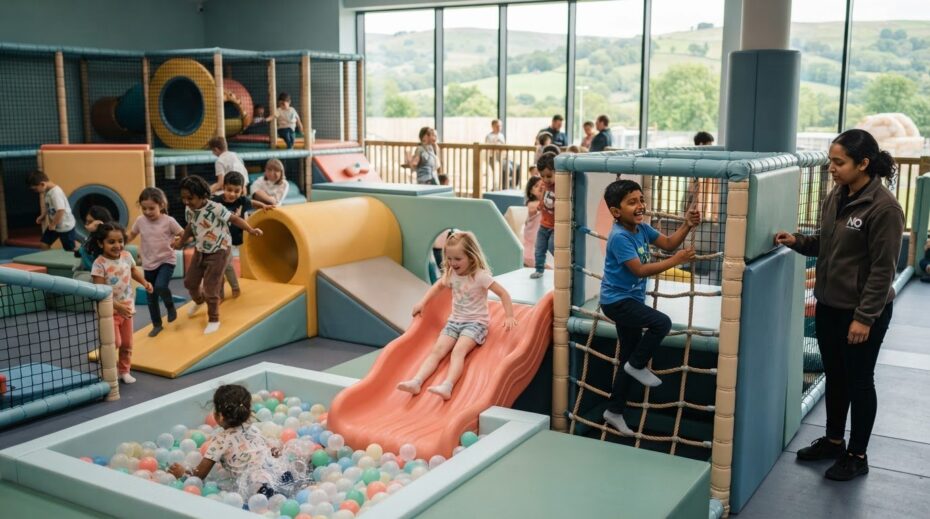
What if the busiest parts of your play area are also the first to show wear? In a school, nursery, playgroup or family venue, repeated use and regular cleaning put equipment through a demanding daily routine. Choosing durable equipment for high-traffic play areas means looking beyond appearance to construction details, upkeep and a layout that suits the children using it.
Equipment that feels safe, stays presentable and offers long-term value is easier to manage when it fits your daily routine. Start by identifying who will use the space, which areas will see the most activity and what your team can realistically clean, dry and inspect.
This guide explains practical ways to compare soft play equipment, plan easier-to-care-for areas and consider relevant safety guidance, including BS EN 1176. You’ll also learn how SoftplayToys4kids, a UK manufacturer and supplier based in West Yorkshire, supports larger projects with professional design and installation. From ball pits and play mats to safety padding, choose equipment with everyday play and regular upkeep in mind.
Key Takeaways
- Match equipment to both footfall and the type of activity it will face, rather than judging durability by appearance alone.
- Use a practical checklist to assess visible construction details, stability and whether padding suits the equipment’s purpose and layout.
- Build a repeatable care routine around product instructions, consistent cleaning, appropriate drying and regular inspection.
- Compare ball pits, play mats and safety padding as distinct options, matched to your venue, users, space and daily routines.
- Set clear project priorities before selecting durable equipment for high-traffic play areas, and consider how design and installation support can help with a larger project.
What makes equipment durable in a high-traffic play area?
Commercial durability isn’t simply a “heavy-duty” label. It’s how well play equipment suits its users, withstands repeated everyday use and fits the venue’s cleaning and maintenance routine. Rather than relying on a product description, consider how the equipment will be used and cared for in your setting.
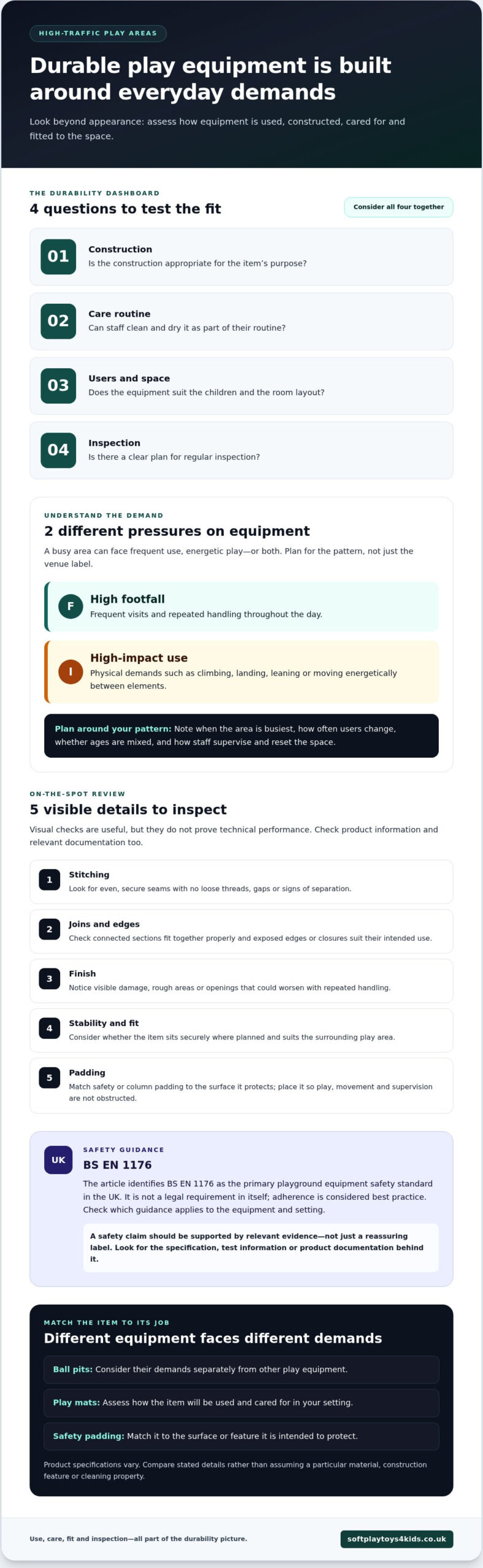
Start with four questions: Is the construction appropriate for the item’s purpose? Can staff clean and dry it as part of their routine? Does it suit the children and the space? Is there a clear plan for regular inspection? Durable equipment for high-traffic play areas needs to work within all four. A ball pit, for example, faces different demands from play mats or safety padding around a busy route.
Separate high footfall from high-impact use. Footfall means frequent visits and repeated handling throughout the day. High-impact use describes the physical demands of play, such as climbing, landing, leaning or moving energetically between elements. A setting may have many users but mostly gentle play, or fewer users whose activity puts more pressure on particular areas. Consider both patterns when choosing equipment and planning its position. Broader playground design and safety considerations also help put equipment choices in the context of the whole play environment.
Which UK play settings count as high traffic?
High traffic depends on the daily pattern, not just the venue label. A nursery may have regular use throughout the day, while a school or playgroup may see concentrated activity around sessions and breaks. An indoor play venue may welcome changing groups of visitors and varied activity across its operating hours. Each routine creates different demands, so one equipment choice may not suit every setting.
Before comparing options, note when the area is busiest, how often users change, whether children of mixed ages share the space, and how staff supervise and reset it. These details help identify which items are likely to be handled or used most often, and what your cleaning and inspection routine needs to cover.
What does durable soft play need to withstand?
Think beyond the moment of play. Children may crawl over, roll on, climb around and handle equipment as they move between activities. Staff may also reposition or store some items. Cleaning frequency and drying practices can affect an item’s condition over time, so match the equipment to your venue’s demands and plan care around the manufacturer’s instructions.
For a useful comparison, inspect how each item is put together and whether its form suits its intended use. Don’t assume a particular fabric, filling, seam or cleaning method is a feature of every product. Specifications vary, so assess the information for the item you’re considering. This helps you compare products on stated details rather than vague durability claims or the assumption that every soft play category is interchangeable.
Which construction and safety details should buyers inspect?
A product can look sturdy in a photograph and still leave important questions unanswered. When choosing durable equipment for high-traffic play areas, assess visible details, then use product information and relevant documentation to understand what a visual check cannot prove.
- Stitching: Look for seams that appear even and secure, with no loose threads, gaps or signs of separation.
- Joins and edges: Check that connected sections sit together properly and that exposed edges or closures are finished for their intended use.
- Finish: Look for a consistent finish and any visible damage, rough areas or openings that could worsen with repeated handling.
- Stability and fit: Consider whether the item sits securely in its planned position and whether its size and shape suit the surrounding play area.
- Padding: Match safety pads or column padding to the surface or feature they’re intended to protect. Position them so they don’t obstruct play, movement or supervision.
These are practical visual checks, not proof of a product’s technical performance. A safety claim should be supported by relevant evidence, not just a reassuring label. For example, look for the specification, test information or product documentation behind a stated performance claim. Don’t infer a particular fabric, foam type, rating or cleaning property from appearance alone.
How can you assess materials, seams and finishes?
Read the product description carefully and look for clearly stated construction and material details. If you can inspect a sample, examine the seams and joins closely, especially around areas likely to be handled or moved. Compare what you see with the product description. A consistent finish is useful to note, but a neat-looking seam alone can’t establish how an item will perform over time. Keep technical claims separate from your own visual observations.
How do safety and suitability fit into durability?
Equipment needs to suit the children who’ll use it. Consider their ages and abilities, the planned activity, and how each item fits with nearby play features. A durable item may still be unsuitable if its size or position doesn’t work for its intended users or the room layout.
In the UK, BS EN 1176 is the primary playground equipment safety standard; it isn’t a legal requirement in itself, but adherence is considered best practice. Check which guidance applies to the equipment and setting, and use RoSPA’s playground safety guidance as a reference. Durability doesn’t remove the need for suitable supervision and routine checks. Look regularly for visible damage or movement, and follow the equipment’s care and inspection instructions.
For a larger space, SoftplayToys4kids brings product choice and layout together through its design and installation service. Explore commercial soft play equipment with your venue’s users and daily routines in mind.
How do cleaning and maintenance affect long-term performance?
Even well-chosen play equipment needs sensible care to stay clean, presentable and ready for everyday use. A practical routine helps staff spot changes early and keep cleaning consistent through busy periods. For durable equipment for high-traffic play areas, maintenance is part of planning for reliable day-to-day use, not an afterthought.
Use this simple sequence as a starting point:
- Follow the care instructions. Keep product guidance accessible to the staff responsible for cleaning and checks.
- Clean consistently. Set a routine that reflects how often the space and equipment are used.
- Dry appropriately. Follow the product’s instructions before returning equipment to use or storage.
- Inspect and record. Note visible changes and make sure any concerns are passed to the right person.
Don’t assume every surface can be cleaned with the same products or method. Materials and construction differ, and an unsuitable approach may affect an item’s condition. Follow the instructions for each product instead of using one cleaning method for ball pits, mats and padding alike. The Association of Play Industries offers broader UK play-industry context, while product-specific care guidance should direct your daily routine.
How should a venue plan a regular cleaning routine?
Set a schedule that reflects the venue’s use and each product’s care instructions. A nursery, school, playgroup or indoor play venue may have different busy periods and reset routines, so make the plan fit how the space operates. Assign responsibility for cleaning, drying and recording issues between sessions or operating periods. Clear ownership helps prevent tasks being missed when staff change.
Keep instructions straightforward and available where staff can use them. If a product’s guidance doesn’t specify a cleaning method, don’t guess at chemicals or procedures. The aim is a repeatable routine that supports cleanliness without risking damage through inappropriate care.
What should staff check during routine inspections?
Build a quick visual check into the routine. Look for loose seams, damaged surfaces, shifted joins, displaced padding or other changes from the equipment’s normal condition. Record what was found and when, so recurring issues can be recognised and followed up.
If damage or movement could affect safe play, remove the item from use until it’s been appropriately assessed. Don’t improvise a repair with unapproved materials or methods. Consistent care and clear reporting help staff manage the play environment and equipment through the demands of everyday use.
How can you match durable play equipment to your venue?
The right choice depends on more than how often a space is used. Match equipment to the children who’ll use it, the activities you want to support, the available floor area and the care your team can manage. This makes it easier to choose durable equipment for high-traffic play areas without treating every product category as a substitute for another.
| Venue and users | Space and routine | Equipment considerations |
|---|---|---|
| Nurseries with young children using the area across the day | Plan for supervised activity, regular resets and any storage needs. | Consider mats for floor-based play, and padding where specific surfaces or columns need protection. |
| Schools and playgroups with activity concentrated around sessions or breaks | Allow clear routes between play elements and account for staff sightlines. | Choose items that fit the planned activities and can be cared for within the venue’s routine. |
| Indoor play venues with changing groups and varied activity | Consider busy periods, user turnover and access around play features. | A ball pit, mats and safety padding serve different purposes; assess each for its location and intended use. |
Placement matters. Equipment in a narrow route may be bumped or shifted more often, while crowding items together can make movement and supervision harder. Leave practical circulation space and consider what staff need to see across the area. For broader commercial planning, use an indoor playground equipment buyer’s guide alongside this venue-specific comparison.
What should nurseries, schools and playgroups prioritise?
Start with the children’s age range and abilities, then consider how sessions run, where equipment will be stored and how staff supervise play. A nursery may prioritise a layout for calm, floor-based activities, while a school may need to plan around defined play periods and shared space. Explore a durable soft play guide for schools and nurseries as a related planning resource, and select equipment according to the room and intended activities.
When does a custom-designed play area make sense?
Design support can be useful when a fixed room layout, several play zones, or specific circulation and supervision needs make equipment placement more complex. SoftplayToys4kids provides professional design and installation for larger projects, with an approach tailored to the venue and its requirements.
Planning a larger space? Explore custom play area design to bring your equipment choices and layout together.
Why choose a UK soft play manufacturer for a busy venue?
Choosing equipment for a busy setting is easier when you begin with a clear project brief instead of relying on a general “heavy-duty” claim. Set out who will use the area, how play happens throughout the day, what space is available, how equipment will be cleaned and which priorities matter most. This gives you a practical basis for comparing durable equipment for high-traffic play areas and selecting options that fit your venue.
What can SoftplayToys4kids support for commercial projects?
SoftplayToys4kids manufactures and supplies soft play equipment from its base in West Yorkshire, serving commercial organisations such as schools, nurseries and playgroups. Its range includes ball pits, play mats and safety padding, each with a different role in a play space. Choose products according to the activities you want to support, the people using the area and the available layout.
For larger projects, professional design support helps bring those decisions together, and installation teams set up the equipment on site. This is useful when planning a dedicated play area or fitting several elements into one room. Base the design on your venue’s users, use patterns, space and care routine rather than relying on a one-size-fits-all selection.
What information should you prepare before requesting a project discussion?
A concise brief turns day-to-day needs into useful project details. Include:
- Venue and users: Describe the setting and the ages or needs of the children who’ll use the space.
- Room dimensions: Share the available area and note fixed features or other site constraints that could affect the layout.
- Use patterns: Explain when the area is busiest, what activities you’re planning and whether users change throughout the day.
- Equipment priorities: List the categories you’re considering, such as ball pits, mats or safety padding, and what each needs to do in your space.
- Care routine: Outline how cleaning and routine checks fit into your venue’s operating day.
With these details in hand, you can focus the discussion on equipment selection and layout choices that support safe, enjoyable play and practical upkeep. As a UK manufacturer, SoftplayToys4kids brings product supply, professional design and installation support together for larger commercial projects. Discuss your commercial soft play project and take the next step with a brief shaped around your venue.
Build a play area ready for everyday use
Choosing durable equipment for high-traffic play areas starts with your venue’s real routine. Consider who will use the space and how, inspect visible construction details, and match equipment to the layout rather than relying on a “heavy-duty” label alone.
Plan care from the outset, too. Follow product-specific cleaning guidance, set a consistent routine and make regular visual checks part of day-to-day upkeep. These steps help you manage equipment thoughtfully while maintaining a clean, welcoming space for children’s play.
SoftplayToys4kids is a UK-based manufacturer and supplier serving commercial customers, including schools, nurseries and playgroups. For larger projects, professional design and installation teams bring equipment choices and the space together. Discuss your high-traffic play area project and take the next step towards a play space planned around your users, priorities and daily routine.
Frequently Asked Questions
What makes soft play equipment suitable for a high-traffic play area?
Suitable equipment matches the level and type of use, the children using it and the venue’s cleaning and maintenance routine. Consider both frequent footfall and more physical play, such as climbing or repeated movement between play features. Check how the equipment fits the layout, including circulation and supervision. Ball pits, mats and safety padding serve different purposes, so choose each category according to the activity and location.
How can I tell whether soft play equipment is durable?
Assess the construction details and look for clear product information rather than relying on a “heavy-duty” description. Inspect visible seams, joins, edges and finishes for consistency, and consider whether the item sits securely in its intended position. Product documents can explain specifications that aren’t visible during a visual check. Don’t assume a particular material, cleaning property or performance rating unless the product information specifically supports that claim.
How often should commercial soft play equipment be cleaned?
Set a cleaning schedule based on how often the equipment is used and the care instructions for each product. A venue with changing groups or concentrated busy periods may need a different routine from a setting with more predictable sessions. Follow product-specific instructions, clean consistently, dry as directed and record any issues noticed during care. Don’t apply one method or cleaning product to every item unless its guidance allows it.
What should I check before buying soft play equipment for a nursery or school?
Start with the children’s ages and abilities, planned activities, available room and the way staff supervise the area. Consider session patterns, storage and the cleaning routine, then match equipment to its intended use. Check visible construction and read product details for relevant specifications. Also plan circulation space so children and staff can move around play features. For a larger area, professional design and installation can help coordinate the layout.
Is custom soft play equipment better for a busy indoor play area?
Custom design can be helpful when a fixed room layout, multiple activity zones or particular circulation and supervision needs make equipment placement complex. It isn’t automatically the better choice for every venue; the best approach depends on users, space, activities and care routines. For larger projects, SoftplayToys4kids offers a professional design service and installation teams to help plan and set up commercial soft play areas.
How do I maintain soft play equipment used by lots of children?
Use a consistent routine: follow each item’s care instructions, clean as directed, dry appropriately and inspect for visible changes. Look for loose seams, damaged surfaces, displaced padding or movement, and record concerns so they can be followed up. If an issue could affect safe play, remove the equipment from use until it’s appropriately assessed. Avoid improvised repairs, as unsuitable materials or methods may create further problems.
Leave a Reply