Best Sensory Play Panels for Toddlers at Home
A toddler who has worked every slider, turned every cog and found the hidden mirror will happily return to the same activity wall again tomorrow. That repeat play is exactly why the best sensory play panels earn their place in a home, nursery or commercial soft play area. They give children a hands-on challenge without filling the floor with loose toys, while helping adults create a more purposeful play space.
A good panel is not simply something colourful to look at. It should invite touching, twisting, matching, moving and problem-solving at a child’s own pace. For busy parents, it can provide a focused activity during indoor afternoons. For nurseries and playgroups, it creates a durable station where several children can build early skills through independent play.
What makes the best sensory play panels worth buying?
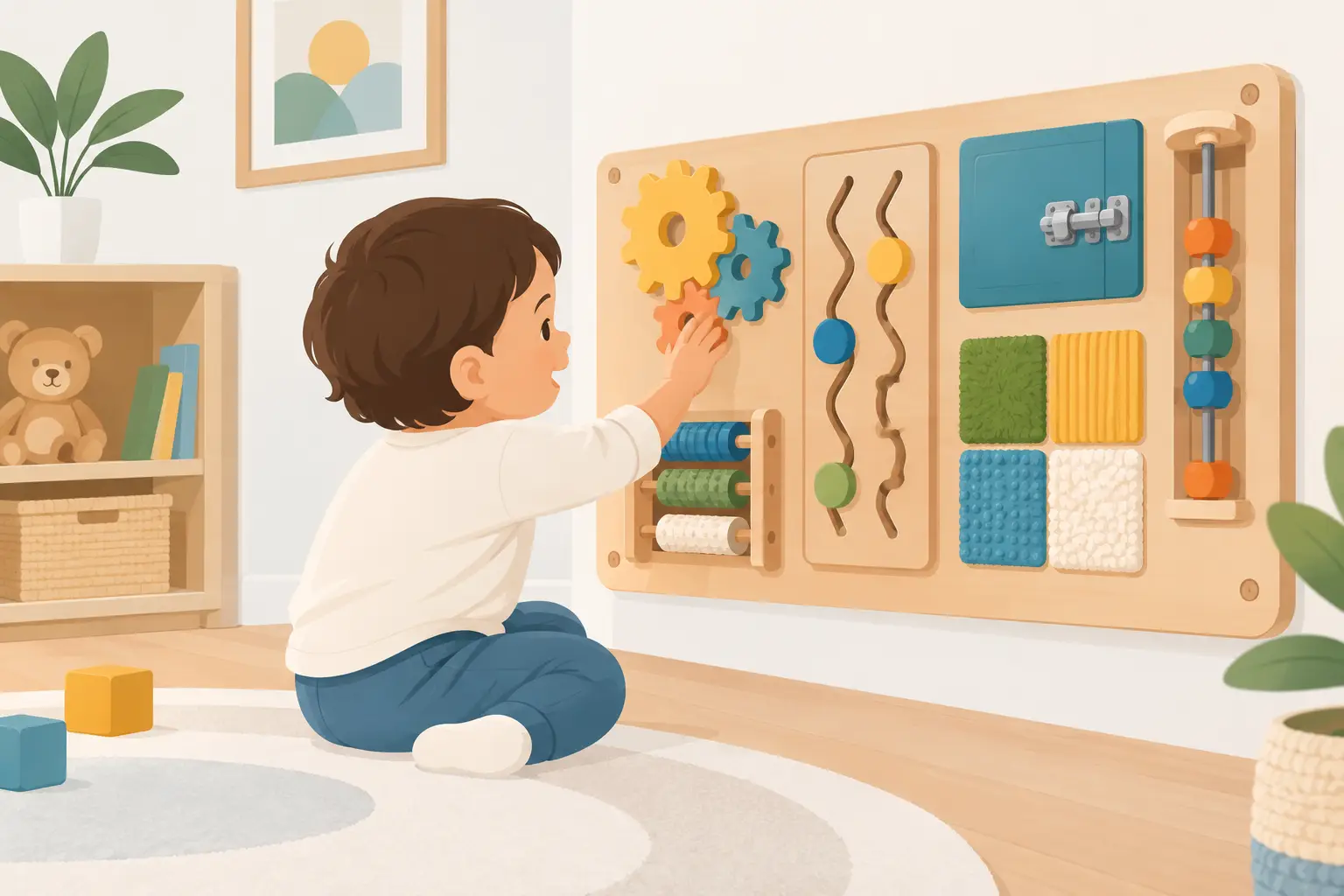
Sensory play works because children learn through their hands as much as their eyes. A panel with textures, spinning parts, tracks, latches, mirrors or shape activities encourages little ones to test cause and effect. They turn a wheel and something moves. They slide a bead and follow its route. They open a door and discover an image or a sound.
That sounds simple, but it supports several useful areas of development at once. Fine motor control improves as children grip, pinch and turn. Hand-eye coordination develops through posting, tracking and matching activities. Language can grow too, especially when an adult talks through what is happening: smooth, bumpy, fast, slow, open, shut and round.
The best sensory play panels also make practical sense where space is tight. Unlike a large freestanding toy, a wall-mounted activity can keep a play corner active without taking over the room. This is particularly useful in hallways, waiting areas, nursery rooms and soft play zones where every square metre matters.
There is a trade-off. A compact panel may suit a small home but offer fewer activities for older children, while a larger multi-panel installation can keep a group occupied but needs a suitable wall and careful positioning. Buy for the space you actually have, not the space you wish you had.
Choosing sensory play panels for your setting
Start with the child’s age and confidence. Babies and younger toddlers benefit from high-contrast colours, safe mirrors, simple textures and large, easy-to-hold features. Toddlers and preschool children often stay engaged for longer with moving gears, mazes, number activities, fastening tasks and picture-based games.
Avoid choosing a panel only because it has the most features. Too much visual activity can feel overwhelming, particularly for younger children or children who respond best to calm, predictable play. A well-designed panel with a few clear activities can provide more value than a crowded board with parts that are difficult to use.
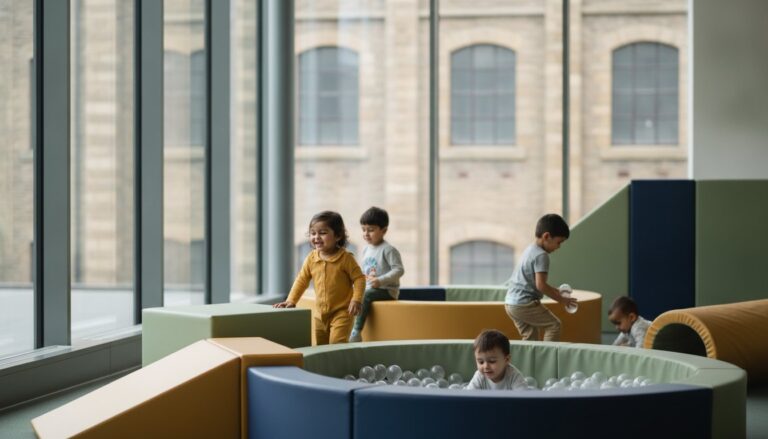
For a home playroom, think about whether the panel will be used alongside soft play shapes, a baby play mat or a ball pit. Colour coordination may matter if you want a neat, inviting area rather than a collection of mismatched equipment. For a nursery or commercial venue, consider how the panel will work as part of the whole room layout. It should add an activity point without creating a bottleneck by an entrance, fire exit or busy route.
Wall condition matters too. Panels must be fitted securely to a suitable surface using fixings appropriate to the wall type. A solid wall, stud wall and temporary partition do not offer the same fixing options. If you are planning a larger installation, measure carefully and ask about the panel dimensions, weight and fitting requirements before ordering.
Prioritise safe, hard-wearing construction
Children will pull, lean, spin, tap and test every component. That is the job. The panel needs smooth edges, securely fixed moving parts and materials that stand up to regular cleaning. Look closely at the finish, the strength of the fittings and whether small components are appropriate for the intended age group.
Commercial buyers should be especially realistic about use. Equipment in a nursery, school or soft play centre may be handled by dozens of children each day. Light domestic products can be perfectly suitable at home but may not offer the same longevity in a high-traffic setting. Spending a little more on stronger construction can reduce replacement costs and disruption later.
Cleaning is another buying factor that is easy to overlook. Choose surfaces that can be wiped down quickly as part of the daily routine. Textured features are valuable for sensory interest, but they should not be so intricate that they become difficult to keep hygienic.
Think about the type of sensory experience
Different panels offer different kinds of engagement. Visual features include bright colours, pictures, mirrors and moving objects. Tactile elements may include varied materials, raised shapes and grooves. Fine motor activities include locks, laces, sliders, cogs and turning mechanisms. Some products also introduce early learning themes such as numbers, letters, animals or everyday routines.
The strongest setups balance stimulation with choice. A child should be able to approach, explore and move away without pressure. This is particularly helpful in shared environments, where one child may be fascinated by a rotating wheel while another wants to trace a maze or look in a mirror.
If you support children with additional sensory needs, avoid assumptions about what every child will enjoy. Some children seek texture and movement, while others prefer a quieter, less busy activity. Offering a small variety of experiences, with room around the panel to step back, is often more useful than relying on one intense sensory feature.
Best sensory play panels for homes, nurseries and venues
There is no single best choice for every buyer. The right panel depends on the children using it, the available space and how often it will be used. In most cases, buyers fall into one of three practical routes.
A compact activity panel is often the sensible choice for a home. It provides a dedicated toddler activity without needing a full playroom refit. Position it at a comfortable height for the child, away from doors and furniture corners, and pair it with soft floor padding where needed. It can become a dependable option for rainy days, post-nap play and the moments when you need your child close by but happily occupied.
A themed or multi-activity panel suits nurseries, preschools and playgroups. It can support conversation, turn-taking and early learning while giving children a calm alternative to more physical play. In a classroom or nursery room, place it where staff can supervise easily without blocking access to tables, toilets or outdoor doors.
A larger run of panels is better suited to reception areas, soft play centres and commercial family venues. Multiple activities spread across the wall give more children something to do at once and make an otherwise unused surface work harder. Here, consistency matters: choose a supplier that can support durable equipment, clear product information and practical advice for a tailored layout.
Softplay Toys4Kids can help buyers who want to build a coordinated indoor activity area around soft play equipment, safety padding and bespoke colour choices. For commercial projects, planning the full space together usually produces a safer, smarter result than adding products one at a time.
Getting more value from a sensory panel
A panel should not become background decoration after the first week. Adults can keep it fresh by changing the way they talk and play around it. Ask a child to find the roughest surface, follow a moving piece with their finger, name a colour, or show how a mechanism works. These small prompts turn familiar activities into new challenges without buying more equipment.
In group settings, sensory panels are also useful for transitions. A child waiting for snack time, a turn outside or collection can use a simple activity productively rather than becoming restless. Keep the area uncluttered and avoid placing loose toys directly underneath, as this can create trip hazards and distract from the panel itself.
Inspect the equipment regularly. Check fixings, moving parts and surfaces for wear, particularly in commercial settings. Wipe down the panel often, follow the maker’s care guidance and act quickly if a component becomes loose or damaged. Reliable maintenance protects children and protects the value of your investment.
The right sensory panel gives children a reason to pause, investigate and try again. Choose one that suits their stage, fits your space securely and is built for the level of play it will receive, then let those busy little hands do what they do best.