
Why Buy Soft Play Direct for Home or Nursery?
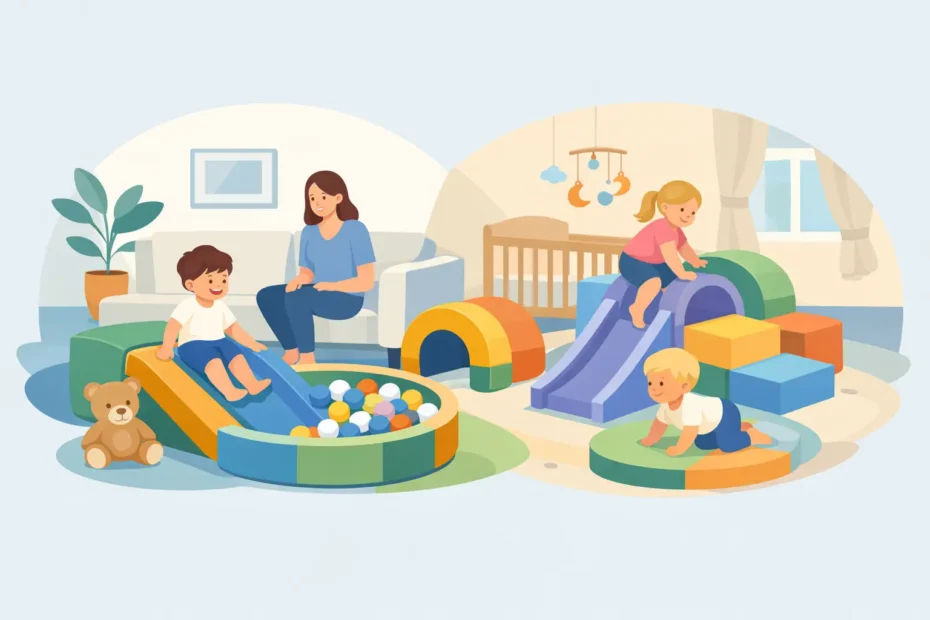
A toddler will not care whether a soft play set came from a high-street retailer or straight from the factory. They will care that the steps feel secure, the foam is comfortable to climb, the ball pit is irresistible and there is room to move. When you buy soft play direct, you can put your budget into the equipment children actually use, rather than paying extra layers of retail markup.
For parents, nurseries and commercial venues, buying direct also means clearer answers. You can discuss the space you have, the ages you cater for and the colours you want before choosing a set. That matters when every square metre needs to earn its place, whether it is a living room corner, a busy preschool room or a full commercial play area.
Why buy soft play direct rather than off the shelf?
Buying from a direct manufacturer gives you more control over the decision. Rather than settling for whatever size, colourway or bundle happens to be on a retailer’s shelf, you can choose equipment around your children, your room and your intended use.
The first benefit is value. A direct supplier has fewer steps between production and purchase, helping keep prices competitive without treating quality as an optional extra. This is especially useful for larger orders. A nursery fitting out a baby room, a playgroup replacing tired foam shapes, or a venue planning a new activity zone can make their budget go much further when buying in volume.
The second is choice. A small home setup may need a compact step-and-slide unit, a foldable baby play mat and a handful of soft shapes. A setting with twenty energetic children may need a larger ball pit, climbing blocks, balance beams, safety mats and wipe-clean seating. Direct supply makes it easier to build the right combination instead of buying a package with items you do not need.
Finally, you get a route to bespoke work. Standard products suit plenty of buyers, but unusual rooms and branded commercial spaces often call for custom sizes, specific colour combinations or protective padding made to fit. Factory-made equipment can be planned around those requirements from the outset.
Start with the children and the space
The best soft play purchase is not necessarily the biggest one. It is the one children can use safely and confidently, again and again. Before comparing products, consider the age range, number of children, available floor area and level of supervision.
For babies who are sitting, crawling and pulling up, low foam shapes, sensory-friendly play mats and small soft steps offer more value than a tall climbing arrangement. These pieces encourage reaching, rolling, balance and early movement without overwhelming a young child.
Toddlers tend to want repetition and challenge. They will climb up, slide down, carry shapes, hide behind blocks and start again. A step-and-slide set, tunnel, wedge, rocker and ball pit can turn limited indoor space into an active play zone. Look for pieces that can be rearranged, because changing the layout keeps familiar equipment interesting.
For nurseries and early years settings, think in zones. A quiet baby area needs a different setup from a high-energy gross-motor corner. Keeping crawling, climbing and role-play activities distinct can make the room easier to supervise and less chaotic during a busy session.
Commercial buyers need to look further ahead. Consider peak capacity, access routes, cleaning routines, wall protection, staff sightlines and how the equipment will cope with daily use. A cheaper product that cannot stand up to a packed Saturday is rarely the cheaper choice over time.
Measure before you order
Measure the usable space, not just the room. Doors, radiators, storage cupboards, fire exits and adult walkways all affect what will fit. Allow space around active climbing pieces so children are not stepping directly into furniture or another play activity.
Ceiling height is equally relevant for larger commercial structures and taller installations. If you are planning a bespoke area, share accurate measurements and photographs with the supplier. A short conversation before production can prevent an expensive compromise later.
Safety, materials and cleanability matter
Soft play should feel carefree for children and reassuring for adults. That starts with suitable foam, durable covers, tidy finishing and equipment designed for its intended setting. Domestic soft play and commercial soft play can look similar at first glance, but the required durability may be very different.
Parents should choose wipe-clean surfaces that cope with everyday spills, snack fingers and enthusiastic play. Nurseries and venues should prioritise materials that support frequent cleaning between sessions and resist the wear that comes with high footfall. Ask practical questions about cover materials, foam density, joining methods, replacement options and the care guidance for each item.
Edges and joins deserve attention too. Soft shapes should sit securely during play, and floor protection should be adequate for the activity taking place. In commercial areas, safety pads and post protectors are not decorative extras. They help create a properly considered environment around hard surfaces and structural features.
No piece of soft play removes the need for sensible supervision. Children develop at different rates, and even familiar equipment needs age-appropriate use. Set clear expectations, keep the area free of hard toys and inspect equipment regularly for damage or loose fittings.
Choose a set that can grow with you
A one-piece purchase can solve an immediate need, but modular soft play usually offers better long-term value. A few quality shapes can become a crawl route for a baby, an obstacle course for a toddler or part of a structured activity for a nursery group.
This flexibility matters when space changes. Families may move the setup from a playroom into a conservatory, or pack portions away when visitors arrive. Early years settings may rotate equipment to refresh children’s interest. Commercial operators may adapt areas for different age groups, parties or quieter weekday sessions.
Ball pits are a good example. They can be a main attraction in a home setup, but they also work as part of a larger activity area. Consider access height for the youngest users, the floor space needed around the pit, the number of balls required and how you will clean and store them. A pit that is too small for a group can quickly become frustrating, while an oversized pit may consume valuable room.
Colour is more than a finishing touch. Soft neutral palettes suit many homes, while bright colours can create an energetic, clearly defined play area. Nurseries may prefer colours that match their rooms or support their visual identity. For commercial venues, custom colourways can help the equipment feel like part of the brand rather than an afterthought.
When bespoke soft play is worth it
Bespoke production is not only for large indoor play centres. It is often the sensible answer when a standard product leaves awkward gaps, blocks a route or fails to make good use of a valuable corner.
A custom ball pit can fit a particular wall length. Made-to-measure safety mats can protect a tricky floor area. Bespoke foam shapes can create a themed zone, support a programme of physical development activities or meet the dimensions of a preschool room. The trade-off is that custom orders need more planning than ready-to-dispatch stock, so it pays to decide early and provide accurate information.
For a commercial project, discuss the whole environment rather than buying item by item. Installation, floor layout, access, padding and maintenance should work together. Softplay Toys4Kids combines direct supply with UK-made bespoke production in West Yorkshire, giving buyers a practical route from initial measurements to a finished play area.
A direct-buying checklist that prevents costly mistakes
Before placing an order, make sure you can answer these questions:
- Who will use the equipment, and what ages and abilities do they have?
- What are the exact usable floor and ceiling measurements?
- Is the setup for occasional home play or repeated commercial use?
- How will you clean, inspect, store and supervise the equipment?
- Do standard sizes work, or would a bespoke solution save space and improve the layout?
It is also worth comparing like for like. A lower headline price does not always include the same quality of foam, cover finish, delivery arrangements or customer support. Check what you are actually receiving, then compare competitors before you buy. A price-beater guarantee can give buyers confidence that they are getting a strong deal without cutting corners.
Make the purchase work harder
Once the equipment arrives, give it a proper place rather than treating it as another pile of toys. Use soft mats to define the play boundary, rotate shapes every few weeks and keep a simple cleaning routine. For nurseries, build short climbing, balancing and movement activities into the daily schedule so the set supports learning as well as letting off steam.
The real value of direct soft play is not simply a lower price. It is the ability to choose equipment that fits real children, real rooms and real budgets. Measure carefully, buy for the use it will get and choose a supplier ready to help when your ideas go beyond a standard box.
Leave a Reply