
How to Clean Soft Play Equipment: 2026 Hygiene Guide
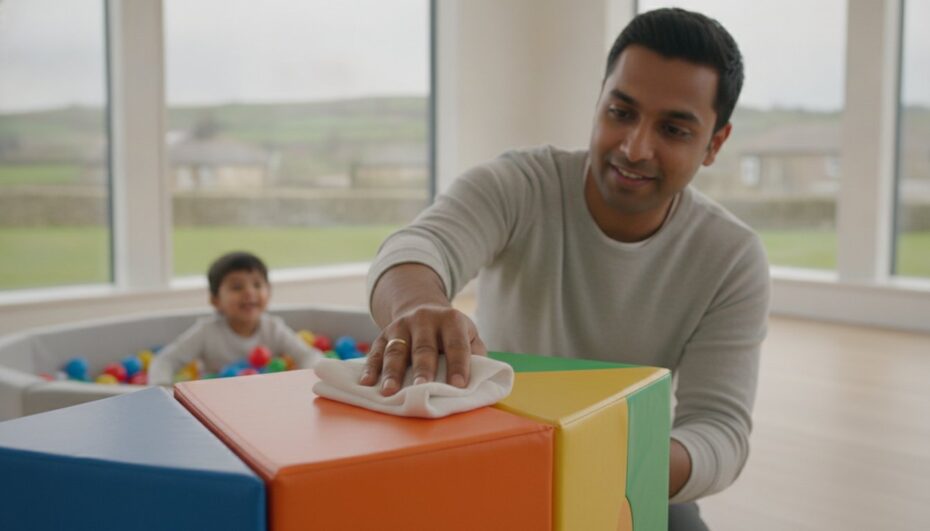
Did you know that by 2026, over 80% of UK households now use disinfectants weekly, yet most parents still worry they’re accidentally ruining their children’s favourite toys? You’ve likely stood over a ball pit after a busy Saturday morning, wondering if your standard kitchen spray will crack the PVC or if those hundreds of balls are secretly harbouring a week’s worth of nursery germs. It’s an overwhelming thought. We understand that your child’s safety is your absolute priority; you want a play area that stays as vibrant and hygienic as the day it arrived from our West Yorkshire factory.
Learning how to clean soft play equipment at home doesn’t have to be a daunting chore that eats up your entire weekend. In this 2026 hygiene guide, we’re sharing our professional, factory-direct secrets to sanitising your equipment without damaging the medical-grade surfaces. You’ll master a simple, repeatable routine that eliminates bacteria while keeping your mats and ball pits looking brand new. We’ll walk you through the latest UK-approved child-safe cleaners, the ultimate ball pit cleaning hack, and how to preserve high-density foam for years of safe, energetic play.
Key Takeaways
- Discover the “No-Go” list of harsh chemicals that can ruin medical-grade PVC and identify the best UK-approved, child-safe alternatives for 2026.
- Master the professional, step-by-step process for how to clean soft play equipment at home to ensure a germ-free environment without damaging the high-density foam.
- Learn our time-saving “laundry basket hack” to sanitise hundreds of ball pit balls and deep-clean the hidden debris from the base of your play area.
- Unlock the secret to PVC conditioning that prevents cracking and fading, keeping your handmade equipment looking brand new for years to come.
- Understand how the durable, handmade seams of our West Yorkshire products allow for a more effective and repeatable cleaning routine than mass-produced alternatives.
Why Regular Hygiene is Essential for Your Home Soft Play
Your child’s soft play area is a sanctuary for joy, but without a routine, it quickly becomes what experts call a “microbe magnet.” Soft play surfaces are designed for tactile exploration, which means they constantly come into contact with sticky fingers, crumbs, and natural skin oils. While our medical-grade PVC is specifically chosen for its easy-wipe properties, these oils can build up in the handmade seams and textured surfaces. This creates a perfect environment for bacteria to thrive if ignored. We take immense pride in our West Yorkshire manufacturing process, and we want your gear to stay in factory-fresh condition for as long as possible.
Beyond hygiene, regular maintenance is about protecting your financial investment. Dirt and sweat aren’t just unsightly; they contain salts and acids that can degrade PVC over time, leading to premature cracking or loss of that signature vibrancy. By following professional playground safety standards even in a domestic setting, you ensure your equipment remains durable for years. Understanding how to clean soft play equipment at home is the best way to safeguard both your child’s health and your wallet. It’s the difference between equipment that lasts a single season and gear that survives the entire toddler phase.
A clean indoor play area acts as a vital barrier against common nursery-age illnesses. Viruses and bacteria can linger on surfaces for hours or even days. By establishing a “hygiene-first” mindset, you create a safe zone where play is the only thing that’s contagious. It gives you the peace of mind to let them dive, climb, and crawl without a second thought.
The Difference Between Cleaning and Sanitising
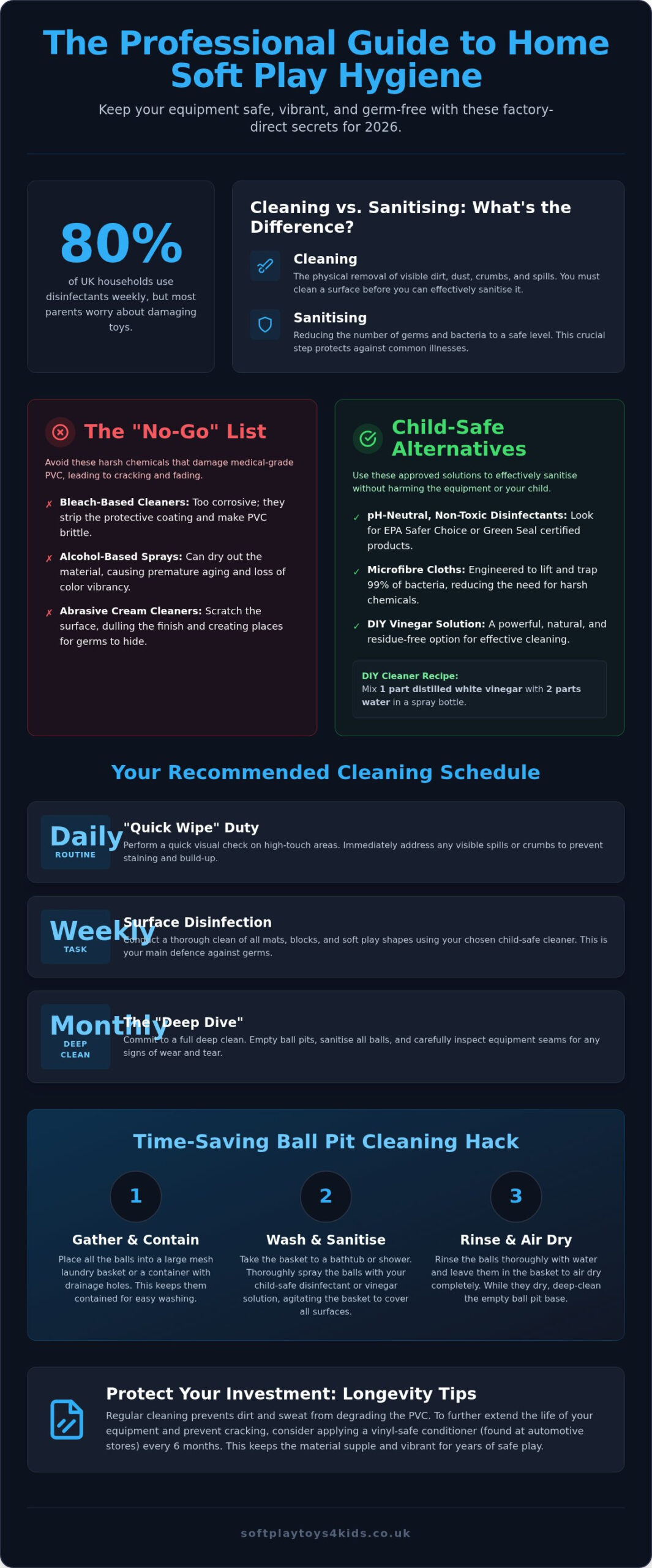
It’s a common mistake to use these terms interchangeably, but they serve very different purposes. Cleaning is the process of removing visible dirt, such as dust, crumbs, or those inevitable juice spills. Sanitising goes deeper by reducing the number of germs on the surface to a level that’s safe for children. To master how to clean soft play equipment at home, your routine must involve both. You can’t effectively sanitise a surface that’s still covered in visible grime, as the dirt provides a shield for the bacteria underneath.
Setting a Cleaning Schedule
Consistency is the secret to a germ-free home. You don’t need to spend hours every day, but a structured approach makes the task manageable. Use this simple frequency guide to stay on top of the mess:
- Daily: Perform a “Quick Wipe” on high-touch areas and address visible spills immediately to prevent staining.
- Weekly: Conduct a thorough surface disinfection of all mats, blocks, and shapes using child-safe cleaners.
- Monthly: Commit to a “Deep Dive.” This involves emptying the ball pit, sanitising each ball, and inspecting the durable seams of your equipment for any signs of wear.
Choosing the Best Child-Safe Cleaning Products
Selecting the right supplies is critical for maintaining the integrity of your equipment. You wouldn’t use sandpaper on a luxury car’s paintwork, so why risk your child’s play area with harsh chemicals? Understanding how to clean soft play equipment at home starts with a strict “No-Go” list. Bleach, alcohol-based sprays, and abrasive cream cleaners are banned. These substances are too aggressive; they strip the protective coating from medical-grade PVC, leading to brittle surfaces and unsightly cracks. In our Bradford factory, we choose materials for their durability, but even the toughest PVC can’t withstand the corrosive nature of industrial bleach.
In 2026, the trend has shifted toward smarter, safer chemistry. Many UK parents now look for pH-neutral, non-toxic disinfectants that meet the EPA Safer Choice or Green Seal standards. These certifications ensure the product is effective against germs but gentle on skin and respiratory systems. For a truly chemical-free approach, white vinegar diluted with water remains a powerhouse. It’s naturally antimicrobial and won’t leave behind a toxic residue that could irritate a toddler’s sensitive skin. Pair your cleaner with high-quality microfibre cloths. These cloths are engineered to lift dirt and trap 99% of bacteria within their fibres, removing the need for heavy scrubbing that might damage our handmade seams.
DIY Cleaning Solution Recipe
You can create a professional-standard cleaner using items already in your pantry. Mix one part distilled white vinegar with two parts lukewarm water in a spray bottle. This balanced solution is perfect for daily maintenance. Before you commit to a full wipe-down, always perform a “Spot Test” on a hidden area, such as a bottom seam. This ensures the solution won’t react with the specific pigment of your equipment. A vital warning: never add essential oils to your mix. While they smell lovely, many oils act as natural solvents that can permanently soften or “melt” the PVC surface over time.
The Danger of Abrasive Tools
Scouring pads and stiff-bristled brushes are the ultimate enemies of soft play mats and shapes. These tools create micro-scratches on the surface. These tiny grooves then become “hiding spots” for the very bacteria you’re trying to eliminate. Stick to soft, non-scratch sponges for stubborn stains like dried juice or felt-tip marks. Once you’ve finished cleaning, use a lint-free towel to dry the area completely. This prevents water spots and ensures the equipment is ready for immediate use. If you’re looking to upgrade your setup, our factory-direct play equipment is designed with these easy-clean principles in mind.
Step-by-Step: How to Clean Soft Play Equipment at Home
Ready to transform your play area? Mastering how to clean soft play equipment at home is simple when you follow a professional, factory-approved sequence. Our West Yorkshire craftsmen design these products for heavy use, but a systematic approach ensures they stay in peak condition. Don’t just dive in with a wet cloth; start by vacuuming the entire area. Use a soft brush attachment to lift loose debris, crumbs, and hair from every crevice. This step is vital because wiping over grit can cause micro-scratches on the medical-grade PVC, dulling that beautiful factory shine over time.
Once the loose dirt is gone, it’s time for the surface wipe. Never spray your cleaning solution directly onto the equipment. Instead, apply it to a microfibre cloth until damp. This prevents excess liquid from pooling around the seams. Speaking of seams, our handmade stitching is incredibly durable, but it can trap fine dust. Use a soft-bristled toothbrush dipped in your cleaner to gently detail these areas. After cleaning, the rinsing phase is non-negotiable. Wipe everything down with a fresh cloth dampened only with water. This removes soap residue which, if left behind, creates a “tacky” surface that actually attracts more dirt. Finally, allow for total air drying. It’s tempting to let the kids back in immediately, but moisture trapped between mats can lead to mildew.
Handling Spills and Accidents
When an accident happens, the “Golden Rule” is to act fast. Fast action prevents pigments from juice or food from bonding with the PVC, especially on lighter-coloured equipment. If you’re dealing with bodily fluids, safety is the priority. Use a UK-approved, child-safe disinfectant to sanitise the area immediately. If a spill is heavy enough to reach the foam through a zip or seam, don’t panic. You can deodorise the foam by lightly misting it with a mixture of water and bicarbonate of soda. Just remember: never submerge the foam inserts, as they will trap moisture and lose their structural integrity.
Cleaning Large Foam Shapes
Cleaning larger items like tunnels, wedges, or soft play blocks requires a bit more care. Focus on wiping the covers thoroughly while keeping the internal foam dry. We strictly advise against machine washing foam inserts; the heat and agitation will destroy the high-density structure we use for safety. For awkward shapes like tunnels, ensure you wipe the interior thoroughly, as these are prime spots for hidden dust bunnies. Prop these items up in a well-ventilated room to ensure they dry from every angle before being returned to the play zone.
The Ball Pit Challenge: Sanitising Balls and Pits
Let’s be honest; the thought of cleaning hundreds of individual balls is enough to make any parent want to close the playroom door and forget about it. However, the ball pit is often the high-traffic heart of your play zone, making it a priority for hygiene. We’ve developed a system that turns this mountain of a task into a manageable routine. Start by emptying the pit using a pop-up laundry basket. These are inexpensive, breathable, and allow you to move large volumes of balls in seconds. Once the balls are cleared, you’ll likely find the “treasure chest” at the base; a collection of crumbs, hair, and the occasional lost sock that has migrated to the bottom. Vacuuming this area is essential before you begin the wet cleaning phase.
To solve the biggest headache, we recommend the “Net Bag” hack. Instead of wiping each ball, place them into large mesh laundry bags and submerge them in a bathtub or shower. This is the most efficient way to handle the volume while ensuring every surface is reached. It’s a game-changer for anyone learning how to clean soft play equipment at home without losing their sanity. After a thorough rinse, spread the balls out on a large, clean towel on the floor. Use the “towel-roll” method by having two people hold the ends of the towel and gently agitate the balls back and forth. This dries 500 balls in a fraction of the time it takes to air dry them individually.
Deep Cleaning the Ball Pit Structure
While the balls are drying, focus on the pit structure itself. Wipe down the internal walls and pay special attention to the Velcro connectors. These connectors are durable, but their “hook and loop” design can trap lint and dust over time. Check the base mat for any signs of dampness or rips in the PVC. Because ball pits are often the most used item, they require a full deep clean every 4 to 6 weeks to maintain the high standards of safety we build into every product. If your current setup is looking a little tired after years of play, explore our range of ball pits, all handmade in our West Yorkshire factory for maximum durability.
Efficient Ball Sanitisation
For total peace of mind, use a mild sterilising solution like Milton during the soaking phase. To achieve the optimal sanitisation level for ball pits, use a ratio of 30ml of Milton sterilising fluid to 5 litres of cold water. This ensures the balls are germ-free without leaving a residue that could be harmful if a child puts a ball in their mouth. If the British weather allows, air drying the balls in the sun is a brilliant natural way to boost disinfection, as UV rays provide an extra layer of antimicrobial protection. Just don’t leave the PVC covers in direct sunlight for too long, as we’ll discuss in the next section.
Ready to refresh your child’s favourite play space? Browse our UK-manufactured ball pools to find a high-quality, easy-clean solution for your home.
Maintaining Your Equipment for Maximum Longevity
You’ve mastered the art of hygiene, but how do you ensure your investment survives the high-energy demands of a growing toddler? Most parents stop at the wipe-down, but the secret to long-lasting gear is preservation. In 2026, we recommend a simple “conditioning” step. Every six months, apply a petroleum-free PVC protector to the covers. This keeps the material supple and prevents the microscopic drying that leads to cracks. When you understand how to clean soft play equipment at home, adding this five-minute step can double the life of your mats and pits. It’s about more than just germs; it’s about maintaining that factory-fresh feel for years to come.
Environmental factors are just as important as your cleaning routine. While it’s tempting to set up a play zone in a sunny conservatory, UV exposure is the primary cause of colour fading. Direct sunlight also speeds up the chemical breakdown of the medical-grade PVC. Similarly, temperature control is vital. Avoid storing your equipment in damp garages or freezing sheds; extreme cold makes PVC brittle, while dampness can encourage mould inside the foam. even when you know how to clean soft play equipment at home, poor storage can undo all your hard work. Our handmade UK equipment is designed for the British climate, but it thrives best in a stable, indoor environment.
Monthly Safety and Wear Checks
Consistency is key to a safe play environment. Once a month, take a few minutes to inspect the tension in the seams. Our durable, handmade stitching is built to last, but heavy use can eventually cause stress points. Check your Velcro connectors too; if they’ve lost their “grip” strength, use a fine comb to remove trapped lint. If you spot a tiny puncture or tear, address it immediately with a PVC repair patch to prevent the hole from growing. Most importantly, feel the foam. If it feels soft or “bottoms out” when pressed, it’s no longer providing the impact protection your child needs for safe play.
Why Quality Manufacturing Matters
The difference between a cheap import and our Bradford-made products lies in the quality of the materials. We use high-density foam that maintains its structural integrity for years, whereas lower-quality alternatives often sag or flatten within months. Our medical-grade PVC is specifically engineered to resist staining and bacterial growth far better than standard vinyl. It’s a professional-standard material that makes your weekly cleaning routine significantly easier and more effective. Upgrade your play area with our durable, easy-clean soft play sets today!
Ready to Transform Your Child’s Play Zone?
You now have the professional toolkit to keep your home play area spotless and safe. By choosing the right pH-neutral cleaners and mastering the systematic wipe-and-rinse method, you’ve taken the guesswork out of hygiene. Mastering how to clean soft play equipment at home isn’t just about removing germs; it’s about preserving the joy and vibrancy of your child’s favourite environment for years to come. From the “net bag” ball pit hack to monthly seam inspections, these simple habits ensure your equipment remains in factory-fresh condition.
Why settle for anything less than the best? Our equipment is handmade in our West Yorkshire factory using medical-grade PVC for superior hygiene. It’s the same durable quality trusted by UK nurseries and schools across the country. We take pride in every stitch so you can take pride in your home. Invest in easy-clean, professional-grade soft play for your home and enjoy the peace of mind that comes with premium craftsmanship. Your child deserves a germ-free space to explore, climb, and grow. Start your new routine today and watch their play area shine!
Frequently Asked Questions
How often should I clean my home soft play equipment?
You should wipe high-touch areas daily and perform a deep sanitisation weekly. For a full ball pit clean, every 4 to 6 weeks is the gold standard for hygiene. Since you’re learning how to clean soft play equipment at home, consistency is your best friend. Regular maintenance prevents the build-up of bacteria and keeps your medical-grade PVC looking vibrant. It’s much easier to stay on top of daily spills than to tackle a month of stubborn grime.
Can I put ball pit balls in the washing machine?
We don’t recommend putting ball pit balls in the washing machine because the heat and high-speed spin can warp or crack the plastic. Instead, use the mesh bag hack we mentioned earlier. Submerge the balls in a bathtub with a mild sterilising solution. This method is far safer for your equipment and ensures every single ball is thoroughly sanitised without the risk of mechanical damage or broken toys in your machine.
What is the safest disinfectant for baby soft play?
The safest options for baby play areas are pH-neutral, non-toxic disinfectants like Milton sterilising fluid or a simple white vinegar and water solution. Avoid anything containing bleach or harsh alcohols, as these can irritate sensitive skin and damage the PVC surface. Always look for UK-approved products that meet the 2026 safety standards. This ensures your child stays safe while they explore their handmade play mats and sensory shapes in a germ-free environment.
How do I get rid of the “new plastic” smell from soft play?
That “new plastic” smell is perfectly normal for freshly manufactured medical-grade PVC. To get rid of it quickly, simply air the equipment out in a well-ventilated room for 24 to 48 hours before use. Avoid using strong perfumes or essential oils to mask the scent, as these can damage the material over time. Once the equipment has had time to breathe, the smell will naturally dissipate, leaving only a fresh, clean play environment for your children.
Is it safe to use a steam cleaner on soft play PVC?
You should never use a steam cleaner on soft play PVC. The high temperatures can melt the medical-grade covers and cause the high-density foam underneath to degrade or lose its shape. Stick to lukewarm water and a soft microfibre cloth to maintain the structural integrity of your gear. Our Bradford-made products are designed for easy wiping, so you don’t need extreme heat to achieve a professional level of hygiene in your own home.
How do I clean soft play mats without them becoming slippery?
Mats usually become slippery when soap residue is left behind after cleaning. To prevent this, always follow your cleaning phase with a thorough rinse using a cloth dampened only with plain water. This removes the “tacky” film that attracts dirt and creates a slick surface. Drying the mats completely with a lint-free towel before play begins is another vital step in keeping your play area safe and slip-free for your energetic toddlers.
What should I do if my child has an accident in the ball pit?
If an accident happens, act immediately by removing all balls from the affected area and placing them in a separate container for sanitisation. Clean the ball pit base with a child-safe disinfectant and ensure the PVC is completely dry before returning the balls. If the spill reaches the foam through a seam, use the bicarbonate of soda trick to deodorise it. Knowing how to clean soft play equipment at home during these moments keeps the environment safe.
How can I stop the Velcro on my soft play from getting dirty?
To keep your Velcro strips clean, use a fine-toothed comb or a small, stiff brush to flick out trapped lint, hair, and dust. Keeping the “hook and loop” connectors clear ensures they maintain their strong grip, which is essential for the stability of your play structures. It’s a quick task that should be part of your monthly deep-clean routine. This small bit of maintenance helps our West Yorkshire handmade equipment stay secure and safe for years of play.
Leave a Reply