
Indoor Soft Play for Toddlers: UK Buying Guide
Indoor Soft Play for Toddlers: UK Buying Guide
What if the best indoor soft play equipment for toddlers isn’t the biggest set, but the one that suits your child and the space you have? Choosing equipment can feel tricky: you want pieces that match your toddler’s abilities, fit comfortably at home or in a nursery, and come with clear information about quality and care.
The right setup can make room for active play without taking over the whole room. Soft play mats, ball pits and sensory toys offer different ways to explore, move and imagine, but age guidance, dimensions and construction all matter when you compare options.
This UK buying guide explains how to compare toddler-friendly equipment, measure your usable floor space and check safety, material and cleaning details before buying. You’ll also learn why a home play corner and a nursery play area may call for different choices, and how to plan a space that works for everyday play. Use the checklist to make a considered choice for your child, room and routine.
Key Takeaways
- Match soft play to your toddler’s abilities and the product’s stated age guidance, rather than relying on age alone.
- Measure your usable floor space and consider storage before choosing indoor soft play equipment for toddlers.
- Compare foam shapes, mats, ball pits and combined sets by their play options, care instructions and setup needs.
- Check product instructions, condition and placement, and actively supervise play. Soft surfaces don’t remove every risk.
- Choose individual pieces for a simple home setup, or explore professional design and installation support for a larger play area.
Toddler Soft Play Equipment: Features and Uses
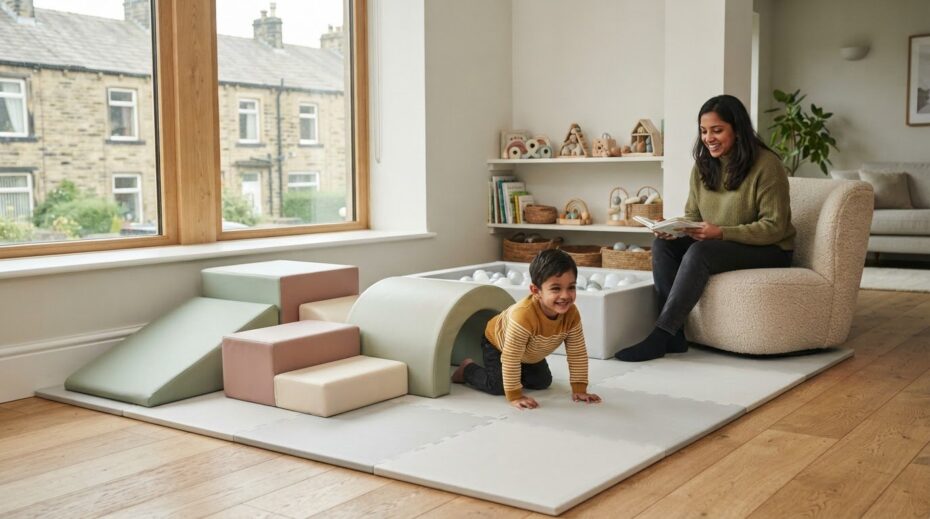
Toddler soft play is cushioned equipment that gives young children a place to move, explore and make up games with an adult close by. A simple setup might be a mat and a few soft shapes; a larger play area could include several features. The aim is to offer play options that suit the child and setting, not to fill every available corner. For broader background, this overview of the role of play in child development looks at the place of play in children’s lives.
Which soft play pieces are commonly used for toddlers?
Foam shapes, steps and wedges offer different ways to practise moving, climbing or changing direction. Tunnels invite children to crawl through and explore. Mats can provide a floor layer or define a play surface, but check the product instructions rather than assuming every mat suits every setup. Ball pits and sensory toys are optional additions, not essentials. Choose pieces for the play opportunities your toddler enjoys and can manage, and follow the stated age guidance.
How does home soft play differ from a nursery setup?
At home, start with the floor area you can dedicate to play, where equipment can be stored, and how it fits around household routines. Leave room for adults to supervise and for children to move without blocking everyday routes. For a nursery, consider repeated use, cleaning routines, access and the needs of the setting. These are different planning questions: a setup that works in a family playroom may not suit a shared environment.
Whatever the setting, check age recommendations, inspect items for wear or damage, and supervise play. Soft equipment doesn’t remove the risks associated with falls or unsuitable arrangements. Follow the product instructions, and reassess the setup as your child’s abilities and use of each piece change.
For a broader introduction before comparing specific options, read What is Soft Play? A Beginner’s Guide for Parents. SoftplayToys4kids, a Bradford-based UK manufacturer and supplier, offers soft play mats, ball pits and sensory toys for families and commercial settings. For a larger project, professional design and installation support is available. Check the scope and terms for your setting.
Choosing Soft Play by Age, Ability, and Space
To choose indoor soft play equipment for toddlers, consider your child’s needs and room layout before comparing products. Age labels are a starting point, not a guarantee that a piece will suit every child. Developmental readiness and confidence vary. Follow each product’s stated age guidance and instructions, then consider how your toddler actually moves and plays.
A practical selection process
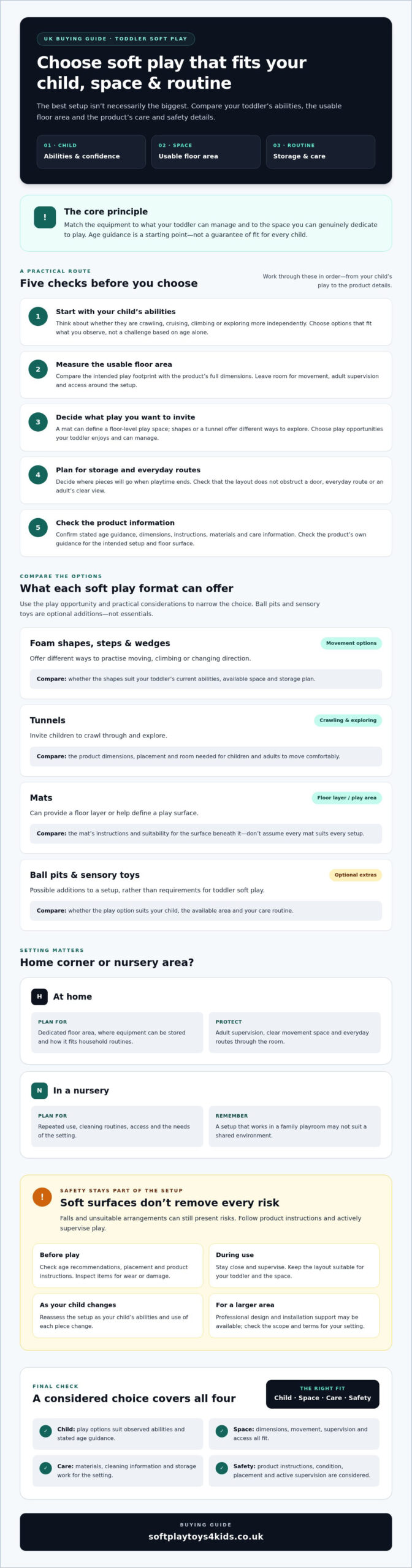
- Start with your child’s abilities. Are they crawling, cruising, climbing or exploring more independently? Choose play options that fit what you observe, rather than selecting a challenge based on age alone.
- Measure the usable floor area. Check the intended play footprint, then compare it with the product’s full dimensions. Allow space for movement, adult supervision and access around the setup.
- Decide what kind of play you want to invite. A mat may define a floor-level play space, while shapes or a tunnel offer different ways to explore. Treat these as play opportunities, not promised developmental outcomes.
- Plan for storage. Decide where pieces will go when playtime ends and whether they’ll need to be moved around household routines.
- Check the product details. Confirm age guidance, dimensions, instructions, materials and care information before choosing. For general safety context, consult RoSPA play safety guidance alongside the manufacturer’s product-specific information.
Making a small indoor play area work
Measure the space you can genuinely dedicate to play, not just the room’s total size. A setup might fit on paper but still obstruct a door, everyday route or clear view from where an adult will supervise. Sketching the proposed footprint can help you spot these problems before buying. Keep the layout simple enough for children and adults to move comfortably.
Consider the floor surface as well. A mat may help define the play area, but its suitability depends on the product instructions and the surface beneath it. For related considerations, see The Ultimate Guide to Choosing the Perfect Baby Play Mat.
Fit depends on the child, the product guidance and the usable space. If you’re comparing options, browse soft play mats, ball pits and sensory toys as possible pieces for a home setup.
Compare toddler soft play formats, materials, and everyday practicality
The best format depends on your available space and how you want playtime to work. Use this comparison to narrow down options for indoor soft play equipment for toddlers, then check the exact product listing and instructions before deciding. Footprint, storage and care requirements can vary between products, even within the same format.
| Format | Footprint and storage | Play options | Cleaning and adult setup |
|---|---|---|---|
| Foam shapes | Separate pieces can be arranged in different ways, but their combined footprint and storage needs depend on the number and size of shapes. | Can offer different ways to move, climb or explore, depending on the pieces and the child’s abilities. | Check the permitted cleaning method for each piece. An adult may need to arrange the shapes and check how they sit together. |
| Mats | Measure the mat itself and consider where it can be stored or left in place. | Provides a distinct floor surface or defined play area. It isn’t a substitute for choosing suitable play equipment. | Follow the product’s care instructions and confirm how it should be positioned on your floor. |
| Ball pits | Allow for the pit’s full dimensions and the surrounding space needed to access it. | Adds a ball-filled play option, but isn’t essential to every setup. | Check instructions for care of the pit and balls, and what adult preparation or supervision is expected. For more considerations, read The Ultimate Guide to Ball Pits for Kids: Safe & Fun Play. |
| Combined sets | Consider the overall arrangement, not just the space taken by one component. Storage depends on every included piece. | Bring multiple play options together in one setup. | Verify every component, its measurements, cover details and care instructions. Check what assembly or adult arrangement is involved. |
Compare covers and care details
Don’t assume two products with similar shapes use the same materials or cover construction. Check the specific listing for stated materials, whether covers are removable, and which cleaning methods the manufacturer permits. Confirm claims such as “washable”, “stain-proof” or “antibacterial” in the product details rather than inferring them from appearance.
Make everyday care part of your comparison. Look for instructions on checking seams, fasteners and surfaces, and follow any guidance for routine inspection. Separate foam shapes may be rearranged, but check how they connect, whether they’re intended to be used together and where each piece will be stored. A mat serves a different purpose, while a combined set calls for checking every component. Comparing these details can make the play area easier to manage from setup through cleanup.
Toddler soft play safety: checks to make before and during play
Soft construction can make a play area feel more reassuring, but it doesn’t guarantee injury prevention. A cushioned surface doesn’t remove every risk associated with falls, height or the way equipment is arranged. Check the product and setting rather than relying on appearance or a broad safety claim.
What product details should you verify before buying?
Before choosing indoor soft play equipment for toddlers, check the product’s stated age range, full dimensions, materials, any weight limits and intended-use instructions. Ask the supplier for supporting evidence behind certification or safety claims. Make sure the evidence relates to the exact product, not a similar item or a general range.
Standards depend on the equipment and setting. In the UK, BS EN 1176-1:2017+A1:2023 covers general requirements for public playground equipment, BS EN 1176-10:2023 addresses fully enclosed play equipment, and BS EN 1177 concerns impact-absorbing surfacing. These aren’t interchangeable labels, and a standard for a larger play structure may not apply to a small home item. For toys, check the product’s relevant safety information, including any claimed EN 71 conformity. Confirm which standards and requirements apply to your particular product and setting using current authoritative guidance.
How should adults prepare and supervise a play area?
Use this quick checklist before and during play:
- Read the instructions. Set up the equipment as directed and keep it within its stated intended use.
- Check age guidance. Make sure the product is intended for your child’s age range, and consider their abilities as well.
- Inspect before use. Look for damage, loose or insecure parts, worn seams and changes that could affect stability.
- Check placement. Keep the arrangement stable and away from obstacles or routes that need to remain clear.
- Stay close and supervise actively. Watch how your toddler uses the equipment and intervene if the setup shifts or play moves beyond the product’s instructions.
Remove damaged or unstable pieces from use until they’ve been properly assessed or replaced. In a nursery or commercial setting, confirm the applicable requirements for the site and its equipment rather than assuming home-use guidance is sufficient.
For a larger play area, ask SoftplayToys4kids about soft play options and verify the product details and any design or installation support relevant to your setting.
Choose a toddler soft play setup and take the next step
Bring the decision back to your child’s everyday routine. A single mat, ball pit or sensory toy may suit a home play area where space is limited and equipment needs to fit around family life. A nursery or larger commercial setting may need a planned layout that accounts for intended users, access and ongoing care. Choose equipment you can use and manage confidently.
Use this shortlist before you decide
- Use case: Is the equipment for home, a nursery or another commercial setting?
- Child’s abilities: Does the play option suit how your toddler currently moves and explores?
- Floor area: Have you measured the usable space and allowed for access and supervision?
- Care needs: Do the product’s cleaning instructions work with your routine?
- Verified details: Have you checked age guidance, dimensions, materials, intended use and any safety claims for the exact product?
Compare shortlisted options against these points, including how often the equipment will be used. If a listing leaves a detail unclear, ask the supplier to clarify it before ordering. SoftplayToys4kids is a UK manufacturer based in Bradford, West Yorkshire, serving families and commercial settings with soft play mats, ball pits and sensory toys.
Explore soft play equipment from SoftplayToys4kids and compare the options with your checklist.
When could a larger play area benefit from planning support?
If you’re planning a nursery or larger commercial play area, professional design advice may help you consider the layout as a whole rather than choosing pieces one at a time. Before making an enquiry, prepare your room measurements, intended users, access details and cleaning needs. SoftplayToys4kids offers design and installation support for larger projects. Check the scope and availability for your specific setting.
For a final product shortlist, compare suitable formats against usable space, age guidance, care instructions and expected frequency of use. See indoor soft play options for toddlers and confirm any remaining product questions before you order.
Make space for play with confidence
The right indoor soft play equipment for toddlers should suit your child’s current abilities, fit the space you can use and work with your everyday care routine. Compare formats, follow each product’s age guidance, and check dimensions, materials and instructions before choosing. Soft surfaces can support indoor play, but they don’t replace careful setup and active supervision.
A single piece may be enough for a home play corner, while a nursery or larger commercial area may benefit from a planned layout. SoftplayToys4kids is a UK-based manufacturer and supplier in Bradford, West Yorkshire, serving home and commercial customers. Design and installation support is available for larger projects. Confirm the scope and availability for your setting.
Ready to explore options for your space? Explore soft play equipment from SoftplayToys4kids. With a clear plan and the right product checks, you can create a welcoming place for little ones to move, explore and enjoy play.
Frequently Asked Questions
Is indoor soft play equipment suitable for toddlers?
It can be suitable if the specific product is intended for your toddler’s age and abilities, set up as instructed and used with adult supervision. Before buying, check the stated age guidance, dimensions, materials and relevant safety information. Soft construction doesn’t remove every risk, so keep the play arrangement appropriate, inspect it regularly and stop use if you find damage or instability.
What indoor soft play equipment is best for a toddler?
There isn’t one best format for every toddler. Choose indoor soft play equipment for toddlers by considering how your child currently moves, the floor space available and the play options you want. Foam shapes, mats, ball pits and combined sets serve different purposes. Compare each product’s dimensions, age guidance, care instructions and storage needs, then select an option that fits your child and routine.
How much space do you need for toddler soft play?
The space required depends on the equipment’s full dimensions and how you plan to arrange it. Measure the usable floor area, not just the room, and leave clear routes for access and enough room for an adult to supervise. Check the manufacturer’s setup instructions too. Avoid arrangements that obstruct doors, walkways or everyday household activities, even if the equipment appears to fit within the measured area.
Are foam soft play sets easy to clean?
Cleaning requirements vary by product, cover and material, so check the manufacturer’s care instructions before buying. Confirm whether the cover is removable and which cleaning methods are permitted. Don’t assume every set is machine washable or suitable for the same cleaning products. During routine care, inspect seams and surfaces for wear or damage, and follow the supplier’s guidance if you’re unsure how to clean a particular part.
What should I check before buying soft play equipment for a toddler?
Check the product’s age guidance, dimensions, materials, intended use, setup instructions and cleaning details. Consider whether it fits the available room, can be supervised easily and has a practical storage place. If a listing makes a certification or safety claim, ask the supplier for evidence that applies to the exact product. For a nursery or commercial setting, verify any additional requirements that apply there.
Can toddlers use soft play equipment without supervision?
No. Toddlers should be actively supervised while using soft play equipment. Follow the product instructions and age guidance, keep the play arrangement suited to your child’s abilities, and inspect the equipment before use. Soft padding isn’t a guarantee against falls or other injuries. Stay attentive, and stop play if a piece is damaged, unstable or being used in a way that goes beyond its instructions.
Is soft play equipment suitable for a nursery as well as a home?
Some suppliers serve both home and commercial customers, but a product suited to a home may not meet a nursery’s needs. Consider frequency of use, cleaning routines, layout, supervision and requirements specific to the setting. Check the details of each product and ask the supplier to clarify suitability. For a larger project, professional design and installation support may be available. Confirm its scope and availability before planning.
Leave a Reply