
Large Foam Play Blocks for Building: How to Choose
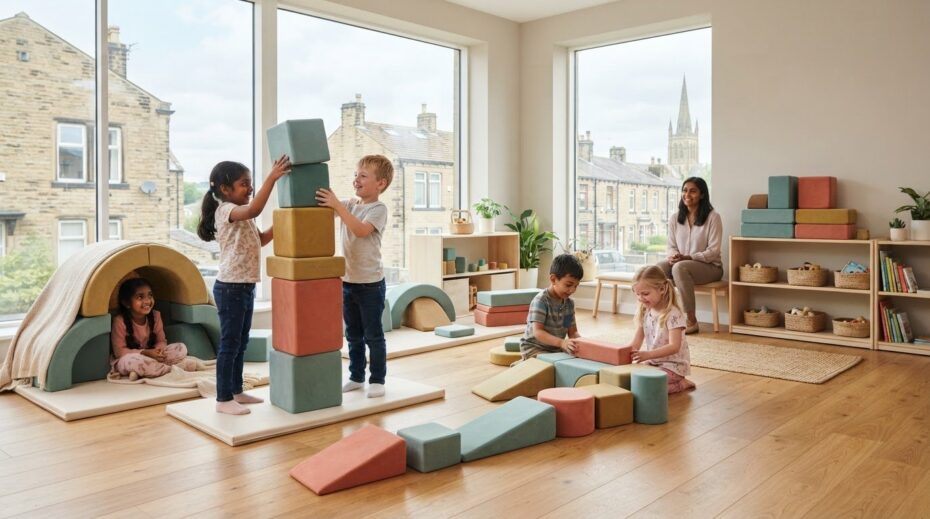
What if the biggest set isn’t the best fit for your child or your room? Choosing large foam play blocks for building is about more than creating impressive towers. The right setup should suit the children using it, leave room to move and be manageable to put away afterwards.
It’s understandable to wonder how many blocks you need, how to arrange a build and what to consider for your child’s age. This guide shows you how to compare block size, shape and quantity, and plan for the play area, storage and adult supervision.
You’ll also find practical pointers on cleaning and choosing between home and shared settings such as schools or nurseries. SoftplayToys4kids manufactures soft-play products in West Yorkshire, including ball pits and mats. For larger soft-play projects, the team offers design and installation support to help bring the wider play area together. Read on to plan a setup that encourages creative play and fits the way your space is used.
Key Takeaways
- Large foam play blocks for building can become towers, pathways and imaginative play spaces that children reshape as they play.
- Plan by identifying who’ll play, measuring the usable area, deciding where blocks will be stored and considering how they’ll be used.
- Compare large blocks with smaller construction toys and fixed play equipment to choose the right scale and style of play for your space.
- Follow the product’s care instructions, dry pieces as directed and check regularly for visible damage.
- For a larger soft-play project, SoftplayToys4kids offers design and installation support alongside its soft-play products.
What can children build with large foam play blocks?
Large foam play blocks are soft-play pieces children can move and arrange into simple structures. A few blocks might become a tower, a pathway across the floor or a pretend vehicle. With imaginative play, the same pieces can form a shop, a house or a den for make-believe adventures.
The appeal is the freedom to change the plan. Unlike a kit designed around one finished model, open-ended blocks can be stacked, spread out, rearranged and rebuilt as a child’s ideas evolve. For general background on different block types and their place in play, see this overview of toy blocks.
What makes large foam blocks different from small construction toys?
Small construction toys are designed for handling individual components and joining them into detailed models. Large foam blocks are movable soft-play pieces that children can arrange as part of a room-scale build. Depending on the pieces and the space, play may involve carrying, placing and working together rather than concentrating on small connections. Neither format is automatically better. Choose according to the child, the play activity and the room.
Which kinds of building play can they encourage?
Children might stack blocks into a tower, line them up as a pathway, or arrange them into a pretend bus or play shop. An adult can encourage planning without taking over: “What are you making?”, “Where should this piece go?” or “What could you change?” These prompts leave children room to lead, adapt and rebuild.
Building together can create opportunities to take turns, share ideas and solve simple problems, though what children gain will vary. Before play, clear enough floor space for the planned activity and supervise in a way that suits the children, pieces and build. A tall or wide structure may call for a different approach from a low pathway. Play value depends on more than the blocks: it also reflects who is using them, what pieces are available, how much room there is and how an adult supports the activity.
That flexibility makes large foam play blocks for building a creative option for home or shared play spaces. Start with a simple idea, then let the children decide what it becomes next.
How to choose large foam play blocks for your child and space
Start with how the blocks will be used, not simply how many pieces come in a set. Are they for one child, siblings, a nursery group or a shared play environment? The answer affects how much open floor space to set aside, how often the pieces will be used and how easily they need to be moved or stored. If soft play is new to you, this soft play beginner’s guide offers a helpful introduction.
Use this simple framework to plan your choice:
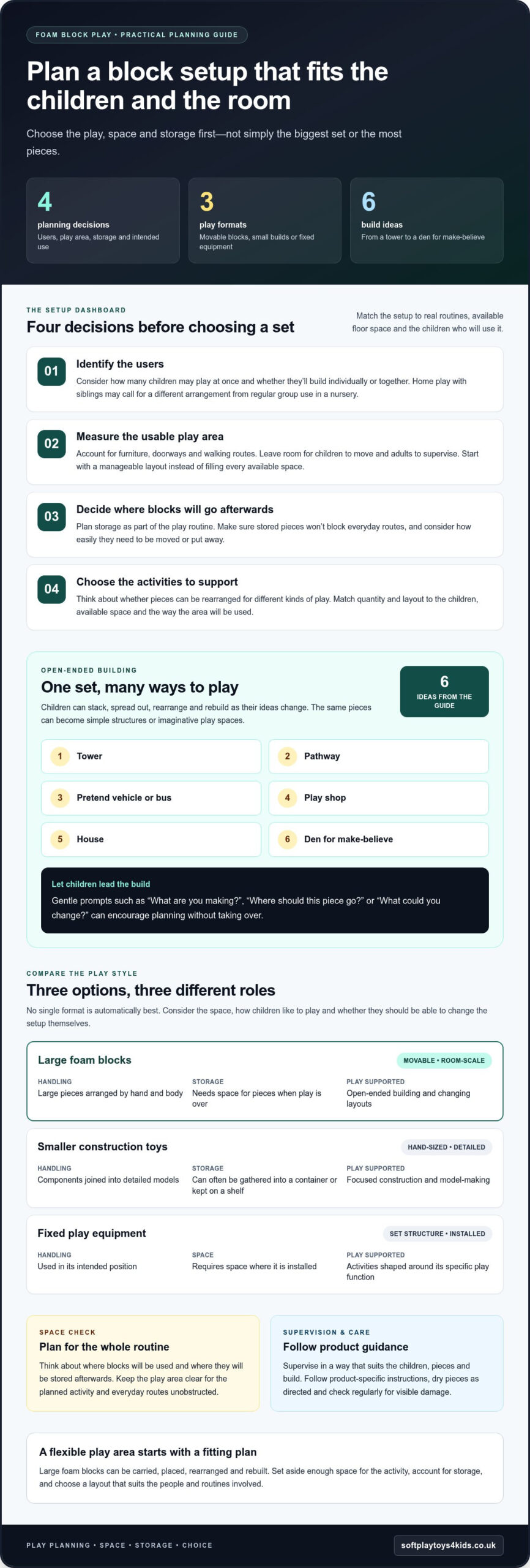
- 1. Identify the users. Consider how many children may play at once and whether they’ll build individually or together.
- 2. Measure the play area. Mark the usable floor space, leaving room for children to move and adults to supervise.
- 3. Plan storage. Choose where the pieces will go after play and make sure they won’t block everyday routes.
- 4. Consider the use. List the activities you want to support and think about whether the pieces can be rearranged for different kinds of play.
How much room do large foam blocks need?
Measure the area where children will build, then account for nearby furniture, doorways and walking routes. Plan for the full play routine: where the blocks will be used and where they’ll be stored afterwards. Start with a manageable layout rather than filling every available space. Clear floor space makes it easier for children to arrange pieces and for adults to keep the activity in view.
What should parents and settings consider before choosing?
At home, you may be planning for siblings and occasional play. In a nursery or group setting, more children may use the area regularly. Match the quantity and layout to the people and routines involved instead of assuming one arrangement suits every space. Follow the product-specific instructions and supervision guidance, and keep the play area clear for the planned activity.
Flexibility matters, too. Pieces that can be rearranged may support different activities without needing a new layout each time. Block play can offer opportunities to practise planning, problem-solving and cooperation, as described in the NAEYC’s overview of the developmental benefits of block play; what children take from play will vary. When planning soft-play ideas for your space, consider how blocks could work alongside the rest of the play area.
Foam building blocks versus other toys: what matters most?
There’s no need to choose one kind of play equipment for every activity. Large foam blocks, smaller construction toys and fixed play equipment each offer a different way to play. The best fit depends on the available space, how children like to play and whether you want a setup they can change themselves.
| Play option | Scale and handling | Storage needs | Play it can support |
|---|---|---|---|
| Large foam blocks | Large, movable pieces arranged by hand and body | Needs space for pieces when play is over | Open-ended building and changing layouts |
| Smaller construction toys | Hand-sized components joined into detailed models | Can often be gathered into a container or kept on a shelf | Focused construction and model-making |
| Fixed play equipment | A set structure used in its intended position | Requires space where it is installed | Activities shaped around its specific play function |
Are foam blocks better than wooden building blocks?
Not universally. Large foam pieces suit room-scale arranging, while wooden blocks are often used for smaller tabletop or floor builds. Consider the child, the activity and the space: a compact area may favour pieces that are easy to gather, while an open play area may allow a larger, collaborative layout. Material alone doesn’t determine which option is right.
When do large blocks work better than a complete play set?
Choose large foam play blocks for building when the appeal is making a layout from scratch, then changing it as play develops. A complete play set is usually organised around a particular play function, while movable blocks let children decide how to arrange and use the space. One doesn’t have to replace the other; blocks can complement equipment designed for a different activity.
For broader planning, the soft play equipment buying guide can help you consider how different pieces work together. If you’re planning for a venue, explore the indoor playground equipment guide for a wider view of the play environment. Compare options by their purpose and footprint, then choose a mix that suits the space and the play you want to encourage.
How to use, store and care for foam play blocks
A simple care routine helps keep play areas orderly and makes it easier to spot when a piece needs attention. Always follow the product’s care and inspection instructions, as cleaning methods can vary. A practical sequence is: use as directed, clean according to the instructions, allow each piece to dry fully, then return it to its designated storage area.
For large foam play blocks for building, make putting them away part of playtime. Children can help return pieces with adult support, while adults check the blocks as they tidy. Keep the storage spot accessible but out of everyday walking routes, so equipment doesn’t spill back into the room once play has finished.
How can you keep a block-play area organised?
Set a clear boundary for building play and keep routes through the room unobstructed. Use the same tidy-up routine each time, such as returning pieces to one chosen area before moving on to another activity. Adjust how many blocks are in use to suit both the floor space and the storage area. A smaller layout can be easier to manage than spreading every piece across the room.
What should you check during routine care?
Follow the manufacturer’s care and inspection instructions for each product. Look over the pieces for visible damage as part of regular tidying. If you find a damaged piece, remove it from play until appropriate action has been taken. In nurseries and venues, include these checks in the setting’s existing equipment routine rather than leaving them until the room is being prepared for a special activity.
- Follow the instructions: Use only the cleaning and care methods specified for that product.
- Dry fully: Make sure pieces are completely dry before putting them away.
- Store neatly: Return blocks to their designated place and keep routes clear.
- Check regularly: Look for visible damage and act according to the product guidance.
A consistent routine makes the play space easier to reset for the next day or activity. It also helps adults notice when a piece needs attention, without assuming that all foam blocks can be cleaned or stored in the same way. For soft-play products that suit your wider play area, explore soft-play options.
Choose a soft-play partner for your large foam building project
A good choice brings together four practical considerations: who’ll use the blocks, how much floor space is available, where the pieces will be stored and what kind of play you want to encourage. Keeping these points in view can help parents and organisations choose a setup that feels enjoyable and manageable, rather than simply filling a room with equipment.
SoftplayToys4kids is a UK-based soft-play manufacturer and supplier, making handmade soft-play products in West Yorkshire for families, schools, nurseries and playgroups. The range includes products such as ball pits and mats, and the team offers design and installation support for larger soft-play projects. This support can help bring a wider layout together, so equipment fits the space and its everyday requirements.
When is professional play-space planning useful?
A nursery, school or larger venue may need a play area to work for different activities and routines, not just one building session. Planning the layout as a whole helps clarify where children will play, how adults will oversee the space and how equipment fits together. SoftplayToys4kids provides design and installation support for larger soft-play projects, helping organisations plan around their space and intended use.
The right level of planning depends on the scale of the play area. A family choosing pieces for a room at home can start by working through floor space and storage. A shared setting may have more equipment and everyday use patterns to account for, making joined-up planning a useful step.
What are the next steps for parents and organisations?
Before exploring options, jot down a few details. They’ll help you focus on what suits your setting:
- Users: Who will play, and will the blocks be used individually or in a group?
- Space: How much clear floor area can you set aside while keeping routes through the room open?
- Storage: Where will the pieces go when play is finished?
- Daily use: For an organisation, how will the area fit into regular activities and room routines?
These notes give you a practical starting point, whether you’re planning a small home play area or a broader soft-play project. Explore soft-play options and consider how they could support the play you want to create.
Make room for creative, flexible play
The right large foam play blocks for building should suit the children who’ll use them, the available space and the kind of play you hope to encourage. Think beyond the build itself: plan where pieces will be stored, keep the play area clear and follow product-specific care and supervision guidance.
Blocks can complement other toys and play equipment rather than replace them. Their strength is flexibility: children can reshape a play space, while fixed equipment supports more specific activities. For a larger project, a joined-up layout can help make the most of the room and its intended uses.
SoftplayToys4kids is a UK-based manufacturer creating handmade soft-play products in West Yorkshire. The team provides design and installation support for larger soft-play projects. Ready to plan a playful space for home or a shared setting? Explore soft-play options for your space and take the next step towards joyful, imaginative play.
Frequently Asked Questions
Can toddlers play with large foam building blocks?
Toddlers may be able to play with some large foam building blocks, but suitability depends on the specific product, the child and the play setting. Check the manufacturer’s age guidance, instructions and supervision recommendations rather than assuming every block is suitable for every age. Stay attentive during play and choose an uncluttered area where pieces can be moved without obstructing doors or everyday routes.
Are large foam play blocks safe for children?
No toy can be described as safe in every situation. Follow the product’s instructions, age guidance and supervision recommendations, and use blocks only as directed. Check pieces regularly for visible damage, and keep the play area clear of hazards. In a nursery, school or other group setting, include the blocks in the organisation’s equipment and supervision procedures. Adjust oversight to the children and activity.
How many large foam blocks do I need?
There’s no single ideal number; it depends on who’ll play, the room and the activities you have in mind. Measure the usable floor area, leave room to move around the build and decide where blocks will be stored. At home, a manageable selection may suit the space and tidy-up routine. For a group setting, plan a layout around shared use and the available room.
How do you clean foam play blocks?
Clean foam play blocks according to the care instructions supplied with the specific product. Cleaning methods can differ, so don’t assume a block can be washed or treated with a particular cleaner unless its instructions say so. Follow the recommended approach, let pieces dry as directed and look for visible damage during routine care. Put them away only as advised by the product guidance.
Are large foam blocks suitable for nurseries and schools?
They can be considered for group play when the products, layout and supervision suit the children and setting. Plan for the number of users, available floor space, storage and the organisation’s day-to-day routines. Follow each product’s instructions and relevant current guidance. For a larger play-space project, professional design and installation planning can help bring the wider layout together around how the area will be used.
How do foam building blocks compare with wooden blocks?
Foam and wooden building blocks differ in scale, handling and the play spaces they suit. Large foam pieces can be arranged into room-scale soft-play builds, while smaller wooden blocks are often used for more compact construction activities. Neither is universally best. Consider the child’s interests, the intended activity, available floor space, storage and the instructions for the specific product before choosing.
Can large foam play blocks be used in a small room?
They may suit a small room if you plan the usable floor area, movement routes and storage before play. Measure the space and keep doors and everyday pathways unobstructed. Start with a manageable number of pieces rather than filling the room, then put them away after play following the product’s care instructions. The layout should leave enough clear space for children to play and adults to supervise.
Leave a Reply