
How much does an indoor soft play area at home cost?

The biggest cost difference comes down to whether you want a complete structure or a simple play corner with separate pieces. Plan the layout before choosing what to buy.
It’s natural to focus on equipment first, but the room, children’s ages and how you’ll use the space also shape the budget. A compact soft-play corner has different needs from a dedicated structure, and thoughtful planning helps you prioritise what matters most.
Here, you’ll learn what equipment to consider, how to make the space safer and which choices influence the overall cost. We’ll also look at planning the layout, so you can create a cheerful play space that fits your home without paying for features you don’t need.
Key Takeaways
- Choose play equipment to suit children’s ages and the activities you want to make room for, from soft mats to ball pits.
- Make the play zone safer by removing sharp-cornered items and securing furniture that could tip or shift.
- Measure the room and consider the space and ceiling height a larger structure needs before setting your budget.
- Build regular inspections into your routine, and look closely at equipment condition and safety information before use.
1. Soft-play equipment and ball pits
Start with the play your child enjoys: climbing over foam shapes, crawling through a soft tunnel or exploring a ball pit. A mat can define the play zone, while wedges and blocks create simple routes to rearrange as interests change. Choose each item for the age range of the children who will use it, and leave enough room to move around it safely.
For a smaller room, choose a few versatile pieces rather than filling the floor with equipment. A mat and low foam shapes can support crawling and building, while a ball pit provides a contained space for ball play. Consider how you’ll store, clean and inspect the equipment. Regularly check for worn covers, loose seams or damaged parts, and remove affected items from play.
DIY can offer flexible play ideas using cushions or household objects, while ready-made soft play equipment provides purpose-made shapes and mats. Keep DIY setups low and simple, and avoid furniture or objects that could shift during play. A mix can work well: use suitable soft-play pieces as the base, then add household items that are easy to remove.
For sensory play, choose items that invite exploration, such as textured toys or contrasting colours. Sensory toys offer tactile choices, and parents supporting a child with SEND can tailor the selection to the child’s preferences and needs. Keep the layout predictable and favourite items within easy reach. A small, uncluttered area may be easier to use than a crowded arrangement.
Before setting up equipment, clear the floor, check the manufacturer’s assembly instructions and place each piece on a stable, level surface. Secure any required components exactly as directed; don’t improvise fixings. Some home soft-play products are designed below 400 mm high and have no Critical Fall Height rating, so don’t treat them as climbing structures. Keep the setup suited to floor-level play, with a clear route around the equipment.
2. Keeping sharp corners and unstable furniture out of the play space
Start by viewing the room from a child’s height. From the floor, check for table corners, exposed cabinet edges, plug-in cables and furniture legs beside the play zone. Move coffee tables and lightweight stools outside the play area rather than relying on children to avoid them. If a heavy bookcase or television unit must stay, secure it according to its manufacturer’s instructions and keep play equipment away from it.
Next, clear a defined route between the play space and the room’s exit. A toy box, floor lamp or dining chair can become an obstacle when children move quickly. Keep drawers and cupboard doors shut, and remove small loose objects that could be picked up during play. Check the whole area before each session, especially after moving furniture or when toys have spread beyond the mat.
Soft padding can cover exposed posts or columns that can’t be moved. Choose padding designed for that purpose, fit it as directed and check for loose edges or damage. Padding won’t make an unstable structure safe, so deal with wobbly furniture at its source. Beside a wall, leave enough clear space for children to enter and leave without squeezing past sharp edges.
Indoor play avoids rain and cold weather, but wet shoes can still make floors slippery. Remove footwear at the room entrance and dry damp patches before play starts. Unlike a supervised play centre, a home space may share its floor with everyday furniture, so reset the boundary when the room returns to normal family use. Sweep for cables, hard toys and shifted furniture to keep the play zone clear.
For room planning, consider soft play safety options alongside the furniture that must remain. Keep the layout simple, with clear sightlines from the usual seating area and no unstable items within reach.
3. Planning and designing a home soft play area
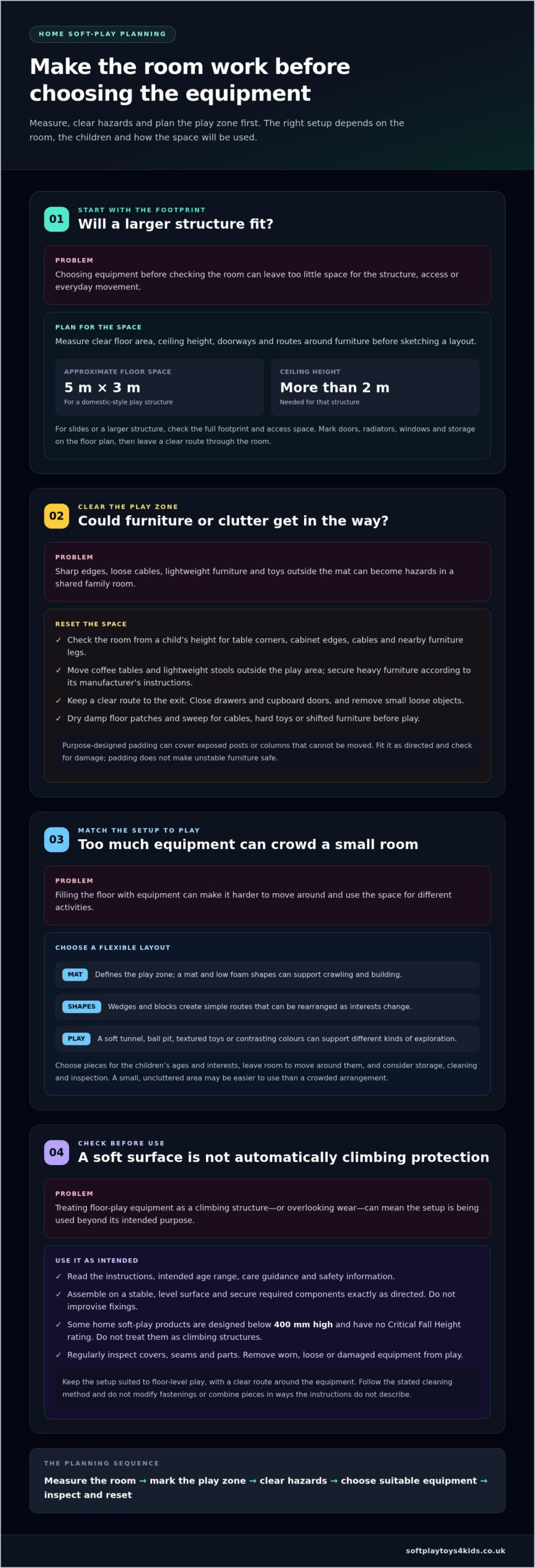
Begin with the room, not the equipment. Measure the clear floor area, ceiling height, doorways and routes around furniture before sketching a layout. A domestic-style play structure needs approximately 5 m by 3 m of floor space and more than 2 m of ceiling height. If you’re looking at slides or a larger structure, check that the room can accommodate its full footprint and access space.
Mark the proposed play zone on a simple floor plan. Include doors, radiators, windows and storage, then leave a clear route through the room. This helps you see whether a structure fits without blocking everyday movement.
Plan the layout around how your children use the space. A crawling route, a spot for building with foam shapes and a quiet corner for sensory play can suit different interests without crowding the floor. Welsh Government notes that quality play can be supported with everyday items rather than expensive resources. Cushions or a blanket can prompt imaginative play when used in a clear, supervised area.
Consider how the setup might change as children grow. Loose pieces are easier to rearrange than a fixed structure, while a dedicated installation needs careful room planning. Keep equipment away from doors and leave open floor for children to move between activities. Draw the layout first, then compare it with the room measurements before deciding what to buy.
Plan for storage and upkeep as well as play. Choose a place for loose balls and smaller toys, and make sure you can inspect equipment without moving heavy furniture. A practical design is easy to reset, so the space works for playtime and the rest of family life.
4. UK safety standards for home soft play equipment and play mats
Safety starts with the product information, not a label that simply says “safe”. Before buying a mat or foam equipment, read the instructions, intended age range, care guidance and any safety information supplied. Check that the product suits how your family plans to use it. A mat for floor play, for example, shouldn’t be treated as fall protection for climbing.
Look for clear information about materials, cleaning and assembly. Follow the stated cleaning method, since unsuitable products or excess moisture can affect covers and seams. Assemble equipment exactly as directed, and don’t modify fastenings or combine pieces in ways the instructions don’t describe. Keep the paperwork or product details available, so you can refer to the correct care and use guidance later.
Check each item before use and during routine maintenance. Look for split seams, exposed foam, loose fastenings, damaged covers or detached parts. Remove damaged equipment from play until it’s repaired or replaced. Check that a play mat lies flat and hasn’t curled at the edges. A mat that shifts across a smooth floor can create a trip hazard, even if its surface feels soft.
Match the equipment to the child and the activity. Low foam pieces intended for floor-level play aren’t automatically suitable for climbing, and soft surfaces don’t remove the need for supervision. Keep hard toys and furniture clear of the play area, and check that padding stays secure if used on a fixed column or exposed edge. Safety pads can cover a surface, but they don’t stabilise furniture or replace sound installation.
Before setting up, compare the product’s instructions with your room layout and intended use. Explore soft play safety options as you plan how to protect exposed surfaces and keep the play space orderly.
SoftplayToys4kids: Soft Play Ball Pits
SoftplayToys4kids can help you add soft play elements to a home play space, especially when you’re choosing a ball pit or mat to suit your layout. Sensory Toys can bring tactile, hands-on exploration into a quieter corner, while Lamp Post Protectors are relevant when a fixed post needs padding. Choose pieces that fit the available floor space and the way your children play, then follow the product instructions and inspect equipment regularly. A simple combination can make a dedicated play zone feel inviting without filling the whole room. If you’re ready to explore equipment for your setup, visit SoftplayToys4kids online.
Shape a play space around your family
Let your child’s everyday play guide your next decision. Notice which activities interest them, then choose a space that supports those interests without making the room harder to use. An indoor soft play area at home can begin with one thoughtful choice, with new elements added as family routines change. The aim isn’t to recreate a commercial play centre, but to make room for joyful movement and discovery at home.
SoftplayToys4kids offers Soft Play Ball Pits, Soft Play Mats and Sensory Toys to help shape different kinds of play. Whether you’re choosing a first piece or refining an existing setup, focus on what fits your child and your home. Contact SoftplayToys4kids for advice as you plan your next step. A considered choice today can help make playtime feel welcoming, engaging and ready for new adventures.
Frequently Asked Questions
How much does it cost?
Costs depend on whether you’re creating a small play corner or planning a complete domestic-style structure. Your budget is shaped by the amount and type of equipment, the available room and whether the layout needs a fitted structure. List essential pieces first, then decide which additions matter most. This helps you compare a simple setup with a larger project without treating them as equivalent.
What equipment is suitable for a home soft play area for babies and toddlers?
Choose pieces according to the child’s age and the activities they enjoy. A play mat can define a floor space, while soft shapes support simple crawling and building play. For babies, keep the arrangement low and uncluttered, with toys suited to their stage of development. Check the product’s intended age range and instructions, and supervise the play space.
How much does home soft play equipment cost in the UK?
Equipment costs vary according to the items selected and the scale of the setup. A mat, separate foam pieces and a ball pit each affect the overall budget differently, while a complete structure involves a different scope. Compare what each option includes and whether it suits your room and play plans. Decide which items are essential first, then consider additions that fit your budget.
How much indoor space is needed for a home soft play area?
A domestic-style play structure requires approximately 5 m by 3 m of floor space and more than 2 m of ceiling height. A smaller play corner can use less room, depending on the pieces and layout. Measure the usable floor area, not just the room’s overall dimensions, and account for doors, furniture and a clear route around the equipment.
Best UK retailers for indoor soft play equipment and foam play mats
SoftplayToys4kids is mentioned as a retailer for home soft-play pieces, including ball pits, mats and sensory toys.
Leave a Reply