
Outdoor Safety Padding for Posts, Walls and Corners in the UK

Padding needs to suit the surface and the impact risk, not just cover it. Outdoor safety padding in the UK comes in different builds: product descriptions include foam padding that is 20 mm thick, while post-protector pads are made with 50mm-thick foam. The right shape and fixing also depend on whether you’re protecting a post, column, enclosure, wall or corner.
It’s natural to want outdoor safety padding that softens hard edges without getting in the way of everyday play or activity. This guide explains how outdoor padding is built, how to measure and fit it, and what to consider when choosing protection for an outdoor space.
You’ll learn how padding can be shaped for different structures, how attachment methods work, and why the site and surface matter when planning a fit. We’ll also look at where SoftplayToys4kids’ safety pads and column padding fit into the wider picture.
Key Takeaways
- Compare foam thickness and backing to understand how padding is built for different impact risks.
- Match the pad’s shape and fixing method to the post, column or enclosure it needs to cover.
- Measure the structure and plan the fit carefully so the padding sits securely in place.
- Choose a wall, corner or fence-post design that protects exposed edges without obstructing the space.
Impact-absorbing foam and plywood backing
Outdoor padding combines a cushioning layer with a cover or backing suited to its location. Product descriptions include foam that is 20 mm thick, while post-protector pads use 50mm-thick foam.
Foam Thickness and Vinyl
Foam thickness affects the pad’s profile and how it cushions contact. A 20 mm layer and a 50mm layer create different levels of bulk, so match the construction to the structure and likely impact. Vinyl covers help enclose the foam; inspect seams, edges and attachment points because damage there can expose the padding. For outdoor use, choose a cover made for weather exposure, rather than assuming every vinyl finish suits a wet site.
Foam and PVC Materials
Foam provides the soft padded layer, while PVC can form a protective outer cover. Sports pitch safety padding covers use sewn, UV- and tear-resistant 610gsm heavy-duty PVC. That construction is designed for exposed settings where sunlight and abrasion matter. Plywood backing serves a different role: it can provide a firmer panel behind cushioning, while foam softens the contact face. Check how each layer is secured, especially around corners and openings.
Options include individual foam pads for posts, rubber mats and poured-in-place safety surfacing. For a post or column, a shaped foam pad protects the structure itself; mats cover a broader floor area, while poured surfacing creates a continuous play surface. Compare coverage, drainage, firmness, maintenance and suitability for the intended impact.
To compare rubber mats, foam padding and poured-in-place surfacing, consider the site shape and whether you need local protection or continuous ground coverage. Mats can be repositioned; fitted foam wraps a structure; poured surfacing follows the ground profile. Review product documentation for its intended use and impact performance.
UK requirements depend on whether the product protects a structure or serves as playground impact-absorbing surfacing. For play surfaces, review documentation identifying the applicable standard and tested impact performance, then consider the installed surface alongside the equipment and fall area.
Potential issues include slipping on wet or poorly drained surfaces, water collecting beneath loose mats, and foam providing inadequate impact protection for the location. Inspect seams, fixings and drainage, and replace padding when tears, compression or movement compromise its protective coverage.
Protective padding for posts, columns and enclosures
Choose padding to suit the structure, its surroundings and likely contact. Posts, columns and enclosures need a close fit that stays clear of access routes.
Post and Column Protection
Wraparound pads protect exposed faces of round, square or rectangular posts. Measure the post’s shape and perimeter, then choose a pad that covers likely contact points without blocking gates, handles or sightlines. Pads can use Velcro straps, eyelets or self-adhesive Velcro, depending on their design. For example, Manchester City F.C.’s training facility used 80 column safety pads. That illustrates how column padding can be planned across a larger sports site, not just one post.
Playground, Garden and Sports Padding
For a playground, garden or sports area, match the pad to the hazard. A covered fence post beside a play route needs different placement from a column beside a training area. Check that the pad covers the exposed contact surface without creating a trip point or obstructing movement. Outdoor post protection is most useful where people regularly pass, play or exercise close to rigid structures.
The per-square-metre cost depends on material, coverage, pad thickness, shape and whether the design is standard or made to measure. A compact post cover and a larger enclosure need different amounts of material, so compare quotes against the same dimensions and specification.
For UK purchases, look for padding suited to the structure and outdoor setting, with clear material and fitting details. Delivery costs depend on order size, package dimensions and destination. For a post or column, explore column safety padding as a relevant option.
In workplaces, padding can cover exposed posts near walkways, loading areas or fitness spaces. Identify the hazard first, then check access, visibility and fixing security. In sports settings, account for player movement and equipment routes so padding protects the structure without creating an obstruction.
Site measurement and installation
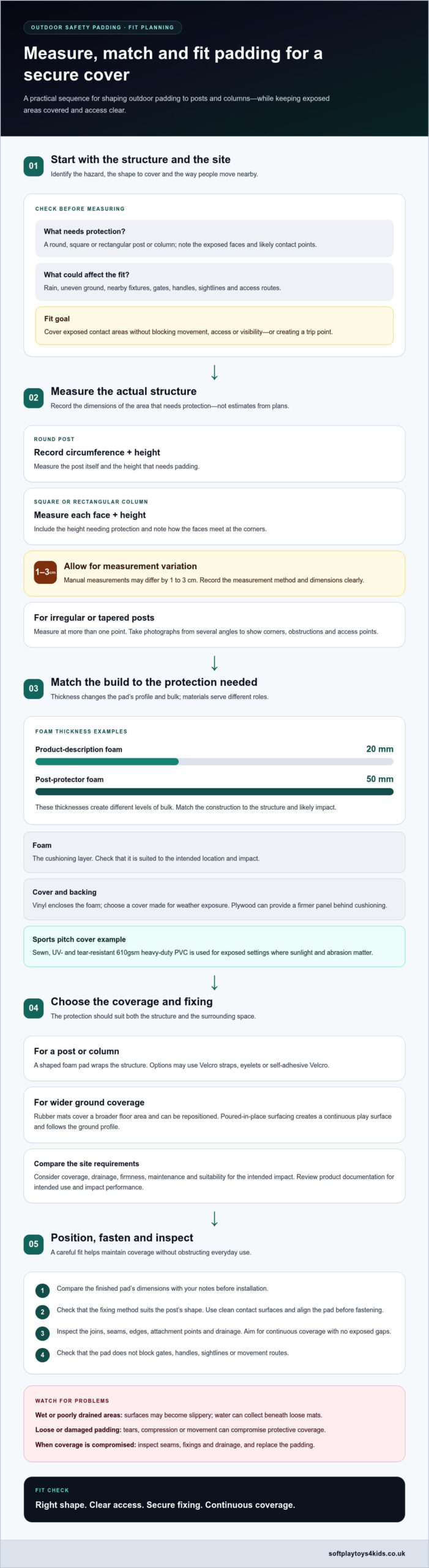
Accurate dimensions help made-to-measure padding cover a hazard without obstructing nearby access. Start by identifying the structure, its shape and the area people could contact. When choosing outdoor safety padding in the UK, consider how rain, uneven ground and nearby fixtures affect placement.
For a round post, record its circumference and height. For a square or rectangular column, measure each face and the height needing protection. Note nearby gates, fixtures or uneven surfaces, since these can affect how a pad sits. Measure the actual structure rather than relying on plans or estimates.
Manual measurements may differ by 1 to 3 cm, so record the measurement method and dimensions clearly. For irregular posts, measure at more than one point; a changing width or taper can affect the fit. Take photographs from several angles to show corners, obstructions and access points. These details help shape made-to-measure padding to the site.
Custom-sized pads can suit round, square or rectangular posts. Before installation, compare the finished pad’s dimensions with your notes and check how its edges meet. Aim for continuous coverage across exposed faces, with no gaps that leave contact areas uncovered and no fit that blocks movement.
The fixing method matters too. Bespoke pads may use self-adhesive Velcro, eyelets or Velcro straps. Choose an attachment that suits the post’s shape and allows the pad to sit securely. Align it before fastening, then inspect the joins. Pole padding is designed for easy installation, but a careful fit still starts with clean contact surfaces and accurate positioning.
For outdoor safety padding in the UK, keep a simple record of each post’s location, shape, measurements and chosen fixing. This is useful when a site has several columns or different colours of padding. Post-protector pads are available in 13 colours, which can help distinguish areas while keeping coverage consistent.
Pads for walls, corners and fence posts
Walls and fences can prevent a full wraparound fit, so pad shape matters. U-shaped pads suit locations where a wall or fence blocks access behind the hazard. They cover the exposed face while leaving the inaccessible side clear. For a garden fence post beside a path, this can protect the side people pass without requiring a complete enclosure.
Exposed corners need a different profile. L-shaped pads cover two adjoining faces, cushioning the corner while sitting against each surface. Measure both faces and the corner height, then consider nearby gates, walkways and play routes. A pad that projects too far could narrow access, while one that misses an exposed edge leaves that contact point unprotected.
Fence-post pads should match the post and its position. Check whether the post is round, square or rectangular, and note any rails or fittings that could affect the fit. Bespoke pads can be attached with self-adhesive Velcro, eyelets or Velcro straps. Choose a fixing method suited to the structure, then check that the cover stays in place without obstructing movement.
Outdoor and indoor settings bring different practical demands. Safety pads are described as fire-retardant and suitable for indoor and outdoor use. Their waterproof, wipe-clean material supports cleaning after outdoor exposure, while weather-resistant construction helps suit exposed locations. Inspect seams and fixings regularly; tears or loosened attachments can leave an edge uncovered.
Before fitting, map the exposed corners and fence posts, then match each location to a U-shaped, L-shaped or wraparound design. Check the finished coverage from the approach direction, not only from directly in front. For tailored protection around columns or exposed structures, explore safety padding options.
SoftplayToys4kids: Soft Play Ball Pits
SoftplayToys4kids offers sensory toys for adding a hands-on play element to a child-focused space. They complement, rather than replace, padding around exposed posts, columns, walls or corners. Keep the distinction clear: safety pads address contact with hard structures, while sensory toys support play and exploration.
Consider sensory toys when planning a play area alongside the physical protection measures covered in this guide. Arrange the space so play activities don’t obstruct access to padded hazards, gates or walkways. For a balanced environment, consider both the fixed risks in the room or outdoor area and the experiences children can enjoy there.
To explore sensory toys, visit softplaytoys4kids.co.uk.
Make your next safety decision with confidence
A safer play space starts with a clear plan for how children use it. Walk through the area from their point of view, note where play routes meet hard surfaces, and prioritise the spots that need attention. This practical approach helps you decide where outdoor safety padding in the UK fits your setting and how it should work alongside the wider play environment.
SoftplayToys4kids offers padding alongside play products, including Soft Play Ball Pits, Soft Play Mats and Sensory Toys. These serve different purposes: padding addresses exposed structures, while the play products support activity and exploration. Keeping those needs distinct helps you plan a space that’s both thoughtfully protected and inviting for children.
Ready to discuss padding for your setting? Contact SoftplayToys4kids about padding and take the next step towards a more considered play space.
Frequently Asked Questions
How thick should outdoor safety padding be for different fall heights?
Choose padding by its intended use and impact-performance evidence, not thickness alone. Product descriptions include 20 mm foam padding and 50mm-thick post-protector pads, but those figures don’t establish protection for a particular fall height. Padding attached to a post protects that structure; ground surfacing needs performance appropriate to the play equipment and fall area. Compare the documented test performance with the site’s specific risks.
What materials are weatherproof, UV-resistant and suitable for outdoor safety padding?
Look for an outdoor-suitable cover paired with foam, and assess the material’s stated properties. Sports pitch safety padding covers use sewn, UV- and tear-resistant 610gsm heavy-duty PVC. Other safety pads are described as waterproof and wipe-clean. These details help compare covers, but don’t assume every PVC or vinyl product has identical weather resistance. Check the intended setting and inspect seams, where wear can expose the foam.
How do you install outdoor safety padding on grass, concrete or other surfaces?
For a post or column, position the pad around the structure and use its designed attachment, such as Velcro straps, eyelets or self-adhesive Velcro. For grass or concrete, distinguish structure padding from ground surfacing: a post pad doesn’t create a continuous impact-absorbing floor. Keep ground products level and stable, maintain drainage, and avoid loose edges that could catch feet or shift during activity.
How do you maintain and clean outdoor safety padding, and how long does it last?
Clean waterproof, wipe-clean covers with a suitable cloth, then inspect the surface, seams and fixings. Look for tears, exposed foam, flattening or movement, as these can reduce coverage or affect stability. Outdoor lifespan depends on exposure to sunlight, rain, abrasion and use, so assess condition through regular checks rather than assuming a set lifespan. Replace damaged padding when it no longer covers the hazard securely.
How much does outdoor safety padding cost in the UK per square metre?
The per-square-metre cost depends on material, coverage, thickness, shape and whether the pad is standard or made to measure. Compare quotes using the same dimensions and specification.
Where can I buy outdoor safety padding in the UK, and what delivery costs apply?
Outdoor safety padding options include Safety Pads and Post Protectors; for a post or column, the article also points to column safety padding. Delivery costs depend on order size, package dimensions and destination.
Leave a Reply