
Dental Practice Play Area Equipment for Calm, Easy Visits

A paediatric dental play area should do more than fill a corner. It should give children a welcoming place to play while keeping them in view of parents and reception staff. Choose dental practice pediatric play area equipment that fits the available space, with soft flooring and a layout near the waiting room but positioned to limit noise reaching appointments. A reading corner can also give children and parents a place to spend time together.
It’s easy to assume any play corner will do, but a dental waiting area has a specific purpose: helping visits feel less daunting while supporting supervision and the practice’s day-to-day flow. Play before treatment can help lower children’s stress levels, so thoughtful choices matter.
This article explains how to define the play area’s purpose, plan its position and layout, and choose accessible soft flooring and child-friendly features. The aim is a cheerful, calm space that works with the waiting room and helps create a more welcoming visit for families.
Key Takeaways
- Set the play area’s purpose around how families use the waiting room, then match its footprint to the practice’s space and busiest periods.
- Plan soft flooring and clear access together so the play zone feels comfortable while preserving an accessible route through the room.
- Use play to make waiting feel more welcoming, with thoughtful choices that can help ease the atmosphere before treatment.
- Consider compact, interactive features and comfortable nearby seating to balance children’s play with parent supervision and available floor space.
Choosing the purpose and layout of a play area
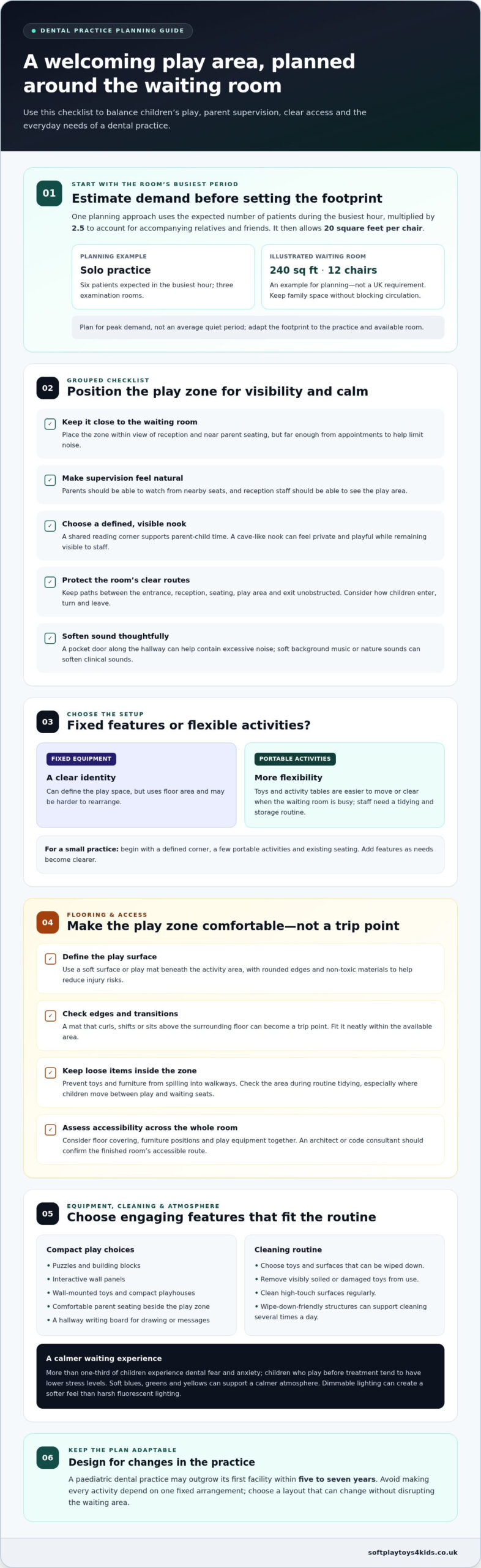
Start by deciding what the space should do: offer children a welcoming activity, encourage parent-child interaction, or both. Position it near the waiting room and within view of reception, but far enough from appointments to limit noise. A reading corner can give a child and parent a chance to share a book while they wait. For a more defined play zone, a cave-like nook can feel private and playful while remaining visible to staff.
Fixed play equipment gives a space a clear identity, but takes up floor area and can be harder to rearrange. Portable toys and activity tables are more flexible and easier to clear when the waiting room is busy, but staff need a routine for tidying and storage. A small practice can begin with a defined corner, a few portable activities and existing seating, then add features as its needs become clearer.
Plan the waiting room around peak demand, not an average quiet period. One planning approach multiplies the expected number of patients seen during the busiest hour by 2.5 to account for accompanying relatives and friends, then allows 20 square feet per chair. For example, a solo practice expecting six patients in its busiest hour, with three examination rooms, has been illustrated with a 240-square-foot waiting room and twelve chairs. Treat this as a planning example, not a UK requirement; the key is making room for families without blocking circulation.
Consider sightlines before choosing equipment. Parents should be able to supervise from nearby seating, and reception staff should be able to see the play zone. In an open-plan practice, parents may remain in reception after one or two visits, so a calm, legible layout can help children feel familiar with the routine. A pocket door along the hallway can help contain excessive noise, while soft background music or nature sounds can soften clinical sounds.
Keep the layout adaptable as the practice grows. A paediatric dental practice may outgrow its first facility within five to seven years, so avoid making every activity depend on one fixed arrangement. Leave clear routes between the entrance, reception, seating and play space, and choose a layout that can be changed without disrupting the waiting area.
Soft flooring and accessibility
Plan flooring as part of the room layout, not as a decorative extra. A soft surface can cushion play, while rounded edges and non-toxic materials can help reduce injury risks. For example, place a defined play mat beneath the activity area instead of letting toys spill into the route between reception and seating.
Toys, furniture and flooring edges can create trip hazards, bumps or blocked routes. Reduce these risks by keeping walkways clear, choosing soft flooring and using rounded edges around play features. Check the area during routine tidying, particularly where children move between the play space and waiting chairs.
Check the floor’s edges and transitions carefully. A mat that curls, shifts or sits above the surrounding surface can become a trip point, so choose a layout that fits neatly within the available floor area. Keep loose toys inside the play zone and leave a clear path to the reception desk, waiting seats and room exit. These choices define the play space without making movement awkward.
Consider accessibility across the finished room, not just at the play surface. Preserve a clear route through the waiting area, including access to seating and reception. An architect or code consultant should confirm the finished room’s accessible route, taking the floor covering, furniture positions and play equipment into account together rather than assessing each in isolation.
Match the flooring and layout to how the space will be used. A small, defined play zone may need a different arrangement from a larger area with several activities. Consider how children enter, turn and leave, and whether a parent can stay close without narrowing the route. Column padding can soften exposed structural columns beside the play area while keeping the clear floor route open.
For a more comfortable play zone, pair a suitable floor surface with soft play mats and keep the surrounding route unobstructed. The finished arrangement should support play while allowing families to move through the waiting room with ease.
Benefits of a dental practice play area
A play area can give children a positive activity before treatment and make waiting feel less clinical. Its usefulness depends on choosing features that fit the room and the practice’s cleaning routine.
Benefits for the Dental Practice
A play area gives children something engaging to do while families wait and can make the practice feel more welcoming. More than one-third of children experience dental fear and anxiety, and children who play before treatment tend to have lower stress levels. A reading nook, simple puzzle or colourful play zone can make waiting feel less focused on the appointment ahead. Soft blues, greens and yellows can support a calmer atmosphere.
Suitable Play Area Equipment
Suitable equipment gives children a focused activity without obstructing the waiting room. Puzzles, building blocks and interactive wall panels encourage creativity, while wall-mounted toys and compact playhouses can save floor space. Comfortable seating beside the play zone gives parents a place to supervise. Dimmable lighting can create a softer atmosphere than harsh fluorescent lighting, and a hallway writing board can invite children to draw or leave a message for the dental team.
Include toys and play surfaces in the practice’s infection-control routine. Choose items that can be wiped down, remove visibly soiled or damaged toys from use, and clean high-touch surfaces regularly. Play structures designed to be wiped down several times a day can support routine cleaning in a busy waiting area.
For UK safety planning, consider non-toxic materials, rounded edges and soft flooring to help reduce injury risks. Assess the installed play area as a whole, including its layout and the clear route through the room, rather than judging a single item alone. Keep toys out of walkways and position equipment where staff can supervise it.
Equipment costs depend on the play area’s size, the mix of fixed and portable features, materials and installation needs. Define the scope based on the room and intended use, then compare similar options rather than judging cost by the price of one toy.
Inspect equipment during routine checks for loose parts, damaged surfaces or unstable fittings. Clean it according to its use and condition, and replace items that are damaged or cannot be cleaned effectively. This helps keep the space practical for daily use.
What equipment is suitable for a paediatric dental practice play area?
Choose equipment based on children’s ages, the room’s footprint and how the practice uses the space. Selecting dental practice pediatric play area equipment means balancing engaging activities with clear routes through the waiting room.
In smaller rooms, wall-mounted toys and compact playhouses can save floor space. Interactive wall panels offer children a hands-on activity while leaving more floor available for movement. In a larger waiting area, puzzles and building blocks encourage creativity and provide a quieter alternative to active play. Keep each activity within a defined part of the room to limit pieces spreading into seating or circulation areas.
Multidisciplinary practices can use mobile play stations to keep the room adaptable. Bring a station out during the paediatric dentist’s office hours, then move it away when another service needs the space. This approach suits waiting rooms serving different patients throughout the day. Choose activities staff can organise and store easily between uses.
Think beyond toys, too. Comfortable seating near the play zone gives parents a practical place to supervise, while a hallway writing board can invite children to draw or leave a message for the dental team. These features offer different ways to engage: a child might choose blocks, sketch on the board, or sit with a parent and complete a puzzle.
Lighting and materials also shape the experience. Dimmable lights can create a softer atmosphere than harsh fluorescent lighting. A dentist-themed toy described as containing at least 50% recycled material offers one example of a material detail practices may consider when comparing options. Match each feature to the room’s cleaning routine and available storage.
Good dental practice pediatric play area equipment can also account for exposed columns beside the play zone. Column padding adds a cushioned covering to a hard surface.
SoftplayToys4kids: Soft Play Ball Pits
SoftplayToys4kids can help practices add child-friendly sensory toys to a waiting area. They’re a practical option when you want to offer children a hands-on activity without relying solely on larger play features.
Consider sensory toys as part of a balanced setup, paired with a clearly defined play space and nearby parent seating. Decide where they will be used and stored, then include them in the practice’s routine for keeping play items clean and organised. This helps the play area fit naturally into the waiting room’s daily use.
If you’re planning a welcoming play space for your practice, contact SoftplayToys4kids to discuss sensory toys for your setting.
Make your waiting room work for families
Treat the play space as part of the welcome your practice gives families, not as an isolated feature. When choosing dental practice pediatric play area equipment, consider how each item supports the experience you want children and parents to have and fits the room’s everyday routine. A considered selection can help create a space that feels personal to your practice rather than like a generic waiting-room corner.
SoftplayToys4kids offers Soft Play Ball Pits, Soft Play Mats and Sensory Toys to help bring child-friendly play into your setting. Choose the kind of activity that suits your space, then build your plan around it. A ball pit can create a dedicated play feature; mats and sensory toys offer other ways to shape the area.
Ready to explore options for your practice? Contact SoftplayToys4kids about play areas and take the next step towards a warmer welcome for young patients.
Frequently Asked Questions
What should a pediatric waiting room play area do that a general play corner does not?
A paediatric dental waiting-room play area should support the visit, not simply occupy children. Use it to offer a calm, age-flexible activity before appointments and help families feel at ease in a clinical setting. For example, a child could draw quietly while a parent completes reception details. Unlike a generic corner, the activities and layout should account for appointment flow, parent supervision, cleaning routines and clinical noise.
What are the recommended play area layouts and sizes for a dental waiting room?
Play areas can range from 1 square foot to 1000 square feet, depending on the practice and available room. Use a footprint that preserves the waiting room’s main function: family seating and clear movement should remain workable alongside play. A small practice could designate a compact activity spot; a larger room can accommodate distinct activity zones. Size the play area against the room’s shape, furnishings and family use, rather than treating the broad range as a target.
Which UK suppliers sell dental practice play area equipment?
SoftplayToys4kids is mentioned as a supplier of soft play ball pits.
Leave a Reply