
4 Ideas for Gender neutral playroom design, from reading corners to creative spaces

A playroom can feel welcoming and imaginative without relying on traditional colour themes. Four ideas for gender neutral playroom design are to create reading and drawing corners, choose neutral paint with Scandi-inspired decor, add practical, child-friendly storage and introduce character with feature wallpaper. Each gives the room a distinct purpose while leaving plenty of space for play.
It’s natural to want a cosy space that can adapt as your child’s interests change. A calm palette, thoughtful furniture choices and creative details can make the room feel personal without tying it to a particular theme.
Set up a snug reading nook and an easy-to-use drawing area, then bring the look together with natural-feeling neutrals, simple Scandi-inspired touches and a feature wallpaper. You’ll also find ways to make the room work for everyday play, so it feels inviting as well as practical.
Key Takeaways
- Give books and drawing materials their own inviting corners, using simple furniture and easy-to-reach supplies to encourage independent play.
- Pair soft neutral paint with natural wood and understated patterns for a calm, flexible Scandi-inspired look.
- Make the room work for everyday play by planning practical storage and choosing spaces and furnishings that suit your child’s needs.
- Use feature wallpaper to add personality, then balance its colour and pattern with simpler finishes elsewhere in the room.
1. Creative corners for reading and drawing
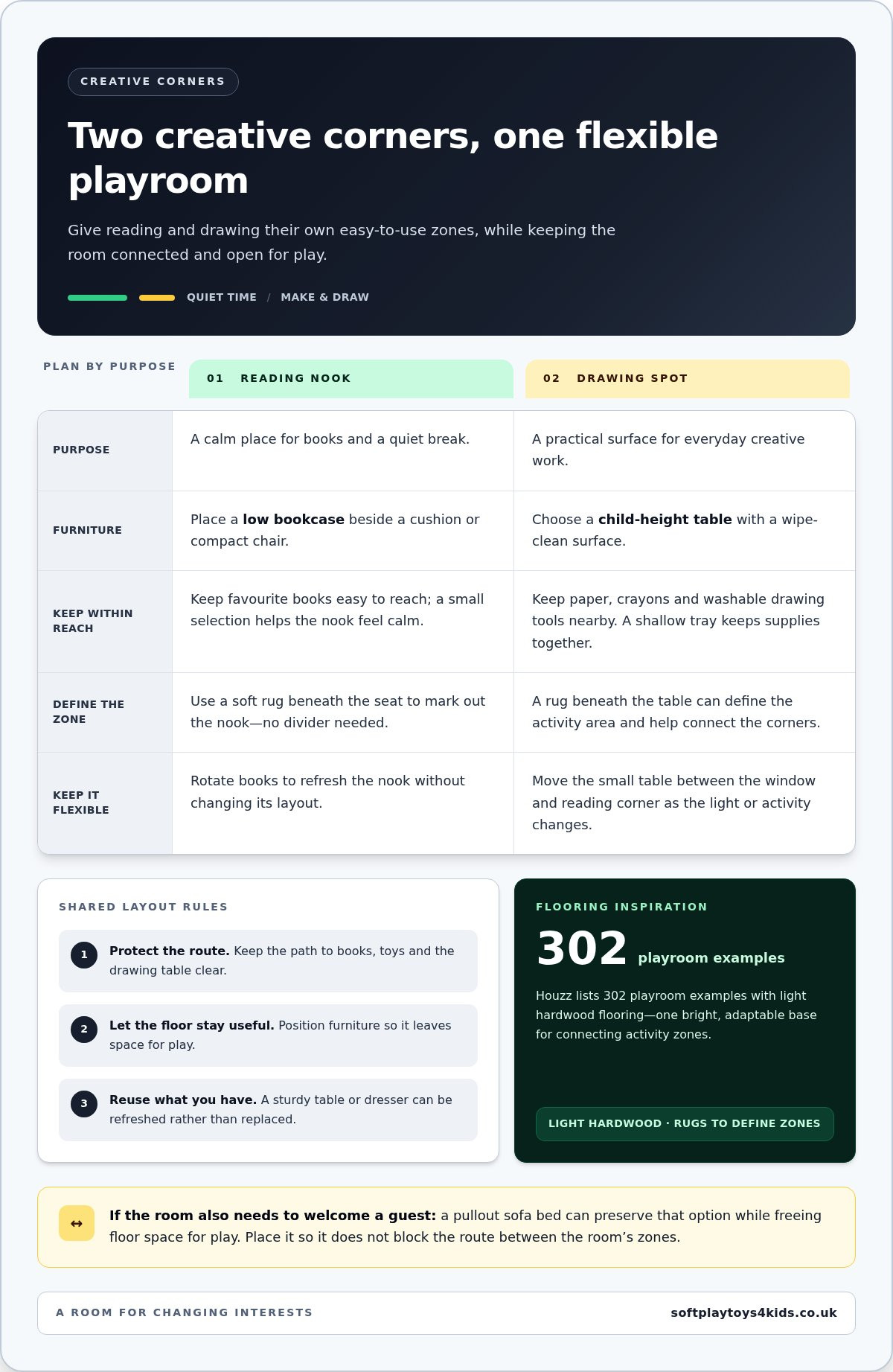
Start with two clear zones: a quiet reading nook and a drawing spot. In a small playroom, place a low bookcase beside a cushion or compact chair, with favourite books within easy reach. A soft rug can define the seating area without adding a divider. If the room also needs to accommodate a guest, a pullout sofa bed can preserve that option while freeing up floor space for play. Position it so it doesn’t block the route to books, toys or the drawing table.
For creative work, use a child-height table and keep paper, crayons and washable drawing tools nearby. A shallow tray keeps supplies together, while a wipe-clean surface makes everyday drawing easier to manage. Keep the setup flexible: move a small table between the window and reading corner as the light or activity changes. Gender neutral playroom design isn’t about removing colour. It lets children’s books, pictures and projects bring their changing interests into the room.
Light hardwood flooring can help connect the zones visually. Houzz lists 302 playroom examples with light hardwood flooring, offering plenty of inspiration for a bright, adaptable base. Add a rug beneath the reading seat or drawing table to define each activity area. If you already have a dresser or sturdy table, try repurposing it with a fresh finish rather than replacing it. That approach can leave room in your budget for a statement rug that brings the corners together.
If a nursery will later become a playroom, choose furniture that can serve both stages: a cot, wardrobe and dresser. Later, the dresser can hold art materials, and the wardrobe can store dress-up clothes or spare cushions. Keep the reading nook calm with a small selection of books, then rotate titles and drawing materials to refresh the space without changing its layout. A pullout sofa bed, book storage and movable art station help the room work for quiet breaks and lively creative sessions.
2. Neutral paint and Scandi-style decor
Choose a neutral base, then add warmth through materials and pattern. Warm white, soft grey, muted sage and sandy beige all work with natural wood. Before painting, test a sample beside the window and look at it in daylight and after dark. The same shade can appear different as natural light changes, so compare it with the floor, curtains and furniture. A restrained palette gives toys, books and children’s artwork room to bring colour into the scheme.
For a Scandinavian-inspired look, keep shapes simple and let natural materials do the work. A pale wooden table, woven basket and plain cotton curtains make an easy starting point. Pairing natural wood with geometric patterns can give a nursery a modern feel while adding warmth. Try a patterned cushion or a simple repeat-print lampshade, and keep nearby surfaces uncluttered. A few sharper details, such as a graphic print or dark-framed picture, can add a contemporary touch.
What are affordable DIY ideas for a gender-neutral playroom? Refresh an existing dresser or table with a new finish, and reuse baskets or jars to organise crayons and blocks. Repurposing furniture can leave more of your budget for a statement rug, which defines the play area without requiring you to repaint the whole room.
Keep the palette consistent by repeating an accent shade in small details, such as a book cover, cushion or storage box. For example, pair warm white walls with pale wood and a few sage-green accessories. Geometric patterns add interest without tying the room to a particular theme. A single patterned feature can balance plain walls and simple furniture, while the rest of the room stays adaptable as tastes change.
For a cohesive finish, bring a fabric swatch or paint sample when choosing accessories, then compare them against the wood in the room. These simple playroom finishing touches help tie the scheme together without crowding the space.
3. Playrooms for toddlers and children
Build the layout around what a child can reach and use independently. Place favourite toys on low shelves and keep heavier items near the floor. Leave a clear route between the door, play space and storage so toys don’t become obstacles. As children grow, add a small table for puzzles or model-making while keeping an open area for active play. These choices keep a gender-neutral room useful as interests change, rather than limiting it to one age or activity.
Make tidying part of play. Use open baskets for soft toys, labelled boxes for building pieces and a shallow tray for small craft materials. Picture labels can help children who aren’t reading yet recognise where items belong. A window seat can combine somewhere to sit with toy storage beneath it. Keep contents easy to see and put away instead of filling containers until tidying becomes difficult. A refreshed dresser can also provide storage, with drawers assigned to categories such as dress-up clothes, games and art supplies.
For a UK playroom, follow the age guidance and warnings supplied with each toy, along with the maker’s instructions for assembling and using furniture. Choose toys suited to the child’s age and abilities, and regularly check for loose parts or damage. These practical checks help you make informed choices without relying on one rule for every product.
How can the room adapt as children grow? Keep larger furniture flexible and change what goes in it. Swap toddler toys for books, board games or craft materials, and move frequently used items to shelves the child can reach. A dresser can shift from toy storage to school supplies, while a clear floor area can accommodate new games. Choose baskets and boxes that suit different contents rather than storage designed for one specific toy. This refreshes the room as interests change, without a complete redesign.
4. Wall colours and feature wallpaper
Choose wall colours as a backdrop for toys, books and changing interests. Warm white, soft grey, muted green and sandy beige sit comfortably alongside colourful play materials. Yellow is another welcoming option: try a pale butter shade throughout the room or a stronger mustard tone on one wall. Before committing, paint a sample beside the window and compare it with the flooring and curtains. A gender-neutral scheme doesn’t have to avoid colour; it leaves room for children’s tastes to shape the details.
Feature wallpaper adds personality without covering every wall in pattern. Choose one focal area, such as the wall behind a reading nook or play table, and keep nearby walls and large furnishings quieter. A small botanical print can bring a natural feel, while abstract shapes or stars can create a lively backdrop. Repeat one wallpaper colour in a cushion, storage box or framed print to connect the design. This makes a bold wall easier to balance with the rest of the room.
Build interest through contrast and texture as well as colour. For example, pair a smooth painted wall with a woven basket, soft rug and framed picture. If the wallpaper has a busy pattern, choose simpler nearby textiles; if the walls are plain, cushions or artwork can add detail. Lay samples together before deciding, so you can compare how each finish looks alongside the others. Repeating one accent colour in a picture, cushion and toy box can tie separate areas together.
How can you choose inclusive toys, books and decor? Look for stories with varied characters and family experiences, and toys that invite open-ended play, such as blocks, pretend food or art materials. Choose pictures and accessories to match your child’s interests, rather than limiting colours or themes by gender.
Ready to add a playful finishing touch? Explore ideas for your playroom and bring the room’s look together with details that suit your family.
SoftplayToys4kids: Soft Play Ball Pits
SoftplayToys4kids can help you add engaging play elements once your room’s layout and look are in place. If you’re creating a dedicated space for sensory exploration, its sensory toys offer another way to complement open-ended play alongside books, drawing and imaginative activities. Choose pieces that fit the play area you’ve planned, rather than crowding the floor or disrupting clear routes through the room.
Soft play ball pits can make a lively focal point in a playroom, while soft play mats define an area for floor-based play. Consider how these pieces fit with your colour palette and the activities your child enjoys. A well-chosen mix keeps the room playful and supports the flexible design you’ve created.
Explore SoftplayToys4kids’ options for your playroom, and visit softplaytoys4kids.co.uk to find out more.
Make the space your child’s own
A playroom doesn’t need to be finished all at once. Let your child’s interests guide the next small change, whether that means adding a favourite picture, making room for a new activity or choosing a playful feature that suits your family. That flexibility is at the heart of gender neutral playroom design: a room that can evolve as your child grows and discovers new ways to play.
When you’re ready to add a dedicated play element, SoftplayToys4kids offers Soft Play Ball Pits, Soft Play Mats and Sensory Toys. Consider which option best complements your available space and the activities you want to encourage, then build around it at your own pace.
Contact SoftplayToys4kids for playroom ideas and take the next step towards a space that feels welcoming, playful and personal to your child. Your best design starts with what makes play special for them.
Frequently Asked Questions
What are the key principles of gender-neutral playroom design?
Prioritise children’s interests, access and freedom to choose activities over gender-coded themes. Display books, costumes and toys together so every child can explore them. Include varied characters in artwork and stories, and leave room for imaginative play, quiet activities and movement. As a final check, ask whether each child can find something engaging without being directed towards a particular colour or activity.
Which colours work well in a gender-neutral playroom?
Colours work well when they suit the room’s light and feel cohesive together. Try a combination such as clay, teal and cream, or pair soft blue with warm yellow accents. Keep stronger shades to accessories or a smaller section of wall if you want to change them easily. A colour chart or fabric sample can help you compare shades with curtains and furnishings before settling on a scheme.
What are practical gender-neutral playroom layout and storage ideas?
Group belongings by activity, then place each group near its usual play spot. Keep puzzles together near a table, for instance, and dress-up items beside a clear area for pretend play. A storage bench can provide seating while concealing larger toys; a wall organiser can hold paper and colouring materials. Leave some shelf space empty so new creations and favourite finds have somewhere to go.
How can a small playroom be designed to suit children of different ages?
Choose furniture that serves more than one purpose and keep the centre of the room flexible. A compact table can support drawing, games and homework, while stackable cushions can become seats or part of an imaginary obstacle course. Store age-specific items in separate, easy-to-recognise containers, then bring out activities each child can enjoy. This helps siblings share the room without needing duplicate furniture.
What are safe, durable flooring and furniture choices for a UK playroom?
Choose flooring that’s comfortable underfoot, easy to clean and suited to the room’s existing surface. A removable rug can soften a defined play area, while a smooth floor is easier to sweep after craft sessions. For furniture, look for sturdy construction, stable bases and wipe-clean finishes. Follow the maker’s assembly and care instructions, and check that furniture remains secure during everyday use.
Leave a Reply