
Foster Care Contact Room Play Equipment Safety Reference

In England, Fostering Services National Minimum Standards include STANDARD 10 2011 on providing a suitable physical environment for a foster child, according to the Department for Education. It’s the starting point for assessing safe play equipment for a foster care contact room, alongside the room’s layout and contents.
A welcoming space matters, but comfort and play must go hand in hand with practical safety. Equipment that suits one child may not suit another, so consider how the room will be used and the needs of each child who visits.
This guide explains what to consider when reviewing play equipment, room contents, cleanliness and relevant fostering standards. Use these practical steps to spot potential hazards, keep the space organised and choose equipment thoughtfully.
Key Takeaways
- Use England’s Standard 10 as a reference when assessing whether the room provides a suitable physical environment for a foster child.
- Choose play items that fit the room, the planned supervision and the children’s individual needs, then remove anything damaged or unsuitable.
- For babies and young children, favour age-appropriate play opportunities and keep the space clear, comfortable and easy to supervise.
- Build a consistent routine for cleaning and inspecting toys, and consider soft play options when they suit the room’s needs.
Building and contents safety
A safe contact room combines suitable equipment, clear sightlines and building checks. Review the space for hazards before each session.
England’s Fostering Services National Minimum Standards include Standard 10 on providing a suitable physical environment for a foster child, according to the Department for Education. The Fostering Services (England) Regulations 2011 include Regulation 26 on assessing prospective foster parents, according to The National Archives (legislation.gov.uk).
Contact Room Play Equipment
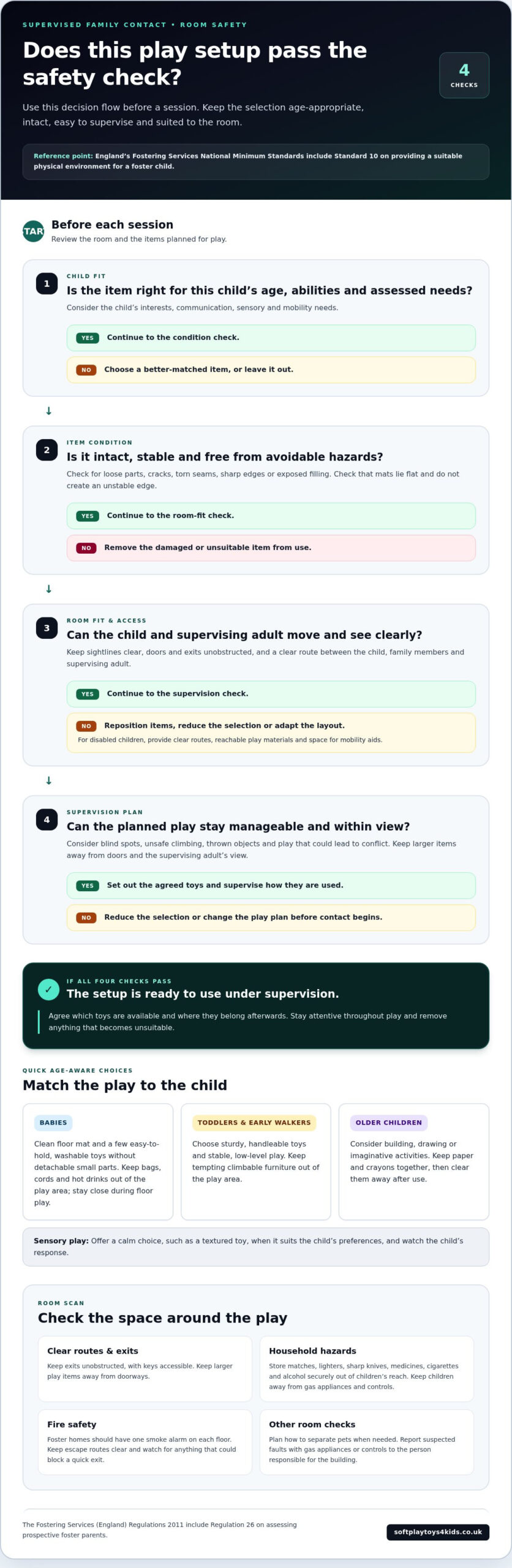
Contact-room play equipment includes toys and play items for children to use during supervised family contact. Choose age-appropriate items that are intact and free of loose parts or sharp edges. Remove anything that could pose a choking, trapping or tripping hazard. Soft play mats and safety pads can help address hard-floor or exposed-edge concerns. Keep toys within the supervising adult’s view.
Contact Room Setup and Accessibility
A foster care contact room is a designated space where a child and family members meet under supervision. Equipping one depends on the room’s condition, access needs, chosen equipment and ongoing upkeep. For disabled children, provide clear routes, reachable play materials and space for mobility aids. Adapt the layout and sensory environment to the child’s needs while keeping sightlines clear for supervision.
Foster-home safety equipment helps reduce specific household hazards. Fit stair gates securely where appropriate, and keep exits clear with keys accessible. Safety equipment supplied by a fostering service is loaned and should be returned when the placement ends.
Plan how to separate pets from children when an animal could interrupt contact or pose a safety concern. Store matches, lighters, sharp knives, medicines, cigarettes and alcohol securely out of children’s reach. Keep children away from gas appliances and controls, and report suspected faults to the person responsible for the building.
Fire safety means reducing ignition risks and keeping escape routes clear. Foster homes should have one smoke alarm on each floor. Keep contact-room exits unobstructed and ensure children cannot reach lighters or matches. During supervision, watch for blind spots, unsafe climbing, objects thrown during play and anything that could block a quick exit.
What safe play equipment is suitable for supervised contact rooms?
Suitable play equipment is age-appropriate, intact and manageable within the room’s supervision arrangements. A foster care contact room safe play equipment plan should support interaction without blocking sightlines or introducing avoidable hazards. A small, considered selection is often easier to supervise than a crowded play area.
Start by considering which children will use the room. Babies may benefit from simple, graspable toys and clear floor space for supported play. Toddlers may enjoy larger toys they can handle, while older children may prefer building, drawing or imaginative activities. Match each choice to the child’s abilities, interests and assessed needs.
Inspect each item closely before a session. Look for loose components, cracks, torn seams, sharp edges and exposed filling. Remove damaged toys from use rather than leaving them within reach. Check that mats lie flat and do not create an unstable edge. Place larger items where they cannot block doors or the supervising adult’s view.
- Soft play items: Use stable pieces suited to the available floor space, away from doorways.
- Small toys: Choose them according to the child’s age and ability to handle them safely.
- Sensory play: Offer a calm choice, such as a textured toy, when it suits the child’s preferences.
- Creative activities: Keep paper and crayons together, then clear them away after use.
Supervision means staying attentive to how children use equipment and interact with one another. Review foster care contact room safe play equipment choices to keep play within the adult’s view, limit the selection to manageable items, and remove anything that encourages unsafe climbing, throwing or conflict. Agree a simple plan before contact begins, including which toys are available and where they belong afterwards. For ideas on planning a child-friendly play area, explore soft play equipment options.
What age-appropriate equipment is suitable for babies and young children during family contact?
Age-appropriate equipment is play and comfort equipment suited to a child’s development, mobility and needs. For a baby, provide floor space, simple graspable toys and close adult attention. For a toddler, choose toys they can handle without climbing or reaching for unstable furniture.
For babies, offer a small selection of washable toys without detachable small parts, such as a soft-textured toy or a large rattle. Keep bags, cords and hot drinks out of the play area. An adult should stay close during floor play, especially as babies begin rolling, reaching and crawling.
For toddlers and young children, choose sturdy items that encourage shared play, such as large building pieces, picture books or simple pretend-play objects. Match activities to the child’s communication, sensory and mobility needs. Set out only what fits the space, leaving a clear route between the child, family members and supervising adult.
- For babies: Provide a clean floor mat and a few easy-to-hold toys.
- For early walkers: Use stable, low-level play choices and keep tempting climbable furniture out of the play area.
- For sensory preferences: Offer a calm choice, such as a textured toy, and watch the child’s response.
Travel cots can be used for babies weighing up to 15 kg for short periods, such as temporary stays with family or friends. If a contact setting uses one, keep its purpose and the baby’s supervision clear. Trampolines are rarely suited to a small contact room; children under 6 years old should use only trampolines suitable for their size and age range. An adult should supervise trampoline use at all times.
Before contact begins, ask which activities the child enjoys and can manage. Place suitable items within reach, remove unsuitable choices and observe how the child responds. Adjust the selection if a toy causes frustration, discomfort or unsafe movement.
How should contact room toys and equipment be cleaned and maintained?
Cleaning and maintenance means removing dirt, checking condition and keeping equipment ready for its next use. England’s Fostering Services National Minimum Standards identify Standard 6.3 as the standard for cleanliness in foster carers’ homes.
Follow the same routine before and after each contact session. First, clear toys, mats and loose materials from the floor. Separate visibly soiled items, then clean each one according to its care instructions. Use a cleaning product suited to the material, and let items dry fully before storing them or returning them to play.
Cleaning removes visible dirt and residue, but it does not replace a condition check. Examine seams, joins and surfaces as you handle each item. Look for split stitching, cracked edges, loose parts, exposed filling or sticky patches that remain after cleaning. Set damaged items aside so they cannot accidentally return to the play area.
- Washable toys: Clean according to their care instructions, then dry completely.
- Hard surfaces: Wipe all sides, including handles and corners children touch.
- Soft furnishings: Check covers and seams for stains, tears or trapped debris.
- Storage: Keep clean items separate from used or damaged equipment.
Record cleaning and repairs in a simple room log. Note the date, item checked, action taken and any item removed from use. A clear record helps staff spot recurring damage, such as a repeatedly loose seam, and prevents unchecked items from returning to sessions.
Keep the routine practical: assign responsibility, store cleaning materials away from children, and finish each check before the next session begins. If cleaning reveals a persistent odour, residue or damage, remove the item until it can be dealt with appropriately. For contact-room layouts where exposed building edges need padding, explore soft play safety padding.
Outdoor play equipment, including swings, slides and climbing frames, should be secured to the ground and well maintained. Playground slides and swings should also have a soft surrounding area.
SoftplayToys4kids: Soft Play Ball Pits
SoftplayToys4kids offers sensory toys that can add another play choice to a supervised contact room. Consider them when a child enjoys sensory play and the room has space for an adult to supervise comfortably. Choose items to suit the child’s interests and needs, and include them in the room’s usual inspection and cleaning routine.
Consider a ball pit only when its size, placement and supervision suit the room and its users. Keep access routes and sightlines clear, and apply the same checks as for other play equipment. Where a fixed post needs protection, Lamp Post Protectors may suit the setting.
For a suitable play or safety-padding option, contact SoftplayToys4kids to discuss your room’s needs.
Make the room work for each child
A contact room can evolve as children’s interests, confidence and support needs change. Treat the play area as part of the welcome: choose safe play equipment for a foster care contact room that supports connection while keeping each child’s comfort and the room’s purpose in view. Review the play choices with the contact team and decide what could make future sessions more engaging.
SoftplayToys4kids offers Soft Play Ball Pits, Soft Play Mats and Sensory Toys for children’s play spaces. These options can help you shape an inviting area around the needs of the children using it, while you continue to manage supervision and routine checks.
Contact SoftplayToys4kids about play equipment and explore options for your setting. Thoughtful choices can help make each visit feel more welcoming.
Frequently Asked Questions
What safety standards apply to toys and play equipment in UK contact centres?
For foster care settings in England, assess equipment as part of providing a suitable physical environment. The Department for Education’s National Minimum Standards include Standard 10, which addresses that environment. In practice, consider each item’s condition, suitability for the children using it, and whether staff can supervise its use. Record concerns and remove damaged or unsuitable items from the play area.
Where can UK contact centres buy suitable play equipment?
UK contact centres can buy soft play products from SoftplayToys4kids, including Soft Play Mats and Sensory Toys. These may suit settings looking for floor-based play or sensory options. Choose items around the room’s layout and the children’s needs, then incorporate them into the centre’s cleaning and inspection arrangements. SoftplayToys4kids also supplies Soft Play Ball Pits for settings where this type of play fits.
What policies or guidance govern equipment in foster care contact rooms?
In England, relevant references include the Fostering Services National Minimum Standards and the Fostering Services (England) Regulations 2011. The standards address the physical environment and cleanliness; Regulation 26 concerns assessment of prospective foster parents, not a toy-by-toy checklist. The Training, Support and Development Standards for Foster Care also identify Standard 3 with health and safety, and healthy care. Apply these references through the setting’s safeguarding and equipment procedures.
Leave a Reply