
Foam Soft Play Blocks for Babies and Toddlers in the UK

Foam soft play blocks in the UK include sets listed as suitable from 1 year old, while age guidance varies by set and some are labelled for children aged 3 and over. The right choice depends on the set’s age label and how you plan to combine the blocks with other play equipment.
It’s natural to want play that feels joyful and suits your child’s age and stage. Foam blocks can form part of a larger play area, alongside a ball pit or soft play mat, giving children room to stack, crawl and explore.
This guide covers how to choose foam soft play blocks in the UK, what to consider when selecting climbing shapes, and how blocks can work alongside ball pits and mats. It also offers practical points for choosing a setup for home or nursery use.
Key Takeaways
- Choose block shapes and piece counts around the play you want to encourage and the space available.
- Match climbing activities to your child’s abilities, and keep active play supervised.
- Understand what the cover materials and cleaning instructions mean for everyday care.
- Plan how blocks, ball pits and soft play mats can work together to create a more engaging play area.
What age is this soft foam block set suitable for?
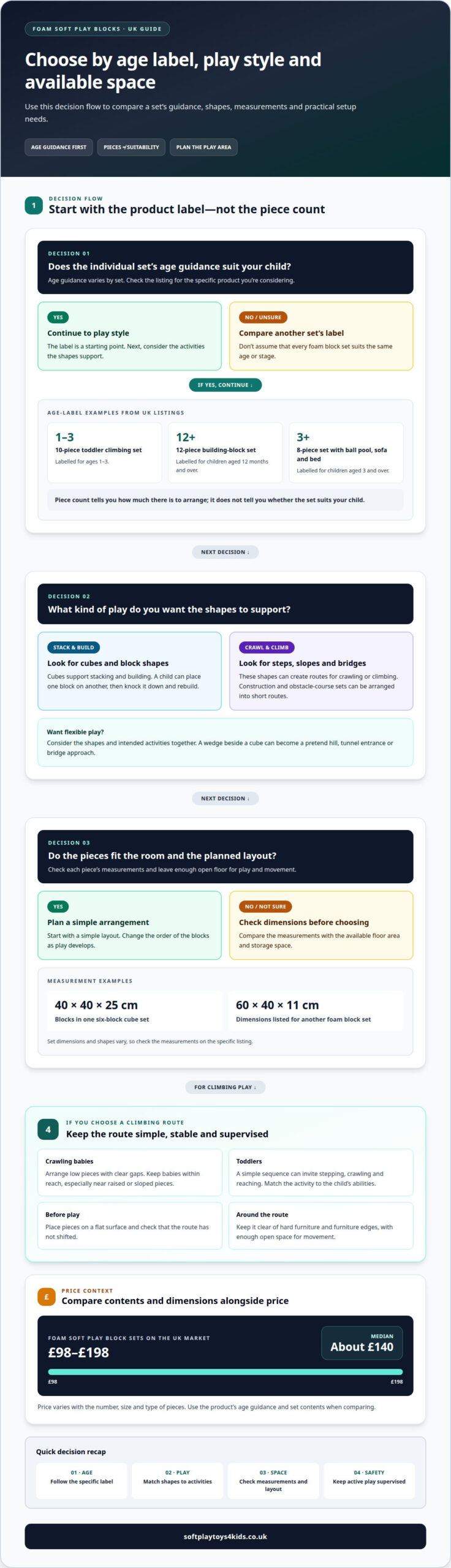
Some foam soft play sets are labelled suitable from 1 year old. Age guidance varies by set, so use the individual product’s label rather than assuming every block set suits the same stage. For example, a 10-piece toddler climbing set is labelled for ages 1-3, while an 8-piece set with a ball pool, sofa and bed is labelled for ages 3 and over.
Piece count tells you how much there is to arrange, but not whether a set suits your child. A 12-piece foam building-block set is labelled for children aged 12 months and over. Look at its shapes and intended activities too: cubes support stacking and building, while steps, slopes and bridges create routes for crawling or climbing. Choose a layout that fits the child’s current play and the space available.
Sets may include cubes, rectangular blocks, wedges and larger climbing elements. A six-block cube set, for instance, has blocks measuring 40 × 40 × 25 cm. Other listings give dimensions of 60 × 40 × 11 cm for a foam block set, showing why checking each piece’s measurements helps you plan storage and floor space. Colours also vary, from simple combinations to brighter mixes; select a look that works in the room without letting colour distract from the set’s age guidance.
Construction and obstacle-course sets combine pieces into short routes for toddlers to crawl over, step across or climb. Begin with a simple arrangement, then change the order of the blocks as play develops. Keep the route clear of hard furniture and supervise active play, especially while a child is learning to balance.
For UK safety, check the product information and age guidance for the specific set you’re considering. Don’t assume that a claim or feature listed for one product applies to other foam blocks.
Foam soft play block sets on the UK market typically cost between £98 and £198, with a median of about £140. The price varies with the number, size and type of pieces, so compare the set contents and dimensions alongside its age guidance.
Foam climbing blocks for babies and toddlers
Foam climbing blocks turn floor play into a short route to explore. For babies who are crawling, arrange low pieces with clear gaps between them. Toddlers can try a simple sequence of stepping, crawling and reaching. Stay close during active play and keep the route away from furniture edges.
Stacking adds a different challenge. A child can place a cube on another block, knock the structure down, then rebuild it. Keep early stacks low and stable, and change the arrangement as play shifts. A wedge beside a cube, for example, can become a pretend hill, tunnel entrance or bridge approach.
Imaginative play gives familiar pieces new roles. A rectangular block might become a pretend seat, while a curved piece suggests a tunnel. Join children in naming parts of the route, then let them decide what happens next. Make-believe keeps familiar shapes interesting without adding more equipment.
Choose pieces to suit the play you have in mind. A set designed for climbing may include slopes or steps, while a cube-focused set offers more options for stacking and building. Consider the room’s floor area, too, and leave enough open space around the route for children to move without bumping into hard objects.
Foam blocks don’t replace supervision or a clear play space. Before play, place the pieces on a flat surface and check that the route hasn’t shifted. Keep babies within reach, especially near raised or sloped pieces. Check the product description for its materials and finish rather than assuming every climbing set has the same cover.
If a route sits beside an exposed column, column padding can be a useful addition to the surrounding play area. Keep the climbing layout itself simple, stable and suited to the child using it.
Product materials and wipe-clean covers
Foam blocks generally have an inner core and an outer cover, but materials vary by product. Read the listing to identify the stated cover material and care method. If a specific listing describes a washable cover, treat that as a feature of that product, not a promise about every foam set.
Covered blocks can add texture to sensory play. A smooth surface, a textured fabric toy and a soft block offer different things for children to touch and explore. Use a block in a creative play scene, such as a pretend shop or pathway. Stacking and handling pieces also give children opportunities to practise motor skills through play.
Removable covers can make cleaning easier, but follow the care instructions for the specific product. Check whether the cover unzips, whether the label gives washing guidance and how it should be dried. If the cover isn’t described as removable or washable, don’t assume it can go in a washing machine. Wipe-clean means the surface can be cleaned as directed, not that every stain will disappear.
For routine care, first remove loose dirt with a clean cloth. Then use the cleaning method stated for the cover and let the surface dry fully before play resumes. Avoid unlisted cleaners, which could affect the fabric or finish. Keep the care instructions with the set so everyone follows the same method.
For a nursery or play centre, prioritise clear care instructions, durable-feeling covers and a cleaning routine staff can follow consistently. Consider how often children share the blocks, where the pieces will be stored and whether the fabric suits your sensory-play plans. A tactile toy alongside a covered block offers another texture, while regular visual checks help staff spot visible damage. In a busy setting, these practical details matter as much as colour or appearance.
Using foam blocks with ball pits and soft play
Foam blocks and a ball pit can create two distinct play zones in one room. Use the blocks for stacking, crawling or pretend construction, and leave a clear route to the pit. This layout gives children options: try a short building challenge, then switch to ball play. Keep blocks clear of the pit entrance so movement between activities stays easy.
Start by setting out only the blocks needed for one activity. For example, place a wedge beside a cube to make a low ramp, leaving open floor around both pieces. Once children have explored that arrangement, change the shapes or direction to invite another attempt. Rearranging encourages problem-solving and coordination through play, without requiring a larger collection of equipment.
A ball pit can inspire imaginative play around the blocks. Children might build a pretend ticket booth, bridge or small waiting area beside the pit. Let them decide what each shape represents, while keeping the play zones distinct enough for crawling and walking. Keep a baby’s block activity simple and close to an adult; older toddlers may enjoy choosing and moving pieces themselves.
Before play, consider how the whole setup fits the room. Leave space for adults to supervise, avoid placing blocks where doors need to open, and keep the route between the pit and other activities clear. In a shared setting, return loose pieces to one defined area after play. This makes it easier to reset the layout for the next group and spot misplaced blocks.
The main takeaway is to combine activities thoughtfully, rather than filling every open space. A clear route, a manageable number of pieces and a fresh arrangement can make one play area feel varied. Plan your soft play setup around the space and the kinds of play children enjoy.
SoftplayToys4kids
SoftplayToys4kids is a natural next step if you’re planning a play area and want to complement foam block activities. Its sensory toys can add different textures and experiences alongside stacking, crawling and imaginative play. Consider how each item will fit the space and the children’s play needs.
Where exposed lamp posts are part of the surroundings, lamp post protectors offer a related safety-padding option. The right additions depend on the layout and how children will use the area.
Contact SoftplayToys4kids to discuss your soft play requirements.
Shape a play space that grows with your child
Choosing foam soft play blocks in the UK is a chance to create a play space around your child’s interests, not just fill a corner with equipment. Think about how the setup could change as play shifts from exploring textures to building, climbing and imaginative games. A flexible arrangement gives you room to refresh activities without losing sight of the space and routine that work for your family.
SoftplayToys4kids offers Soft Play Ball Pits, Soft Play Mats and Sensory Toys to complement a play area. If you’re considering how foam blocks might fit your home or setting, take the next step and talk through your requirements.
Contact SoftplayToys4kids to ask about blocks and start planning a play space your child can enjoy.
Frequently Asked Questions
How do I clean and maintain the foam blocks?
Follow the care instructions for each block, since cleaning methods depend on its cover. For routine care, remove surface dirt with a clean cloth and use only the method recommended for that material. Let the cover dry before play resumes. Store blocks somewhere clean and dry, and check seams and surfaces regularly for visible damage.
What does the set include?
What’s included depends on the set: one may focus on foam building pieces, while another combines shapes for climbing or crawling. Before choosing, review the product listing’s contents and dimensions, then consider where each piece will be used and stored. If you’re planning a play route, check that the listed shapes suit the activities you have in mind.
What types and sizes of foam soft play blocks are available in the UK?
UK product ranges include cube-shaped blocks, stacking pieces and sets with shapes for climbing or creating obstacle routes. Set size can refer to the number of pieces or the space they occupy, so these details aren’t interchangeable. Use the product dimensions to plan where a set will fit, and consider whether its shapes support building, imaginative play or movement.
Are foam soft play blocks safe for babies and toddlers?
Choose a set with age guidance that matches the child using it. Some sets are labelled suitable from 1 year old, while others are marked for children aged 3 and over. SoftplayToys4kids states that its equipment meets BS Safety Standards. Keep play supervised and arrange pieces on a clear surface, allowing room for the child to move around them.
Which foam fillings and wipe-clean covers are used in soft play blocks?
Foam blocks have an inner core and an outer cover, but materials and care details vary by product. Read the individual listing for the cover material and whether it is described as wipe-clean, removable or washable. Don’t assume a washable cover can go in a washing machine; follow its stated care instructions to help preserve the fabric and fit.
How do you clean and maintain foam soft play blocks?
Make care part of the playroom routine: clean marks using the product’s stated method, then let the surface dry fully. In shared settings, keep the care instructions accessible so everyone follows the same process. Check blocks for loose stitching, tears or changes in shape, and take any visibly damaged piece out of play until it’s addressed.
Leave a Reply