
Soft Foam Steps for Toddler Stair Training at Home

Soft foam steps for toddler stair training can create a playful route when arranged with a ramp and clear floor space. Use contrasting colours to distinguish sections, and keep the layout simple so your toddler can focus on climbing, stepping and exploring. This is an indoor play setup, not a substitute for learning to use household stairs with an adult.
It’s natural to want play to feel exciting while keeping the space calm and manageable. The right arrangement depends on your room, the colours your child enjoys and how you combine steps with other soft-play elements. This guide explains how to plan the layout, make colour choices and use play features to shape a toddler-friendly setup, so you can create a space that fits your home and invites little ones to explore.
Key Takeaways
- Choose colours and a layout that suit your home, keeping the play area clear and easy for your toddler to explore.
- Think about how steps, ramps and other soft-play elements can work together to make movement feel playful.
- Match the setup to your toddler’s current movement and confidence, rather than choosing by age alone.
- Explore soft play mats, ball pits and sensory toys to add more opportunities for play around the home.
Product colours and home-space options
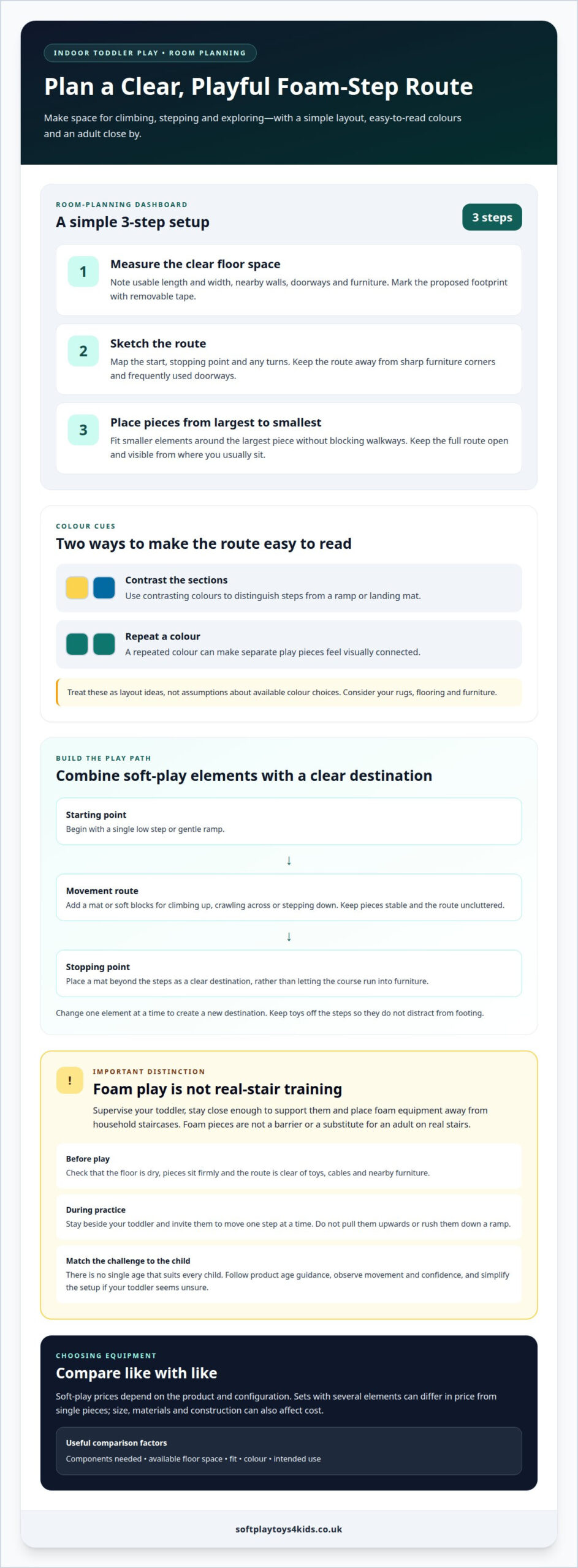
Start by measuring the floor area where your toddler will play. Note the usable length and width, then mark the proposed footprint with removable tape. A corner beside a living-room wall, for instance, may keep the route clear of a doorway. Make sure you can see the play area from where you usually sit. Move loose toys, trailing cables and small tables outside the marked area before setting up.
Choose a colour approach that makes the play route easy to understand. Two contrasting colours can help distinguish the steps from a ramp, while one repeated colour can make separate pieces feel visually connected. For example, use a bright step beside a contrasting landing mat. Treat these as layout ideas, not assumptions about available colour choices. Before selecting a set, consider existing rugs, flooring and furniture, so the colours fit your room rather than compete with it.
Use this simple room-planning sequence:
- Measure the clear floor space and note nearby walls, doorways and furniture.
- Sketch the route from its starting point to its stopping point, including each turn.
- Place the largest piece first, then fit smaller elements around it without blocking walkways.
Room shape helps determine the best arrangement. A narrow space may suit a straight route along one side, while a larger open area can accommodate a gentle turn. Keep the route away from sharp furniture corners and frequently used doorways. If the play area shares space with a dining table, decide where the equipment will go during meals. Marking the footprint helps you judge whether each piece fits before play begins.
Soft-play prices depend on the product and its configuration. A set with several elements will differ in price from a single piece, and size, materials and construction can also affect the cost. For a useful comparison, identify the components you need and the floor space available, then compare similar products. Focus on fit, colour and intended use rather than comparing prices for different configurations.
Soft foam steps and other play elements
Soft steps can become one part of a small indoor movement course. Add a ramp, a mat or soft blocks to invite different ways of moving, such as climbing up, crawling across and stepping down. Keep each piece stable and arrange a clear route between them. For example, place a mat at the end as a defined stopping point, rather than letting the course run into furniture.
What alternatives to foam steps can help toddlers practise stair climbing? A low, stable step or gentle foam ramp offers a smaller change in height, with an adult nearby. For movement without a step, invite your toddler to crawl over cushions or step across soft blocks laid flat on the floor.
Imaginative play can give each movement a purpose. Your child might climb a foam slope to reach a cushion “island”, then crawl back along a mat “path”. Keep the story simple and the route open; toys on steps can distract from footing. Change one element at a time, such as moving a block to create a new destination.
Some climbing sets include tunnels, adding a crawl-through section between climbing pieces. Place the tunnel on a clear, level part of the play area, with its entrance and exit unobstructed. A tunnel can make the route feel like an adventure, but it does not teach stair technique by itself. Pair it with a separate, supervised stepping activity.
What safety standards or certifications should UK parents look for in foam play equipment? Look for manufacturer information that identifies applicable UK product-safety requirements, intended age guidance and setup instructions. A certification mark is one part of that information, not a substitute for clear directions on use and care.
Are foam steps suitable for unsupervised use or near real stairs? Supervise your toddler during play and place foam equipment away from household staircases. Foam play pieces are not a barrier or a substitute for an adult on real stairs.
For a play area near hard edges, soft play safety pads can be considered as part of the room’s wider setup.
Foam climbing steps and ramps for toddlers
To practise stair movements, set foam steps on a clear, level floor and stay beside your toddler, guiding each movement calmly. Use soft foam steps for toddler stair training as a supervised play activity, not as a substitute for household stairs. Pieces may shift, and a cluttered route or unsupervised climbing can lead to falls, so keep the area clear and stay within reach.
Age and Developmental Suitability
There is no single age that suits every child; movement skills and confidence develop at different rates. Consider whether your toddler can move towards the steps, change position and attempt a low climb with your support. A child still learning to sit or crawl may prefer a different activity. Follow the product’s age guidance and observe how your child approaches each piece.
Begin with a single low step or gentle ramp rather than a longer climbing route. Notice whether your toddler can pause, turn around or climb down with help. If they reach for furniture or seem unsure, simplify the setup and offer support. These observations help you choose a suitable challenge without treating the equipment as a test or milestone.
Guided Stair-Climbing Practice
For soft foam steps for toddler stair training, practise the movement in a familiar play space, not on household stairs. Sit or kneel beside your toddler and invite them to approach one step at a time. Let them place their hands and feet where they feel steady while you stay close enough to support them.
Keep the route short and uncluttered. For example, place a mat beyond the steps as a clear destination, then pause between climbs. Do not pull your toddler upwards or rush them down the ramp. Calm encouragement lets them focus on each movement. Real stairs still require close adult supervision and appropriate stair safety measures.
Fall Risks and Prevention
A foam piece may slide, separate from another piece or become harder to climb if the floor or equipment is wet. Toys, cushions and nearby furniture can also interrupt the route. Before play, check that the floor is dry, the pieces sit firmly together and the path is clear. Place the setup away from household stairs and hard edges.
Stay beside your child throughout climbing, especially when they turn or descend. Stop play if a piece shifts, becomes damaged or no longer sits securely. Keep siblings from pushing or crowding the route, and do not use the steps for jumping. These checks reduce avoidable hazards, but foam steps cannot prevent every fall.
What age and developmental stage are foam steps suitable for?
There is no single suitable age for every child, so consider movement skills first. A toddler who crawls, pulls to stand or walks independently may approach foam steps differently. Match the activity to what your child can do now rather than treating a birthday as a readiness test. Follow the product’s age guidance, too.
Observe how your child moves before introducing a climb. Can they change position, reach towards a stable surface and respond to your guidance? A child still learning to sit may enjoy floor-level play. If your toddler walks but hesitates at a low step, begin with a ramp or one low climbing piece and stay close.
Use these cues to choose the starting point:
- Crawling: offer a clear floor-level route without a climb.
- Pulling to stand: keep play simple and remain beside your child.
- Walking: introduce a low step, then pause before adding another challenge.
Keep the first activity brief and predictable. For example, invite your toddler to move towards a favourite toy placed on the floor beyond a low step. Let them decide whether to approach, pause or turn back. Avoid placing the toy high up, which may encourage reaching before your child feels steady. Stay within arm’s reach during climbing play.
Read the manufacturer’s instructions on intended use, age guidance and care before setting up the equipment. Reassess the arrangement as your toddler’s movement changes; a route that once felt manageable may become too easy or confusing. Foam steps are play equipment, not a way to teach independent use of household stairs. Keep practice on real stairs separate and supervised.
If your play area includes an exposed column, explore column padding options as part of planning the space around your toddler’s movement.
SoftplayToys4kids
SoftplayToys4kids can help you shape a playful home environment around your toddler’s movement and sensory exploration. While planning stair practice, keep climbing activities separate from household stairs and choose play equipment that suits your child’s stage. Sensory toys can add hands-on discovery alongside supervised movement, giving your toddler another way to explore textures, sounds and play at home.
Think about the room as a whole: the play area, nearby hard edges and how your child moves between activities. SoftplayToys4kids also offers Lamp Post Protectors for settings where protecting a post is relevant. These products serve a different purpose from toddler stair practice, so choose them only where they fit your space and needs.
Contact SoftplayToys4kids to discuss sensory toys for your home play setup.
Build a play space that grows with your toddler
Your toddler’s interests and movement skills will change over time. Treat the home play area as a flexible space for exploration, not a lesson with a fixed finish line. Soft foam steps for toddler stair training can be part of that play routine, while household stairs remain a separate activity. As your child’s interests shift, adapt the play space to offer fresh ways to explore without making every session about climbing.
SoftplayToys4kids offers Soft Play Ball Pits, Soft Play Mats and Sensory Toys. These options can support different kinds of indoor play alongside a thoughtfully arranged home setup. Notice which activities your toddler chooses and what fits comfortably into your room. That can help you decide what kind of play experience to add next, based on your family’s space and routine.
Ready to explore options for your child’s play space? Contact SoftplayToys4kids to discuss options and take the next step towards playful moments at home.
Frequently Asked Questions
How much do toddler foam steps cost in the UK?
These are prices for specific step-slide products, not a general UK price range. Compare the product name and configuration that best suit your home before choosing.
What materials, covers and cleaning methods are best for foam steps?
Follow the manufacturer’s care instructions for the foam steps.
Leave a Reply