
How to Set Up a Soft Calm Down Corner with Foam Mats
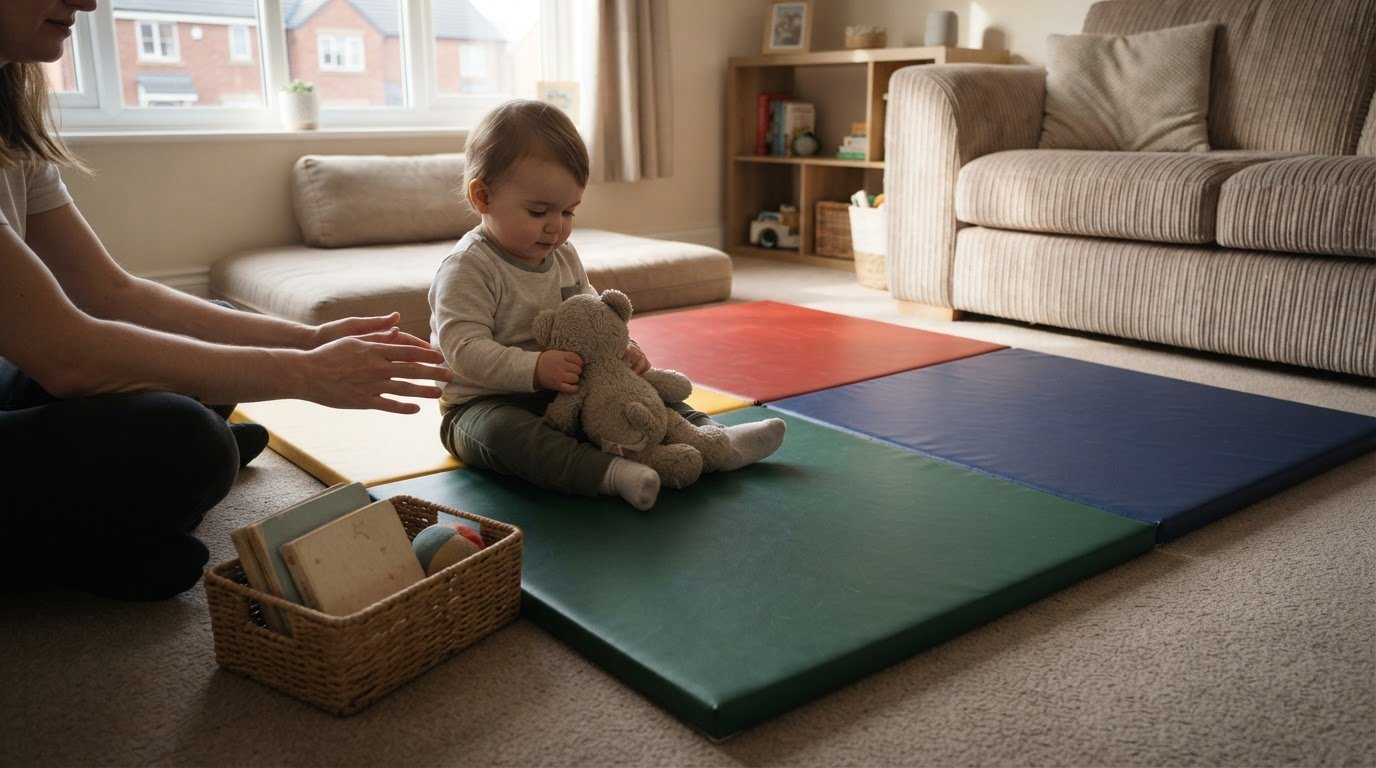
What if a calmer moment starts with a softer place to land? A toddler calm down corner with foam mats can be a simple, cosy spot at home where your child can pause when feelings get big. Choose a quiet area, add a soft mat or rug and plush seating, then make room for a few favourite books, soft toys or quiet activities.
It’s natural to want a comforting space that doesn’t feel like a punishment. A toddler calm down corner works best as a welcoming place your child can learn to use over time, with a familiar adult nearby to reassure them and help them settle.
This guide takes you through setting up the space, from choosing a location and arranging foam mats to selecting a few calming items. It also offers practical ideas for introducing the corner at home or adapting the approach for a classroom. Keep the space soft, simple and suited to your child, then adjust it as you learn what helps them feel at ease.
Key Takeaways
- Choose a quiet spot and create a soft, welcoming base with a mat or rug and comfortable seating.
- Keep calming items simple and familiar, then introduce the space gently so it feels supportive rather than punitive.
- Adapt the corner for home or classroom use with quiet activities that suit the child and setting.
- Learn which foam-mat material and compliance details can help inform your choice for a toddler’s space.
Soft rugs, mats and plush seating
Build the corner around a foam mat or soft rug, then add comfortable seating and a few quiet items. Read the mat’s safety and care information before setting up the space.
-
Check foam mat safety standards
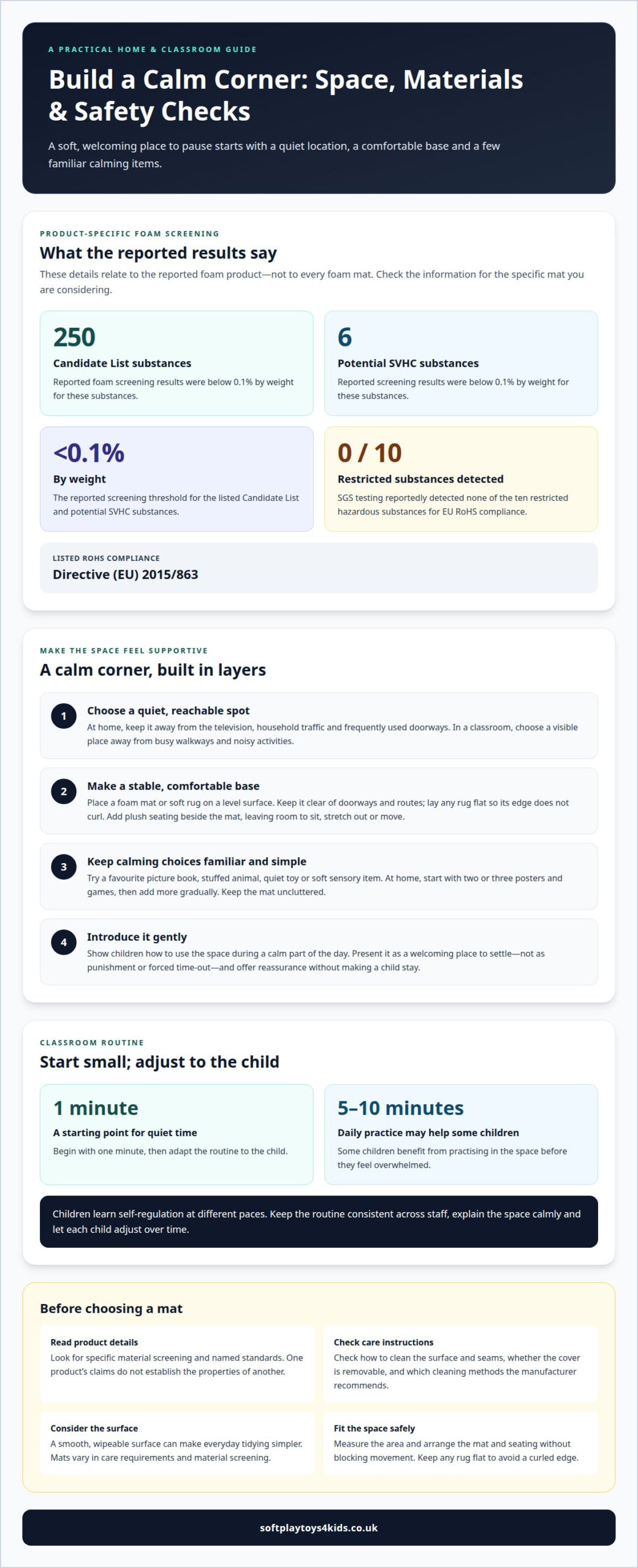
Read the product information for material screening and named standards before choosing a mat. The reported foam screening results were below 0.1% by weight for 250 Candidate List substances and 6 potential SVHC substances. The foam reportedly had none of the ten restricted hazardous substances detected in SGS testing for EU RoHS compliance. Its listed RoHS compliance is with Directive (EU) 2015/863. These details help you assess a specific product, not every foam mat.
-
Assess mat cleaning and chemical content
Check how to clean the surface and seams, and whether the cover is removable. Foam mats aren’t automatically easy to clean or free from harmful chemicals; care instructions and material screening vary by product. Follow the stated cleaning method, especially after spills, and avoid products that conflict with the manufacturer’s guidance. A smooth, wipeable surface can make everyday tidying simpler.
- Choose a stable, comfortable base. Place the mat on a level surface, away from doorways and busy routes, so the corner feels separate without blocking movement. If you add a rug, lay it flat so the edge doesn’t curl or become a trip point. Keep the space small enough to feel like a quiet spot, but large enough for your toddler to sit or lie down.
- Add soft seating and a few calming items. A bean bag chair, favourite stuffed animal, picture book or quiet toy can make the space feel familiar. For sensory play, try a soft, textured fabric book or a simple tactile toy, and notice which items your toddler chooses. Keep the selection uncluttered so the mat remains a clear, comfortable place to pause.
Calm down corners in classrooms
Set aside a defined classroom space where a child can pause when emotions feel overwhelming. Make it welcoming, not a time-out or punishment.
- Choose a quiet, visible spot away from busy walkways and noisy activities. A corner near the classroom book area may work if children can reach it without crossing a crowded play zone. Keep the route clear so a child can come and go without disrupting others.
- Make the space distinct with a soft mat, plush seating and a small boundary, such as a low shelf. Arrange the furniture so the child can sit comfortably while staff can still see the area. Avoid making the corner hidden or isolated.
- Offer a few quiet activities children can use independently. Options include picture books, soft toys, blankets, drawing materials and simple journaling supplies. Choose pencils and other small items with the children using the space in mind, and return each activity to its place after use.
- Explain how to use the corner during a calm part of the day. Show children how to choose a book, hold a soft toy or sit quietly, then practise together. Make clear that the space is available when feelings become difficult, not as a consequence for behaviour.
- Begin with one minute of quiet time, then adjust the routine to the child. Some children benefit from practising in the space for 5-10 minutes daily, before they feel overwhelmed. Children develop self-regulation skills when their brains are ready, so allow different children to learn at different paces.
- Keep the routine consistent across staff. Use simple language such as, “You can choose the book corner to settle,” and offer support without forcing a child to stay. If the classroom layout has exposed columns near the play area, column padding for classroom spaces may help address that separate environmental consideration.
Setting up a calm down corner at home
- Choose a quiet, familiar spot your toddler can reach easily, such as a corner of the living room. Keep it away from the television, household traffic and frequently used doorways. Arrange toddler calm down corner foam mats to fit the available floor space without blocking movement. Leave room for your child to sit, stretch out or move between the mat and seating.
- Use a soft rug or foam mat as the comfortable base. Add a bean bag chair or another plush seat that suits your child and the room. Place the seating beside the mat, not in its centre, so your toddler can choose to sit with a book or lie down quietly. Measure the area first to make sure toddler calm down corner foam mats fit.
- Start with two or three posters and games, then add more gradually. Choose simple pictures, familiar colours or a quiet matching game instead of busy, noisy activities. Keep the display uncluttered and put items where your child can see them from the mat. A small selection makes choices easier and keeps the corner from feeling like another play station.
- Put a few familiar calming items within easy reach. Try a favourite picture book, a stuffed animal and a quiet toy your toddler already enjoys. A soft sensory item gives your child something to touch while settling. Rotate items when interest fades, but keep a familiar favourite so the corner remains recognisable.
- Introduce the space during a calm moment, not only after difficult behaviour. Sit beside your toddler and show them how to choose a book or cuddle a toy. Explain that the corner is available when feelings feel big, not as a punishment or forced time-out. Stay nearby at first, use gentle language and let your child gradually learn when they want to use it.
Are foam play mats safe for toddlers, and what safety standards should parents check?
- Read the mat’s product information before placing it in your toddler’s corner. Foam mats aren’t interchangeable, and a claim about one product doesn’t establish the properties of another. Look for specific material screening and compliance details, and consider them alongside the mat’s construction and intended use.
- Look for the stated REACH SVHC screening results. For the product described, results were below 0.1% by weight for the 250 Candidate List substances and 6 potential SVHC substances. These figures describe that foam’s screening results, not a guarantee about every mat on the market.
- Check whether RoHS compliance is identified and which directive is named. The product’s listed RoHS compliance is with Directive (EU) 2015/863. Treat this as a specific product detail, rather than assuming every foam play mat has the same compliance information.
- Review the testing description, not just the headline. SGS testing for EU RoHS compliance reportedly detected none of the ten restricted hazardous substances. A useful product check identifies the testing organisation, the substances tested and the stated result, rather than relying on a broad “safe” label alone.
- Inspect the mat before each use. Check that its surface, edges and joins remain intact, and remove it from the play area if damage exposes the foam or creates loose pieces. Place it on a firm, level floor away from stairs and doorways, where it won’t shift into a route.
- Match the mat to the whole room, not just the calm corner. Check nearby walls, furniture and exposed columns for hard impact points. Explore safety pads as one option for padding suitable surfaces around a child’s play space.
SoftplayToys4kids
SoftplayToys4kids offers soft play equipment and sensory items that can help you shape a welcoming play environment. For a calm corner, Sensory Toys can add a quiet, hands-on activity alongside a soft place to sit and pause. Choose items that suit your toddler’s interests and keep the space simple, so calming play doesn’t become overwhelming.
If you’re planning a home or classroom space and want suitable play equipment, contact SoftplayToys4kids to discuss your needs.
Make the corner your toddler’s own
A calm corner can grow with your child. Let your toddler help choose a familiar toy or book, then notice what makes the space inviting. Small, thoughtful changes can keep a toddler calm down corner with foam mats in tune with your child’s changing interests, rather than making it feel like a fixed routine.
If you’re shaping a play space around quiet moments, SoftplayToys4kids offers Soft Play Mats, Soft Play Ball Pits and Sensory Toys for children’s play environments. Consider which items fit your room and your child’s needs, then build the space at a pace that feels right for your family.
Contact SoftplayToys4kids to discuss the play equipment that could suit your space. A welcoming little corner is a lovely place to begin.
Frequently Asked Questions
How Do I Set Up a Calming Corner?
Choose a quiet spot your toddler can reach independently. Add a comfortable base, somewhere to sit and a small selection of familiar activities. Introduce the corner during a settled moment, showing your child how to choose an item and use the space. Keep the routine consistent while letting them decide which quiet activity feels right.
What is a calm-down corner?
A calm-down corner is a designated place for a child to pause when emotions feel difficult to manage. It isn’t a punishment or a consequence for misbehaviour. At home, it might be a small area beside a bookcase; in a classroom, it could be a quiet spot with a clear purpose. Its value depends on how adults introduce and support its use.
What is a calm-down corner for toddlers and how can it help?
For toddlers, a calm-down corner offers a familiar place to practise settling with adult support. A caregiver can name the feeling, offer a simple choice such as a book or soft toy, and stay close while the child pauses. This gives the child an opportunity to practise self-regulation, but toddlers develop these skills at different paces and still need responsive care.
How to create a safe toddler calm-down corner at home?
Choose a spot with a clear route in and out, away from stairs, doorways and unstable furniture. Secure nearby items that could tip, and keep small play pieces out of reach if your toddler puts objects in their mouth. Check the area regularly for loose seams, damaged surfaces or curled edges, and keep the corner within an adult’s view.
Which foam mats are suitable for a toddler calm-down corner in the UK?
Choose a mat with clear product information about its materials, cleaning and relevant compliance details. Compare the stated evidence for the exact mat, rather than relying on a general “safe” label. SoftplayToys4kids offers Soft Play Mats for children’s play spaces. Select a style that fits the room and your toddler’s quiet routine, and follow the product’s care instructions.
What size and thickness of foam mat works best for a calm-down corner?
Choose a mat with enough room for your toddler to sit, stretch out or enjoy a quiet activity without covering a walkway. Measure the usable floor area first, allowing space for seating and movement around it. The useful thickness depends on the floor and how you’ll use the corner, so compare product details rather than assuming one measurement suits every home.


