
How to Deodorise Commercial Foam Play Equipment Safely
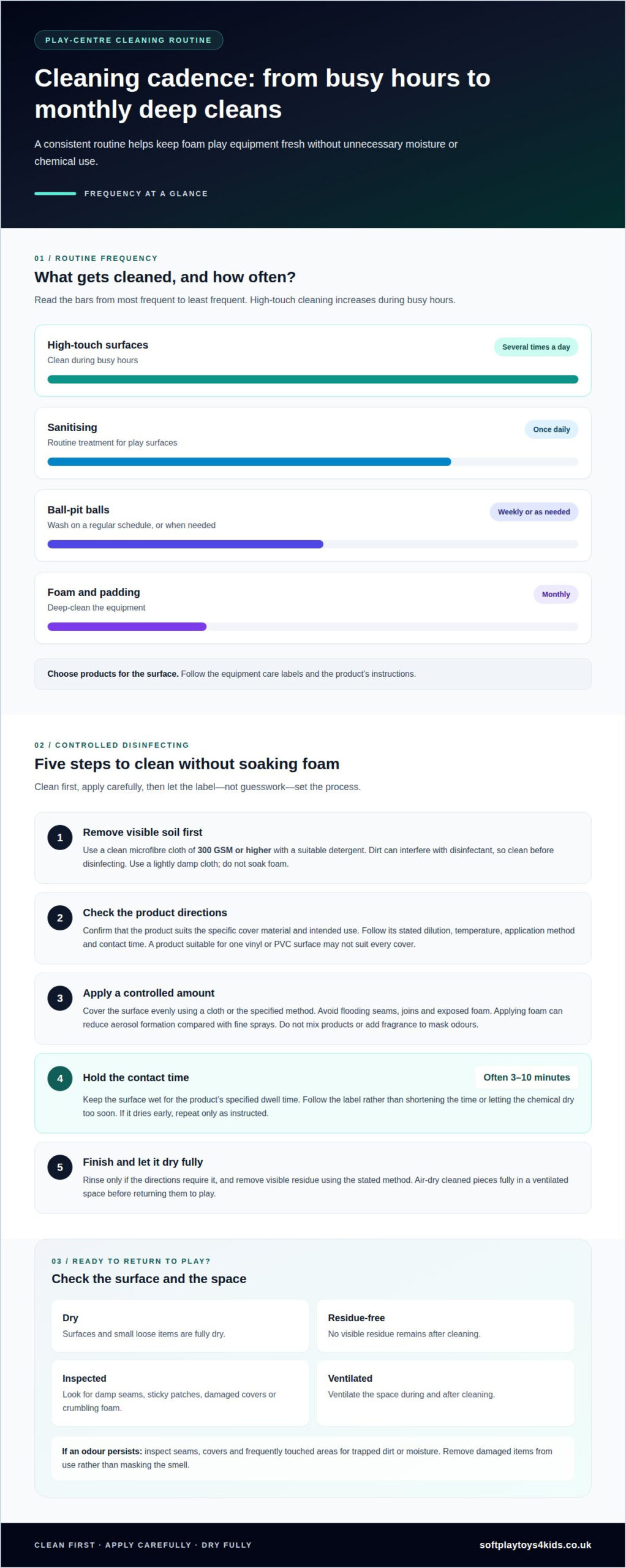
A busy play centre needs a consistent cleaning routine, not a deep clean after every session. Deodorising commercial foam play equipment safely means cleaning high-touch surfaces several times a day during busy hours, sanitising once daily and deep-cleaning foam and padding monthly. Wash ball-pit balls weekly or as needed.
Clean before disinfecting, because dirt can interfere with a product’s effectiveness. Wipe foam with a damp cloth rather than soaking it, and follow the product’s stated contact time before drying the surface.
This guide covers how to set a practical cleaning schedule, apply disinfectant without saturating foam and reduce unnecessary exposure to cleaning chemicals. It also explains how to clean covers and ball-pit balls, respond to bodily-fluid incidents, and decide when equipment is dry and clean enough to return to play. The goal is a fresh, welcoming space without excessive moisture or chemical use.
Key Takeaways
- Choose cleaning products that suit the equipment’s materials, and use them exactly as directed.
- Apply disinfectant in a controlled way to protect foam from excess moisture.
- Reduce airborne droplets by choosing a suitable application method and limiting unnecessary spraying.
- Learn how to care for covers and respond to contamination while keeping play equipment in good condition.
How Often Should Indoor Play Centers Be Cleaned?
In the UK, choose cleaning chemicals suitable for the surfaces being treated and follow the equipment’s care labels. Clean high-touch surfaces several times a day during busy hours, sanitise once daily, wash ball-pit balls weekly or as needed, and deep-clean foam monthly.
-
Identify Persistent Odour Sources
Inspect seams, covers and frequently touched surfaces for spills, grime and trapped moisture. Persistent odours can remain when dirt collects in textured fabric or liquid reaches the foam beneath a cover. Clean visible dirt first, then check whether the smell remains once the material is dry. Remove damaged items from use rather than masking odours with fragrance.
-
Clean and Disinfect Soft-Play Surfaces
Use a clean microfibre cloth of 300 GSM or higher to remove visible soil before sanitising or disinfecting. Cleaning removes dirt; sanitising reduces germs to a safer level; disinfecting kills most germs on a cleaned surface. Choose a chemical labelled as suitable for the specific vinyl or PVC surface. Follow its instructions, including the stated wet contact time.
-
Deodorise Foam Without Damaging It
Wipe foam gently with a damp cloth instead of soaking it, as trapped moisture can encourage mould. Whether a disinfectant works against particular bacteria or viruses depends on its label, target organisms, surface compatibility, dilution and contact time. Don’t assume every chemical is suitable for vinyl or PVC. If an odour persists after proper cleaning, inspect the item more closely, and take torn covers or crumbling foam out of use.
-
Dry and Store Equipment Cleanly
Air-dry cleaned pieces fully in a ventilated space before returning them to play. Make sure small loose toys and interactive elements are dry before returning them to play. Reopen areas only when surfaces are dry, residue-free, inspected, and the space ventilated. Store equipment in a clean, dry environment to limit dampness.
Applying disinfectant without oversaturating foam
A routine for deodorising commercial foam play equipment safely depends on controlled application, suitable products and clear staff procedures. Disinfectant needs the correct contact time, not a waterlogged foam core.
- Remove visible soil first. Wipe the surface with a clean, lightly damp cloth and suitable detergent. Disinfectant works best after cleaning, because dirt can interfere with its action. Let the area dry before applying disinfectant if the product instructions require it. Don’t add extra liquid to compensate for missed soil.
- Check the product directions. Confirm that the disinfectant suits the equipment’s cover material and intended use. Follow its stated dilution, temperature and application method. A chemical suitable for one vinyl or PVC surface may not suit every cover. Keep the label available so staff can follow the same process consistently.
- Apply a controlled amount. Use a cloth or the specified application method to cover the surface evenly. Avoid flooding seams, joins and exposed foam. Applying foam can reduce aerosol formation compared with fine sprays, while measured use helps prevent liquid reaching the core. Don’t mix products or add fragrance to mask odours.
- Hold the contact time. Keep the treated surface wet for the disinfectant’s specified dwell time, often 3 to 10 minutes. Follow the label rather than shortening the time or letting the chemical dry too soon. If the surface dries early, repeat application only as instructed, without soaking the foam.
- Finish according to the label. Rinse only if the product directions require it, then remove visible residue using the stated method. Allow the area to dry fully before use. During weekly checks, look for damp seams, sticky patches or lingering chemical smells. Staff can use these signs to refine their approach to deodorising commercial foam play equipment safely.
For a play-area refresh alongside your cleaning routine, explore column padding.
Reducing aerosol and chemical exposure
Build a low-aerosol cleaning routine around controlled application, suitable products and clear staff procedures. Applying foam can reduce aerosol formation compared with fine sprays, while careful storage and ventilation help keep cleaning tasks organised.
- Choose the application method before cleaning. For broad foam surfaces, use a method that applies stable foam rather than a fine mist. Metered equipment combines water, detergent or disinfectant, and air. Set it to the product’s specified dilution, temperature and pressure. Don’t switch to a spray bottle just to speed up the routine.
- Limit unnecessary chemical use. Remove visible soil with detergent before disinfecting, so disinfectant is not used to tackle dirt. Apply only enough product to cover the target surface. Follow the label’s contact time and any rinsing directions. Extra product can leave residue without improving the process.
- Use cloths for targeted work. For a small mark or break in a cover, apply a suitable product to a cloth if its label permits. Wipe the affected area gently instead of spraying nearby play spaces. Keep used cloths separate from clean ones, then launder or dispose of them according to the site’s routine.
- Set staff and storage controls. Approve cleaning products before staff use them, and don’t allow household cleaners brought from home. Relying on professional commercial vendors such as Pro Clean Supply makes it easier to standardise facility inventory and maintain proper safety protocols. Keep chemicals in designated storage, with containers closed and labels readable. Map high-traffic and lower-risk zones, then assign each space a suitable hygiene routine and standard cleaning equipment.
- Protect staff during application. Read the product label for handling and protective-equipment instructions before each task. Keep people away from the immediate cleaning area, and ventilate the space during and after use. Don’t return equipment to play until the surfaces are dry and the area has been ventilated.
How do you deodorise foam play equipment without damaging the foam or covers?
- Blot spills promptly. Use a clean cloth on bouclé or corduroy covers, pressing gently instead of rubbing. For a mark, spot-clean with a little mild soap and water. Rubbing can push dirt further into textured fabric, while careful blotting lifts it without rough treatment.
- Isolate bodily-fluid contamination. Remove the affected item from play and follow your centre’s approved incident-cleaning procedure. Clean the cover and any exposed surfaces with products suitable for their materials. If liquid may have passed through the cover, treat the foam separately and keep the item out of use until it is fully dry.
- Clean eco-leather covers gently. Wipe with a damp cloth and mild soap, then dry with a soft towel. Avoid bleach and harsh solvents, which can damage the covering. Don’t use scented sprays to hide an odour; remove the residue or spill causing it instead.
- Wash removable covers carefully. Zip each cover closed before washing to protect the zip and fabric. Use a gentle, cool cycle with mild, non-bio detergent, then air-dry the cover rather than tumble-drying it. If a clean cover feels snug, refit it while slightly damp so the fabric can ease back into place.
- Keep foam blocks out of the washing machine. If liquid gets through a cover, blot the foam and air-dry it fully in a well-ventilated room before refitting the cover. Don’t trap damp foam inside a cover, as lingering moisture can contribute to mould and persistent odours.
- Inspect before returning equipment. Follow any spray’s stated contact time, then dry the surface as directed. Take torn covers or crumbling foam out of use. If an odour remains after cleaning and complete drying, keep the item aside for assessment rather than masking the smell.
For play spaces that need protective padding, explore column padding.
SoftplayToys4kids
SoftplayToys4kids helps play centres create welcoming spaces with children’s soft-play equipment. Once your cleaning routine is in place, consider whether worn or damaged items need replacing, or whether your play area needs new equipment to suit its layout and use.
The range includes Soft Play Mats, Soft Play Ball Pits, Sensory Toys and Lamp Post Protectors. These products support different play and protection needs, while good care practices help keep equipment in better condition. Choose the items that suit your space and the play experiences you want to provide.
For questions about suitable soft-play equipment for your setting, contact SoftplayToys4kids.
Make your next play-space decision with confidence
A fresh-smelling play area is also a chance to review how well the space supports children’s play and your team’s daily routines. If equipment is worn, difficult to clean or no longer suits how children use the area, consider whether a change could make the environment more practical. A thoughtful approach to deodorising commercial foam play equipment safely can inform those decisions without relying on strong scents to cover persistent odours.
SoftplayToys4kids offers Soft Play Ball Pits, Soft Play Mats and Sensory Toys for play spaces with different needs. Choose equipment that fits your setting and helps create an inviting place for children to explore, move and play.
Contact SoftplayToys4kids to discuss equipment for your play space and take the next step towards a welcoming environment.
Frequently Asked Questions
What cleaning products are safe for commercial foam play equipment?
Use products labelled as suitable for the equipment’s specific cover and surface materials. For example, mild soap and water can clean eco-leather covers, while disinfectants should be selected for the surface and used according to their labels. Before introducing a new product across a play area, spot-test an inconspicuous patch and inspect it after 24 hours for changes.
What are the step-by-step cleaning and deodorising procedures for commercial soft play?
Start by removing the affected item from play, especially after a spill or bodily-fluid incident. Clear loose debris, then clean the soiled area with a suitable detergent and clean cloth. Apply a compatible disinfectant as directed, including its contact time. Rinse only if the product instructions require it. Dry the item fully, check for residue or damage, then return it to use.
What chemicals and cleaning methods should be avoided on foam play equipment?
Avoid household bleach and harsh solvents on soft-play covers, as they can damage materials. Don’t soak foam or put foam blocks in a washing machine. Avoid mixing cleaning chemicals, adding fragrance to mask smells or using an unapproved household cleaner. These shortcuts can leave residue, damage covers or introduce moisture into foam that is difficult to dry.
How often should commercial soft play equipment be cleaned and deodorised?
Clean high-touch surfaces several times a day during busy periods, and sanitise once daily. Wash ball-pit balls weekly or as needed, and deep-clean foam and padding monthly. Clean spills and bodily-fluid contamination promptly rather than waiting for the next scheduled clean. Increase targeted cleaning during changeovers or after maintenance when surfaces need attention.
What UK regulations and hygiene guidance apply to cleaning commercial soft play equipment?
In the UK, choose cleaning chemicals suitable for the surfaces being treated and follow the equipment’s care labels. Clean before sanitising or disinfecting, and follow each product’s directions.
Which disinfectants are effective against bacteria and viruses on soft play equipment?
Use a disinfectant whose label covers the target bacteria or viruses and is compatible with the equipment’s surface. Follow its dilution instructions and stated wet contact time.