
Safe Ways for Toddlers to Burn Energy Indoors: A Guide
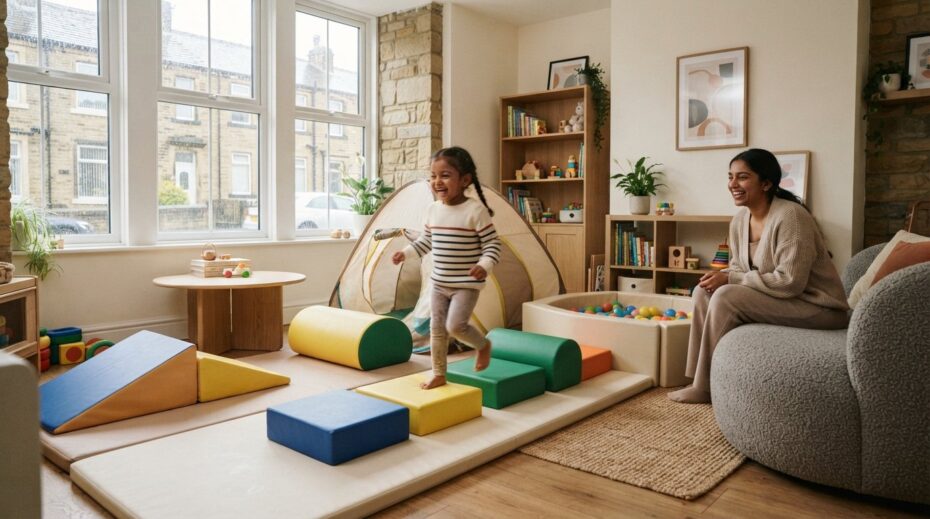
It’s 10:00 AM on a dreary, rainy Tuesday, and your toddler has already scaled the back of the sofa, attempted a daredevil jump, and narrowly missed the sharp wooden coffee table. Every parent knows that familiar mix of dread and exhaustion when wet weather traps boundless physical energy inside four walls. You want to ditch the screen-time guilt without watching your living room descend into dangerous clutter, which is why discovering safe ways for toddlers to burn energy indoors is an absolute lifesaver.
You shouldn’t have to constantly referee risky climbing stunts just to satisfy your child’s natural need for vigorous movement. In this guide, you’ll discover fun, screen-free, and injury-proof indoor activities designed to channel that energetic momentum safely on rainy days. We’ll explore simple daily games, gross motor play strategies, and clever impact protection that cushions high-impact tumbles, leaving you with a protected home and a blissfully tired toddler ready for naptime.
Key Takeaways
- Understand why toddlers require at least 180 minutes of daily physical movement to regulate their nervous systems and develop crucial gross motor skills.
- Discover fast, zero-equipment active games that channel boundless energy without turning your living room into chaotic clutter.
- Learn how to design safe ways for toddlers to burn energy indoors by creating continuous, circular obstacle courses with soft landing zones.
- See how commercial-grade play mats and soft play ball pits protect household furniture while cushioning high-impact tumbles.
- Master sensory “heavy work” transition routines that effectively bring adrenaline levels down before naptime or bedtime.
Why Toddlers Need Vigorous Indoor Gross Motor Play Every Day
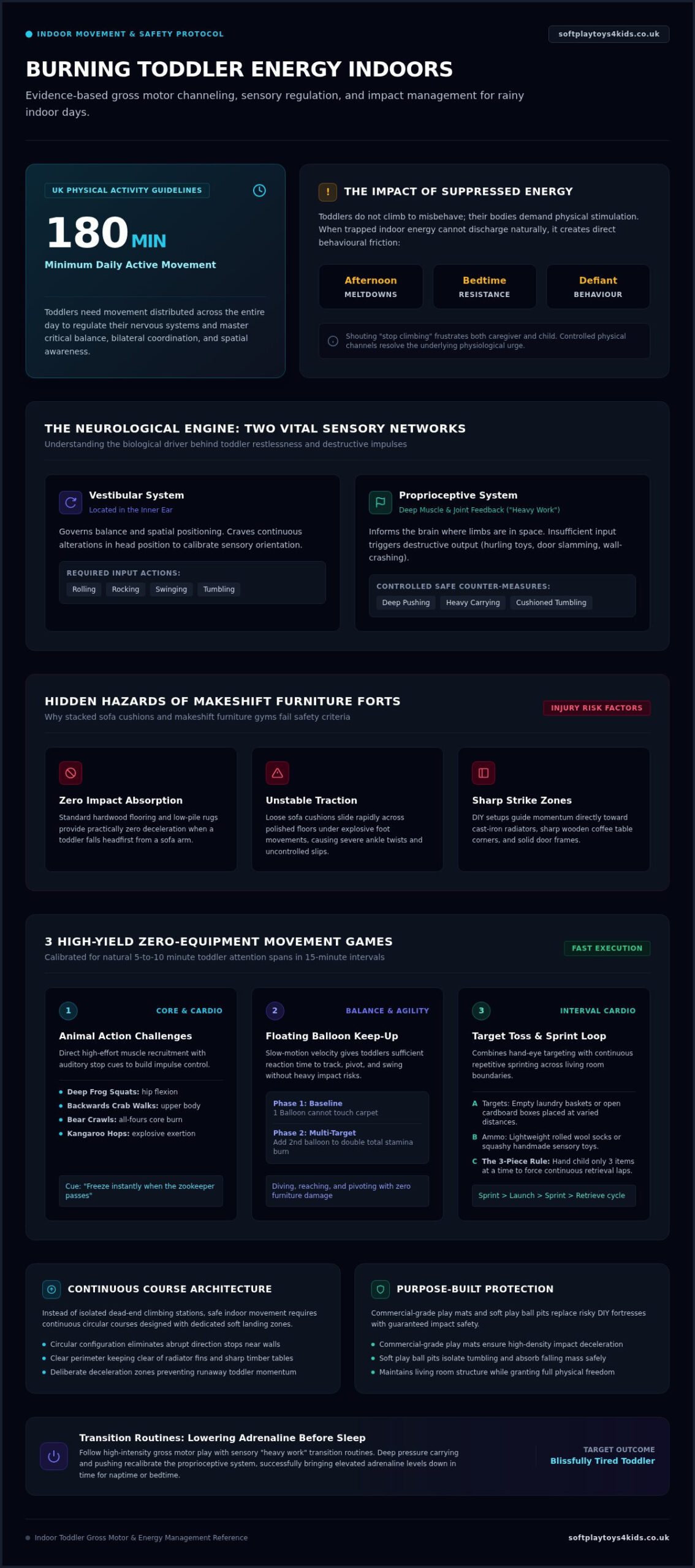
According to UK physical activity guidelines, toddlers need at least 180 minutes of active movement spread throughout the day. When bad weather strikes, that intense physiological drive doesn’t disappear; it simply bounces off the walls. Developing crucial gross motor skills through full-body movement helps little ones master balance, bilateral coordination, and spatial awareness. When kids don’t get this daily physical release, suppressed energy quickly surfaces as afternoon meltdowns, bedtime resistance, and defiant behaviour.
Constantly shouting “stop climbing” or “sit still” frustrates both you and your child. Toddlers don’t climb to misbehave; their bodies are screaming for physical stimulation. Implementing proactive, safe ways for toddlers to burn energy indoors allows you to channel that natural enthusiasm into healthy physical development while keeping your living room intact.
Understanding Toddler Energy: Vestibular and Proprioceptive Needs
Toddler restlessness is driven by two vital sensory networks: the vestibular and proprioceptive systems. The vestibular system, located in the inner ear, craves changes in head position through rolling, rocking, swinging, and tumbling. Meanwhile, proprioception involves deep pressure feedback from muscles and joints, often called “heavy work”. When a toddler lacks sufficient proprioceptive input, they seek it out destructively by hurling wooden toys, slamming doors, or throwing themselves into walls. Giving them controlled ways to push, carry, and tumble satisfies these neurological cravings safely.
The Hidden Hazards of Improvised Living Room Gyms
Tempting as it is to stack couch cushions into an impromptu indoor assault course, DIY setups introduce serious hazards into family living spaces:
- Zero impact absorption: Standard hardwood flooring and low-pile rugs provide practically no deceleration when a toddler falls headfirst from a sofa arm.
- Unstable traction: Loose sofa cushions easily slide across polished floors under explosive foot movements, causing severe ankle twists and uncontrolled slips.
- Sharp strike zones: Improvised obstacle courses bring children dangerously close to cast-iron radiators, sharp coffee table corners, and solid door frames.
Creating safe ways for toddlers to burn energy indoors requires intentional boundaries and purpose-built impact protection rather than risky makeshift furniture fortresses.
Top Zero-Equipment Movement Games to Exhaust Energetic Toddlers
You don’t need a house full of complex gear to tire out an active child on a rainy afternoon. Toddlers thrive on short, intensive bursts of movement that align with their natural five-to-ten-minute attention spans. By turning simple physical challenges into fast-paced games, you provide high-efficiency output without spending hours resetting complicated rules. These structured activities represent some of the most reliable, safe ways for toddlers to burn energy indoors when bad weather locks you inside.
High-Intensity Animal Action Challenges
Animal games recruit major muscle groups while requiring zero cleanup. Call out movements that demand significant cardiovascular and core effort: deep frog squats, backwards crab walks, bear crawls on all fours, and explosive kangaroo hops. Model exaggerated forms yourself so your toddler fully flexes their hips and engages heavy breathing. Introduce auditory stop cues, like freezing instantly when the imaginary zookeeper walks past, to build impulse control alongside physical exertion.
The Floating Balloon Keep-Up Challenge
Balloons move in slow motion, giving toddlers the extra reaction time they need to track, adjust balance, and swing upward successfully. Clear the immediate floor area of stray shoes or toys, then launch a single balloon with the rule that it cannot touch the carpet. Want to double the energy burn? Add a second balloon. Diving, reaching, and pivoting across the room burns off rapid stamina without the impact risks of heavy balls.
Living Room Floor Target Toss
Target games combine hand-eye coordination with repetitive sprinting. Place empty laundry baskets or open cardboard boxes at varying distances across the room. Hand your toddler safe, lightweight projectiles like rolled-up wool socks or squashy handmade sensory toys from our workshop. Instead of keeping a large pile of items beside them, give them only three pieces at a time. This requires them to launch their throws, sprint across the room to retrieve them, and race back to the starting line, delivering constant cardiovascular exercise.
Running these games in fifteen-minute intervals creates manageable rhythms throughout wet days, giving your child the heavy exertion they crave while maintaining control of your home environment.
How to Build a Safe Indoor Obstacle Course
An indoor obstacle course is one of the most effective, safe ways for toddlers to burn energy indoors while keeping physical activity firmly under your control. Unlike a chaotic free-for-all across living room furniture, a structured circuit channels physical momentum into a predictable loop. Designing a continuous, cyclical path prevents sudden collisions, protects little joints from hard floor impacts, and exhausts multiple muscle groups at once.
Step 1: Mapping the Course Flow and Hazard Zones
Map out a distinct one-way loop around your living room so your toddler doesn’t backtrack into blind corners. Maintain a generous clearance zone around television units, low glass tables, and heavy radiators. Roll up loose decorative rugs that easily skid across smooth surfaces, replacing them with non-slip flooring that anchors both the launch and landing points of the route.
Step 2: Creating Multi-Level Movement Stations
Alternate movements between crawling low, stepping high, and controlled landings. Rather than using dining chairs that tip over when scaled, introduce sturdy cardboard tunnels for crawling, alongside firm foam blocks to challenge balance. At every dismount point, protect developing ankles and knees with high-density soft play mats that absorb heavy kinetic shock far better than loose cushions.
Step 3: Timing and Gamifying the Circuit
Transform the track into an exciting daily challenge using upbeat music or a large visual sand timer. Focus on precision and control by challenging your toddler to complete five smooth laps rather than sprinting at breakneck speed. Celebrate their successful course runs with big sensory rewards, like firm bear hugs or exuberant high-fives, reinforcing their achievement while burning off serious physical stamina.
Building structured obstacle tracks provides reliable, safe ways for toddlers to burn energy indoors, turning rainy afternoons into constructive physical development without sacrificing household safety.
Dedicated Indoor Play Equipment for Safe Energy Burning
Domestic sofas and dining chairs simply aren’t engineered to withstand high-velocity toddler athletics. While homemade obstacle courses offer quick entertainment, purpose-built soft play structures deliver the heavy kinetic absorption developing joints need. High-density commercial foam absorbs abrupt dismounts, resists tipping, and protects household walls from structural wear. Integrating dedicated, British-made equipment into your living space provides repeatable, safe ways for toddlers to burn energy indoors without subjecting your furniture to constant abuse.
Soft Play Ball Pits: Cardio and Sensory Integration
Wading through plastic balls creates continuous, gentle resistance against developing leg and hip muscles. Diving straight into a cushioned ball pit satisfies deep tactile cravings while removing the risk of head collisions against hard surfaces. Toddlers build upper-body strength by scooping, tossing, and gathering balls, turning repetitive physical effort into immersive sensory play.
Impact-Absorbing Soft Play Mats and Safety Pads
High-resilience foam mats create durable landing zones under climbing apparatus or next to active zones. Heavy-duty vinyl covers provide non-toxic, wipe-clean hygiene after sweaty play sessions, while dense interior foam cushions high-impact tumbles. Check out the ultimate guide to buying soft play equipment to understand foam density ratings and durability standards for domestic spaces.
Sensory Toys and Balance Apparatus
Active gross motor games don’t always require massive floor tracks. Textured stepping blocks challenge dynamic arch strength, while curved rocker boards demand continuous core stabilisation within a compact footprint. Explore our complete guide to sensory toys to discover how targeted balance tools accelerate physical development without crowding your lounge.
Ready to build a safe, impact-absorbing play sanctuary right in your living room? Explore our handmade British collection and shop our durable soft play equipment today.
Transition Routines: Calming Down After High-Energy Play
Demanding that a toddler instantly sit down and read quietly after thirty minutes of intense climbing almost guarantees a tearful meltdown. When adrenaline is surging, an abrupt halt shocks their developing nervous system. Effective indoor play sessions don’t just stop; they taper off intentionally. Finding safe ways for toddlers to burn energy indoors is only half the equation; guiding that intense physiological momentum down into calm, restorative rest is what saves your sanity.
Heavy Work Activities for Nervous System Regulation
Proprioceptive “heavy work” provides the perfect bridge between wild cardio bursts and quiet downtime. Applying deep pressure to joints and muscles stimulates the parasympathetic nervous system, naturally reducing cortisol levels. Try these soothing physical activities to ground their body:
- Challenge your child to push a laundry basket loaded with hardback books across the carpet.
- Guide them through slow, deliberate bear stretches or gentle push-ups flat against the living room wall.
- Offer deep-pressure physical comfort by wrapping them securely like a burrito inside soft safety pads or giving long, firm bear hugs.
Sensory Calming and Room Reset
Once muscle exertion winds down, adjust the sensory atmosphere of your living room. Switch off harsh overhead spotlights, switch on warm side lamps, and put on soft classical melodies or an audiobook. Rather than cleaning up alone while your toddler wanders off to find more mischief, integrate pack-away time into their wind-down routine. Count out plastic balls as they drop them back into the pit or have them slowly push foam blocks into place. If you are planning an organised playroom layout, our parent overview on what is soft play offers practical tips for balancing active gross motor spaces with quiet, restful zones.
Establishing a structured wind-down sequence turns potential naptime battles into peaceful routines, proving that safe ways for toddlers to burn energy indoors can seamlessly transition into quiet household harmony.
Turn Rainy Days into Safe Physical Adventures
Trapping energetic toddlers indoors doesn’t have to mean surrendered living rooms or endless screen-time battles. By understanding the sensory biology behind their movement needs, you can easily implement safe ways for toddlers to burn energy indoors. Whether you run rapid animal action challenges, create structured looping obstacle courses, or guide heavy-work calming transitions, proactive planning keeps playtime constructive and safe.
Investing in purpose-built impact protection transforms active play into a worry-free daily habit. At SoftplayToys4kids, we manufacture commercial-grade soft play equipment handmade in West Yorkshire, UK. Designed with durable, non-toxic, wipe-clean materials, our foam structures are trusted by UK nurseries, schools, and playgroups to protect adventurous children and domestic furniture alike.
Take the chaos out of wet weather play. Explore handmade British soft play equipment for active toddlers and give your little explorer the joyful, safe movement zone they deserve.
Frequently Asked Questions
How can I tire out my toddler indoors on a rainy day?
Combine short cardiovascular bursts with full-body muscle resistance games across a structured loop to tire out an indoor toddler quickly. Rotate through animal walks, timed target throwing, and obstacle courses instead of allowing uncontrolled running. Structuring safe ways for toddlers to burn energy indoors targets their vestibular and proprioceptive systems efficiently in ten-minute blocks, releasing trapped physical stamina while keeping home play contained and thoroughly controlled.
What are the best indoor activities to burn toddler energy without screens?
Sensory-rich gross motor challenges like balloon keep-up, crawling tunnels, and ball pit diving burn the most energy without screens. These activities demand balance, spatial awareness, and full-body physical engagement from growing toddlers. Incorporating dedicated play mats ensures safe ways for toddlers to burn energy indoors, allowing little ones to jump, tumble, and roll safely without parents having to rely on television distractions during wet afternoons.
Is it safe to let my toddler jump off the sofa onto pillows?
No, letting a toddler jump from sofas onto standard household pillows carries significant injury risks. Bed pillows and sofa cushions slip easily across wooden floors and compress instantly under dynamic body weight, failing to cushion developing ankles, knees, and spines. For safe high-impact jumping, use dense, commercial-grade soft play mats that grip the floor securely and absorb deceleration forces properly without bottoming out.
How much physical exercise does an active toddler need each day?
UK physical activity guidelines recommend that toddlers achieve at least 180 minutes of active movement spread across each day. This daily total includes light movement, energetic active play, and cardiovascular bouts like jumping, running, and climbing. When wet weather prevents outdoor park trips, structuring vigorous indoor play sessions ensures your child hits their essential developmental milestones without suffering restless afternoon tantrums or disrupted sleep.
What indoor play equipment is best for burning energy in small spaces?
Compact soft play ball pits and textured sensory balance blocks offer maximum energy expenditure within smaller domestic rooms. Wading through hundreds of plastic balls creates continuous, low-impact resistance that exhausts large leg muscles, while wobble boards and stepping pads challenge core balance within a tiny footprint. High-density foam pieces can also be easily stacked and tidied against living room walls when playtime finishes.
How do I prevent my toddler from crashing into furniture while running indoors?
Prevent indoor collision hazards by establishing one-way circular movement circuits and isolating hard room edges. Toddlers lack mature peripheral vision and braking control when running at top speed indoors. Establish clear running boundaries with floor play mats, remove low wooden tables from the activity zone, and install durable column padding or safety pads around hazardous architectural corners and radiator covers.
Why does my toddler get wilder when they are actually overtired?
Overtired toddlers experience a sudden surge of cortisol and adrenaline that triggers hyperactive, dysregulated behaviour. Because their immature nervous systems cannot regulate this stress hormone spike, fatigue often looks like wild running and increased defiance. Counteract this adrenaline rush with proprioceptive heavy work, such as pushing a weighted toy basket or receiving firm, reassuring hugs, to help their bodies settle before bedtime.
Leave a Reply