
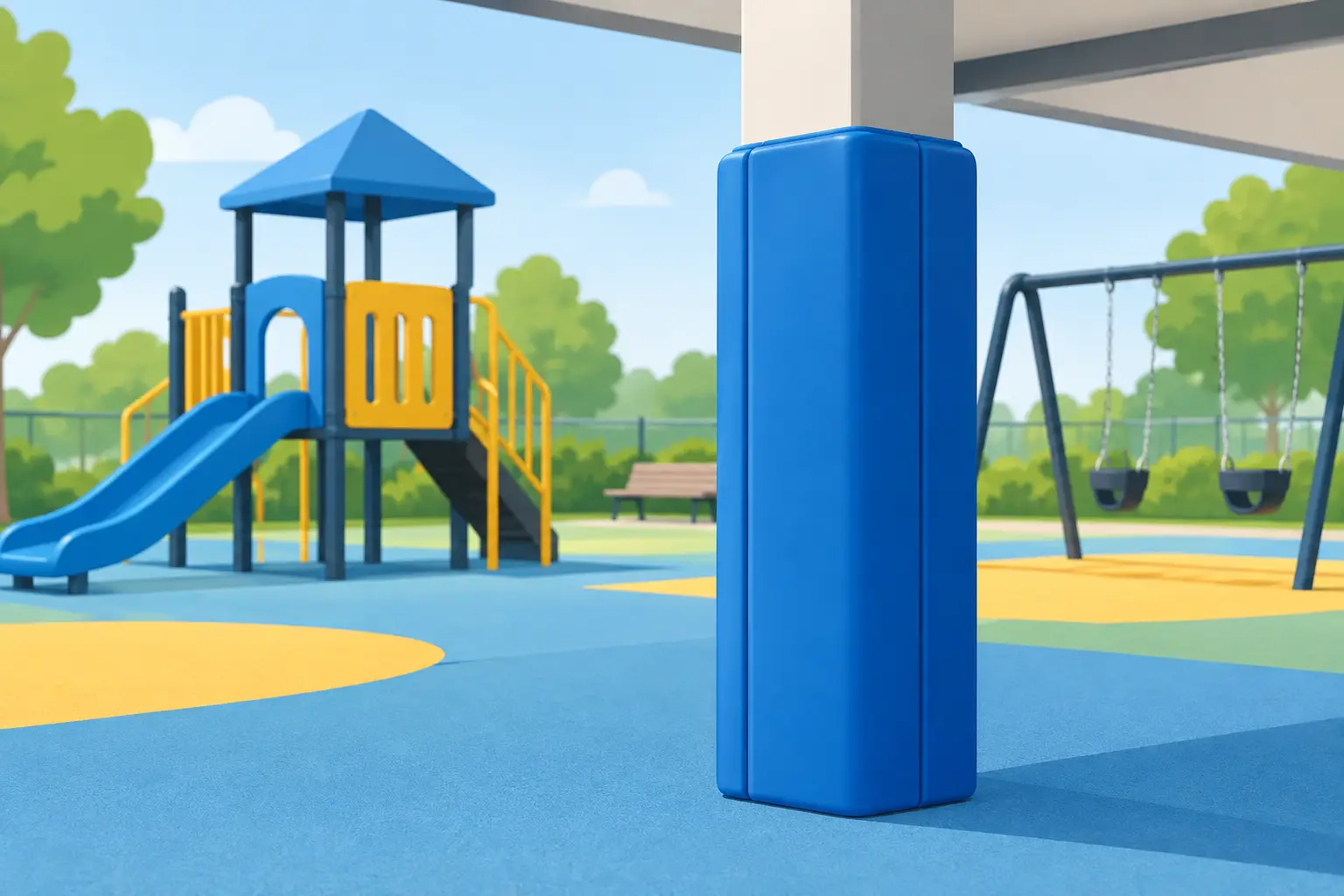
Column Impact Guards for Safer Play Areas
A hard concrete or steel column can turn an otherwise well-planned play space into a constant worry. Children run, climb, carry toys and change direction without warning. Column impact guards add a soft, protective barrier around fixed posts and pillars, helping to reduce the risk of painful bumps while making the whole area feel safer, brighter and more finished.
For parents creating an indoor play corner, a guard can make an awkward structural feature far less hazardous. For nurseries, schools, playgroups and commercial soft play centres, it is a practical safety measure that protects both children and the building itself during busy sessions.
Why column impact guards matter in active play spaces
Posts are easy to overlook during the planning stage because they are part of the building, not part of the play equipment. Yet they often sit exactly where children are most active: beside a ball pit, near a climbing area, at the edge of a movement zone or along a busy route between rooms.
A properly fitted impact guard cushions accidental contact with firm surfaces. This is especially useful for toddlers, who are still developing balance and spatial awareness, but it matters for older children too. Fast-paced games, excited group play and congested sessions can all lead to knocks that no adult can fully prevent.
The benefit is not only physical protection. Brightly coloured padded columns can help define the layout of a room, making posts more visible and turning an industrial-looking space into one that feels designed for children. In a commercial setting, that attention to detail reassures families before a child has even started to play.
Choosing the right column impact guards
The best guard is not simply the thickest option available. It needs to suit the shape, size and position of the column, as well as the type of activity taking place around it. A slim square post beside a quiet baby area needs a different solution from a large round pillar positioned next to slides, climbing blocks or a busy entrance.
Measure the column, not just the room
Start with accurate measurements. For square or rectangular posts, measure each face and the full height that needs covering. For round columns, measure the circumference as well as the height. Include any skirting, base plates, pipework or uneven features that may affect the fit.
It is sensible to consider the likely impact height too. Full-height protection can give the cleanest result in commercial venues and helps prevent children from reaching an exposed section. In some domestic spaces, a lower guard may be enough where the risk is concentrated around toddler height. There is no one-size-fits-all answer, which is why made-to-measure options are often the better investment.
Match the foam protection to the activity
Foam is the part doing the hard work. It should offer meaningful cushioning while retaining its shape through repeated knocks, leaning and everyday use. Cheap, low-density padding can compress quickly, leaving a post looking tired and providing less protection where it is needed.
Higher-activity zones generally deserve more substantial padding. Think carefully about columns close to climbing frames, soft play shapes, balance equipment, ride-on toys or ball pits. In these areas, children may hit the post with more momentum than they would in a reading corner or calm sensory area.
The outer cover matters just as much. A hard-wearing wipe-clean finish is the practical choice for nurseries, schools and play centres where surfaces need regular cleaning. At home, it still makes life easier after sticky hands, snack time and creative play. Choose a material that can cope with normal cleaning without cracking, peeling or becoming difficult to maintain.
Think about edges, fixings and finish
A column guard should fit securely and sit neatly around the post. Loose padding can shift, create gaps or become tempting for children to pull at. The fixing method must suit the column and allow the guard to stay in position through daily use.
Look closely at joins and exposed edges. A well-made guard should have a tidy, professional finish, with covers and fixings designed for a child-focused environment. It is worth paying for the right fit rather than trying to adapt generic foam sheets around a post. The latter can appear cheaper at first, but poor coverage and frequent replacement soon remove any saving.
Where should padded post protection be used?
Column protection is valuable wherever children move freely around fixed structural features. The most obvious locations are indoor soft play rooms, nursery halls and school activity spaces, but the same thinking applies to church halls, community centres, sensory rooms, waiting areas and home playrooms.
Pay particular attention to corners, routes between activities and areas where adults may have limited sight lines. A column behind a slide exit or beside a doorway deserves more consideration than one positioned well outside the active play zone. If furniture, mats or equipment can move, assess the space after everything is in place rather than relying on an empty-room plan.
Commercial operators should also think about presentation. Coordinating guards with wall pads, safety mats, ball pits and foam shapes gives a venue a consistent appearance. That does not mean every item must be the same colour. Contrasting colours can make columns more visible, while a matching palette can create a polished, branded look. The right choice depends on whether visibility or a calmer visual scheme is the priority.
Bespoke sizing is often the sensible option
Structural columns rarely come in convenient standard sizes. They may be unusually wide, off-centre, tapered, interrupted by brackets or positioned close to walls. Standard guards can work for straightforward posts, but a bespoke design gives better coverage and avoids unsightly gaps.
For commercial buyers, custom sizing also makes budgeting and installation easier. You can plan the full room around the real dimensions of the building rather than compromising the play layout to suit off-the-shelf protection. Colour choices can be tailored to your existing equipment, and multiple guards can be produced to create a consistent finish across a larger site.
Softplay Toys4Kids manufactures soft play equipment in the UK and can help customers plan practical padded protection alongside mats, wall padding, post protectors and custom soft play layouts. For a nursery expansion, a new home playroom or a complete commercial installation, getting dimensions right at the start avoids costly adjustments later.
Installation and everyday care
Before fitting a guard, clean the column and check that the surrounding floor is level and clear. Follow the recommended fixing approach for the product and avoid placing play equipment so tightly against the column that the padding cannot do its job. There should be enough room for children to move around it without becoming trapped between equipment and the post.
Once installed, include padded columns in your normal inspection routine. Check that covers remain secure, seams are intact and foam has not become misshapen. In high-use settings, a quick visual check at the start of each day is a sensible habit. Wipe the surface using suitable cleaning products, then allow it to dry fully before busy play begins.
Replace or repair damaged guards promptly. Torn covers, exposed foam and loose fixings do not just spoil the appearance of the room – they reduce the protection the product is there to provide. This is one area where preventative maintenance is considerably cheaper than dealing with an avoidable accident or a damaged structural surface.
Do not treat padding as the whole safety plan
Column impact guards are a strong addition to a safer play environment, but they are one part of the picture. Good room layout, age-appropriate equipment, suitable floor mats, regular checks and active supervision all matter. Padding cannot compensate for overcrowding, badly placed climbing equipment or unsuitable activities.
That said, fixed columns are one of the simplest risks to improve. They cannot be moved, but they can be measured, padded and made easier to see. Whether you are preparing a small play space at home or fitting out a demanding commercial venue, protecting hard posts is a practical decision that keeps children focused on what they came to do: move, learn and enjoy themselves.


