
Sensory Toys: The Ultimate Guide to Boosting Your Child’s Development
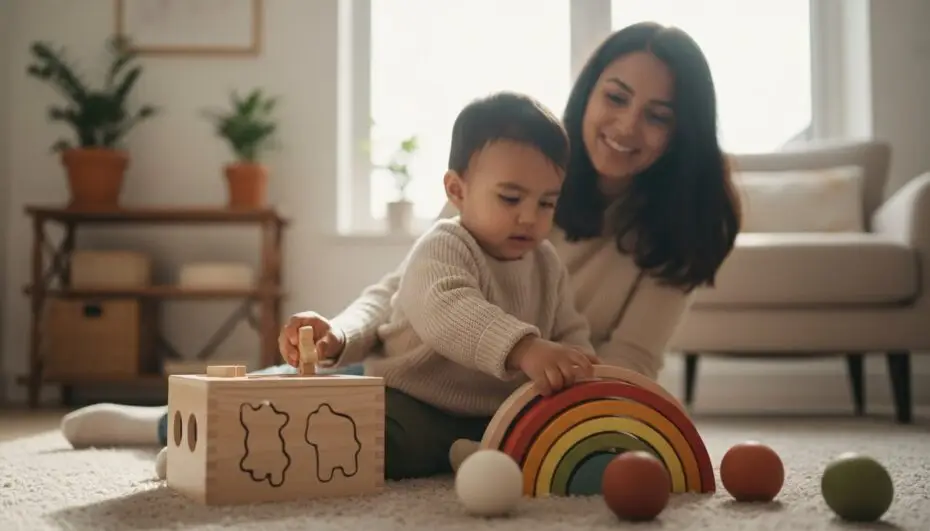
Trying to find the perfect toy for your child can feel like a huge challenge, can’t it? With a sea of options online and in-store, from flashing lights to squishy textures, it’s easy to feel overwhelmed. You want something that’s more than just a five-minute distraction-you want a tool for growth. But what exactly are sensory toys, and how do you know which ones will genuinely help your little one learn and thrive?
Many modern play systems are designed to incorporate all these benefits through open-ended, loose-parts play, which encourages creativity and problem-solving. To see a great example of this approach, you can learn more about Nudel Pod, a versatile kit for growing minds.
We get it. Ask any parent, and they’ll tell you they want their child to be happy, engaged, and above all, safe during playtime. That’s why we’ve created this ultimate guide. Consider this your roadmap to cutting through the confusion and unlocking the power of purposeful play. We’ll show you exactly how the right toys can be a complete game-changer for your child’s development, focus, and calmness.
Get ready to discover the incredible benefits of sensory play, learn how to confidently choose the perfect, durable items for your child’s unique needs, and find high-quality options lovingly handmade right here in the UK. It’s time to make playtime both fun and foundational!
Key Takeaways
- Understand that sensory toys are powerful tools, not just playthings, designed to stimulate your child’s brain and boost their development from an early age.
- Discover that sensory play goes beyond just touch and sight. Learn how to engage all seven of your child’s senses for well-rounded, happy growth.
- Learn a simple method for choosing the perfect sensory toys based on your child’s unique age, interests, and specific developmental needs.
- Get easy, actionable ideas to transform any room into a sensory-rich play space that encourages learning and fun, without breaking the bank.
What Are Sensory Toys and Why Are They So Important?
Ask any parent, and they’ll tell you: seeing your child happy and learning through play is one of life’s greatest joys. But what if a toy could do even more? That’s where the magic of sensory toys comes in. Put simply, they are specially designed tools that engage a child’s senses-touch, sight, sound, movement, and balance. Unlike a standard toy car meant purely for imaginative scenarios, a textured ball or a squishy block has a specific purpose: to help your child explore, understand, and process the world around them in a safe, fun, and engaging way.
Defining Sensory Play: More Than Just a Toy
At its heart, this is all about sensory processing-your child’s brain taking in information and turning it into meaningful responses. This process is the foundation of what is sensory play, an activity that actively builds crucial nerve connections in the brain. It’s not just about keeping them busy; it’s about fuelling their development. Every time they squish, listen, or balance, they’re strengthening pathways for everything from language development to fine motor skills. It’s the experience that counts, turning playtime into powerful, brain-building fun.
The Key Benefits for Child Development
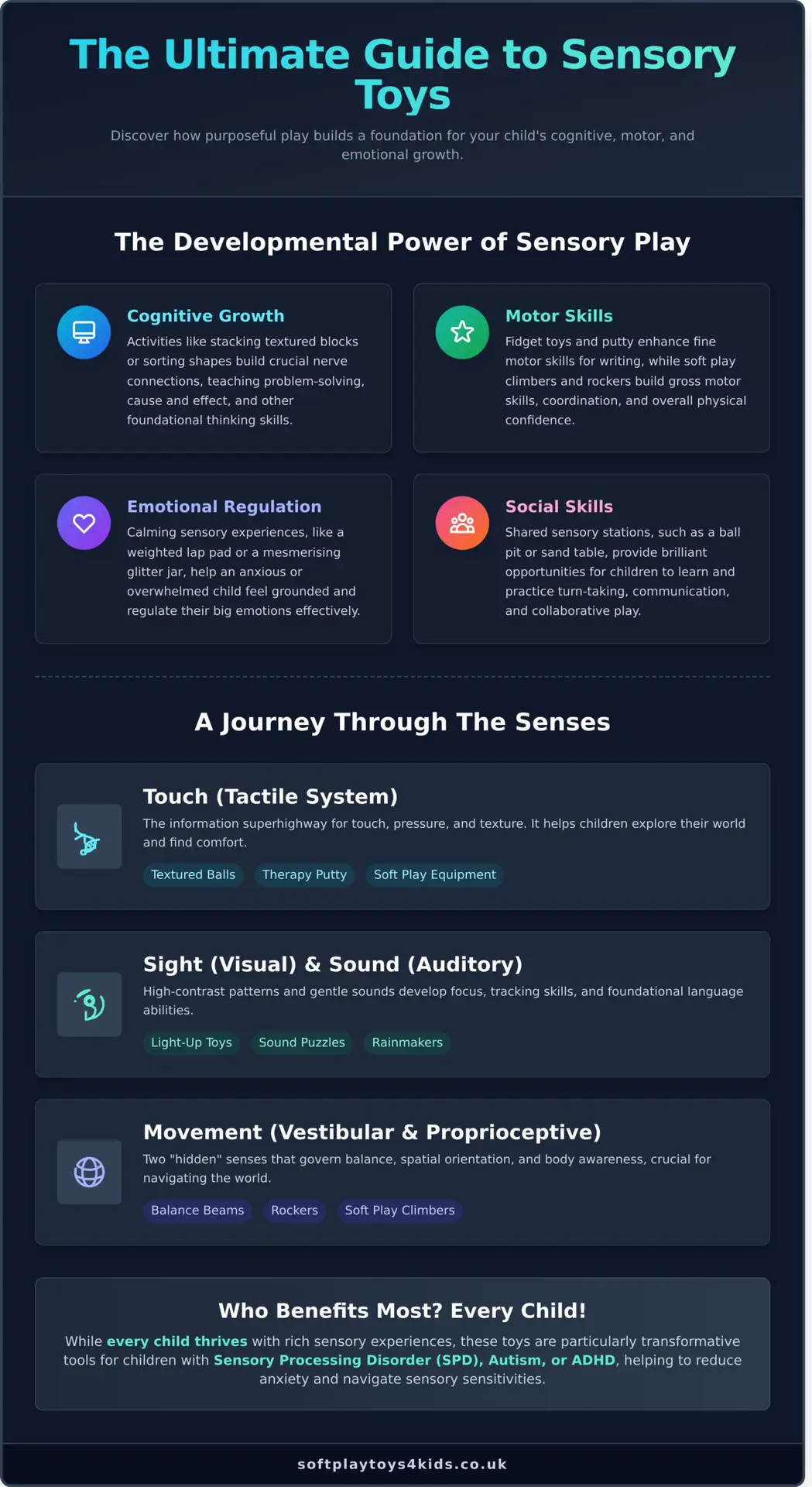
The developmental rewards are incredible! High-quality sensory play provides a foundation for a happy, healthy child. Here’s what you can expect:
- Cognitive Growth: Activities like stacking textured blocks or sorting colourful shapes teach vital problem-solving skills and the concept of cause and effect.
- Motor Skills: Fidget toys and therapy putty are fantastic for developing fine motor skills (the small hand muscles needed for writing), while soft play climbers and rockers build gross motor skills and coordination.
- Emotional Regulation: Sensory experiences can be wonderfully calming. A weighted lap pad or a mesmerising glitter jar can help an anxious or frustrated child feel grounded and regulate their big emotions.
- Social Skills: Shared sensory stations, like a ball pit or a sand table, create brilliant opportunities for children to practice turn-taking, communication, and collaborative play.
Who Benefits Most from Sensory Toys?
So, who are these amazing toys for? The truth is, every child thrives with rich sensory experiences! However, for children with Sensory Processing Disorder (SPD), Autism, or ADHD, these tools are particularly transformative. They can provide a calming focus, reduce anxiety, and help them navigate sensory sensitivities in a world that can feel overwhelming. That’s why you’ll find our lovingly UK-made sensory toys and equipment in nurseries, schools, and therapy centres across the country-they are trusted tools for professionals and parents alike.
For parents looking to connect with professionals or therapy centres that specialise in sensory needs, the online directory Guide2Care can be an excellent starting point.
A Journey Through the Senses: Types of Sensory Toys Explained
Ready for an adventure? Let’s explore the incredible world of sensory play! While we often talk about the five basic senses, a child’s development actually relies on seven. Understanding these is the secret to unlocking a universe of fun and learning. The right sensory toys don’t just entertain; they build crucial neural pathways, turning playtime into powerful brain-building time. Let’s dive in!
Touch (Tactile): Textured Balls, Putty, and Soft Play
The tactile system is your child’s information superhighway for touch, processing everything from a gentle hug to the rough bark of a tree. It helps them understand pressure, temperature, and texture. Toys that engage this sense are fantastic for exploration and comfort. Think of the satisfying squish of a putty ball, the bumpy surface of a fidget toy, or the feel of different fabrics. For a truly immersive experience, our high-quality soft play equipment provides a safe, full-body tactile adventure, perfect for tumbling, rolling, and discovering with their whole body!
Sight (Visual) & Sound (Auditory): Light-Up Toys and Sound Puzzles
A child’s world is a vibrant kaleidoscope of sights and sounds! Visual sensory toys use high-contrast patterns, flashing lights, and brilliant colours to capture a little one’s attention, helping them develop focus and visual tracking skills. At the same time, auditory toys are about more than just making noise. A gentle rainmaker, a simple musical instrument, or a sound-matching puzzle helps your child learn to listen carefully, identify different sounds, and develop crucial language foundations. It’s a symphony of learning, one giggle at a time!
Movement (Vestibular & Proprioceptive): Balance and Body Awareness
Have you ever wondered how your child knows how to balance or navigate a space without bumping into everything? That’s the magic of two hidden senses! The vestibular sense, managed by the inner ear, governs balance and spatial orientation. The proprioceptive sense provides feedback from muscles and joints, telling us where our body parts are. As your child’s needs evolve, Choosing the Best Toys for Your Child becomes essential for their growth. Toys like swings and rockers stimulate the vestibular system, while crash pads, stepping stones, and weighted items engage proprioception, building coordination and a brilliant sense of confidence with every move.
How to Choose the Perfect Sensory Toys for Your Child
Feeling a bit lost in a world of bright, noisy, and textured toys? You’re not alone! The secret to finding the perfect match isn’t about buying the most popular item; it’s about finding the one that speaks to your child’s unique needs. This simple checklist will guide you from their age to their specific sensory preferences, ensuring every playtime is a happy one.
Choosing by Age: From Babies to Big Kids
A child’s developmental stage is the best place to start. What fascinates a baby can bore a preschooler, and what challenges a toddler might be unsafe for an infant. Understanding age-appropriate toy utilization is key to ensuring playtime is both fun and beneficial. Here’s a quick guide to get you started:
| Age Group | Recommended Sensory Toys |
|---|---|
| Babies (0-1 Year) | High-contrast play mats, soft textured balls, gentle rattles, and baby-safe mirrors. |
| Toddlers (1-3 Years) | Soft play blocks for stacking, colourful stepping stones, and simple shape-sorting puzzles. |
| Pre-schoolers (3-5 Years) | Balance boards, messy play materials like sand or dough, and more complex building toys. |
Choosing by Need: Calming vs. Stimulating Toys
Ever notice how your child sometimes needs to burn off endless energy, and other times needs a quiet moment to reset? This is all about sensory regulation. Observing whether your child is overstimulated (fidgety, overwhelmed) or under-stimulated (lethargic, seeking input) can help you choose the right tool for the moment.
- For Calming Down: Think gentle and predictable. Weighted lap pads, slow-moving bubble tubes, or toys with a soft, rhythmic motion can help soothe an overwhelmed nervous system.
- For Waking Up: Time to get moving! Brightly coloured crash pads, spinning toys, and balance boards provide fantastic sensory input to help a child feel alert and engaged.
Watch how they react-their play will tell you everything you need to know about what they need most!
Safety First: What to Look for in a Quality UK-Made Toy
Above all else, nothing is more important than your child’s safety. When you invest in high-quality sensory toys, you’re investing in peace of mind. As proud UK manufacturers, we believe in unbeatable standards. Here’s what to look for:
- Durable Materials: Look for non-toxic, wipe-clean PVC and high-grade foam that can withstand years of enthusiastic play.
- Expert Construction: Check for strong, reinforced stitching and ensure there are no small, detachable parts for younger children.
- Official Certification: Always look for the UKCA mark on the product or packaging. This is your guarantee that the toy meets the UK’s strict safety standards.
Ready to give your child the gift of safe, engaging play? See our range of safe, lovingly handmade sensory toys!
Creating a Sensory-Rich Play Environment at Home
You’ve seen the magic that individual sensory toys can bring, but are you ready to take it to the next level? Creating a sensory-rich environment at home is about more than just toys; it’s about crafting a world where your child feels safe, engaged, and free to explore. And the best part? It’s easier and more affordable than you might think!
The ‘Sensory Corner’: Building a Safe and Engaging Space
You don’t need an entire playroom to make a big impact. A quiet corner of the living room or bedroom can become a magical sensory haven. Start with a foundation of comfort, like one of our premium soft play mats, to create a safe and inviting floor space. Keep storage simple with a few low baskets to avoid overwhelming your child with choices. For a truly calming atmosphere, consider adding gentle lighting like a starlight projector or a blackout pop-up tent for a cosy retreat. It’s wonderfully simple to create a secure space for fun and learning.
Integrating Sensory Play into Daily Routines
For busy parents, weaving sensory experiences into everyday life is a game-changer. These are your easy wins for developmental fun! Transform routine moments into opportunities for discovery:
- Bath time: Turn the tub into a sensory lagoon with bubbles, colourful foam, different textured sponges, and floating toys.
- Mealtime: Let them get their hands messy! Involve your little one in safe food prep like kneading dough, mixing ingredients, or washing vegetables.
- Outdoor Play: Encourage them to feel the world around them. A simple sandpit, a water table, or just walking barefoot on the grass provides incredible sensory feedback.
Why a Ball Pit is the Ultimate Sensory Experience
Looking for one item that delivers a powerful, multi-sensory punch? A ball pit is the answer. It’s not just about diving into a sea of colour; it’s a comprehensive developmental tool that engages a child’s entire body and mind. It provides:
- Tactile Feedback: The gentle, consistent pressure from hundreds of balls offers a calming and organising sensation, similar to a comforting hug.
- Proprioceptive Input: Navigating through the balls helps children understand where their body is in space, building crucial body awareness and coordination.
- Visual Stimulation: The vibrant, exciting colours are visually engaging and can help with colour recognition, sparking joy and endless giggles.
A high-quality, durable ball pit is one of the best investments you can make in your child’s playtime. Check out our unbeatable prices on UK-made ball pits! We proudly manufacture them right here in our West Yorkshire factory, ensuring they meet the highest safety standards for your peace of mind.
Ready to Unlock Your Child’s Potential Through Play?
As we’ve explored, choosing the right sensory toys is more than just about keeping your child entertained-it’s a powerful way to support their cognitive, motor, and emotional growth. By understanding the different types of sensory play and creating a stimulating environment at home, you transform everyday moments into incredible opportunities for learning and discovery. You truly have the power to make learning a joyful adventure!
So, are you ready to bring that magic home? At SoftplayToys4kids, we pour our hearts into every piece we create. Trusted by hundreds of UK schools, nurseries, and play centres, our equipment is lovingly handmade right here in our West Yorkshire factory to ensure unbeatable quality and safety. And with our Price-Beater Guarantee on all products, you can invest in your child’s future with complete confidence. Let’s start their next great adventure together.
Explore our full range of lovingly handmade sensory toys!
Frequently Asked Questions About Sensory Toys
What is the difference between a sensory toy and a regular toy?
Great question! While any toy can provide some sensory input, a sensory toy is specifically designed to stimulate one or more of the senses in a targeted way. Think of toys with unique textures, mesmerising lights, distinct sounds, or specific weights. They are lovingly crafted not just for fun, but to help your child process sensory information, which is a magical part of their development and learning journey. It’s about turning playtime into purposeful development!
Are sensory toys only for children with special needs like Autism or SPD?
Absolutely not! That’s a common misconception. While sensory toys are a fantastic and essential tool for children with sensory processing differences, they offer incredible benefits for every single child. All children are learning to navigate the world through their senses. These toys help improve focus, encourage exploration, and provide a calming outlet for big emotions. They are designed for universal fun and happy, giggling playtimes for all kids.
How do I introduce new sensory toys to my child without overwhelming them?
The key is to start slow and create a positive, pressure-free environment. Introduce just one new toy at a time in a calm and familiar space. Show them how it works, but let them lead the exploration at their own pace. If they seem hesitant, simply leave the toy nearby for them to discover on their own time. The goal is to make it an exciting new addition to their play, not a task to be completed.
How should I clean and maintain soft play sensory toys to ensure they last?
We know durability is key for parents! Our high-quality, UK-made soft play items are built to last and are wonderfully easy to clean. Simply wipe the premium PVC covers with a damp cloth and a mild, child-safe cleaning solution. For lasting fun, regularly check for any scuffs and ensure they are stored in a dry place. This simple care ensures your investment provides a safe, hygienic, and fun play environment for years to come.
Can sensory toys help with my child’s anxiety or trouble with focusing?
Yes, they can be an amazing support! Many sensory toys provide a safe and healthy outlet for restless energy, which can significantly improve a child’s ability to focus on tasks like homework. Items with soft, squishy textures or a gentle weight can have a powerful calming effect, helping to soothe anxiety and regulate emotions. They work by giving a child’s nervous system the input it craves in a structured and reassuring way.
At what age should I introduce sensory toys to my baby?
You can start from the very beginning! Even your newborn bundle of joy benefits from gentle sensory experiences. Think high-contrast images for developing eyesight, soft rattles for hearing and touch, or different textured fabrics for them to feel. As they grow, you can introduce more complex items. The key is choosing safe, age-appropriate toys that encourage your baby to explore the world and make those exciting new discoveries.
Leave a Reply