
The Ultimate Guide to Crash Mats: Safety, Standards, and Selection for 2026
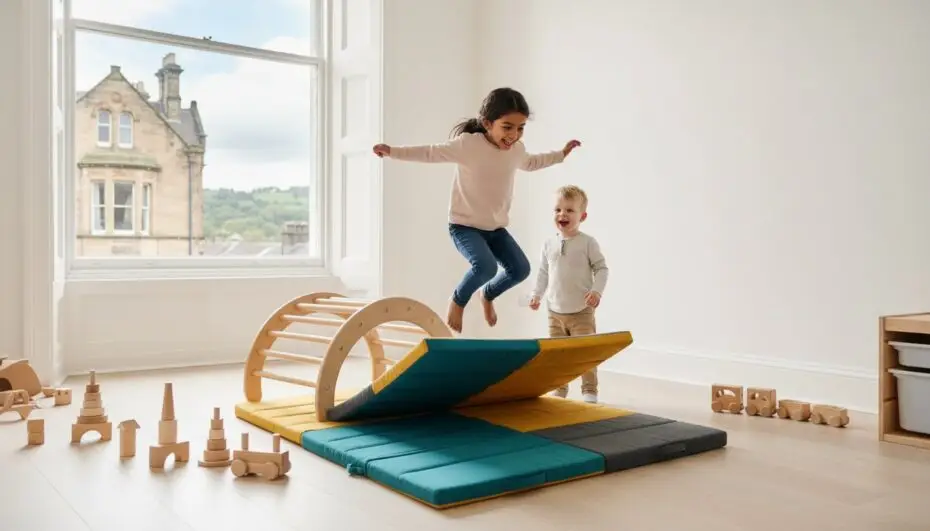
Did you know that according to RoSPA, falls are the most common cause of accidents for children in the UK? It’s a sobering thought for any parent watching their little one joyfully clambering, tumbling, and exploring their world. You want to encourage all that happy, giggling fun, but you also need complete peace of mind that when a slip inevitably happens, they have the safest landing possible.
That’s why we’re here to cut through the confusion. This guide will give you the confidence to select the perfect crash mats for your space, whether it’s a cosy home playroom or a bustling commercial gym. We’ll show you exactly how to choose a high-quality, durable mat that meets critical UK safety standards, fits your space perfectly, and gives your children the ultimate protection for every adventure.
Key Takeaways
- Discover how to match your mat’s thickness to your play equipment’s “Critical Fall Height” (CFH), guaranteeing complete peace of mind during playtime.
- Find out whether a convenient folding mat or a solid block is the right choice for your playroom or gym, balancing easy storage with ultimate safety.
- Master the simple technique for measuring your “fall zone” and see why a gap between crash mats creates a dangerous “sliding risk” for your children.
- Learn how the right safety matting encourages “brave play,” boosting your child’s confidence and physical development in a secure environment.
What Are Crash Mats and Why Does Your Playroom Need Them?
Ever held your breath watching your little one scale the back of the sofa, about to launch themselves into a daring dismount? That heart-stopping moment is exactly why crash mats exist. At its core, a crash mat is a purpose-built safety device, engineered with high-density foam to absorb the energy and impact from falls, tumbles, and jumps. It’s the ultimate guardian for your little adventurer’s playroom.
But it’s about more than just physical safety. Providing a cushioned landing zone gives your child the psychological freedom to engage in “brave play.” They can test their limits, build their strength, and develop crucial gross motor skills without fear holding them back. It transforms a simple playroom into a safe space for exploration, fostering confidence with every single leap and roll. You’re not just buying a mat; you’re investing in your child’s physical and emotional development in a controlled, reassuring environment.
So, where are the “danger zones” in your home? Think about any area with a potential fall height of 60cm or more. Key spots include:
- Beneath indoor climbing frames or Pikler triangles
- Next to high-sleeper or cabin beds
- Under home gymnastics bars or climbing ropes
- At the bottom of a small indoor slide
In these high-impact zones, a standard rug or a thin puzzle mat simply isn’t enough. They offer minimal cushioning and do almost nothing to decelerate a fall, which is the key to preventing injury.
Crash Mats vs. Play Mats: Knowing the Difference
It’s easy to confuse the two, but their jobs are worlds apart. A standard play mat is designed for floor comfort and insulation, perfect for tummy time or keeping little knees off a cold floor. A crash mat, however, is a piece of safety equipment designed for one thing: deceleration. It slows a child’s fall over a fraction of a second, dissipating the impact energy safely. This difference comes down to the foam. Most play mats use thin, closed-cell foam, while our premium crash mats use thick, open-cell foam that actively compresses to absorb shock.
The Anatomy of a High-Quality Safety Mat
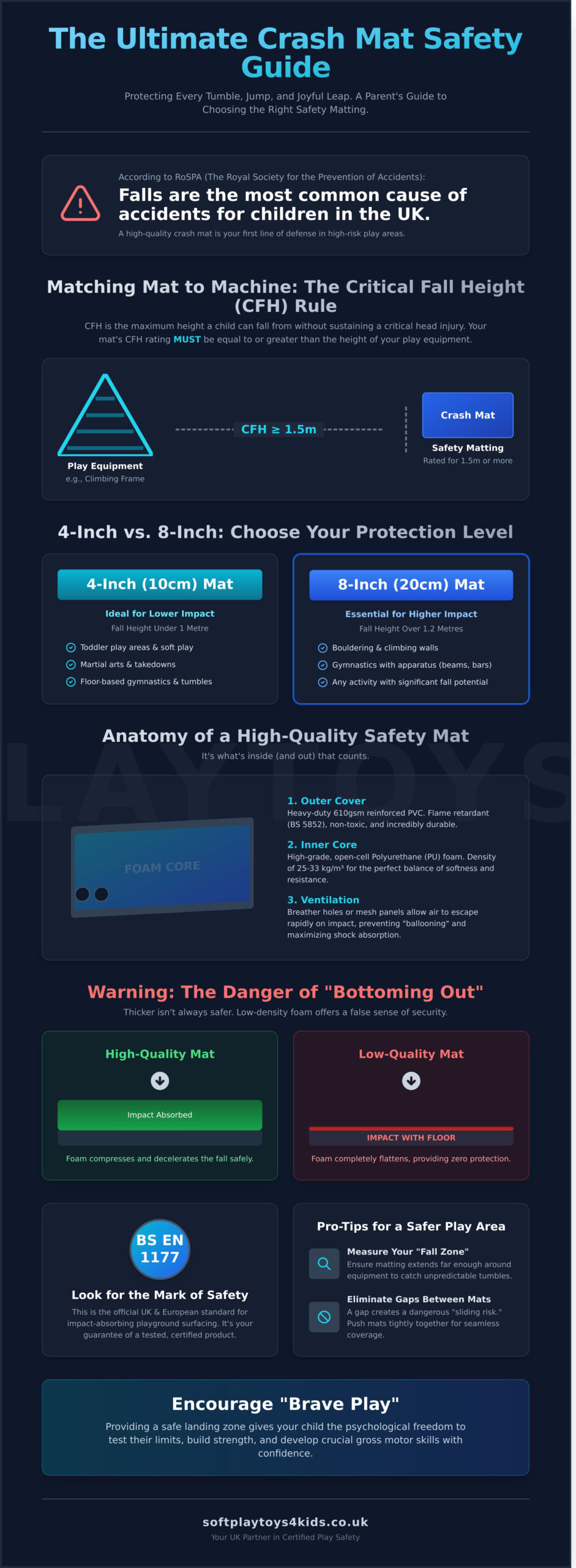
What makes a safety mat truly effective? It’s all about what’s inside and out. The inner core is the hero, typically made from high-grade polyurethane (PU) foam with a density between 25-33 kg/m³. This specific density provides the perfect balance of softness and resistance. The principles behind this are well-established in sports safety, and you can learn more about Bouldering mat construction and history to see how these materials perform under pressure. The outer skin is just as important. We use a heavy-duty, reinforced PVC cover (weighing 610gsm) that is flame retardant, non-toxic, and incredibly durable. Finally, look for ventilation. Our mats feature breather holes or mesh panels that allow air to escape rapidly on impact, preventing the mat from “ballooning” and ensuring maximum shock absorption exactly when it’s needed.
Understanding Density, Depth, and UK Safety Standards
Choosing the right crash mat isn’t just about picking the thickest one you can find. True safety lies in the science behind the foam. It’s about matching the mat’s technical specifications to the exact type of tumbles, falls, and energetic play you expect. Getting this right gives you more than just a soft landing; it provides certified peace of mind.
The single most important factor is the “Critical Fall Height” or CFH. This is the maximum height from which a person can fall onto the mat without sustaining a critical head injury. If your climbing frame is 1.5 metres tall, you absolutely need a mat with a CFH rating of 1.5 metres or more. It’s a non-negotiable starting point that dictates every other choice you make.
This leads directly to the common 4-inch vs. 8-inch debate. Which is right for you? It depends entirely on the activity:
- 4-Inch (10cm) Mats: Perfect for lower-impact activities. Think toddler play areas, martial arts takedowns, or floor-based gymnastics where the fall height is under 1 metre. They offer excellent protection for tumbles and rolls.
- 8-Inch (20cm) Mats: Essential for higher-impact sports. This is the standard for bouldering walls, gymnastics training with apparatus like beams, or any activity where falls can occur from over 1.2 metres.
But remember, thicker doesn’t always mean safer. A poorly made, low-density 8-inch mat can be more dangerous than a high-quality 4-inch one. In a high-impact fall, cheap foam can compress completely, a phenomenon called “bottoming out,” meaning the user still hits the hard floor beneath. It’s the quality of the foam inside that truly protects.
Finally, always check for fire retardancy. For commercial venues like schools or soft play centres, it’s a legal and insurance requirement. For home use, it’s a vital safety feature. All our covers are made from 610gsm PVC fabric, which is fire retardant to BS 5852 standards, ensuring they are safe for any environment.
British Standards: BS EN 1177 and BS EN 12188
These codes aren’t just jargon; they are your guarantee of safety. BS EN 1177 is the European standard for impact-attenuating playground surfacing. This certification confirms a mat’s CFH rating through rigorous testing. For gymnastics, BS EN 12188 specifies shock absorption properties. Compliance is crucial for businesses, as adhering to these standards is a core component of the UK playground safety laws that protect both your users and your organisation. This is why our lovingly handmade UK mats provide superior, consistent density compared to many imports, which can have dangerous variations in quality.
Foam Density: The Secret to Long-Term Safety
Foam density, measured in kilograms per cubic metre (kg/m³), is the true indicator of a mat’s protective power. A high-density recon foam, often around 6lb/ft³ (or 96 kg/m³), absorbs impact effectively without bottoming out. In contrast, a low-density foam below 30 kg/m³ might feel soft but offers little resistance to a sudden, forceful impact. This creates a trade-off. A high-density mat is heavier and less portable, but it provides unbeatable protection. Understanding this balance is key to selecting the right crash mats for your specific needs.
Feeling a bit overwhelmed by the numbers? Our friendly UK-based team can help you match the perfect handmade safety mat to your exact requirements, ensuring every landing is a safe one.
Choosing the Right Crash Mat for Your Specific Use Case
Are you kitting out a home playroom, a specialist sensory room, or a bustling commercial gym? The perfect mat isn’t a one-size-fits-all solution. What works for a quiet reading nook would be entirely unsuitable for a gymnastics club. The environment dictates everything, from the mat’s construction and size to its colour. Let’s break down exactly what you need to look for to guarantee safety and get the best value.
A key decision is choosing between folding designs and solid block mats. For most UK homes where space is at a premium, a folding mat is a brilliant, practical choice. It offers excellent protection during playtime and can be neatly tucked away afterwards. Solid block mats, on the other hand, provide a completely uniform, seamless surface, ideal for permanent installations. And what if you need to cover a larger area? That’s where hook and loop fasteners come in. These strong Velcro-style strips allow you to join multiple mats together, creating a large, secure safety floor with no dangerous gaps for little feet to get caught in.
Even the colour of your mat plays a vital role. Think about the mood you want to create. Bright, vibrant primary colours like red and yellow are fantastic for stimulating energy and fun in a school gym or soft play centre. Conversely, for a sensory room or a calming corner at home, softer tones like pastel blues, gentle greens, and muted greys can help create a soothing, non-overwhelming atmosphere for children who need it most.
Home Playrooms and Bedroom Safety
Is that new mid-sleeper bed or indoor slide making you a little nervous? A strategically placed mat provides instant peace of mind. We find that a 1.2m x 0.9m mat is a perfect fit for the base of most standard UK single beds and slides, offering a soft landing without creating a trip hazard in the middle of the room. But these mats are more than just a safety feature. They quickly become the favourite spot for building blocks, a comfy cushion for story time, or the designated launchpad for superhero jumps, making them a truly multi-purpose investment for your child’s happiness and safety.
Commercial Use: Schools, Nurseries, and Gyms
In a high-traffic commercial setting, durability is everything. You need equipment that can withstand the daily energy of dozens of children. That means looking for heavy-duty features like robust, wipe-clean 610gsm PVC covers and reinforced, double-stitched seams. Meeting safety regulations is also non-negotiable. For nurseries and schools, this means ensuring all equipment complies with the latest British and European safety standards, such as BS EN 1177 for impact-absorbing surfaces. As proud UK manufacturers, we can also customise your crash mats with school colours or logos, helping you create a professional, branded, and incredibly safe environment for every child in your care.
Measuring, Maintenance, and Longevity
You’ve chosen the perfect crash mat. Fantastic! Now, let’s make sure it provides unbeatable protection for years to come. A high-quality mat is an investment in safety and fun, and with the right care, you can maximise its lifespan and performance. Getting the details right, from initial measurement to daily maintenance, is the secret to worry-free play and training.
First, let’s talk coverage. Measuring your “fall zone” is non-negotiable. For any piece of equipment like a climbing frame or gymnastics bar, UK safety guidelines recommend a clear space extending at least 1.5 metres from the equipment’s perimeter. This entire area must be covered. Why is this so critical? A child or athlete doesn’t always fall straight down. You need to account for forward or sideways momentum. A common mistake is leaving a gap between two mats. This creates a dangerous “sliding risk,” where a limb can get caught in the gap during a fall, leading to serious injury. Always ensure your mats are tightly abutted, using Velcro fasteners if available, to create one seamless, safe surface.
Even the most durable, lovingly handmade safety equipment has a working life. The expected lifespan of professional crash mats depends heavily on their environment.
- Domestic Setting: With regular use in a home playroom or garden, you can expect a premium mat to last between 5 and 7 years.
- Commercial Setting: In a busy nursery, gymnastics club, or soft play centre with constant, heavy traffic, the lifespan is typically shorter, around 2 to 4 years.
It’s vital to know when it’s time for a replacement. Watch for signs of “foam fatigue.” If you can press down and easily feel the hard floor beneath, the foam is “bottoming out” and has lost its impact absorption. Other tell-tale signs include the foam recovering very slowly after compression, visible dips or permanent indentations on the surface, or any tears in the cover that expose the foam to moisture and damage.
Cleaning and Hygiene: PVC Maintenance
For nurseries and schools, hygiene is paramount. That’s why our mats use non-porous, 610gsm PVC covers, which act as a barrier against spills, germs, and viruses. To clean, simply use a soft cloth with warm, soapy water or a mild, diluted disinfectant. Avoid harsh chemicals like bleach, as they can degrade the UV-protected finish over time. If an accident happens, clean the surface immediately to prevent any liquid from seeping through the seams.
Storage Solutions for Small Spaces
Don’t have a dedicated gym space? No problem. Many of our designs are bi-fold or tri-fold, allowing them to be easily stored in a cupboard or under a bed. For commercial gyms, wall-hanging straps are a brilliant solution to clear floor space. Just remember that extreme temperatures can affect the foam. Try to store your mats in a dry place between 5°C and 25°C to maintain their protective elasticity for as long as possible.
Proper care ensures your safety equipment performs when it matters most. By following these simple steps, you’re not just cleaning a mat; you’re preserving the safe space where children and athletes can build confidence. Ready to invest in safety that lasts? Explore our full range of durable, UK-made crash mats and find the perfect fit for your space.
Why SoftplayToys4kids Leads the UK in Safety Matting
When it comes to your child’s safety, why settle for anything less than the best? You want peace of mind, exceptional quality, and value that makes sense for your family or business. That’s precisely where we come in. At SoftplayToys4kids, we don’t just sell safety equipment; we create it. Every single mat is lovingly handmade right here in our West Yorkshire factory, using premium, UK-sourced materials that meet stringent safety standards.
We are so confident in our craftsmanship and pricing that we issue a direct challenge: our “Check Us Out Before You Checkout” promise. We invite you to compare our quality and value against any mass-market retailer. You’ll quickly discover the difference that genuine, hands-on manufacturing makes.
Unlike off-the-shelf options, we thrive on creativity and customisation. Need a mat to fit an awkward alcove or a unique shape for a sensory room? Mass-market suppliers can’t help. We can. We design and produce bespoke sizes and shapes tailored to your exact specifications, offering a level of personalisation that is simply unavailable elsewhere. This commitment is backed by our Price-Beater Guarantee. We believe high-end safety shouldn’t be a luxury, ensuring you get the best protection without the premium price tag.
The Benefit of Buying Direct from the Manufacturer
By choosing SoftplayToys4kids, you are eliminating the middleman. There are no distributors, wholesalers, or retail markups inflating the cost. This direct-to-consumer model allows us to provide commercial-grade crash mats, built with high-density foam and tough 610gsm PVC covers, at prices accessible to everyone from parents to nurseries.
This direct line also gives you unparalleled access to our creative team. Planning a full soft play area? You can collaborate with the very people who will design and build it, ensuring your vision comes to life perfectly. Buying from us also means you’re supporting local British industry and skilled craftspeople in Yorkshire, all while reducing your carbon footprint by avoiding long-distance international shipping.
Join the SoftplayToys4kids Family
Our reputation is built on the trust of thousands of customers across the UK. From parents in Cornwall creating a safe playroom to commercial play centres in Glasgow needing durable, high-impact solutions, our reviews speak for themselves. They celebrate the vibrant colours, the robust stitching, and the undeniable quality that keeps little explorers safe day after day.
Our mission has always been to deliver “new wild fun” without ever compromising on safety. It’s about encouraging tumbles, jumps, and imaginative play on a surface you can completely trust. Are you ready to invest in safety, quality, and British craftsmanship?
See the difference for yourself. Check out our full range of UK-made crash mats here and give your children the safe space they deserve to play and grow.
Ready to Create the Safest, Most Fun Play Zone?
You’re now equipped with the expert knowledge to make the best choice for your little ones. Understanding the critical differences in foam density and knowing which UK safety standards to look for puts you in complete control. You know that the right mat isn’t just a purchase; it’s an investment in countless hours of happy, worry-free play.
That’s where we come in. At SoftplayToys4kids, every single one of our premium crash mats is lovingly handmade in our West Yorkshire factory, ensuring it’s fully compliant with all UK safety standards. We’re so confident in our quality and value that we back it all up with our famous Price-Beater Guarantee. Don’t just buy a mat; invest in peace of mind from a trusted UK manufacturer.
Check Us Out Before You Checkout – Shop Our UK-Made Crash Mats
Go on, give them the freedom to play, explore, and grow with confidence. A safer, happier playtime is just a click away.
Frequently Asked Questions
How thick should a crash mat be for home use?
For general home play, a crash mat thickness of 10cm to 20cm is ideal. This provides fantastic cushioning for toddlers and young children tumbling from low heights, like off a sofa or a small play frame. If your kids are practising gymnastics or more energetic activities, we recommend a thicker mat of around 30cm. This ensures maximum impact absorption for total peace of mind while they have fun.
Can I use these crash mats for outdoor play areas?
Yes, our PVC-covered mats are perfect for temporary outdoor fun! The durable, wipe-clean PVC cover is water-resistant, making it great for use on the lawn or patio on a dry day. We don’t recommend leaving them outside permanently, as prolonged sun and rain can affect the materials. Simply bring your mat back indoors after playtime to keep it in top condition for years of happy tumbles.
What is the best way to clean a PVC-covered crash mat?
Cleaning our PVC-covered mats is incredibly simple and quick. Just use a soft cloth with warm, soapy water to wipe away any spills, dirt, or sticky fingerprints. For any tougher marks, a mild, non-abrasive household cleaner will work perfectly. It’s best to avoid harsh chemical solvents, as they can damage the vibrant PVC surface. A quick wipe keeps your mat hygienic and ready for the next adventure!
Are your crash mats fire retardant?
Absolutely, your child’s safety is our number one priority. All of our crash mats are lovingly handmade right here in our West Yorkshire factory using materials that meet stringent UK fire safety regulations, specifically BS 5852. Both the high-density foam core and the durable PVC cover are fire retardant. This gives you complete confidence while your little ones are playing safely at home.
Do you offer custom sizes for awkward playroom layouts?
Yes, we do! We know that not all playrooms are a perfect square. As a proud UK manufacturer, we have the flexibility to create custom-sized crash mats that fit your space perfectly. Whether you need to fit a mat around a corner or under a specific piece of play equipment, just get in touch with our team. We are excited to help you build the perfect, safe play area for your home.
What is the difference between a landing mat and a crash mat?
While they look similar, the key difference is their foam density and purpose. A landing mat is typically firmer, designed for controlled landings in sports like gymnastics where athletes need a stable surface that won’t compress too much. A crash mat is much softer and is engineered to cushion unexpected falls from greater heights. It provides maximum impact absorption to protect against injury, making it the ideal choice for soft play and climbing.
How long do crash mats typically last before needing replacement?
Our high-quality crash mats are built to last and can provide safe fun for over 5 years with proper care. For typical family home use, you can expect many years of reliable performance. In a commercial setting with constant daily use, you might look at replacement closer to the 5-year mark. We use premium, high-density foam and tough 610gsm PVC covers, all handmade in the UK to ensure they withstand endless tumbles.
Are these mats suitable for children with sensory processing disorders?
Yes, our mats are an excellent tool for children with sensory processing disorders (SPD). The soft, cushioned surface provides a safe space for essential sensory input, such as jumping, rolling, and crashing, which can be incredibly calming and organising. The tactile feedback from the mat helps with body awareness and proprioceptive input. Many UK occupational therapists recommend our mats for creating a safe and effective sensory environment at home.
Leave a Reply