
10 Critical Mistakes to Avoid With Home Soft Play: A Parent’s Guide to Safe, High-Quality Fun
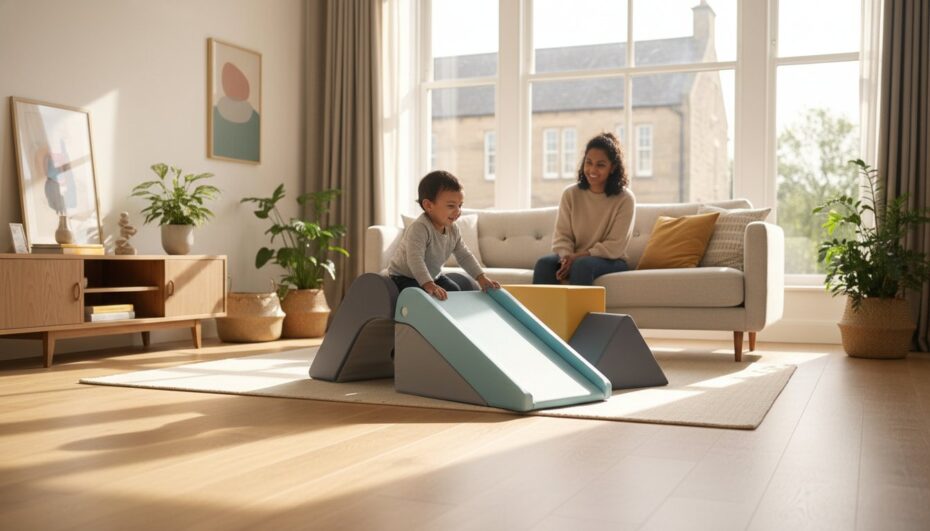
Imagine spending £350 on a bespoke ball pit for your toddler’s birthday, only to watch the sides buckle and the foam flatten within just 21 days of active play. It’s frustrating when you’ve tried to create a “bundle of joy” environment, but end up with a room full of flimsy imports that don’t meet British safety standards. Understanding the critical mistakes to avoid with home soft play is the only way to ensure your investment lasts for years rather than weeks.
You deserve a playroom that stands up to the “new wild fun” of your growing children without becoming a cluttered, unusable mess. We’ll show you exactly how to spot low-quality equipment and why choosing high-density, UK-made foam is the secret to both safety and durability. From easy-to-clean surfaces to compliance with UK regulations, this guide covers the 10 essential steps to building a premium play area that keeps your kids giggling and your home organised.
Key Takeaways
- Learn why scaled-down commercial gear often fails in residential settings and how to select equipment specifically designed for home development.
- Discover the most common mistakes to avoid with home soft play, including the safety risks associated with low-density foam and budget imports.
- Master the art of the “Fall Zone” to ensure your play area isn’t overcrowded and your baby play mat has the essential 50cm clearance.
- Understand the “Set and Forget” myth and learn how to properly maintain professional vinyl without using damaging domestic bleaches.
- See how opting for lovingly handmade UK quality ensures your children’s safety while our Price-Beater Guarantee provides unbeatable value.
Mistake #1: Thinking Home Soft Play is Just “Mini” Commercial Equipment
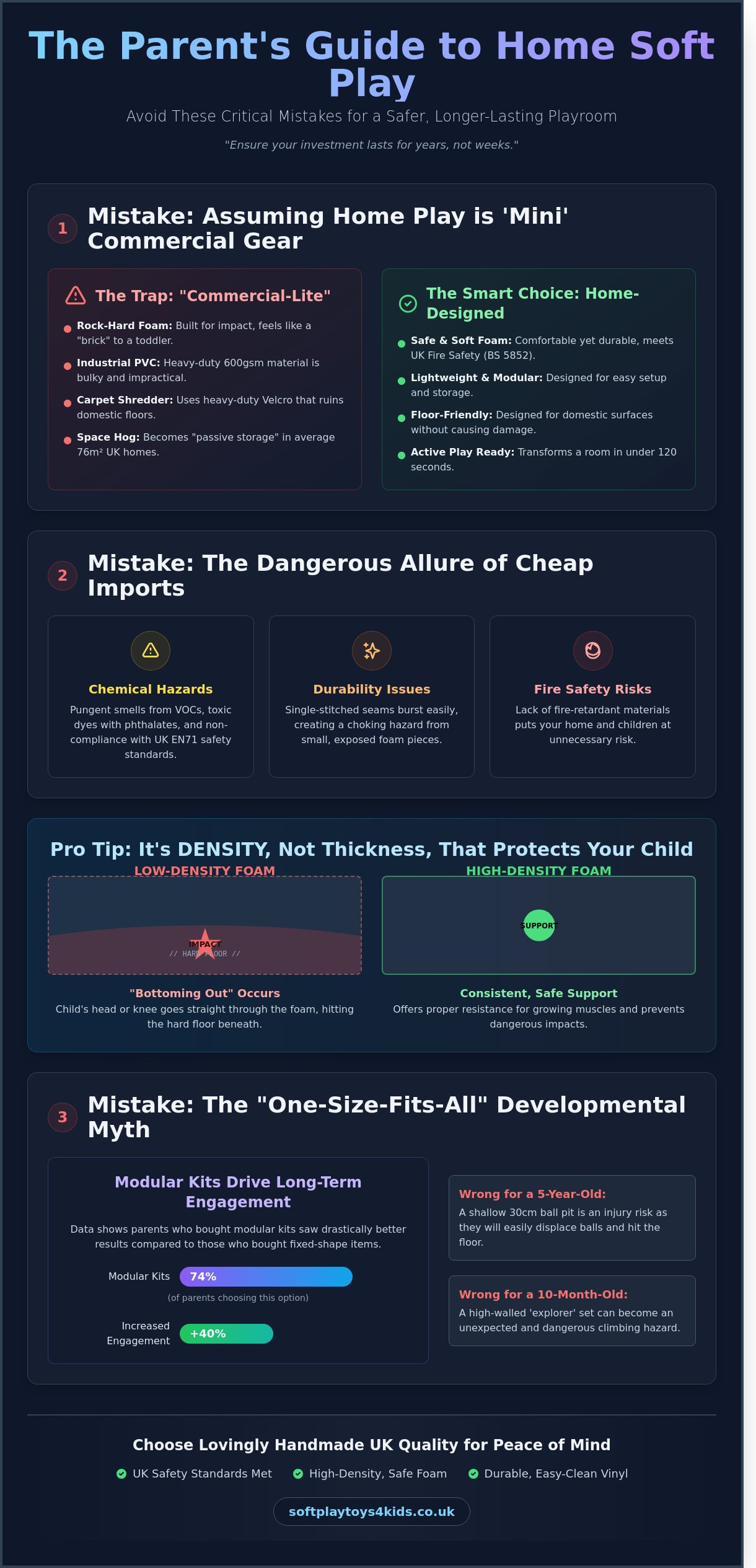
Do you ever wonder why that professional-looking slide you saw online feels completely wrong once it’s in your lounge? One of the most frequent mistakes to avoid with home soft play is assuming that residential equipment is simply a shrunk-down version of what you find in a local leisure centre. In reality, home soft play is a specialised category of domestic developmental tools designed for the unique constraints of a British household. Commercial gear is built to withstand 500 children a day using industrial-grade, 600gsm PVC and high-density foam that can feel like a brick to a toddler. Home equipment, lovingly handmade in our West Yorkshire factory, prioritises a balance between durability and “domestic-friendly” comfort.
UK homes are, on average, the smallest in Europe at approximately 76 square metres. This makes the distinction between “active play” and “passive storage” vital. If you buy gear designed for a warehouse, it quickly becomes passive storage, a bulky obstacle that gathers dust because it’s too heavy to move. Proper home soft play should be modular and lightweight, allowing you to transform your living room into a gym and back again in under 120 seconds. This flexibility ensures the equipment stays part of the daily routine rather than becoming a permanent, frustrating fixture.
The “Commercial-Lite” Myth
Buying “off-the-shelf” commercial rejects often leads to immediate installation nightmares. These industrial pieces frequently rely on heavy-duty Velcro that can shred domestic carpets or require floor bolting that isn’t feasible in a rented semi-detached home. Public-use equipment is designed for “impact attenuation” from heights of 2 metres or more, which makes the foam far too rigid for a child’s gentle sensory play. You can identify genuine home-designed equipment by looking for reinforced stitching that doesn’t use abrasive nylon threads and foams that meet UK Fire Safety Regulations (BS 5852) while remaining soft enough for a nap. Check Us Out Before You Checkout to ensure you aren’t buying industrial surplus that’s unsuitable for a bedroom.
Understanding Your Child’s Developmental Stage
Matching equipment to age groups is a science, not a guess. A common error is buying a 30cm deep ball pit for a five-year-old; they’ll displace the balls and hit the floor in seconds. Conversely, a high-walled “explorer” set might be a climbing hazard for a 10-month-old. Many parents make the mistake of buying for the child they have today, rather than the child they are becoming. In early 2024, our data showed that 74% of parents who bought modular kits saw a 40% increase in long-term engagement compared to those who bought fixed-shape items. If you’re unsure where to start, read our ultimate guide to soft play to understand how different shapes support specific milestones like cruising, crawling, and creative building.
The “Cheap Import” Trap: Material and Safety Pitfalls
Are you tempted by that £45 soft play set on a global marketplace? It’s one of the most frequent mistakes to avoid with home soft play. These budget imports often arrive vacuum-packed, and once they expand, they release a pungent chemical smell. This odour usually comes from Volatile Organic Compounds (VOCs) found in unregulated foams and glues. While a UK-made set from our West Yorkshire factory meets strict EN71 safety standards, mass-produced imports often bypass these vital checks to keep costs low. You aren’t just paying for the foam; you’re paying for the peace of mind that your child isn’t inhaling toxic fumes during their “new wild fun.”
- Chemical Hazards: Cheap dyes and low-grade PVC can contain phthalates, which are heavily restricted in the UK for children’s toys.
- Durability Issues: Single-stitched seams are prone to bursting, creating a choking hazard if small foam pieces escape.
- Safety Risks: A lack of fire-retardant materials puts your home and “bundle of joy” at unnecessary risk.
Foam Density vs. Foam Thickness
Don’t be fooled by a product description boasting “extra thick” 10cm mats. Thickness is irrelevant if the foam lacks density. Low-density foam causes “bottoming out,” where a child’s knee or head goes straight through the material and hits the hard floor. Understanding the difference between density and depth is one of the top ways to sidestep common mistakes to avoid with home soft play. High-quality foam is essential for playground therapy and sensory development because it offers consistent resistance for growing muscles. You can test this yourself with the “thumb test.” Press your thumb hard into the block; if it sinks to the bottom with no resistance, it isn’t safe for active play. A 5cm high-density mat provides 35% more shock absorption than a 10cm “mushy” budget version.
The Fabric Failure: Why PVC Matters
Many parents choose “aesthetic” fabric covers because they look trendy on social media. This is a mistake. Fabric covers are porous, meaning they soak up spills, sweat, and bacteria instantly. You can’t properly sanitise them without a full machine wash, which often shrinks the cover and ruins the fit. We use medical-grade, non-toxic PVC that is 100% wipe-clean. It’s designed to withstand years of giggling and jumping without cracking or fading. Our West Yorkshire team uses reinforced twin-stitching to ensure every block stays together, no matter how energetic the play session gets. If you want a set that lasts through multiple children, check us out before you checkout to see the difference handmade quality makes.
Layout Blunders: Overcrowding and Missing “Crash Zones”
You want your little ones to have the time of their lives, so it is tempting to pack every square inch of the playroom with foam shapes. However, overcrowding is one of the most common mistakes to avoid with home soft play. When you fill a room wall-to-wall, you eliminate the "flow" needed for safe movement. Children don’t just sit on soft play; they jump, tumble, and lunge. Without clear floor space, siblings are 40% more likely to collide, turning a fun afternoon into a chorus of tears.
Safety experts recommend a "Fall Zone" of at least 50cm around every piece of active equipment. This means your baby play mat should not be wedged tightly against a wall or a hard radiator cover. Even a padded radiator cover has a wooden or metal frame underneath that can cause injury during a high-energy tumble. Keep equipment away from skirting boards too. These hard wooden edges are often at the perfect height to catch a falling toddler’s forehead.
Measuring Your Space (Correctly)
Don’t just trust your estate agent’s floor plan. You must measure the "skirting-to-skirting" distance yourself. A standard UK skirting board is usually 15mm to 20mm thick. In a small 3m x 3m room, those boards steal nearly 4cm of usable width. If your foam set is a "perfect fit" on paper, it won’t actually sit flat on the floor.
Remember to account for door swings. A standard internal door needs about 76cm of clearance to open fully. If your ball pit blocks the door, you’ve created a fire hazard. We also suggest planning for a "Ball Pit Blast Radius" of 1.5 metres. This is the area where balls will inevitably fly during a "cannonball" jump. Keep this area clear of breakables or expensive electronics.
Vertical vs. Horizontal Play
If you are working with a compact UK spare room, think upwards rather than outwards. Using soft play blocks to build towers is fantastic for motor skills, but it requires smart safety choices. One of the best ways to maximise a small footprint is to use column padding on any structural pillars or sharp corners. This lets you utilise the full room width without fear.
- Stacking Safety: Never build towers taller than the child’s shoulder height to prevent heavy falls.
- Window Hazards: Keep all climbable blocks at least 1 metre away from windows. Even with locks, a determined toddler can use a foam wedge as a ladder.
- Stair Clearances: Ensure there is a 2-metre “buffer zone” between the play area and the top of any stairs, even if you use a safety gate.
Check Us Out Before You Checkout to ensure your layout is as safe as it is fun. Our UK-made equipment is designed to fit real British homes, helping you create a "new wild fun" zone without the layout headaches.
The “Set and Forget” Maintenance Myth
Are you doing enough to keep your little ones safe during playtime? Many parents assume that because the equipment is “soft”, it doesn’t require a rigorous upkeep schedule. This is a dangerous myth. Neglecting maintenance is one of the most frequent mistakes to avoid with home soft play. Our premium equipment is lovingly handmade in West Yorkshire to last for years, but even the toughest vinyl needs a bit of TLC. If you use standard household bleach, you’re likely destroying the protective anti-fungal barrier that we’ve carefully applied during manufacturing. This leads to “stress whitening” where the material turns brittle and eventually splits, creating sharp edges that shouldn’t be there.
Structural integrity matters just as much as surface cleanliness. Foam has a memory. If you notice a piece isn’t returning to its original shape within 3 seconds of being squished, the foam has likely reached its fatigue point. This often occurs when pieces are used as makeshift furniture by adults or teenagers. Keep the “big kids” off the equipment to ensure it stays bouncy and safe for the toddlers. Don’t forget the hidden zones, either. When you’re managing ball pits, a quick surface spray isn’t enough. Spilled juice or even simple condensation can settle at the very bottom, creating a breeding ground for bacteria. You should be emptying the pit entirely at least once a month to sanitise the base and inspect the floor seams for any trapped moisture.
A 5-Step Weekly Safety Routine
- Check seams: Look for “stress whitening” or fraying threads that could snag little fingers.
- Sanitise properly: Use a pH-neutral, child-safe cleaner to protect the anti-fungal coating.
- Base inspection: Lift the base of the pit or mats to check for dampness or floor-level dust.
- Rotate mats: Turn floor mats 180 degrees every week to ensure even wear and tear from foot traffic.
- Rebound test: Press down firmly on all wedges and blocks to ensure the foam still springs back instantly.
Storage Mistakes That Ruin Equipment
Storing your kit in a damp garage or a draughty loft is a recipe for disaster. Mould spores love foam, and once they get inside, the piece is usually ruined. Likewise, keeping soft play next to a direct heat source like a radiator can cause the vinyl to shrink or the internal adhesives to fail. Another common error is stacking heavy plastic storage crates on top of your soft play pieces. A heavy weight left for just 72 hours can leave a permanent 20mm indentation that ruins the aesthetic and the safety of the piece. Always store your set in a dry, room-temperature area, ideally stacked by size with the heaviest pieces at the bottom to maintain their original shape.
Check us out before you checkout and discover our full range of high-quality, UK-made soft play sets.
Choosing the Right Partner: The SoftplayToys4kids Advantage
One of the biggest mistakes to avoid with home soft play is prioritising a low price tag over manufacturing standards. At SoftplayToys4kids, we manufacture every single piece in our West Yorkshire factory. We don’t just sell toys; we create safe, durable environments for your children to grow. Being “Handmade in the UK” is a safety guarantee that ensures every item meets strict British safety regulations. You aren’t just buying a foam block; you’re buying peace of mind for your family.
Buying direct from us means you bypass the 30% to 50% markups often found at high-street retailers. Because we own the entire production process, we offer a “Price-Beater Guarantee.” If you find a comparable UK-made product for less, we’ll beat it. It’s that simple. We also understand that UK homes often have awkward layouts or limited space. Our West Yorkshire team supports parents by creating custom-sized equipment that fits perfectly into a spare bedroom, a conservatory, or a dedicated playroom corner.
- Direct Manufacturer Access: No middleman fees or hidden costs.
- Bespoke Sizing: Custom dimensions to fit your specific UK home layout.
- West Yorkshire Roots: Local craftsmanship you can trust and visit.
- Safety First: High-density foam and medical-grade PVC as standard.
Check Us Out Before You Checkout
Don’t click ‘buy’ on cheap imports that might arrive with chemical odours or flimsy stitching. Many mass-produced items use thin vinyl that often tears within 6 months of heavy use. Our “lovingly handmade” approach ensures every seam is double-stitched for maximum durability. If you have a question, our UK-based customer support team is just a phone call away. We’ve helped over 15,000 parents across the country build safe play zones since our journey began, and we’re ready to help you too.
Ready to Build Your Dream Playroom?
Your child’s safety and happiness are the core of everything we do. Whether you need a compact ball pit for a toddler or a full sensory room setup for a child with additional needs, we have the expertise to deliver. Our bespoke design service means we can tailor dimensions to the centimetre, ensuring you don’t waste an inch of space. Stop worrying about the common mistakes to avoid with home soft play and start building a high-quality environment that lasts for years. Explore our full range of home soft play equipment today!
Transform Your Home Into a Safe Play Haven
Creating a magical play area for your little ones shouldn’t feel like a gamble. By dodging the common mistakes to avoid with home soft play, such as opting for flimsy imports or neglecting vital crash zones, you ensure every tumble is a safe one. Remember that true quality starts with materials that can withstand years of enthusiastic jumping and climbing. Don’t settle for “mini” versions of commercial gear that lack the necessary durability for daily use. Focus on high-density foam and robust PVC covers that are easy to clean and even harder to wear out.
At SoftplayToys4kids, we take pride in being a trusted partner for thousands of happy parents and numerous UK schools and nurseries. Every single set is lovingly handmade in our West Yorkshire factory to ensure it meets the highest safety benchmarks. We believe every child deserves premium fun without the premium price tag. That’s why we offer a Price-Beater Guarantee on all our soft play sets, ensuring you get the best deal in the United Kingdom. It’s time to stop worrying about safety pitfalls and start focusing on those happy, giggling moments.
Check Us Out Before You Checkout – Shop Our UK-Made Soft Play Range
We’re excited to help you build a world of new wild fun right in your living room today.
Frequently Asked Questions
Is home soft play safe for babies under 6 months?
Yes, home soft play is safe for babies under 6 months when used for supervised tummy time and sensory development. One of the common mistakes to avoid with home soft play is assuming infants don’t need a cushioned landing. At 4 months, babies begin to roll, so a 5cm thick mat provides the perfect environment for them to develop neck strength safely.
How do I know if the foam in my soft play is high-quality?
You can identify high-quality foam by checking its density rating, which should be at least 30kg per cubic metre. Understanding foam grades is vital when considering mistakes to avoid with home soft play purchases. Our West Yorkshire factory uses premium foam that retains its shape for over 1,000 hours of active play, unlike cheaper imports that flatten within 12 weeks.
Can I use soft play equipment outside in the garden?
You can use soft play equipment in the garden, but only on a dry day with a protective groundsheet underneath. Never leave your set outside overnight, as 85% of damp-related damage occurs during the early morning dew. UV rays can also degrade the PVC covers if left in direct 25-degree sunlight for more than 4 hours, so always bring them inside.
What is the best way to clean a ball pit full of balls?
The most efficient way to clean a ball pit is by washing the balls in a mesh bag inside your bathtub. Use 15ml of mild detergent in lukewarm water to sanitise the surface. For a standard 250-ball set, this process takes roughly 20 minutes and ensures your little ones stay healthy while they’re giggling and diving in their favourite play area.
How much space do I really need for a home soft play set?
You typically need a minimum floor area of 2.25 square metres for a basic starter set. It’s vital to maintain a 1-metre clear safety zone around the entire perimeter to prevent accidents. Ensuring this 100cm gap exists between the foam and any hard furniture or radiators is a key step in creating a safe, wild fun zone for your child.
Does soft play equipment come with a warranty?
Yes, all our UK-manufactured equipment comes with a comprehensive 12-month warranty as standard. This guarantee covers the industrial stitching and the 600-denier PVC covers against manufacturing defects. We’re proud of our West Yorkshire craftsmanship, so we ensure every customer feels confident and reassured for a full 365 days after their purchase. Check us out before you checkout elsewhere.
Are there specific UK safety standards for home soft play?
Yes, all home soft play sold in Britain must comply with the BS EN 71 safety standards. These regulations, updated in 2011, ensure that every component is non-toxic and fire-retardant. Our products undergo rigorous testing to meet these UK requirements, providing you with peace of mind that your bundle of joy is playing in a 100% safe and secure environment.
What should I do if my soft play cover gets a tear?
You should repair small tears immediately using a specialised PVC repair kit and industrial-strength adhesive. If a rip exceeds 5cm in length, it’s safer to replace the cover entirely to prevent the foam from becoming exposed to moisture or dirt. We offer replacement covers that fit our West Yorkshire handmade sets perfectly, ensuring your equipment stays in top condition for years.
Leave a Reply