
Soft Play Shapes for Babies That Make Sense
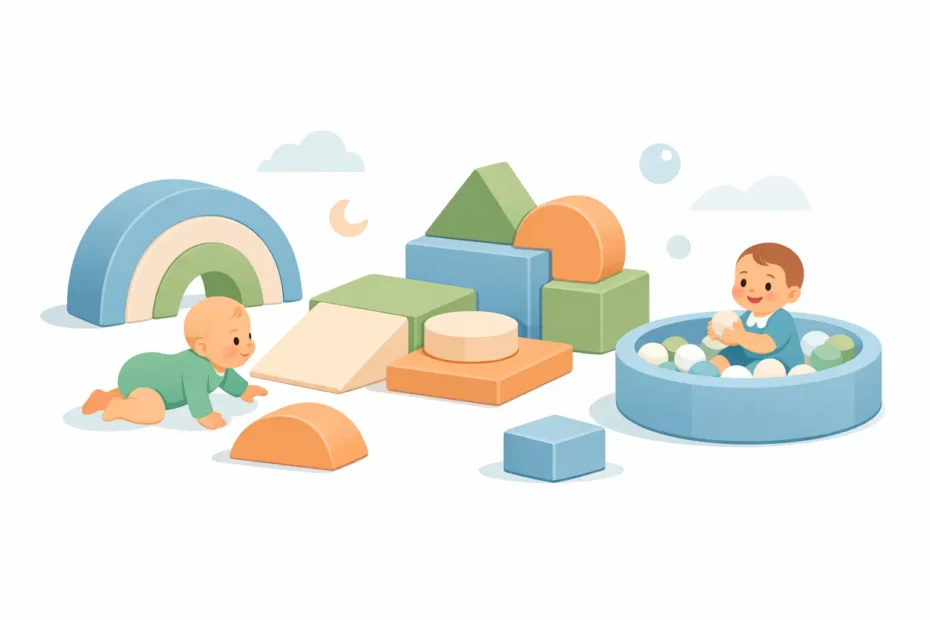
A baby does not need a room full of noisy gadgets to stay engaged. Give them safe surfaces to lean on, crawl over, reach for and explore, and you have something far more useful. That is why soft play shapes for babies have become such a smart choice for parents, nurseries and playgroups looking for practical indoor play that supports early development without compromising on safety.
For babies, play is physical before it is anything else. They push, pull, roll, climb, sit, wobble and test their balance long before they follow rules or structured games. Soft foam shapes give them a secure way to do that. They turn ordinary floor space into an active play area where babies can build confidence at their own pace, whether that means tummy time on a wedge, crawling across a mat, or pulling up against a low block.
Why soft play shapes for babies work so well
The best baby play equipment does two jobs at once. It keeps children safe, and it gives them a reason to move. Soft play shapes do exactly that. Their appeal is simple – they are gentle enough for babies who are still unsteady, but interesting enough to encourage repeated use.
A good set of shapes helps babies develop body awareness. Stepping over a low beam, reaching across a cylinder or steadying themselves against a cube asks them to judge space, weight and balance. These are early physical skills, but they matter. They support crawling, standing, cruising and eventually walking.
There is also a practical advantage for adults. Proper soft play is easy to wipe clean, simple to rearrange and far more adaptable than many single-purpose baby toys. One day a shape is a climbing block. The next day it becomes a seat, a tunnel support or part of a simple obstacle course. If you are buying for home, that flexibility matters. If you are buying for a nursery or soft play setting, it matters even more.
What to look for when buying baby soft play shapes
Not all soft play is made to the same standard, and this is where buyers need to be careful. Cheap-looking sets may seem attractive on price alone, but poor foam density, weak stitching or low-grade covers quickly become a false economy. If the equipment loses shape, marks too easily or feels flimsy under use, you are not getting value.
The first thing to look at is the firmness of the foam. For babies, shapes should be soft enough to protect little knocks but supportive enough to hold their form. If a wedge collapses too easily or a block feels unstable, it stops being useful. Babies need equipment that gives a little, not equipment that folds underneath them.
The outer material matters just as much. Durable, wipe-clean covers are essential for both home and commercial use. Babies dribble, spill and make regular cleaning part of daily life. A cover that wipes down quickly saves time and helps keep the play area hygienic.
Size is another point buyers often overlook. Bigger is not always better, especially for babies. Very high shapes can be intimidating or unsuitable for younger children, while low-level pieces encourage safer exploration. For home spaces, compact sets often make more sense because they fit around normal family life. For nurseries and commercial environments, the best result usually comes from combining low baby-friendly pieces with a layout that can be expanded as children grow.
The best shapes for babies at different stages
Babies do not all play in the same way, so the right shapes depend on age, confidence and mobility. That is why buying a mixed set often works better than choosing one large item.
For younger babies
For babies who are still focused on tummy time, rolling and supported sitting, wedges and soft mats are usually the strongest starting point. A wedge can help vary positioning and make floor play more engaging. Mats give a safer base and define the play area clearly, which is useful at home and in childcare settings.
Low bolsters and cylinders can also be helpful at this stage. They encourage reaching, leaning and supported movement without pushing babies into activities they are not ready for.
For crawling babies
Once babies start crawling, they need more variety. This is where cubes, low steps, curved shapes and small ramps really come into their own. These pieces encourage movement in different directions and create simple challenges that keep babies interested.
At this stage, the layout matters almost as much as the shapes themselves. A straightforward arrangement with gentle changes in height tends to work best. Too many pieces crammed together can make the area feel cluttered rather than stimulating.
For babies learning to stand
Pulling up and cruising changes what babies need from soft play. Stable blocks, step units and supportive shapes become much more valuable because they allow babies to practise standing with a softer landing zone if they lose balance.
This is where quality really shows. A well-made shape holds firm and inspires confidence. A poorly made one shifts too much and can make babies hesitant. Good equipment should support movement, not interfere with it.
Home buyers and commercial buyers need different things
Parents buying for the house usually want three things – safe play, sensible sizing and a price that feels justified. A domestic soft play set should fit into everyday life without taking over the room. Smaller combinations of mats, wedges and a few versatile shapes often give the best return because they are easy to store, easy to clean and useful every day.
Commercial buyers have a different brief. Nurseries, preschools, baby rooms and playgroups need equipment that can cope with repeated use, regular cleaning and multiple children using it throughout the day. Durability matters more, but so does layout planning. It is not just about buying shapes. It is about creating a safe, logical play area that works for the age group, the room size and the setting’s routine.
That is where UK manufacturing and bespoke options can make a real difference. Standard sets are useful, but custom sizing and colour choices help buyers make better use of space and keep the area in line with the rest of the setting. Softplay Toys4Kids understands this well because strong value does not only come from price – it comes from getting the right product first time.
Safety should never be treated as a bonus
When people compare suppliers, price often grabs attention first. That is understandable, but with baby soft play, safety should be built into the buying decision from the start. You want secure construction, reliable materials and shapes designed for actual child use, not products that simply look the part online.
There is also a common mistake in assuming all soft play is automatically safe because it is soft. It depends on the design, the size and how the equipment will be used. A shape that works for toddlers may not be suitable for younger babies. A layout that suits a busy nursery may be excessive for a living room. The best buying decision is the one that matches the child and the space.
Supervision still matters, of course. Soft play reduces risk, but it does not replace adult oversight. What it does do is create a more forgiving environment where babies can test movement and gain confidence with fewer hard edges and less worry.
Why value matters as much as quality
Buyers should not have to choose between affordable pricing and well-made equipment. That is often where frustration starts, especially for parents trying to build a safe indoor play space on a sensible budget, or for nurseries trying to stretch funds across multiple rooms.
Real value comes from equipment that keeps its shape, cleans easily and stays useful over time. A well-designed set of soft play shapes can support different stages of development, which means it does more than fill a corner for a few weeks. It becomes part of daily play.
This is also why broad product choice matters. Some buyers need just a few baby-safe shapes to add to an existing mat area. Others need a complete setup, from floor padding to activity sets and larger soft play arrangements. The strongest suppliers are the ones that can handle both without making the customer overbuy.
Making the right choice without overcomplicating it
If you are choosing soft play shapes for babies, keep the decision grounded in the basics. Think about the child’s stage, the available space and how often the equipment will be used. Then look closely at build quality, cleanability and whether the pieces actually encourage safe movement.
A small, well-made set will usually outperform a larger, cheaper one that lacks support and durability. For commercial settings, the same rule applies at scale. Reliable equipment, sensible design and a supplier that understands custom requirements will nearly always beat a rushed bargain purchase.
Babies do not need overengineered play. They need safe opportunities to move, explore and build confidence. Get that right, and even a simple set of shapes can do a very big job.
When you buy well, soft play is not just another nursery extra or living room add-on. It becomes part of how children grow, play and feel secure in their space.
Leave a Reply