
Sensory Room Ideas for Home: Creating a Safe Haven in 2026
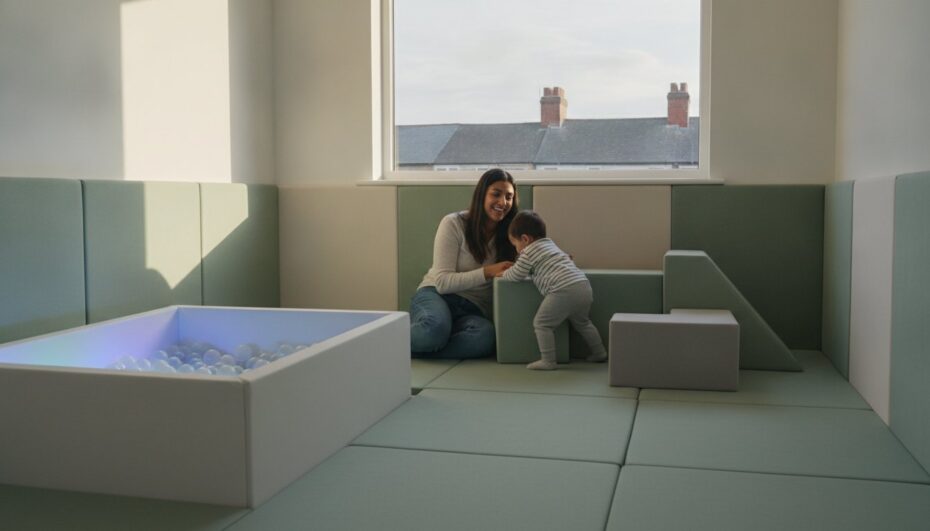
What if that cluttered corner of your spare room could become the most powerful tool in your child’s developmental toolkit? You’ve likely spent hours scrolling through endless gadgets, worrying if a cheap fabric alternative will actually survive a week of active play in a compact UK home. It’s a common struggle for parents who want to provide a calming retreat but feel overwhelmed by non-regulated imports and clinical-looking designs. We understand that your child’s safety and happiness are your top priorities, and you shouldn’t have to compromise on quality to create a peaceful environment.
In this guide, you’ll learn how to transform any space into a professional-grade sanctuary using the best sensory room ideas for home available in 2026. We’ll show you how to combine British-made durability with smart, space-saving layouts that support both emotional regulation and motor skill development. From choosing hygienic soft play mats to installing protective padding that lasts for years, we’re previewing the essential steps to build a safe haven that truly works for your family. Let’s build a space where your child can thrive, play, and find their calm every single day.
Key Takeaways
- Learn the critical difference between relaxation-focused “Snoezelen” zones and active therapy spaces to ensure your design matches your child’s specific sensory profile.
- Discover innovative sensory room ideas for home that balance calming visual stimulation with high-quality tactile engagement using professional-grade materials.
- Understand why active soft play, such as ball pits and climbing blocks, is the secret to improving motor skills and providing essential proprioceptive feedback.
- Master the art of “zoning” to turn even the smallest UK bedroom corner into a multifunctional, modular sensory nook that remains hygienic and durable for years.
- Find out why choosing UK-manufactured equipment ensures your sanctuary meets the highest safety standards while offering the best direct-from-factory value.
What is a Home Sensory Room and Why Does Your Child Need One?
Imagine a space where the bright lights of the supermarket, the hum of the fridge, and the scratchy texture of a new jumper simply don’t exist. For many children, the world is a constant barrage of overwhelming signals. A home sensory room is a controlled, predictable environment specifically designed to help your child explore their senses without the stress of the outside world. When you start researching What is a Sensory Room? you’ll find it’s far more than just a room with a bubble tube. It is a sanctuary for regulation and growth.
In 2026, the best sensory room ideas for home focus on two distinct paths: relaxation and active play. Traditional “Snoezelen” rooms are all about the “chill factor,” using soft lights and gentle sounds to lower heart rates. On the other hand, active therapy spaces encourage movement, climbing, and heavy work to help children understand where their bodies are in space. By combining these, you prevent meltdowns before they start. The latest trends emphasize biophilic design, using natural tones and plants, alongside modular equipment that adapts as your child grows from a toddler to a teen.
The Science of Sensory Integration
Your child’s brain is constantly processing a flood of environmental stimuli. Sometimes, that “switchboard” gets overloaded, leading to anxiety or “stimming” behaviours. Sensory rooms provide a manual reset button for the nervous system by offering specific, targeted inputs. This process helps the brain organize information more efficiently. Sensory integration therapy for home use is a purposeful way to help your child’s brain respond to sensory information through structured, repetitive play in a safe environment.
Benefits for Neurodivergent and Neurotypical Children
While these spaces are essential for children with Autism, ADHD, and Sensory Processing Disorder (SPD), they offer huge advantages for every child. For neurodivergent little ones, a dedicated sanctuary provides the “enclosure” and safety they need to feel secure. For neurotypical children, sensory play is a massive boost for cognitive development and fine motor skills. You’ll likely notice a significant shift in the household dynamic too. A child who has had time to regulate their senses in a ball pit or on a soft play mat is often a child who sleeps better and manages their emotions more effectively. It’s about building a foundation for a happier, calmer home life.
The Three Pillars of Effective Sensory Room Design
Building a sanctuary that truly supports your child’s needs requires more than just buying a few gadgets. It’s about creating a balanced environment that addresses the three core pillars of sensory development. While many competitors suggest that a single bubble tube is enough, we know that a truly effective space must engage the visual, tactile, and vestibular systems simultaneously. When you’re exploring sensory room ideas for home, you need to think about how each piece of equipment serves a specific developmental purpose while remaining safe and durable for daily use.
Visual stimulation is often the first thing parents consider, using projectors and fibre optics to create a mesmerising atmosphere. However, it’s vital to balance this with auditory control and proprioceptive input. High-quality acoustic padding can dampen external noise, allowing calming music to take centre stage. For gravity-based play, incorporating a ball pit or balance boards provides essential vestibular feedback, helping children understand their body’s position in space. These elements work together to create a holistic experience that moves beyond simple decoration into the territory of genuine therapy.
Creating the ‘Dark Den’ Experience
Many children find comfort in small, enclosed spaces where they can escape the glare of everyday life. You can easily achieve this by using blackout blinds or a dedicated pop-up tent to create a low-stimulus “Dark Den.” Within this zone, integrating UV lighting and glow-in-the-dark elements encourages visual tracking without being overwhelming. Always ensure your electronic sensory lighting is professionally manufactured and securely installed. These sensory space ideas from New Story Schools highlight how important it is to provide a “reset” zone that feels both private and secure.
The Power of Touch and Texture
Tactile engagement is the foundation of fine motor skill development. We recommend using high-density foam wrapped in premium, PVC-coated vinyl because it provides superior tactile feedback compared to cheap fabric alternatives. From professional-grade baby play mats to textured soft play blocks, the right materials are essential for safety and hygiene. You can also incorporate “heavy work” by using foam wedges or weighted blankets, which help ground a child’s nervous system. Using a variety of sensory toys within these tactile zones keeps the environment engaging and fresh. If you want to ensure your sanctuary lasts for years, choosing UK-manufactured play mats and safety pads is the smartest way to guarantee quality and peace of mind.
Active Sensory Play: Why Soft Play is Essential
While the twinkling lights and fibre optics discussed earlier provide excellent visual calm, they only tell half the story. To truly unlock your child’s potential, you must integrate active sensory input. This is where many sensory room ideas for home fall short by focusing solely on “passive” observation. Active sensory play involves climbing, crawling, and jumping, which directly engages the proprioceptive and vestibular systems. By using high-density foam equipment, you provide a safe space for your child to push their physical limits without the risk of injury from hard plastic or wire-frame toys.
Why is a ball pit considered the ultimate tool for proprioceptive feedback? It’s because the consistent, deep pressure from the balls provides a “hug” for the entire body, helping a child understand their physical boundaries. This type of play also encourages “crossing the midline” and bilateral coordination. When a child reaches across their body to grab a ball or climbs over a foam wedge, they are forcing the left and right hemispheres of the brain to communicate. This isn’t just fun; it’s a fundamental building block for writing, dressing, and even sports later in life.
Vestibular Input: Movement and Balance
Stimulating the inner ear is key to developing a strong sense of balance. By incorporating soft play steps, slides, and rockers into your layout, you allow your child to experience controlled movement. Sometimes, a child needs to “crash” into a pile of foam mats to regulate their energy levels and blow off steam. Safe risk-taking is vital for sensory growth because it allows children to test their balance in an environment where the floor is literally designed to catch them. We believe in providing the tools that let children be adventurous while staying completely protected.
Durability Matters: Soft Play vs. Cheap Imports
Don’t be tempted by the low prices of non-regulated imports. Many budget options use thin polyester fabrics and exposed wire frames that can poke through after just a few weeks of use. We take pride in our UK-manufactured products because we use medical-grade vinyl that is both hygienic and incredibly easy to wipe clean. Our high-density foam features “shape memory,” meaning it won’t sag or flatten like low-grade alternatives. When you invest in professional-grade safety pads and ball pools, you’re choosing a product that will last for years, not just a few play sessions. Compare our craftsmanship to the rest, and you’ll see why domestic quality wins every time.
Small Space Sensory Room Ideas for UK Homes
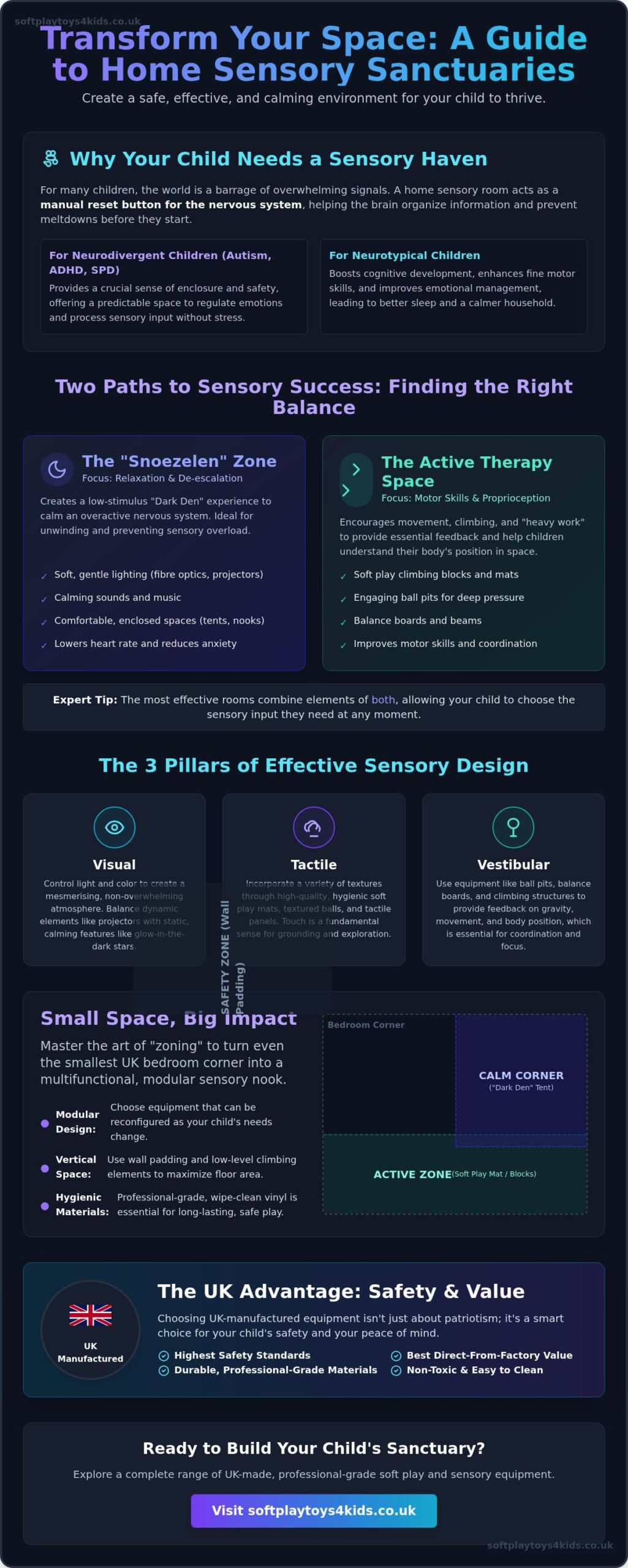
Don’t let a lack of square footage stop you from creating a professional-grade sanctuary. While some competitors might lead you to believe you need a dedicated, sprawling basement for a sensory setup, that’s simply not the reality for most UK terrace or semi-detached homes. Much like the luxury living spaces designed by Unipad, you can achieve incredible results by mastering the art of “zoning.” By turning a single bedroom corner into a dedicated sensory nook, you provide a clear boundary for regulation without taking over the entire house. These sensory room ideas for home are designed specifically for families who need to make every inch count.
Modular equipment is your best friend in a compact space. Look for pieces that can be easily tucked away or repurposed when not in use. Wall-mounted sensory panels are another brilliant space-saver, moving the stimulation from the floor to the walls. One of our favourite “hacks” for 2026 is the “Sensory Wardrobe.” By clearing out a built-in cupboard and lining it with our premium safety pads and some battery-operated LED lights, you create an instant, private dark den that disappears when the doors are closed. It’s about being clever with the space you already have.
Multi-Functional Play Areas
If you don’t have a spare room, your living room can easily pull double duty. The key is choosing soft play equipment that doesn’t clash with your home decor. We offer neutral-coloured foam mats and ball pools that blend seamlessly into modern interiors. For high-energy moments, foldable crash mats are essential. They provide a safe landing zone for jumping and “crashing” but can be folded up and slid behind a sofa in seconds. This flexibility ensures your home remains a home, while still meeting your child’s developmental needs.
Budget-Friendly Sensory Starters
Starting your sensory journey doesn’t require a massive upfront investment. We recommend a “floor-up” approach. Start with high-quality play mats to create a safe foundation, then add pieces as your budget allows. Here are five essentials to get you started:
- Premium Play Mats: The foundation of safety and hygiene.
- Textured Cushions: For immediate tactile feedback.
- Portable LED Projector: To transform any wall into a visual wonderland.
- Small Ball Pool: For deep pressure and proprioceptive input.
- Weighted Lap Pad: To help with grounding during quiet time.
While DIY sensory bins are great for quick activities, investing in professional equipment ensures long-term durability and safety. Ready to start building your sanctuary? Explore our range of UK-manufactured soft play mats and ball pits today and see the difference that professional quality makes for your home.
Why SoftplayToys4kids is the Perfect Partner for Your Home Sensory Project
Choosing the right partner to bring your sensory room ideas for home to life is just as important as the equipment itself. We don’t believe you should have to pay a premium for safety and quality. Because we manufacture our products right here in the UK, we offer direct-from-factory pricing on professional indoor playground equipment. This means you get the same heavy-duty durability found in commercial play centres but at a price that fits a family budget. We cut out the middleman, passing those savings directly to you while maintaining total control over every stitch and seam.
Safety isn’t just a buzzword for us; it’s the foundation of everything we build. Our equipment is designed to meet rigorous standards, including EN 1176-10:2008 for enclosed play and EN 1177 for impact-attenuating surfacing. By manufacturing domestically, we also significantly reduce our carbon footprint and ensure that every material used is non-toxic and child-safe. You won’t have to worry about the safety of non-regulated imports when you choose a partner that lives and breathes British quality. We even offer customisation options, allowing you to choose colours and sizes that fit your specific room layout perfectly.
Handmade Quality in West Yorkshire
Our workshop in West Yorkshire is the heart of our operation. Every ball pit, play mat, and safety pad is handmade by skilled craftspeople who take immense pride in their work. We use reinforced seams and medical-grade vinyl to ensure our products can handle the most enthusiastic “crashing” and play sessions. Buying British doesn’t just mean better quality; it means you’ll receive faster delivery and more reliable customer support if you ever need a hand. Browse our range of sensory-friendly soft play today!
Expert Support for Parents
We know that starting a sensory project can feel overwhelming. Our creative team is here to help you navigate the process, offering advice on how to design a safe and effective play area even in the tightest spaces. We stand behind our work with a “built to last” guarantee, giving you the peace of mind that your investment will support your child’s development for years to come. Remember, you don’t need to do everything at once. Start small, focus on the essentials, and grow your sanctuary as you discover what works best for your child. We’re ready to help you implement the best sensory room ideas for home whenever you’re ready to begin.
Start Building Your Child’s Sanctuary Today
Creating a professional-grade retreat in your own home is about more than just buying gadgets; it’s about investing in your child’s long-term emotional well-being and physical development. We’ve explored how the most effective sensory room ideas for home combine calming visual zones with high-energy active play to create a truly balanced environment. By choosing modular, high-density foam equipment, you can transform even the smallest UK bedroom corner into a durable sanctuary that stands up to years of daily use.
Don’t settle for flimsy imports when you can have handmade quality direct from our West Yorkshire factory. Our products exceed UK Safety Standards (BS EN 1176) and are trusted by schools, nurseries, and parents across the country. You have the power to create a space that reduces meltdowns and boosts confidence. Take the first step toward a calmer, happier home life right now.
Shop UK-Made Sensory & Soft Play Equipment
Your child deserves a safe place to grow, play, and thrive. We can’t wait to help you build it.
Frequently Asked Questions
How much does it cost to set up a basic sensory room at home?
Setting up a basic sensory sanctuary typically starts around £250 for an entry-level starter pack. You can begin with essential foundation pieces like high-density foam mats and a small ball pit to manage your initial investment. Many families choose to phase their purchases, adding more advanced visual equipment as their budget allows. This modular approach ensures you build a high-quality environment without needing a massive upfront payment.
What are the most important items for a child with autism?
The most effective setups for children with autism usually combine calming visual tools with active proprioceptive equipment. A ball pit is a top priority because it provides the deep pressure feedback that helps many children feel grounded and secure. Pairing this with a “dark den” or a quiet corner lined with safety pads offers a vital escape from sensory overload, helping to prevent meltdowns before they happen.
Can I create a sensory room in a small flat?
You can absolutely create a powerful sensory space in a small flat by using clever zoning and modular equipment. Many parents utilize wall-mounted panels or convert a built-in wardrobe into a sensory nook to save precious floor space. Choosing foldable play mats and multi-functional soft play blocks allows you to set up a therapeutic area that can be tucked away when it isn’t in use. These sensory room ideas for home prove that size isn’t a barrier to quality.
Is soft play equipment safe for babies and toddlers?
Professional-grade soft play equipment is incredibly safe for babies and toddlers when it meets UK standards like BS EN 1176. Our products use non-toxic, medical-grade vinyl and high-density foam to provide a cushioned environment for early exploration. This material is far superior to thin polyester alternatives, offering the durability needed to protect little ones as they develop their motor skills and explore their surroundings safely.
How do I clean and maintain sensory room equipment?
Cleaning your equipment is simple if you choose high-quality PVC-coated vinyl. Most items only require a quick wipe down with a damp cloth and a mild, non-toxic detergent to stay hygienic and fresh. Avoid using harsh abrasive cleaners that could damage the surface over time. Regular inspections of seams and fastenings ensure your sanctuary remains a safe and healthy environment for your child for many years of active play.
What is the difference between home-grade and commercial-grade sensory toys?
The main difference lies in the durability of the materials and the rigorous safety testing involved. Commercial-grade equipment is built with reinforced seams and higher-density foam to withstand constant use in schools or play centres. While some home-grade items are light and portable, investing in professional-grade sensory room ideas for home ensures your setup won’t sag or tear after just a few weeks of enthusiastic, daily use.
How can a sensory room help with my child’s sleep?
A sensory room helps improve sleep patterns by providing a dedicated space for nervous system regulation before bedtime. Engaging in “heavy work” like crawling through a ball pool or relaxing in a low-stimulus dark den helps lower cortisol levels and reduce anxiety. When a child’s sensory needs are met during the day, their body is better prepared to transition into a restful, deep sleep at night.
Do I need professional installation for home sensory equipment?
Most home sensory equipment, such as play mats and ball pits, is designed for easy setup and doesn’t require professional installation. However, if you are planning on installing heavy suspended swings or complex electrical wall projections, we recommend consulting a professional to ensure total safety. Our modular soft play range is designed to be user-friendly, allowing you to create a professional-grade sanctuary without the need for specialist tools or contractors.
Leave a Reply