
Sensory Soft Play Equipment: The Ultimate Guide to Boosting Your Child’s Development (2026)
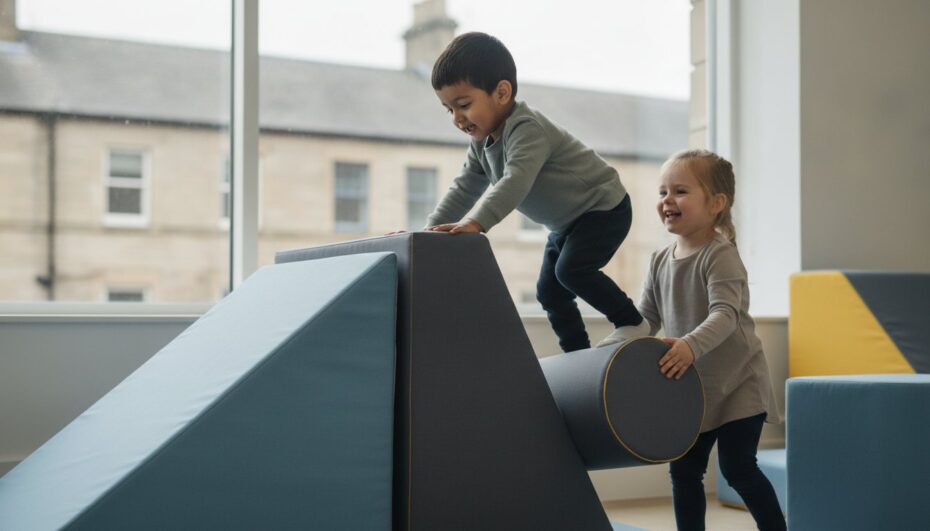
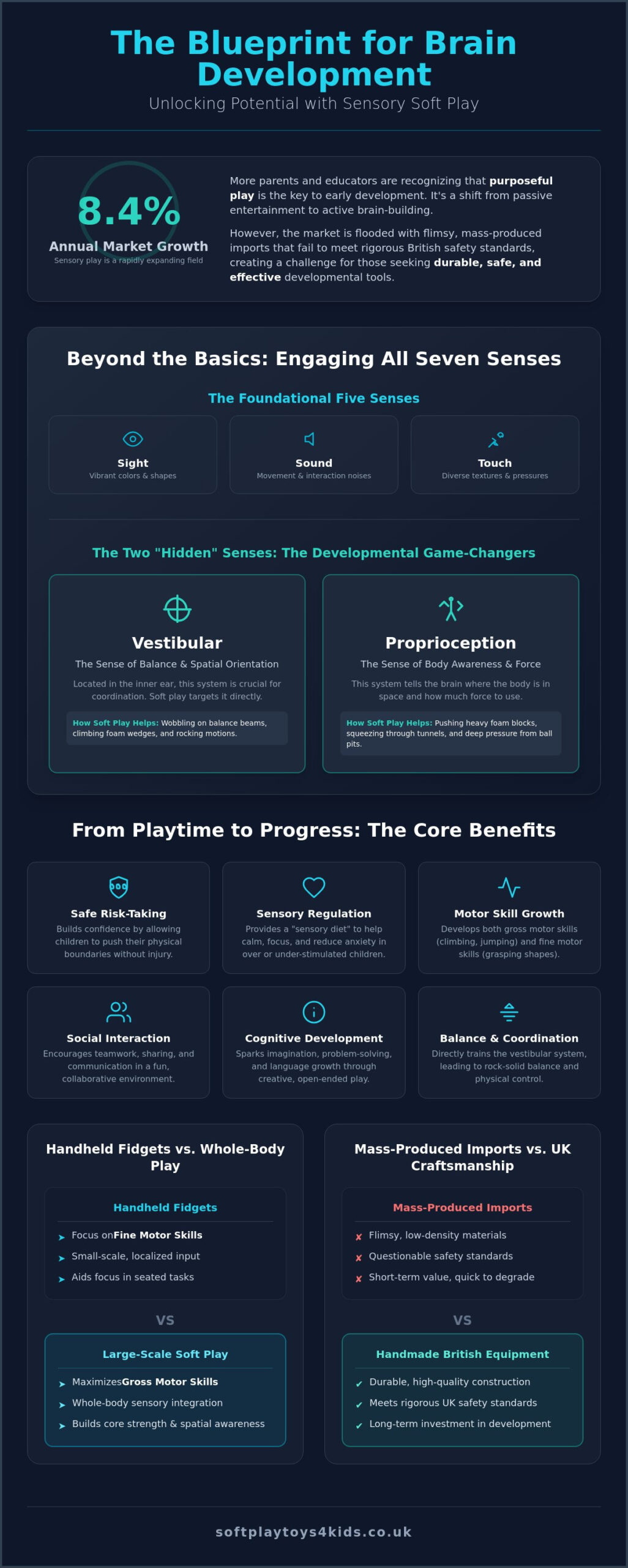
What if the most powerful classroom for your child’s brain isn’t a desk, but a room filled with foam shapes and soft mats? It is a bold claim, but with the sensory play market growing at a rapid 8.4% annually, more parents are realizing that intentional play is the key to early development. You likely feel the pressure to choose the “right” tools while worrying about flimsy, unsafe imports that don’t meet rigorous British safety standards. It is exhausting to navigate a market flooded with low-quality options when all you want is a durable, safe space where your child can thrive. Investing in premium sensory soft play equipment isn’t just about keeping them busy; it is about building a foundation for cognitive and physical milestones through purposeful movement.
We know you value quality that lasts and the peace of mind that comes from British manufacturing. This guide will help you discover how sensory-rich environments transform physical activity into a vital developmental tool for children of all abilities. We will break down the science behind sensory integration and show you why handmade UK craftsmanship is the gold standard for safety and durability. You will learn exactly how to identify high-quality equipment and create a professional-grade sensory space in your own home or nursery.
Key Takeaways
- Discover how premium sensory soft play equipment engages all seven sensory systems to transform everyday physical activity into a powerful developmental breakthrough.
- Learn how to target “hidden” senses like the vestibular system using specialized foam tools that build rock-solid balance and coordination.
- Get our expert step-by-step guide to matching equipment to your child’s unique sensory profile, ensuring every piece of gear serves a specific developmental purpose.
- Understand why large-scale, handmade British environments provide far greater long-term value and safety than flimsy, mass-produced plastic imports.
- Identify the core differences between small-scale fidgets and whole-body soft play to maximize your child’s gross motor skill growth.
What is Sensory Soft Play Equipment? A Guide to Stimulating Development
Sensory soft play equipment is much more than a pile of foam shapes or a simple padded room. It is a sophisticated developmental tool designed to stimulate a child’s five primary senses, sight, sound, touch, smell, and taste, while also targeting the two ‘hidden’ senses, the vestibular system (balance) and proprioception (body awareness). In the UK, we are seeing a major shift from passive play to purposeful play. This approach uses sensory stimulation to turn every movement into a learning opportunity. Whether you are a parent or a nursery manager, you will find that these environments are essential for meeting the Early Years Foundation Stage (EYFS) standards, specifically in physical development and expressive arts.
By providing a safe, controlled space, sensory soft play equipment allows children to push their boundaries without the risk of injury. This is why it is a staple for both neurotypical children and those with Special Educational Needs (SEN). It provides a level of engagement that standard toys simply cannot match, as it involves the whole body in a tactile, 3D experience. When you choose equipment handmade in our Bradford factory, you aren’t just buying a toy; you are investing in a durable, high quality developmental aid built to withstand years of enthusiastic use.
Understanding Sensory Processing in Children
The brain acts like a high speed processor, constantly organising information from the environment. For some children, this processing can be overwhelming or undersensitive, a condition often referred to as Sensory Processing Disorder. Our equipment acts as a ‘sensory diet,’ providing the specific physical inputs a child craves to feel balanced and calm. Whether it is the deep pressure provided by a ball pit or the balance challenge of a gymnastic beam, these tools help regulate emotions and reduce anxiety by grounding the child in their own body.
The Benefits for All Abilities
There is a common misconception that sensory rooms are only for children with autism or ADHD. While they are transformative for SEN learners, they are equally essential for neurotypical development. Playing in these environments boosts fine motor skills, encourages social interaction, and sparks the imagination required for language growth. If you are new to the world of foam play, our beginner’s guide for parents explains the core concepts in detail. By choosing handmade British goods from West Yorkshire, you ensure your child is playing on durable, safe surfaces that outperform cheap imports every time. This direct from factory approach means you get premium quality without the retail markups, making professional grade development accessible for every home.
The Science of Sensory Play: Engaging the Seven Senses
Most parents can list the five basic senses, but did you know your child actually has seven? While sight, sound, touch, smell, and taste are vital, true developmental breakthroughs happen when we engage the “hidden” systems: the vestibular and proprioceptive senses. High-quality sensory soft play equipment is designed to stimulate all seven. This holistic approach is what experts call “Sensory Integration.” By providing a variety of textures, heights, and resistances, you are literally helping your child’s brain wire itself for better coordination and emotional control. Science shows that a rich sensory environment encourages brain plasticity, allowing young minds to adapt and learn at an incredible rate.
The vestibular system, located in the inner ear, manages balance and spatial orientation. When a child wobbles on a balance board or climbs a foam wedge, they are fine-tuning this system. Meanwhile, the proprioceptive system provides information about body position and force. Research from benefits of sensory play highlights how these activities build the foundation for complex motor skills. Our handmade equipment from West Yorkshire is built to provide the exact level of resistance needed to challenge these systems safely. You won’t find this level of developmental precision in cheap, mass-produced imports.
Tactile and Visual Stimulation
Texture variety is a secret weapon against tactile defensiveness. Our range moves from buttery-soft vinyl to firmer, textured mats that encourage tiny hands and feet to explore. For the youngest learners, baby play mats serve as the first essential sensory environment. We use high-contrast colours and bold patterns to assist with visual tracking, helping babies focus and follow movement. This visual input, combined with the physical feel of the foam, creates a multi-sensory “anchor” for early learning.
Proprioception and Deep Pressure
Have you noticed how your child calms down when they are tucked into a tight space? This is the “hug” effect. Proprioception is the sense of self-movement, force, and body position. When children jump into one of our ball pits or squeeze between soft pads, they receive deep pressure input that tells their nervous system it is safe to relax. This “heavy work” builds muscle memory and helps anxious children self-regulate. It is not just play; it is a physical reassurance that helps them understand exactly where they are in the world.
Handheld Fidgets vs. Large-Scale Sensory Soft Play Environments
Size matters when it comes to sensory input. While small handheld fidgets are popular for improving focus and fine motor skills, they only engage a fraction of a child’s nervous system. Large-scale sensory soft play equipment, however, provides a whole-body experience that small plastic gadgets simply cannot replicate. Think about the difference between clicking a button and diving into a pool of soft balls. One is a distraction; the other is a developmental workout. Large-scale environments encourage gross motor movements like crawling, climbing, and jumping, which are fundamental to healthy childhood development.
Durability is another major factor. Small plastic toys often end up in the bin within weeks. Professional-grade foam equipment is built to last for years, even in high-traffic commercial settings like nurseries or schools. This “commercial grade” standard isn’t just about toughness; it is about meeting strict UK safety regulations. When you choose equipment made in our Bradford factory, you are getting the same quality we supply to professional play centres. This ensures that every jump and tumble is supported by high-density materials that won’t bottom out or degrade over time.
Why Soft Play is the Ultimate Sensory Tool
High-density foam is the secret to safe “heavy work.” This type of play involves pushing, pulling, and jumping, which provides the deep pressure input children need to feel grounded. A ball pit is the ultimate example of this. It surrounds the child with tactile feedback, making it a multi-sensory powerhouse for toddlers and babies alike. There is also a vital social-sensory element. In a shared soft play area, children learn to navigate space and interact with others. Large foam blocks encourage imaginative and cognitive play by allowing children to build, tumble, and re-create their environment as they see fit.
The Manufacturer’s Perspective: Quality Matters
How to Choose the Right Sensory Equipment for Your Child
Choosing the right tools for your child’s development shouldn’t feel like guesswork. To find the perfect sensory soft play equipment, you need a clear framework that balances your child’s unique needs with the practicalities of your space. Start by observing how your child interacts with their environment. Do they crave high-energy movement, or do they seek out quiet, enclosed spaces? Once you understand their sensory profile, you can match equipment to specific goals like improving balance, building strength, or providing a calming influence. Consider your available floor space carefully. A compact home playroom might suit a modular mat and a small ball pit, whereas a commercial nursery can accommodate larger, multi-piece obstacle courses and column padding.
Sensory Needs: Seekers vs. Avoiders
Identifying whether your child is a “Sensory Seeker” or a “Sensory Avoider” is the most important step in your selection process. Sensory Seekers have a high threshold for input and often seem like they have “too much energy.” They need high-intensity gear like thick crash mats, large ball pits, and climbing wedges to satisfy their cravings for deep pressure and movement. On the other hand, Sensory Avoiders are easily overwhelmed by bright lights or loud noises. These children prefer calming, low-stimulation tools, such as soft play mats in neutral tones or small, padded “den” areas where they feel secure and grounded. Use this quick checklist: Does your child jump off furniture? (Seeker). Do they hide under tables when things get busy? (Avoider). Do they love the feeling of being squeezed or hugged tightly? (Likely a seeker of proprioceptive input).
Don’t forget the “grow-with-me” factor. Modular soft play sets are a fantastic investment because they evolve alongside your child’s changing motor skills. You can start with a simple set of foam blocks and add wedges, tunnels, or steps as they become more confident and mobile. This flexibility makes modular gear a cost-effective choice for both growing families and busy professional play centres. By choosing pieces that can be reconfigured, you keep the environment fresh and challenging for years to come.
Safety and Maintenance in the UK
In the UK, safety isn’t just a buzzword; it is a rigorous manufacturing standard. When you buy equipment handmade in West Yorkshire, you are ensuring the foam and covers meet strict fire-retardant regulations. Our easy-clean PVC surfaces are essential for maintaining a hygienic environment, especially in nurseries where spills are a daily reality. Unlike cheap, mass-produced imports that might use questionable materials, our British-made products are designed for heavy daily use and total peace of mind. For more expert advice on keeping your gear in top shape, check out our buying soft play equipment guide. Ready to build a safe, developmental haven? Explore our full range of handmade sensory gear today.
Why SoftplayToys4kids is the UK’s Choice for Sensory Excellence
Why settle for mass-produced imports when you can have the pride of West Yorkshire in your playroom? At SoftplayToys4kids, we don’t just sell sensory soft play equipment; we manufacture it ourselves in our Bradford factory. This direct-to-customer model is our secret weapon. By cutting out the retail middlemen, we pass the savings directly to you. This means you get professional-grade, handmade quality at a price that actually makes sense for your budget. We take immense pride in our craftsmanship, ensuring every stitch and seam is built to survive the most energetic “heavy work” sessions. Compare us with international retailers and you will see the difference in durability and safety immediately.
Our commitment to early years development is at the heart of everything we do. We understand that schools, nurseries, and parents need gear that meets rigorous UK safety standards while providing genuine therapeutic value. We have already confirmed our 2026 lead times for custom sensory installations, so you can plan your project with total confidence. Whether you are looking for a single ball pit or a full-scale sensory room, we provide the durability and expert design your children deserve.
Handmade Quality You Can Trust
Every sensory mat and ball pit that leaves our factory is hand-sewn and undergoes a strict quality-check process. We don’t believe in “good enough.” We use premium, non-toxic materials specifically chosen for the British climate and heavy indoor use. Our fabrics are easy to wipe down and maintain, ensuring a hygienic environment for years. We invite you to see the difference that UK manufacturing makes to the safety and longevity of your play area. When you buy from us, you are supporting local jobs and getting a product that is built to last, not just to look good in a catalogue.
Custom Solutions for Homes and Businesses
Do you have a unique space that needs a bespoke touch? Our creative team excels at planning custom sensory environments for schools and commercial play centres. We don’t just provide the blocks; we provide the vision. We offer professional installation services across the United Kingdom, ensuring your equipment is set up safely and efficiently. From column padding to custom ball pools, we handle the technical details so you can focus on the children. Don’t leave your child’s development to chance with flimsy alternatives. Explore our range of handmade sensory toys and soft play today!
Transform Your Child’s Play Into Purposeful Development
Investing in the right sensory soft play equipment is one of the most effective ways to support your child’s physical and cognitive growth. By understanding whether they are a sensory seeker or an avoider, you can create a tailored environment that builds confidence and coordination. We have explored how engaging all seven sensory systems leads to better emotional regulation and motor skill mastery. Don’t settle for flimsy imports when you can provide a safe, professionally designed space built to last for years.
Our products are handmade in our West Yorkshire factory, ensuring commercial-grade durability at home prices. We are proud to be trusted by UK schools and nurseries to deliver premium quality that withstands the most active play. Ready to give your child the best possible start? Shop our handmade UK sensory toys and soft play equipment and see the difference that British craftsmanship makes. Your child’s next developmental breakthrough is just a tumble away.
Frequently Asked Questions
What age are sensory toys and soft play suitable for?
Sensory toys and soft play are suitable from birth through approximately age eight. For infants, soft mats provide a safe base for tummy time and early visual tracking. As children grow into toddlers and preschoolers, they transition to more complex sensory soft play equipment like ball pits and climbers that challenge their balance and coordination.
How do sensory toys help children with autism and SEN?
Sensory toys provide controlled physical input that helps children with autism or SEN regulate their nervous systems. These tools can either calm a child who is feeling overwhelmed or stimulate one who needs more sensory feedback. Products like ball pits offer deep pressure therapy, which is proven to reduce “stimming” and improve focus by grounding the child in their environment.
Are sensory toys and Montessori toys the same thing?
No, they are not the same, though they often complement each other in a playroom. Montessori toys focus on natural materials and real-life skills to encourage independence and logic. Sensory toys, particularly soft play, are specifically engineered to engage the seven sensory systems, focusing heavily on physical feedback, tactile exploration, and gross motor development through high-density foam and varied textures.
How do I clean foam sensory equipment and play mats?
You can clean our foam equipment and play mats easily with a soft cloth and warm, soapy water. Our professional-grade PVC covers are designed to be “wipe-clean” for maximum hygiene in busy homes and nurseries. It is best to avoid harsh chemical cleaners or abrasive sponges, as these can damage the fire-retardant coating and the vibrant colours of the fabric.
Can sensory soft play help with my child’s anxiety?
Yes, sensory play is a powerful tool for reducing anxiety by lowering cortisol levels through physical engagement. Creating a “sensory den” with soft mats and padding gives a child a safe, quiet space to retreat when they feel overwhelmed. The rhythmic movement of jumping or the deep pressure of a ball pool can act as a physical reset for a stressed nervous system.
Why should I choose UK-made sensory equipment over cheaper imports?
Choosing UK-made gear ensures your products meet the highest British safety standards, including fire retardancy and non-toxic material requirements. Our sensory soft play equipment is handmade in our West Yorkshire factory, which means we oversee every stitch for maximum durability. You avoid the risks of flimsy, unsafe imports while benefiting from direct-from-factory pricing that keeps professional quality affordable.
What is the best sensory toy for a toddler who is always jumping?
A high-density foam crash mat or a large ball pit is the best choice for a toddler who craves “heavy work” like jumping. These items provide the significant proprioceptive resistance their bodies are seeking while ensuring they land on a safe, cushioned surface. This type of play helps them burn energy and improves their spatial awareness without the risk of injury from jumping on household furniture.
Leave a Reply