
Foam Shapes: Easy Colour & Number Play Ideas for 2026
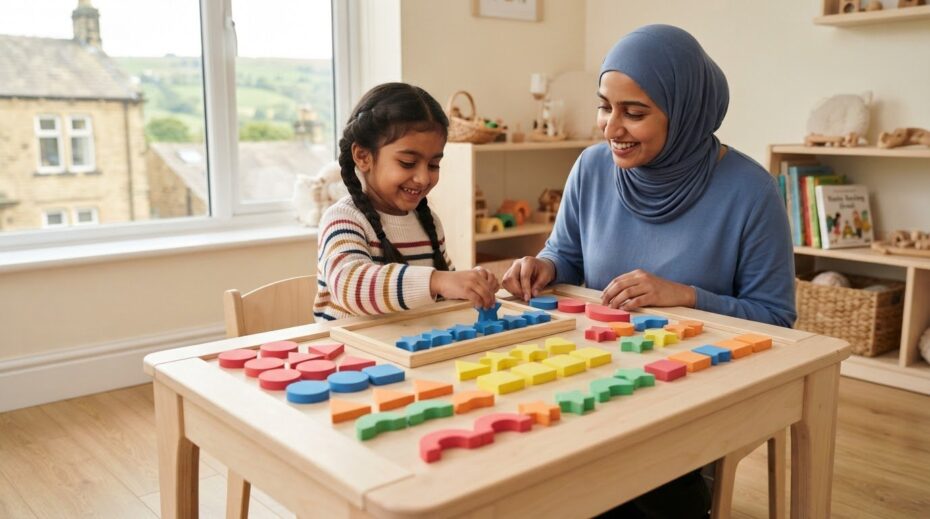
Foam shapes for learning colours and numbers can turn a few minutes of play into a chance to notice, match and count together. You do not need a formal lesson or a complicated setup. At home or in an early-years setting, start with a small selection of shapes and follow what interests the child. If they want to hold a favourite piece or line up shapes, join in and use that play as a starting point.
Try simple activities such as sorting by colour, counting a group, matching pieces or making a pattern. Keep the instructions short, give the child time to respond and remember that pointing or moving a shape can be an answer too. You can make a game easier by putting out fewer pieces, or add a small challenge when the child is ready. The aim is shared, enjoyable play, not getting every answer right.
Foam shapes for learning colours and numbers
A few well-chosen pieces are enough to try the ideas in this guide. Begin with one inviting prompt, such as “Can you find a red shape?”, then build on what the child notices. These activities can be brief and easy to repeat, with little preparation and no need to finish a game once interest fades.
Key Takeaways
- Use foam shapes for learning colours and numbers as flexible play prompts. Model one simple action before inviting the child to have a go.
- Try five easy games, from a colour hunt to pattern-making, with a small number of materials and steps.
- Make activities easier by offering fewer choices or pieces, and follow the child’s interests to keep play enjoyable.
- Choose easy-to-handle materials that suit the child’s age and the play setting.
- Build practice into brief, repeatable moments during everyday play rather than relying on formal drills.
How foam shapes make colour and number practice feel like play
You do not need a long activity or a perfect plan to explore colours and counting. A few relaxed minutes with foam shapes can give you and a child something to look at, pick up and talk about together. Start with what catches their attention. If they choose a favourite piece, name its colour or invite them to find another one like it.
Foam shapes are tactile materials children can handle, arrange and explore. An adult can use them to prompt simple actions such as naming, matching, sorting and counting. The aim is not to test a child or correct every answer. Notice what they do, describe it, then leave time for them to join in, respond in their own way or keep exploring.
Learning through play means exploring and making sense of ideas through playful, active experiences. A grown-up might offer a gentle prompt while the child makes choices. For a general introduction to play-based learning, see the linked overview.
What children can practise with coloured shapes
Start with something easy to see. Name a colour as you pick up a shape, then invite the child to choose one or find a match. When they are ready, count a small group together, touching or moving each shape once as you say a number. You can also notice whether pieces look big or small, or name a shape, but focus on one idea at a time to keep the play manageable.
Set up a simple, inviting play space
Choose a clear patch of floor or a play mat and put out just a few shapes. A small selection makes it easier to point, name and play together without too many choices competing for attention. Use familiar words and pause after asking a question. A child might answer aloud, point, reach or show you by moving a piece.
Keep the mood light. Try “I’ve found a yellow one” or “Shall we count these together?” rather than making every prompt a quiz. If the child loses interest, follow their lead or put the shapes away and try another time. For broader context on soft play, you can also explore the guide What is Soft Play? A Beginner’s Guide for Parents.
Build from colour naming to counting with foam shapes
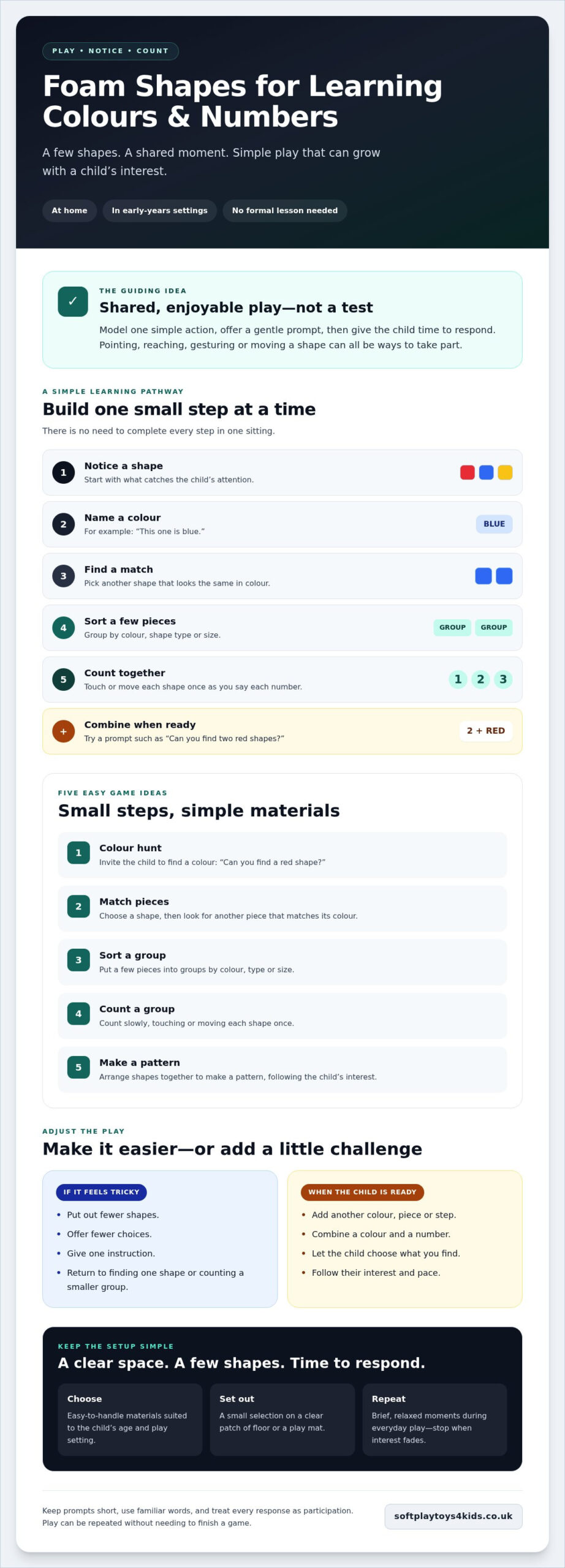
Once the child is comfortable exploring the pieces, add one small step at a time: notice a shape, name its colour, find a match, sort a few pieces, then count them. There is no need to work through every step in one sitting. Model one action and invite the child to copy you, choose a shape or show you what they notice.
Use open, encouraging questions. Try “Which one would you like to find?” or “What do you notice about these shapes?” A response might be a spoken word, a point, a gesture or moving a piece into place. Treat each as participation rather than turning the activity into a test.
Start with colour matching and sorting
Choose a colour and ask the child to find a shape that matches. Demonstrate first by picking up a piece and saying, “This one is blue.” Then make a small group of matching shapes together and describe what you see: “These are all blue.” If the child seems ready, invite them to make the groups or explain why they put certain pieces together. Shapes can also be sorted by type or size, so there is more than one way to group them.
Add counting and number recognition
Use a small group of pieces and count slowly, touching or moving each shape once as you say each number. This helps you keep track of which pieces have been counted. Then say a number and invite the child to make a matching group, or show a numeral and count out that many shapes together. Keep the quantity manageable for the child’s attention and confidence. There is no need to follow a fixed age milestone.
When both parts feel familiar, combine them with a simple prompt: “Can you find two red shapes?” If that feels tricky, return to finding one red shape or counting a smaller group. If it is easy, let the child choose the colour or number for you to find.
Quick adjustment: Make the activity easier by offering fewer shapes or one instruction. Add another colour, piece or step when the child is ready.
Hands-on play can happen in many settings. If you are considering a play mat as part of a play space, explore the soft play mats available from SoftplayToys4kids.
Five foam-shape games that combine colours and numbers
These quick games use foam shapes as prompts for playful colour and number practice, not formal exercises. Try them one-to-one, with siblings taking turns or in a small early-years group. Offer a choice between two tasks, such as finding a colour or making a counted group, so children can join in their own way.
1. Colour hunt
Materials: A few foam shapes in different colours.
Play: Name a colour and invite the child to find shapes that match. Count the pieces together, moving each one as you count.
Variation: Let the child choose the colour for everyone to find.
2. Sorting bowls
Materials: Foam shapes and a few bowls or containers.
Play: Put one shape in each bowl as a colour example, then sort the remaining shapes into matching groups. Talk about the colours and count how many pieces are in each bowl.
Variation: Ask the child to choose a different way to sort, such as by shape.
3. Counted towers
Materials: Foam shapes that can be safely stacked.
Play: Choose a number and add shapes one at a time, counting aloud as you build. Name each colour as it goes on: “One red, two blue.”
Variation: Build a tower using one colour, or invite the child to pick the next piece.
4. Number matching
Materials: Foam shapes and number cards, or numbers written on paper.
Play: Choose a number, say it aloud and help the child make a group with the same number of shapes. Count together to check the group, then notice its colours.
Variation: Offer two number cards and let the child choose which group to make.
5. Patterns and playful stories
Materials: A handful of shapes in two or more colours.
Play: Lay out a simple repeating pattern, such as red, blue, red, blue, and invite the child to continue it. Turn the line into a story: “Two red shapes are going on an adventure. How many blue friends will join?”
Variation: Let the child invent a pattern or story and count the shapes in it.
Keep each game flexible. In a group, children can take turns choosing, sorting or counting, while others join in by pointing or naming colours. For more ideas about sensory play, see Sensory Toys: The Ultimate Guide to Boosting Your Child’s Development.
Adapt foam-shape learning to age, interest and ability
The best activity is one the child wants to join. Follow their curiosity: if they are more interested in making a colourful line than naming each piece, play along and describe what they are doing. Keep sessions flexible, and stop or switch activities if the child seems tired or frustrated. There is no need to finish a game or reach a particular answer.
Make an activity easier or more challenging
Small adjustments can change the level of challenge without changing the playful feel. If a task seems difficult, put out fewer shapes, offer two colour choices or count a smaller group. Give one short instruction at a time, such as “Find a red one.” If the child is ready for more, add another colour, invite them to sort by colour and shape, or extend a repeating pattern by one step.
A mixed-up answer can be a chance to explore together, not a test to pass. You might say, “You picked the blue one. Shall we look for a red one too?” Give the child time to respond and let them choose what happens next. The aim is to find a level of play that feels inviting rather than demanding.
Helpful rule: To make play easier, reduce the choices or steps. To add challenge, introduce one new choice or step at a time.
Keep play inclusive, comfortable and supervised
Children can take part in different ways. They might speak, point, look towards a shape or move it. Adapt how you present the pieces to suit the child’s communication style, mobility and attention. Place shapes within easy reach, use a clear surface, or keep the activity brief with pauses. In a group, offer turns without requiring every child to respond in the same way.
Before play, check the item’s age guidance and any care or safety information supplied with it. Inspect the materials for damage, and set aside anything that appears broken or unsuitable. Some foam shapes may be small. Consider choking risk for young children, particularly those who mouth objects, and keep small pieces out of reach when needed. Stay close and actively supervise throughout. Suitability depends on the specific materials and the child, so do not assume every item is appropriate for every age or setting.
For a comfortable play space, you could explore soft play mats and sensory toys from SoftplayToys4kids, and check the product information to see what suits your intended use.
Choose useful play materials and turn practice into a routine
Choose materials that suit the child and the way you plan to play. For home use, look for pieces the child can handle comfortably and that fit the activity you have in mind. Product sets can differ in size, material and intended age range, so check the listing rather than making assumptions.
What to check before choosing shapes
Read the manufacturer’s product information before introducing new play materials. Check the dimensions, materials, cleaning guidance and age recommendations, and follow any warnings or care instructions provided. Do not assume a product is suitable for a child or setting based on its appearance alone.
For a nursery, school or group setting, consider where the pieces will be stored, how often they will be used and how many children may play with them. These practical details can help you decide whether the materials suit your space and routine. If information you need is not available, check with the supplier before choosing.
Keep colour and number learning part of everyday play
Learning moments do not need a formal timetable. Count a few pieces as you put them away, compare colours while choosing what to use next, or describe a simple pattern together. Keep it brief and follow the child’s interest. Repeat a favourite game if they enjoy it; if they move on, let the activity end naturally.
SoftplayToys4kids supplies sensory toys and soft play equipment, including play mats. If you are looking for foam shapes, check product listings or contact the supplier about current availability. You can also explore the company’s soft play and sensory toy range here: Explore soft play and sensory toys.
Make colour and number play part of everyday moments
Keep it simple: name a colour as the child chooses a shape, count a small group together, or follow their lead in a favourite game. These ideas make foam shapes a flexible prompt for shared play, not a formal lesson. Adjust the choices and steps to suit the child, and finish while the activity still feels enjoyable.
SoftplayToys4kids is a UK-based manufacturer and supplier operating from West Yorkshire. Its products include sensory toys, soft play equipment and play mats. If foam learning shapes are what you are looking for, check current product availability before choosing.
Explore soft play and sensory toys from SoftplayToys4kids to find play materials that suit your space and routine. Start with a mat, sensory toy or another suitable item, then follow the child’s curiosity as you play.
Frequently Asked Questions
How do you teach a child colours with foam shapes?
Start with a few shapes and name one colour clearly, such as red. Invite the child to find another red shape, point to one or place matching pieces together. Model the word yourself and allow time for a response, whether they speak, gesture or move a shape. Keep the game relaxed. When matching is still enjoyable, introduce another colour or let the child choose which colour to look for next.
Can foam shapes help children learn numbers?
Foam shapes can provide hands-on prompts for practising number words and counting. Touch or move one piece for each number as you count together, then try making a small group to match a spoken number. Keep the focus on exploring, not getting every answer right. Adjust the number of pieces and the pace to the child’s interest and current ability, and pause or change the activity if they lose interest.
What games can you play with foam shapes to practise colours and numbers?
Try a colour hunt, a sorting game, counted groups, number matching or a simple repeating pattern. For example, ask the child to find all the blue shapes, then count how many they collected together. Demonstrate one turn and keep your instructions short. If a game feels tricky, offer fewer pieces or focus only on finding a colour before adding counting or another step.
At what age can children use foam shapes for learning?
Suitability depends on the child and the specific product, so check the manufacturer’s age guidance before play. Some foam shapes are small and may pose a choking risk, especially for children under three or those who mouth objects. Follow product instructions, keep unsuitable pieces out of reach and supervise closely. Choose activities based on how the child communicates, handles materials and sustains attention, rather than a fixed learning milestone.
How can I make colour and number activities easier for a child?
Reduce the number of shapes and offer just two colour choices, such as red or yellow. Show each step, use simple words and give the child time to point, choose or respond without speaking. You can also count a smaller group together. If the child seems frustrated or loses interest, pause, switch to a favourite activity or try again another time. Keep play encouraging rather than turning it into a test.
Are foam shapes suitable for nurseries and playgroups?
They may suit a nursery or playgroup activity if the materials are appropriate for the children and setting. Check the product’s age guidance, cleaning instructions and storage needs, and consider how many children will use the pieces. Plan active adult supervision and adapt instructions for different communication styles and abilities. If product details are unclear, ask the supplier before use, and follow any relevant policies for your setting.
Leave a Reply