
Best Foam Step Slides for Toddlers and Nurseries
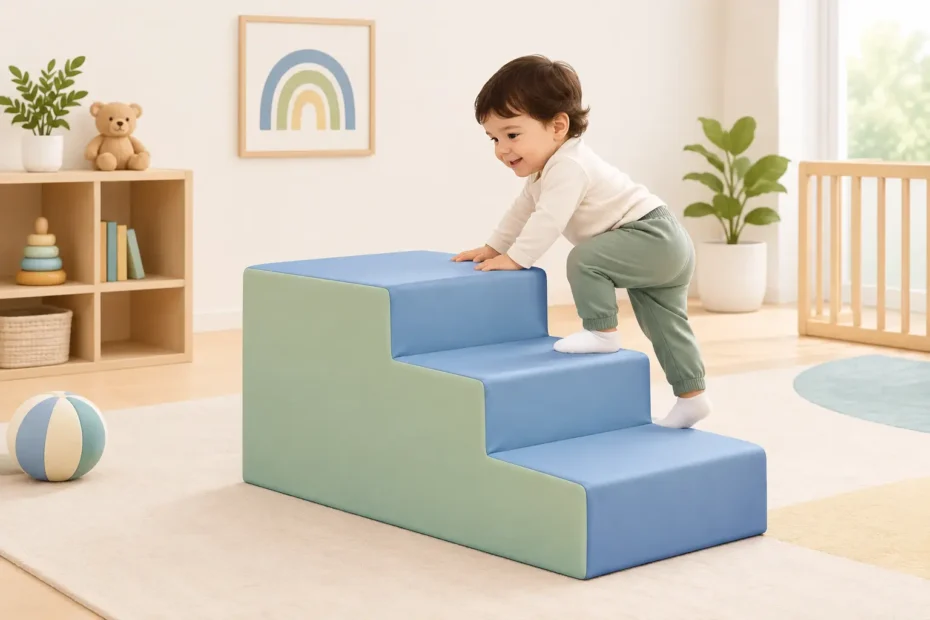
A foam step slide can turn a quiet corner of the lounge, nursery room or play centre into the place children head for first. The best foam step slides do more than provide a quick climb and slide: they encourage balance, confidence, coordination and active play without bringing hard-edged equipment into a young child’s space.
For parents, the appeal is clear. Children can burn off energy indoors while practising a movement they will use every day: stepping up, holding on, sitting down and sliding safely. For nurseries and commercial soft play settings, a well-made step-and-slide unit is a hard-working piece of equipment that earns its floor space from morning play through to collection time.
What makes the best foam step slides?
A good-looking slide is not automatically a good soft play slide. For babies and toddlers, the design must feel secure at every stage of the movement. That means a stable base, manageable step height, gentle slide angle and enough room for a child to sit and position themselves before coming down.
The best models use high-quality, supportive foam that holds its shape. Foam that is too soft can feel unstable under small feet, while foam that is too firm loses the reassuring cushioned feel families expect from soft play. The right balance gives children confidence to climb independently while offering a softer landing if they wobble or topple.
The outer cover matters just as much. A durable, wipe-clean PVC or vinyl cover is practical for the spills, sticky hands and busy sessions that come with children’s play. It should be securely stitched, easy to clean and capable of standing up to regular use. In a nursery or soft play centre, this is not a small detail – equipment that cannot be cleaned quickly becomes a problem.
A separate step and slide configuration can be especially useful because it gives children a clear route: climb, turn, sit, slide, repeat. Some units include a short platform at the top, which gives a little more space for toddlers to settle before sliding. Others are compact and low to the ground, making them better suited to early walkers and smaller home play areas.
Choose the right size for the children using it
The biggest mistake buyers make is choosing by photograph alone. A slide may look compact online but need a sensible safety zone around it. Before ordering, measure the available floor area and allow room at the front for children to land and walk away without crossing another child’s path.
For home use, a smaller foam step slide is often the sensible choice. It is easier to fit in a bedroom, playroom or corner of the living room, and a lower height can be less daunting for young toddlers. It still delivers the climbing and sliding action children love, but without taking over the whole house.
Nurseries, preschools and playgroups may benefit from a larger unit, particularly where several children are likely to use it throughout the day. However, bigger is not always better. A compact slide with a clear one-child-at-a-time route may work more effectively than a large, complicated piece that creates queues, congestion and supervision issues.
Think about the age range too. Babies who are cruising and early walkers need low, predictable shapes with gentle gradients. Confident toddlers can handle a little more challenge, provided the unit remains stable and staff or parents can supervise appropriately. If a group includes a wide age range, pairing a small step slide with other low-level foam shapes can create a play area where children choose activities that suit their confidence.
Safety starts with placement and supervision
Soft foam helps reduce the impact of everyday tumbles, but it does not remove the need for sensible setup. Position the unit on a level floor and make sure it cannot slide across smooth surfaces during use. A suitable safety mat underneath or around the landing area can add further cushioning and define the play zone clearly.
Keep the slide away from furniture corners, radiators, doors and routes people use to walk through the room. In commercial settings, avoid placing it where children exiting the slide could move directly into the path of another activity. A clear run-off area is one of the simplest ways to make play calmer and safer.
Adult supervision remains essential, especially with younger children. Encourage children to climb the steps rather than scramble up the slide, sit facing forwards and wait until the landing area is clear. These simple habits help prevent the collisions that can happen when excited toddlers all want another turn at once.
Check the equipment routinely. Look over seams, covers and foam edges, and remove any item from use if it becomes damaged. A quality foam unit should be built for regular play, but regular checks protect children and extend the life of your investment.
Why foam step slides support early development
A foam step slide is not just a treat for rainy afternoons. Climbing steps requires children to shift weight from one foot to the other, judge height and use their arms for balance. Sliding introduces cause and effect: sit at the top, move forwards, arrive at the bottom. That simple sequence is hugely satisfying for young children and encourages repetition.
Repeated play can support gross motor development, body awareness and confidence. A child who initially needs a hand to climb may soon be stepping up alone. That visible progress is one reason step-and-slide equipment works so well in both homes and early years environments.
It also supports social play. Children learn to take turns, wait, watch others and communicate their excitement. In a nursery, a short conversation at the top of the steps or a cheer at the bottom can become part of the shared play experience. The equipment should never replace open-ended play, but it can give children an inviting focal point for it.
Home foam slides versus commercial soft play units
Domestic buyers usually need equipment that is compact, easy to move when required and simple to clean. Colour can be a major consideration too. A soft neutral palette may suit a living space, while brighter colours can make a dedicated playroom feel more exciting. The right choice depends on where it will live and how often it needs to be put away.
Commercial buyers need to think more about volume of use, room layout and the age of their users. Nursery equipment may be used by multiple children every day, so durable covers, reliable stitching and supportive foam become non-negotiable. It is also worth considering whether the unit will be part of a wider soft play layout with ball pits, tunnels, balance beams or activity blocks.
Bespoke sizing can make a real difference where a room has an awkward alcove, limited floor space or a specific colour scheme. Rather than forcing standard equipment into a poor layout, a made-to-order option can help create a safer, more useful play area. Softplay Toys4Kids manufactures in the UK and can help customers looking for practical sizes and colours without paying inflated prices for a customised solution.
Cleaning and care that keeps play equipment ready
Wipe down covers regularly using a mild cleaning solution suitable for the material, then allow the surface to dry fully before use. In a busy nursery, make cleaning part of the daily routine rather than waiting for visible marks. This keeps the equipment looking fresh and supports a more hygienic shared environment.
Avoid harsh chemicals, abrasive pads and soaking the foam. The cover is designed to protect the inside, but damaged seams or prolonged moisture can shorten the life of any soft play product. Store movable pieces in a dry indoor area and keep them away from direct heat sources.
If you are buying for home, choose a design you will genuinely keep accessible. Equipment hidden in a cupboard rarely gets the use it deserves. A compact foam step slide left ready in a safe play corner can become a dependable everyday outlet for movement, especially when outdoor play is not an option.
Getting real value from your purchase
The lowest price is only good value if the foam retains its shape, the cover remains easy to clean and the size works for your space. Compare dimensions, materials, construction and after-sales support before deciding. For commercial buyers, it is usually more economical to buy equipment built for frequent use than replace lightweight alternatives after a short period.
Consider how the slide will work with the rest of your setup. A step slide can be used on its own, but it becomes even more versatile alongside soft blocks, wedges, tunnels and mats. Start with the activity children will use most, then build the play area around it as budget and space allow.
The best choice is the one that gives children enough challenge to feel proud, enough cushioning to play with confidence and enough quality to stay part of the fun long after the first excited slide.
Leave a Reply