
Active Play Benefits for Toddlers: Complete Guide (2026)
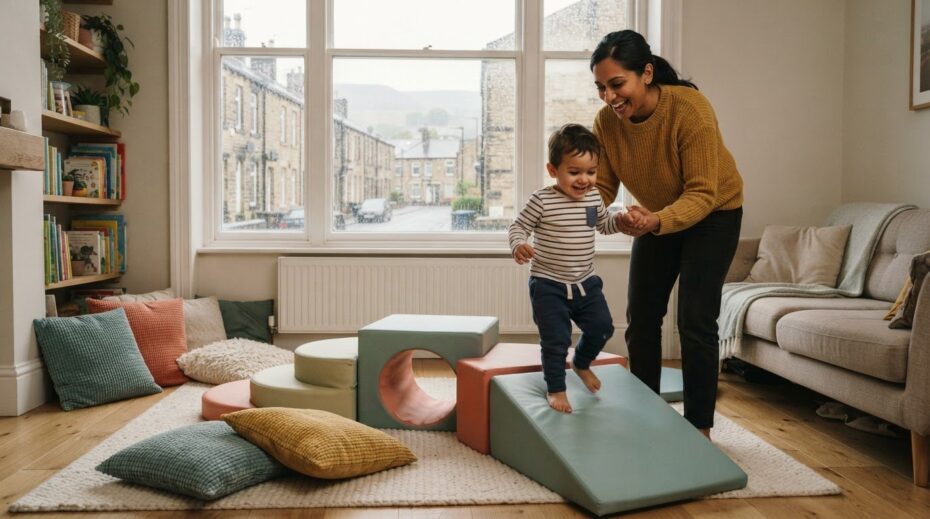
Did you know that fewer than one in four UK toddlers hit their recommended daily movement targets? According to a 2025 University of Bristol study, just 23% of children aged two to four achieve the 180 minutes of daily physical activity advised by NHS guidelines. When wet British afternoons trap you indoors, understanding the true active play benefits for toddlers can feel secondary to simply surviving the day without bruised knees or screen-induced meltdowns.
You want your little one to burn off restless energy safely, and you shouldn’t have to worry about accidental tumbles onto hard floors to make it happen. Purposeful physical play does far more than tire children out for naptime; tactile movement actively wires developing brain architecture and supports emotional balance. In this complete guide, you’ll discover how daily active movement transforms your toddler’s physical strength, brain development, and emotional resilience through safe, sensory-rich play. We’ll break down essential neurological milestones, practical indoor movement routines, and the best ways to create a cushioned, high-density play space at home.
Key Takeaways
- Master the 180-minute daily activity target set by UK health guidelines through structured and open-ended indoor movement routines.
- Discover the full scope of active play benefits for toddlers, from rapid gross motor acceleration to essential vestibular and sensory regulation.
- Turn any domestic living area into a dynamic obstacle course using interactive rhythm games and cushioned floor challenges.
- Eliminate common indoor injury risks by cushioning hard floors and structural hazards with durable, impact-absorbing safety pads.
- Learn why commercial-grade, high-density foam crafted by British manufacturers delivers superior protection and longevity compared to low-density alternatives.
What Is Active Play and Why Is It Vital for Toddlers?
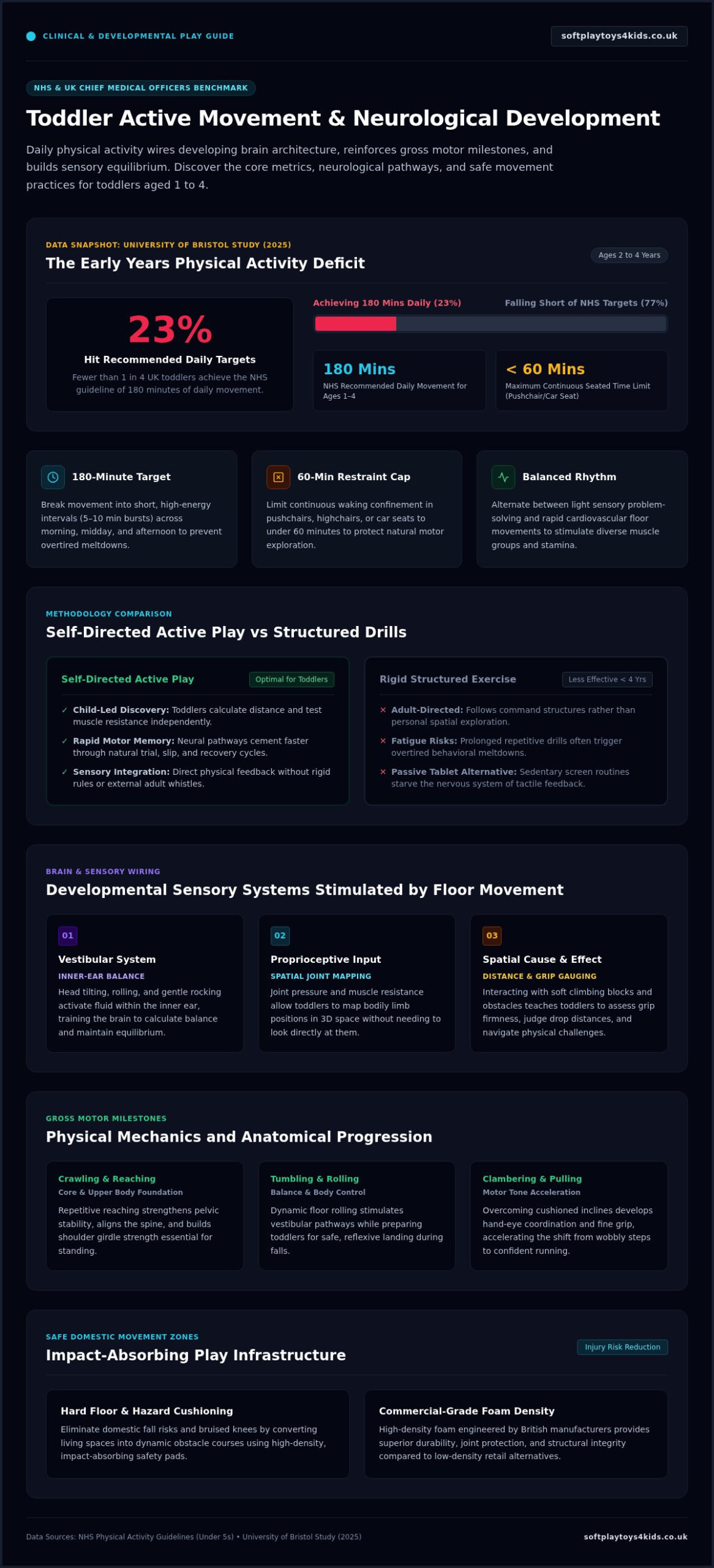
Active play is spontaneous, child-led physical movement that engages large muscle groups, spatial curiosity, and sensory discovery. Unlike organised sports, it requires no rigid rulebooks or adult whistles. Instead, it invites self-directed exploration. UK Chief Medical Officers and NHS guidelines recommend that toddlers aged one to four spend at least 180 minutes each day moving. Understanding the full active play benefits for toddlers bridges the gap between these clinical guidelines and real-world living room setups.
A balanced day alternates between light, curious exploration, such as building towers or navigating sensory bins, and energetic cardiovascular bursts that get tiny hearts pumping. Swapping passive screen routines for movement is urgent. Sitting toddlers in front of digital tablets starves developing nervous systems of the tactile feedback they crave. In contrast, dynamic floor play directly supports gross motor skills development, giving young children the balance, muscle tone, and body control necessary for growing confidence.
The Core Definition: Active Play vs Structured Exercise
Why do self-directed games beat rigid drills for early development? Toddlers learn through cause and effect. When children decide how high to climb, stretch, or crawl, their brains calculate distances and test muscle resistance independently. This exploratory play involves natural movements:
- Crawling and reaching: Builds pelvic stability, core alignment, and shoulder strength.
- Tumbling and rolling: Stimulates inner-ear balance systems while building spatial awareness.
- Playful repetition: Cementing neural pathways each time a child attempts to climb up or slide down.
Through trial, slip, and recovery, toddlers forge lasting motor memory far faster than following adult commands.
Daily Movement Guidelines for Growing 1- to 3-Year-Olds
Hitting three hours of daily activity sounds daunting. The trick is breaking it into manageable intervals across the morning, midday, and late afternoon. Toddlers thrive on short, high-energy bursts. Quick five-to-ten-minute sessions keep energy levels balanced while avoiding the overtired meltdowns that follow prolonged, exhausting drills.
Crucially, health guidance stresses limiting continuous seated time. Toddlers shouldn’t remain strapped into pushchairs, highchairs, or car seats for more than an hour at a time during waking hours. Introducing safe soft play mats or dedicated movement zones indoors lets your child explore freely, unlocking vital active play benefits for toddlers while protecting domestic peace of mind.
Major Developmental Benefits of Active Toddler Movement
Active movement is the primary catalyst for early childhood neurological architecture. While the physical exercise is obvious, the true active play benefits for toddlers run much deeper. Dynamic movement integrates sensory processing, emotional resilience, and muscular coordination simultaneously, laying the groundwork for lifelong health and learning.
Physical Strength and Gross Motor Skill Progression
Every time a toddler pushes up from the floor, clambers over an obstacle, or pulls themselves upright, they build critical core and spinal muscle tone. These repetitive muscular contractions form the physical base required for gross motor development. Grasping soft edges, rolling across slopes, and throwing light objects refine fine motor grip and hand-eye coordination. As aligned with the NHS physical activity guidelines for children under five, consistent daily movement accelerates confidence, helping toddlers transition smoothly from wobbly early steps to fluid running and climbing.
Cognitive Growth, Spatial Awareness, and Sensory Systems
Active floor exploration directly stimulates two hidden sensory systems: the vestibular system and proprioception.
- Vestibular processing: Head tilting, rolling, and gentle rocking activate fluid in the inner ear. This teaches the brain how to balance and maintain equilibrium.
- Proprioceptive input: Muscle resistance and joint pressure help children map their body’s position in space without looking at their limbs.
- Spatial problem-solving: Integrating tactile sensory toys alongside climbing blocks challenges toddlers to gauge distances, assess grip firmness, and understand physical cause and effect.
This dual sensory input sharpens cognitive mapping, strengthening spatial reasoning long before formal classroom learning begins.
Emotional Regulation, Social Confidence, and Sleep Quality
Physical movement serves as an essential release valve for toddler emotional overwhelm. Vigorous play burns off excess cortisol and releases mood-boosting endorphins. In fact, research highlighted by the American Academy of Pediatrics found that just 15 minutes of free, active play cut physiological stress indicators in half compared to sedentary sitting. Mastering an obstacle independently fosters genuine self-reliance, giving toddlers the confidence to navigate new environments.
Sharing physical play spaces also sparks early cooperative play, teaching patience and spatial respect. Best of all for parents, intensive daytime movement drives deeper nocturnal REM sleep, resulting in quicker bedtime settling and longer overnight rest. If you want to transform domestic energy into peaceful evenings, investing in dedicated home equipment from SoftplayToys4kids offers a safe, cushioned environment where toddlers can push their boundaries without risk.
Creative Active Play Ideas for Indoors and Outdoors
Engaging toddlers doesn’t require an expansive gymnasium or clear blue skies. By structuring movement into dynamic, low-pressure games, you can unlock the full active play benefits for toddlers right in your living room or local park. A well-rounded physical routine weaves together five simple steps: setting up cushioned obstacle courses, dancing to rhythmic freeze songs, tossing soft objects, exploring outdoor terrain, and finishing with gentle wind-down stretches.
Weatherproof Indoor Movement Games for Living Rooms
Unpredictable British weather shouldn’t derail your toddler’s movement routine. You can easily build safe, high-energy obstacle tracks across the lounge floor using sofa cushions, soft play mats, and taped floor markers. Challenge your little one to scramble over foam wedges, crawl beneath dining chairs, and leap between safe targets in a game of floor-is-lava. Anti-slip bases are vital here to keep energetic landings secure.
Add animal-walk challenges to activate different muscle groups. Call out prompts for bear crawls, frog leaps, and bunny hops down the hallway. You can also turn throwing and sorting into active cardiovascular games. Scatter soft balls or lightweight sensory toys across the carpet and have your toddler race back and forth to deposit them into soft play ball pits. These creative indoor challenges maximize active play benefits for toddlers without demanding massive square footage.
Outdoor Adventures That Encourage Physical Exploration
When the rain pauses, take physical exploration outside to test your toddler’s balance against variable natural ground. Uneven terrain challenges stability in ways flat indoor floors cannot replicate:
- Slope and trail navigation: Walking across grassy banks or negotiating gentle woodland paths builds core posture and strengthens ankle joints.
- Chalk balance lines: Draw winding pathways or hopscotch stepping stones along garden paving to encourage single-foot balancing.
- Sensory nature gathering: Prompt your child to squat, carry, and sort pinecones, twigs, and leaves, combining tactile learning with physical resistance.
- Puddle leaping: Don wellies and practice two-footed jumps over wet patches to develop explosive leg power.
Always close high-energy play with a soothing cool-down. Guide your toddler through slow, deliberate stretches, like reaching tall like a giraffe or curling into a tiny hedgehog ball. This gradual deceleration eases elevated heart rates, smoothly transitioning excited children into peaceful mealtimes or afternoon naps.
Designing a Safe, Impact-Absorbing Play Zone at Home
Energetic physical development requires an environment where falls do not lead to tears. While parks offer wide-open spaces, British homes present hard timber floors, low radiators, and sharp skirting boards that can quickly cut playtime short. Understanding the core concept of what is soft play allows parents to transform standard domestic rooms into cushioned movement zones. By setting up impact-absorbing play areas, you unlock the active play benefits for toddlers while giving yourself complete peace of mind.
Assessing Room Layouts and Eliminating Fall Hazards
Begin by scanning your proposed play space from your toddler’s physical eye level. Look beyond standard floor clutter to identify structural risks that become hazardous during rapid movement:
- Run-up perimeters: Keep at least one metre of clear clearance around climbing elements to prevent collisions with shelving or door frames.
- Edge protection: Fit dense safety pads or foam column padding over low radiator fins, brick fireplace hearths, and sharp television consoles.
- Line-of-sight monitoring: Eliminate blind spots caused by bulky armchairs so you can observe independent exploration from anywhere in the room.
Establishing clear boundaries allows toddlers to test their physical limits without feeling overly restricted by constant parental intervention.
Essential Protective Equipment: Mats, Padding, and Ball Pools
Thin yoga mats or lightweight rugs simply bottom out when a falling toddler lands knees-first. To prevent impact shock, cover hard floor surfaces with dense, commercial-grade baby play mats. Quality mats distribute kinetic energy evenly across high-density foam, ensuring wobbly balance attempts never result in painful bruises.
Pair your cushioned flooring with immersive pieces like soft play ball pits. Rolling through multi-coloured plastic spheres offers deep proprioceptive pressure while encouraging active leg kicking and hand grasping. To maintain high hygiene standards during messy indoor play, always choose covers crafted from phthalate-free, wipe-clean vinyl that withstands daily sanitisation. Maximise the active play benefits for toddlers in your own home by exploring the handmade, commercial-standard collections at SoftplayToys4kids to build a safe, personalised sensory setup today.
How Handcrafted British Soft Play Supports Active Toddlers
Toddlers don’t hold back when they play. They launch themselves off surfaces, tumble across the carpet, and push their developing bodies to the absolute limit. Capturing the full active play benefits for toddlers requires physical equipment that is just as resilient as they are. Flimsy, low-density foam quickly collapses under repeated kinetic impact, leaving toddlers landing against hard flooring. Premium British engineering bridges that gap, pairing boundless toddler energy with uncompromising impact protection.
The Advantage of British Manufacturing and Premium Foam
Handmade directly in our West Yorkshire workshop, British craftsmanship sets the benchmark for toddler safety and structural longevity. Compare generic, mass-produced imports with purpose-built British soft play. Cheap overseas sets frequently rely on low-density foam that sags within months, failing to cushion energetic tumbles. In contrast, our commercial-grade, high-density foam cores absorb deep shock while retaining their shape year after year.
Every piece adheres strictly to British toy safety standards (BS EN 71) and UK fire safety regulations (BS 5852 Crib 5). Wrapped in heavy-duty, phthalate-free, wipe-clean fabrics, our surfaces resist heavy wear while ensuring zero exposure to toxic off-gassing. Spills, sticky fingerprints, and daily messes wipe away effortlessly, keeping high-traffic play zones spotless.
Equipping Your Home or Nursery for Safe Energy Burning
Whether you’re furnishing a compact lounge corner or upgrading an early years preschool room, modular pieces adapt seamlessly to your floor plan. Build an active setup by combining key essentials:
- Interlocking soft play mats: Establish wide, shock-absorbing flooring across hard timber or tile.
- High-density steps and wedges: Encourage dynamic climbing, sliding, and core trunk engagement.
- Tactile sensory toys: Integrate multi-sensory hand-eye challenges directly into physical movement zones.
- Protective safety pads: Shield children from sharp architectural projections, sills, and low columns.
Providing an environment built specifically for safe physical exploration unlocks the real active play benefits for toddlers every single day. You give your little one the freedom to jump, climb, and balance without fear of injury, while giving yourself lasting peace of mind. Invest in durable, handcrafted British craftsmanship that turns domestic energy into confident, lifelong motor skill development.
Power Your Toddler’s Physical Potential Every Single Day
Giving your child room to climb, tumble, and explore isn’t just about burning off endless afternoon energy. Daily physical movement shapes developing brain pathways, strengthens core posture, and supports early emotional regulation. By setting up a dedicated, impact-absorbing movement zone right in your living room, you unlock the lasting active play benefits for toddlers while keeping everyday exploration completely safe from bruised knees and painful spills.
Don’t settle for flimsy imports that bottom out under energetic feet. You can give your child a secure environment built to withstand years of rigorous indoor discovery. Handmade with pride in West Yorkshire, our equipment pairs commercial-grade high-density foam with strict compliance to British safety and non-toxicity standards. Ready to build an inspiring indoor play zone your child will love? Explore handcrafted British soft play equipment at SoftplayToys4kids and turn your home into a dependable haven for confident, joyful growth.
Frequently Asked Questions
How much active play does a toddler need every day according to UK health guidelines?
UK health guidance recommends that toddlers aged one to four accumulate at least 180 minutes of physical activity spread throughout the day. This doesn’t mean three continuous hours of intense running. Instead, it combines light interactive floor movement with energetic cardiovascular bursts, such as dancing, climbing, or jumping, making sure no child remains seated in pushchairs or highchairs for more than an hour awake.
Can active play help reduce toddler bedtime battles and improve sleep quality?
Yes, daytime active physical exertion directly regulates your toddler’s circadian rhythm and accelerates nighttime sleep onset. Engaging large muscle groups burns off excess stress hormones like cortisol while promoting natural melatonin release. Toddlers who participate in energetic floor play settle down faster at night, experience fewer nocturnal awakenings, and enjoy deeper, more restorative periods of slow-wave and REM sleep cycles.
What is the difference between active play and fine motor sensory play?
Active play targets gross motor development by working the core, back, and large limb muscle groups through actions like jumping, running, clambering, and balancing. Fine motor sensory play focuses on small muscle control, like grasping beads, manipulating clay, or threading laces. While both are critical, pairing tactile sensory toys directly with large movement equipment ensures balanced sensory integration across your child’s developing brain.
How can I encourage active physical play indoors when space is limited?
You can encourage dynamic indoor movement in small spaces by using modular, stackable equipment that works across compact footprints. Creating simple crawl tunnels, animal-walk paths, or setting up a compact ball pool in an unused corner lets children move vigorously without needing an entire playroom. The active play benefits for toddlers rely on movement variety and effort rather than total domestic square footage.
Is indoor soft play equipment safe for energetic toddlers who love jumping?
Certified indoor soft play equipment is specifically engineered to cushion repeated jumping and landing safely. Unlike domestic sofa cushions that slip or thin foam mats that bottom out, high-density commercial-grade foam distributes kinetic shock evenly across its surface. This heavy-duty core protection shields developing ankles, knees, and hips, providing an exceptionally safe landing zone for the most energetic toddlers.
What are the main signs that a toddler is not getting enough physical movement?
Frequent meltdowns, daytime restlessness, and bedtime hyperactivity often indicate that a child isn’t burning off adequate physical energy. Toddlers lacking movement may also show clumsy spatial awareness, bumping into furniture because their vestibular and proprioceptive systems are under-stimulated. Unlocking full active play benefits for toddlers through regular physical challenges resolves these pent-up frustrations and restores daytime emotional stability.
How does active physical play support speech and language development in toddlers?
Physical movement and speech processing develop along shared neurological pathways in the brain. As toddlers leap, crawl, and climb, they learn spatial prepositions like “over,” “under,” and “through” via direct physical experience. Dynamic physical games also encourage vocal turn-taking, cause-and-effect shouts, and expressive communication, expanding early vocabulary naturally as children navigate obstacles and narrate their imaginative play.
Leave a Reply