
Making the Most of a Small Play Corner with Cosy Storage and Sensory Ideas

A cosy toddler play corner doesn’t need a whole room. Making the most of a small play corner starts with defining one area, leaving clear space to move and choosing a few useful activities. A soft mat can mark the play zone, while a comfortable reading nook or sensory spot gives it a calm, welcoming feel. Thoughtful storage keeps toys close at hand without letting them take over the room.
It’s natural to want a space that feels fun for your toddler and still works for everyday family life. Use the furniture and space you already have, then add age-appropriate toys and simple touches to make play feel special.
Explore ideas for shaping a cosy corner, choosing engaging play items, making storage work harder and creating a snug sensory spot. Small changes can make a compact area feel inviting, practical and ready for little adventures.
Key Takeaways
- Use existing furniture to define a play zone in an open-plan room, while keeping enough clear floor space for movement.
- Choose adaptable furniture that can serve more than one purpose and be moved aside when your toddler needs room to play.
- Give toys an easy-to-reach home in a storage ottoman or table, and keep only a selection out to help the corner feel calmer.
- Create a soothing sensory spot with soft textures and a welcoming nook that invites quiet play and exploration.
1. How to Create a Cozy Play Corner in a Toddler’s Room
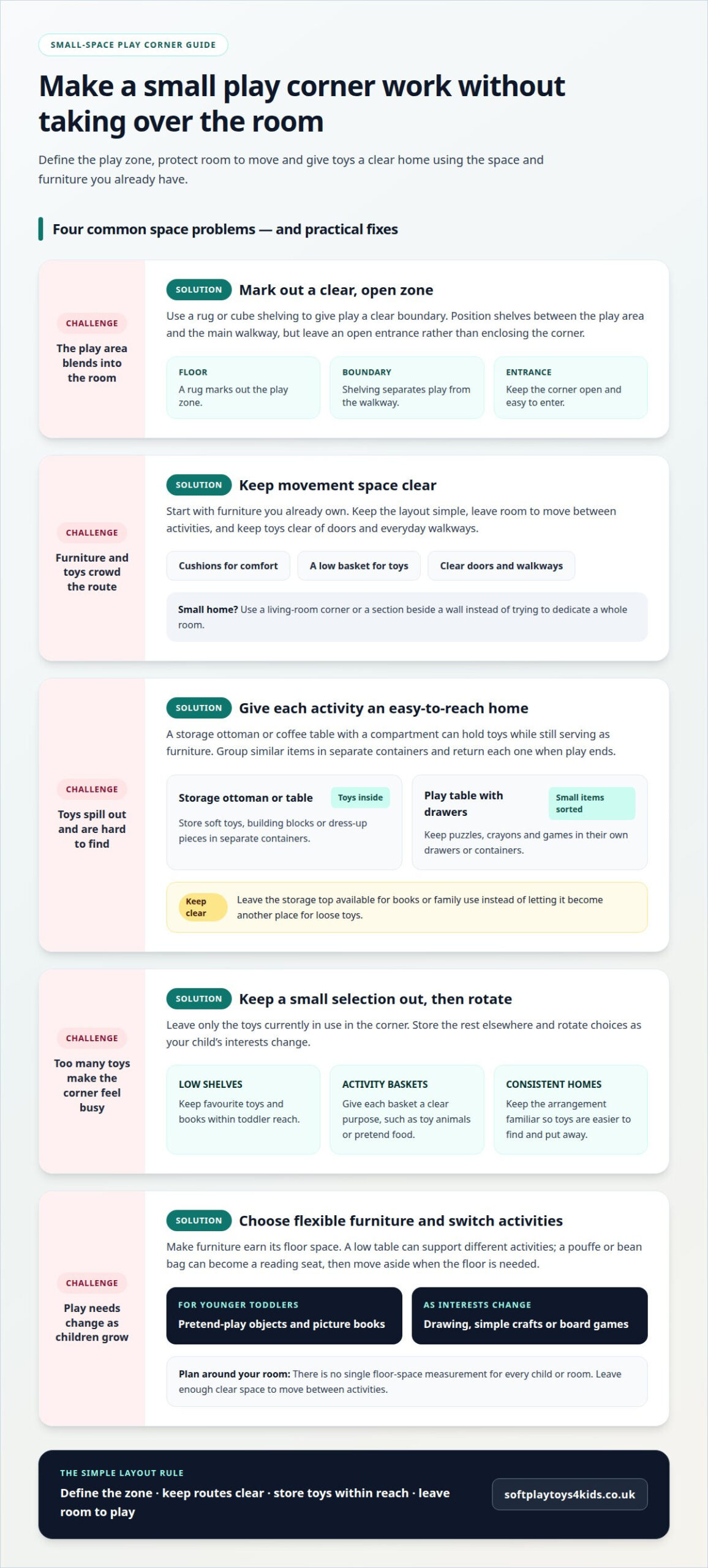
In an open-plan living room, use a rug or cube shelving to give play a clear boundary. Position shelves between the play area and the main walkway, leaving an open entrance rather than enclosing the corner. Store a small selection of toys in the cubes, with books and favourite playthings at toddler height. This makes the zone easy to recognise and keeps the route across the room clear.
Start with furniture you already own to create a play corner on a budget. A rug can mark out the floor, while cushions and a low basket make the space inviting without adding bulky furniture. Keep the layout simple: leave room for your toddler to move, and keep toys clear of doors and everyday walkways. In a flat, use a living-room corner or a section beside a wall instead of trying to dedicate a whole room.
Make the corner work for different ages by choosing activities that suit your child now, then swapping them as interests change. Younger toddlers may enjoy pretend-play objects and picture books; older children can use the same area for drawing or simple crafts. Keep small or unsuitable items out of reach, choose toys appropriate for your child’s age, and supervise play. These are practical ways to make a home play area more suitable, rather than a substitute for a specific space requirement.
There’s no single floor-space measurement that suits every child or room. Leave enough clear space for your toddler to move between activities, and arrange the area around the furniture, toys and floor space available. A comfortable reading nook can sit beside the shelves, with cushions and books your child can reach. Place it where natural light supports reading, while keeping it connected to the rest of the room.
For creative play without adding furniture, use a chalkboard wall or a suitable drawing surface on an available wall. Keep drawing materials together in an easy-to-reach container, then put them back after use. A small, defined area can combine reading and creative activities while leaving the rest of the living room available for family life.
2. WHAT’S FUN TO PUT IN THE PLAY AREA FOR A TODDLER AGED 3?
In a toddler’s playroom, choose furniture that earns its floor space. A low table can support drawing, puzzles and pretend play, then hold a snack or storybook when activities change. A bench with storage can provide seating and a place for toys, while open shelves keep favourite items visible and within reach. Leave enough clear floor for play instead of filling every corner with furniture.
Make the arrangement easy to adapt as your child grows. Toddlers may enjoy imaginative play with toy animals, pretend food or a play kitchen. Older children may want room for crafts, board games or a homework spot. Keep the furniture and rotate the activities: a table that suits chunky crayons today can hold a board game later. Choose versatile colours and finishes for larger pieces, so changing toys or cushions can refresh the look without replacing the furniture.
In a compact room, movable pieces make tidying easier. A pouffe or bean bag can become a reading seat, then move aside when the floor is needed for play. Stackable chairs can be put away after drawing or craft time. Larger toys, such as a play kitchen, can be easier to return to one place than lots of small loose pieces. Keep accessories in bins beside the main toy so each activity stays together.
A washable rug can define the play area and make spills easier to clean. Choose one that fits the usable floor area without blocking doors or creating a trip hazard, and keep its edges clear of furniture legs where possible. For a creative corner near a post or exposed column, column padding for play areas can add a soft protective layer around that feature.
If a toddler and an older sibling share the space, offer different activities at accessible levels. Keep age-suitable toys separate in labelled or distinct containers, and place small pieces where the younger child can’t reach them. This helps each child find something engaging without crowding the room.
3. Using storage ottomans or tables for toy storage
A storage ottoman or coffee table with a compartment can serve as both furniture and a home for toys. Use it for soft toys, building blocks or dress-up pieces, grouping similar items in separate containers inside. Choose a spot that’s easy to reach during play, then put each container back when the activity ends. Keep the top clear for books or family use instead of letting it become another place for loose toys.
A play table with drawers or cubbies gives smaller items a dedicated place. Put puzzles in one drawer, crayons in another and games with small pieces in a lidded container. Separating items makes it easier for children to find one activity without tipping everything out. Keep frequently used items in the most accessible compartment and reserve less accessible storage for toys used less often.
Open shelving works well for toys children can choose and put away themselves. Place a few activity baskets on lower shelves, such as one for toy animals and another for pretend food. Keep the arrangement consistent so children can recognise where items belong. A basket with a clear purpose is easier to tidy than a mixed box of unrelated toys.
In a living room with a television, a fitted media unit can combine the screen area with low-level toy storage. Use the lower compartments for play items, separate from household equipment and cables. A window seat can also provide seating and reachable storage beneath. Store books or soft toys there, while keeping the seat available for reading and looking outside.
Keep storage manageable by leaving only the toys currently in use in the corner. Put the rest elsewhere and rotate choices as interests change. Before choosing an ottoman, table or window seat, consider how its lid, drawers or doors open in the available floor space. The best arrangement lets children reach toys and put them away without blocking the route through the room.
4. Making a cosy sensory spot
A sensory nook gives your child a quieter place for gentle play, looking through books or taking a break from busier activities. Choose one corner and define it with a small rug or floor mat. Keep the entrance open so your toddler can move in and out without squeezing past furniture.
A teepee, tent or canopy can make the nook feel like a snug retreat. Add a soft throw and a few washable blankets, then hang a simple garland where it won’t trail across the floor. Consider natural light when choosing a spot: a bright area can make books and picture cards easier to see, while a shaded corner may feel calmer.
Build sensory interest with a small, deliberate selection of textures and objects. Offer a soft cushion, a fabric book and a few age-appropriate sensory toys in a low basket. Keep it uncluttered so your child can handle each item without emptying a large box. Rotate the selection when familiar objects lose their appeal.
Letters can add a playful focus without taking up much room. Place a few large letter cards or a favourite alphabet book where your toddler can explore them alongside textured objects. Talk about the letters and pictures together, following your child’s interest rather than turning the nook into a lesson. A familiar book or soft toy can also signal that this spot is for quieter play.
Keep the sensory area flexible. Choose lightweight items that are easy to move for floor play, and store them in one basket when the nook isn’t being used. Check that blankets, garlands and toys don’t block walkways or create loose trailing edges. For tactile play ideas, explore sensory toys for your play corner and choose items suited to your toddler’s age and interests.
SoftplayToys4kids
SoftplayToys4kids can help you add child-focused play items to a compact home corner. If your layout already has a clear play zone but needs more engaging activities, sensory toys can bring extra variety to your toddler’s play. Choose a spot where your child can explore them without blocking the route through the room, and keep the selection suited to their age and interests.
For a sensory nook, these toys can complement a cosy space with books, soft furnishings and room to play. SoftplayToys4kids also supplies Lamp Post Protectors for settings where protection around a lamp post is needed, rather than as a typical feature of an indoor play corner.
If you’d like help choosing play items for your space, contact SoftplayToys4kids.
Make Your Play Corner Feel Like Yours
A play corner can change as your toddler’s interests and your family’s routines evolve. Treat the space as something you can adjust, rather than a finished room: swap activities, make room for a new favourite and keep the layout suited to your home. That flexible approach is at the heart of making the most of a small play corner.
If you’re ready to add play equipment, SoftplayToys4kids offers Soft Play Ball Pits, Soft Play Mats and Sensory Toys to support different kinds of play. Think about which option best fits your available space and the experience you want to create for your child.
For help exploring these options, contact SoftplayToys4kids. Your child’s next favourite little corner can begin with one thoughtful choice.
Frequently Asked Questions
How do I create a cosy playing corner in my toddler’s room?
Choose a corner beside a wall, then give it a clear purpose, such as quiet reading or pretend play. In a bedroom, a low book basket and a familiar cushion can make a welcoming spot without bulky furniture. Keep the arrangement easy to change: move the cushion for floor activities, and place favourite books where your toddler can see and reach them.
What’s fun to put in the play area for a toddler aged 3?
At three, pretend-play props, picture books, chunky crayons and simple puzzles can offer different ways to play. Pair toy animals with a small box as a pretend home, or set out paper and crayons for drawing. Choose items that suit your child’s interests, and change the selection when they’re ready for something different.
What are the best space-saving toys and furniture for a small play area?
Look for items that support more than one activity, such as a low table used for drawing, puzzles and pretend play. A soft play mat can define a floor activity area, while a ball pit can provide a distinct play option if the room layout allows. To make the most of a small play corner, prioritise a few useful pieces over numerous large toys.
What are small play corner storage ideas and toy rotation tips?
Use separate containers for different activities, such as one for building pieces and another for toy animals. Keep a small selection accessible and store the rest elsewhere; swap choices as your child’s interests shift. A simple picture label can help children recognise where toys belong, even before they can read. This makes each activity easier to find and put away.
How can I make a small play corner work in a shared living room?
Choose a spot that doesn’t interrupt the main route through the room, such as a quiet corner beside a sofa. A rug can mark the play area visually, while a basket makes it easier to gather toys when the room needs to return to family use. Keep the layout flexible so seating or play items can move as the room’s needs change.
What is the best washable and durable flooring for a children’s play corner?
A machine-washable rug can make cleaning up spills more straightforward, while a play mat creates a defined surface for floor activities. Consider how the surface will fit the room and whether it can be cleaned using your usual routine. SoftplayToys4kids offers Soft Play Mats for home play areas, giving families an option to consider when planning their floor space.
Leave a Reply