
Best Indoor Play Equipment for Nursery
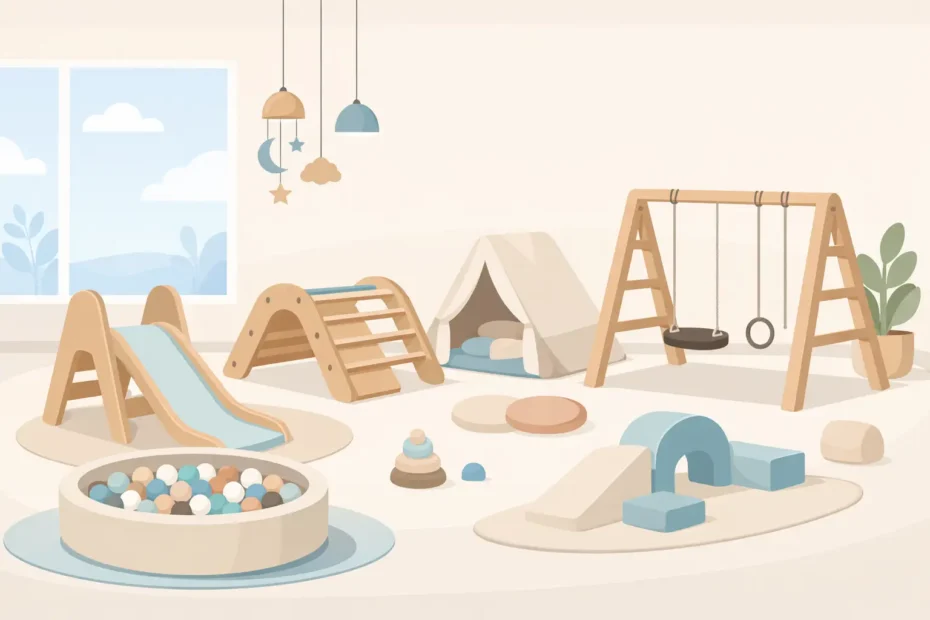
When a nursery room starts feeling cramped, noisy or flat by mid-morning, the issue usually is not the children. It is the setup. The best indoor play equipment for nursery spaces gives children a clear way to climb, crawl, balance, sit, explore and reset their energy safely, without turning the room into chaos.
That is why choosing equipment needs more thought than simply filling a corner with toys. For nurseries, preschools, playgroups and even home setups, indoor play equipment has to work hard. It must be safe, easy to clean, durable enough for daily use and engaging enough to keep little ones moving. Price matters too, especially when you are fitting out a room properly rather than buying one item at a time.
What makes the best indoor play equipment for nursery use?
The strongest nursery setups usually combine active play with quiet developmental play. In practical terms, that means children should be able to move their bodies, test coordination and build confidence without needing complicated equipment or constant rearranging by staff.
Soft play remains one of the smartest choices because it covers several needs at once. It supports gross motor development, helps children learn spatial awareness and reduces the risk of knocks compared with harder structures. For babies and toddlers especially, padded indoor equipment gives peace of mind while still encouraging independent play.
The best option also depends on your setting. A home nursery corner needs compact pieces that can be moved or stored easily. A busy childcare setting needs commercial-grade products that can cope with repeated use, regular cleaning and different age groups using the same space across the day.
The core equipment worth buying first
If you are building a nursery play area from scratch, it pays to start with the pieces that deliver the most use. Not everything needs to be large or expensive. In fact, some of the most valuable items are the simplest.
Soft play shapes
Soft play shapes are one of the most flexible purchases for nursery environments. Cubes, wedges, cylinders and blocks can be used for stacking, climbing, stepping, sitting and imaginative play. Staff can change the layout quickly, which helps keep interest high without buying new equipment every few weeks.
They also suit a wide age range. Younger children can crawl over low shapes and explore texture and movement, while older toddlers can build obstacle routes and practise balance. For nurseries watching their budget, this is one of the safest investments because one set can do the work of several different products.
Step and slide units
A step and slide unit gives children exactly what they want from indoor activity equipment – a chance to climb up and come down again with confidence. It supports balance, turn-taking and movement planning, all within a padded design that feels far more manageable than hard play frames.
The main thing to watch is scale. In a small room, oversized units can dominate the space and limit free movement. For babies and early toddlers, lower-height options are usually the better buy. In larger nursery rooms, a bigger step and slide feature can become the anchor of the whole play zone.
Ball pits
Ball pits are consistently popular because they combine sensory play, physical movement and pure fun. For many nurseries, they are also a reliable way to encourage hesitant children to join group play. Climbing in and out, reaching, throwing and shifting through the balls all support coordination.
That said, maintenance matters. A ball pit only stays an asset if it is easy to clean and properly supervised. In busy settings, choosing the right size and a sturdy padded frame makes a major difference. Too small, and it becomes frustrating. Too large, and it can take over the room.
Baby play mats and padded flooring
Sometimes the best indoor play equipment for nursery rooms is the part under everything else. Good quality baby play mats and padded flooring create safer play areas for tummy time, crawling, rolling and first attempts at standing. They also help define zones within a room, which is useful when children need a quieter area away from more active play.
For nurseries caring for mixed ages, this is essential rather than optional. A soft, clean and properly padded base gives staff more flexibility when arranging equipment and supports safer everyday use.
Balance beams and low climbers
Low-level balance equipment is excellent for children who are beginning to test coordination and body control. Soft balance beams, stepping pods and low climbers encourage measured risk-taking without pushing children beyond what is appropriate for their age.
This category works particularly well in nurseries because it keeps children active without creating the noise and intensity of larger apparatus. It is also easy to rotate into short obstacle courses, which helps prevent the play space from going stale.
Choosing by age group, not just by product
A common mistake is buying equipment that looks impressive but does not suit the children using it most. Babies, toddlers and preschool children all need slightly different challenges.
For babies, the priority is safe floor-based exploration. Mats, low wedges, mirrors, small sensory shapes and soft support cushions are often enough. The aim is not to create a busy obstacle course. It is to give them room to reach, roll, crawl and build confidence.
For toddlers, movement becomes the focus. This is the age where step units, mini slides, crawl tunnels, low balance pieces and ball pits come into their own. Children want repetition. Up, down, through, over and back again. Good nursery equipment should support that without staff needing to intervene every few seconds.
For preschool children, modularity becomes more important. They benefit from layouts that can change, from imaginative combinations of shapes and from more structured movement challenges. Equipment that seemed simple six months ago can become far more valuable when it can be rearranged to create something new.
Safety, durability and cleaning are not extras
Any supplier can talk about fun. Serious nursery buyers look at what happens after the first week. Can the surfaces be wiped clean quickly? Are the seams strong? Is the foam supportive enough to hold shape under daily use? Will the equipment still look presentable after constant handling?
That is where quality really shows. Well-made indoor play equipment should be child-safe by design, not child-safe only when used perfectly. Padded edges, stable construction and wipe-clean covers all matter. For commercial nurseries and playgroups, durability is not a luxury. Replacing poor-quality equipment costs more in the long run.
This is also where UK-made soft play can offer a real advantage. Better control over materials, sizing and production standards makes it easier to source equipment that matches the space properly and stands up to repeated use. If you need custom colours, specific dimensions or a layout designed around awkward rooms, bespoke manufacturing is often the smarter route.
How to build a nursery setup that actually works
The best nursery play spaces are not always the biggest. They are the ones planned well. Start by thinking about how children move through the room. One active zone, one soft floor area and one flexible section for modular pieces often works better than trying to fit everything everywhere.
If space is tight, choose multi-use products first. A set of soft play shapes, a folding mat and a compact step-and-slide unit can do far more than several single-purpose items. If you have a larger room, create progression. A child should be able to move from low-confidence play to more active exploration naturally.
Budget should be handled the same way. It is better to buy fewer well-made pieces than to fill a room with cheaper items that wear out fast. For larger nursery projects, schools and commercial play settings, buying direct from a manufacturer can also make costs easier to control, especially when you need volume, custom sizing or matched colour schemes.
Best indoor play equipment for nursery buyers on a budget
Affordable does not have to mean basic. The right buying approach is to focus on value per use. Soft shapes, mats, mini climbers and modular sets tend to offer the strongest return because children can use them in different ways every day.
For parents building a home nursery play corner, compact soft play bundles are often the most practical place to start. For trade and nursery buyers, the stronger option is usually a coordinated set that covers climbing, balancing and floor play in one scheme. That creates a more complete experience for children and a more professional setup for the setting.
Businesses such as Softplay Toys4Kids have built their reputation on exactly that balance – safe, handmade UK manufacturing, custom options and pricing that stays competitive enough for both families and commercial buyers. When you are comparing suppliers, that combination of service, value and product range matters just as much as the equipment itself.
A nursery play area does not need to be flashy to be effective. It needs to be safe, well planned and ready for real daily use. Choose equipment that earns its place, and the room will do more than keep children busy – it will help them grow in confidence every single day.
Leave a Reply