
Wall Corner Protector Guide: Safety & Damage Prevention (2026)

Can a sensory space truly be a sanctuary if you’re constantly worrying about the sharp masonry corners and crumbling plaster hidden behind the fun? We know that for many parents and providers, the fear of a child’s head injury on a hard edge is a daily reality that overshadows the joy of play. It’s frustrating when industrial-looking guards ruin the calming aesthetic you’ve worked so hard to create. Integrating high-quality padded wall panels for sensory rooms shouldn’t mean sacrificing style for safety. You deserve a solution that absorbs impact and looks incredible, protecting both your little ones and your property from the inevitable bumps of high-energy exploration.
You want peace of mind knowing your environment meets Ofsted and EYFS requirements without looking like a clinical ward. This guide walks you through choosing the perfect corner protectors and padding to create a safe, compliant, and beautiful sensory haven. We’ll explore the benefits of our professional-grade, wipe-clean PVC surfaces and the importance of BS 5852 fire safety standards. From bespoke West Yorkshire craftsmanship to durable foam that stands the test of time, you’ll discover how to transform any space into a high-hygiene, impact-resistant zone that parents trust and children love.
Key Takeaways
- Identify why corners are the most vulnerable points in your facility and how vertical impact guards act as a vital shield for both children and your property.
- Discover how to select the ideal padded wall panels for sensory rooms by comparing impact-absorbing foam with industrial materials to maintain a safe, welcoming aesthetic.
- Master the art of measuring correctly for bespoke installations, ensuring you get the perfect wing width and height for maximum corner protection.
- Navigate UK safety compliance with ease by learning the essential fire retardancy standards and professional installation tips for a long-lasting, secure finish.
- Benefit from the durability and quality of handmade safety padding from our West Yorkshire factory, tailored specifically to your room’s unique layout and dimensions.
Understanding Padded Wall Panels for Sensory Rooms and Building Maintenance
What exactly are we talking about when we discuss professional wall protection? High-quality padded wall panels for sensory rooms are specialized, vertical impact-absorbing guards designed to wrap around vulnerable surfaces. They’re the frontline defense against the daily chaos of active play. Corners and walls are the most vulnerable points in any sensory environment. Why? Because they’re the direct targets for swinging equipment, wheelchairs, and energetic children who are exploring their physical limits. Without the right protection, your walls don’t stand a chance.
Neglecting these high-impact areas carries hidden costs that go far beyond a simple scuff. Frequent plaster repairs, constant repainting, and structural maintenance can drain your maintenance budget faster than you’d think. But the real priority is safety. Professional-grade padding prevents head injuries and bruises during moments of intense sensory seeking or accidental falls. While we’ve moved far beyond the clinical history of padded rooms, the core principle remains the same; creating an environment where physical harm is virtually impossible. Our padded wall panels for sensory rooms transform hard masonry into a soft, forgiving sanctuary.
The Role of Padding in Sensory Regulation
A sensory room should be a true “safe zone” where children can explore without hitting a single environmental hazard. Our padding doesn’t just protect; it actively adds to the therapeutic experience. Soft, PVC-reinforced textures provide a calming, tactile surface that invites touch and exploration. For a deeper look at how these environments support early childhood growth, check out our guide on What is Soft Play? for essential developmental context. It’s about building confidence through safe movement.
Residential vs. Commercial Safety Requirements
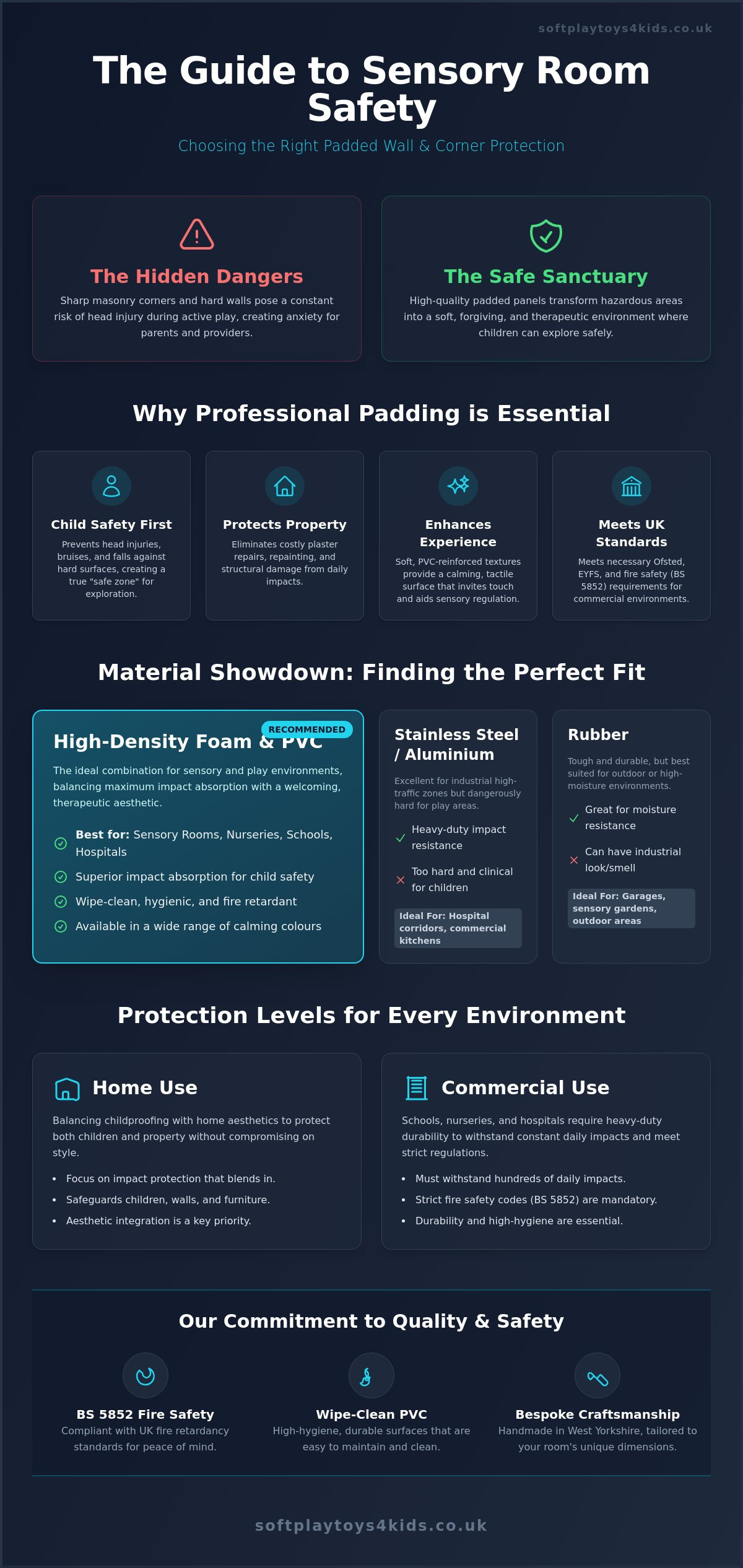
The level of protection you need depends entirely on your setting. We’ve seen it all, and we know that one size doesn’t fit every situation. Here is how requirements typically break down:
- Home use: You’re usually balancing childproofing with your home’s aesthetic. You want impact protection that blends into your decor while safeguarding both your child and your furniture.
- Commercial use: UK schools, nurseries, and hospitals require heavy-duty durability. These panels must withstand hundreds of daily impacts and meet strict fire safety codes like BS 5852.
- Industrial use: High-traffic corridors in care facilities or play centres need to resist impact from heavy trolleys and wheelchairs. Our West Yorkshire-made pads are built for exactly this kind of intense pressure.
Whether you’re a parent or a facility manager, you need equipment that works as hard as you do. Don’t settle for flimsy alternatives that won’t last the month. Choose handmade British quality that’s designed to endure.
Comparing Materials: From Industrial Metal to High-Density Foam Padding
Choosing the right material for your wall corners isn’t just about picking a colour. It’s about matching the protection to the specific “threat” your walls face. In a professional sensory environment, that threat is usually a mix of high-energy play and heavy equipment. While some competitors might push industrial metal as the only solution, we know that a “one size fits all” approach doesn’t work when children’s safety is on the line. Different materials serve different purposes across your facility.
- PVC and Plastic: These are affordable, lightweight, and incredibly versatile. They come in a rainbow of colours to match your sensory room’s theme, making them a popular choice for general childproofing.
- Stainless Steel and Aluminium: This is the gold standard for hygiene and heavy industrial impact. You’ll find these in commercial kitchens or hospital corridors where trolleys frequently bash into corners. However, they’re far too hard for an active play zone.
- Rubber: Ideal for garages, sensory gardens, or outdoor areas with high moisture levels. Rubber is tough, but it often lacks the aesthetic appeal needed for a calming indoor environment.
- High-Density Foam: This is the essential choice for padded wall panels for sensory rooms. It provides the necessary “give” to prevent injuries while remaining durable enough for years of use.
If you’re looking for the ultimate balance of safety and style, our handmade safety pads are crafted right here in our West Yorkshire factory to meet these exact needs.
Why Foam Padding Outperforms Hard Guards in Schools
In a school or nursery setting, the science of impact absorption is what matters most. When a child accidentally runs into a wall, high-density foam works by increasing the “stopping distance,” which significantly reduces the G-force of the collision. Hard plastic or metal guards simply don’t do this. Our professional-grade PVC-reinforced covers are far superior to standard foam stickers found in high-street shops. They won’t peel or crumble over time. Plus, these non-porous surfaces are easy to wipe clean, helping you maintain the high hygiene standards required in SEND environments.
Discreet Protection with Clear Plastic Guards
Sometimes you want protection that’s practically invisible. Clear plastic guards allow you to maintain your interior aesthetics while preventing wallpaper peeling and unsightly scuffs on painted masonry. Quality is vital here; you need guards with high UV resistance to ensure they stay crystal clear. UV stability in clear PVC guards refers to the material’s chemical ability to resist degradation and yellowing when exposed to natural or artificial ultraviolet light. This ensures your room looks fresh and professional for years, not just months.
How to Choose the Right Padded Wall Panels for Your Space
Getting the measurements right is the next vital step. When protecting corners, you must determine the required wing width and height. The “wing” is the section that extends from the corner along the flat wall. For most schools and nurseries, a wing width of 50mm to 100mm provides ample coverage to prevent accidental collisions. Height is equally important; for sensory play, padding should typically start from the floor or the top of your skirting board and reach at least 1.2 metres high to cover the primary impact zone for children.
Aesthetics shouldn’t be an afterthought. While our West Yorkshire-made pads come in a vibrant range of colours to stimulate or calm, you might prefer transparent guards for corridors where you want the original decor to shine through. Investing in professional-grade durability is always more cost-effective than temporary childproofing solutions. High-quality PVC-reinforced padding from a trusted British manufacturer ensures your investment lasts for years of rigorous use.
Best Options for Home Playrooms and Bedrooms
In a domestic setting, your priorities are often non-toxic materials and ease of installation. You want protection that keeps your little ones safe without making your home feel like a clinical facility. Depending on whether you’re in a rental property or your forever home, you can choose between high-strength self-adhesive backings or more permanent screw-fix options. For a truly comprehensive safety solution, consider how your wall protection will integrate with baby play mats to create total floor-to-wall safety in active play areas.
High-Impact Solutions for Commercial Play Centres
Standard plastic guards found on the high street almost always fail in demanding commercial soft play settings. They simply aren’t designed for the constant, heavy impact of a busy play centre. Our custom-made padded wall panels for sensory rooms are the superior choice here. We can tailor safety pads to fit non-standard wall shapes, pillars, and awkward cut-outs perfectly. If you’re planning a large-scale project, matching your wall protection with professional indoor playground equipment ensures a cohesive, high-performance environment that meets every safety regulation.
Installation and Compliance: Meeting UK Safety Standards
What’s the point of investing in premium protection if it doesn’t stay exactly where it’s supposed to? Installing padded wall panels for sensory rooms requires more than just a bit of glue and hope. To ensure your facility remains a safe haven, you need a professional approach to mounting. You’ve chosen high-quality British craftsmanship; now let’s make sure the installation matches that standard. Follow these four essential steps to secure your space.
- Step 1: Surface Preparation. Dust, grease, and loose paint are the enemies of adhesion. You must thoroughly clean and degrease the wall surface. If you’re working with bare plaster or high-gloss paint, a quick sand or a specific primer might be necessary to create the perfect “key” for your adhesive.
- Step 2: Dry Fitting. Don’t start gluing immediately! Hold your panels against the wall and mark the correct height for your impact zones. Use a spirit level to ensure everything is perfectly vertical. This is your chance to double-check those measurements we discussed earlier.
- Step 3: Application. Depending on your wall type, you’ll use heavy-duty, child-safe contact adhesive or mechanical fixings. For permanent commercial installations, a combination of both often provides the most secure bond.
- Step 4: Sealing Edges. This is the secret to a professional finish. Sealing the edges prevents curious fingers from peeling the padding away and stops bacterial growth in hidden gaps. It keeps your high-hygiene areas actually hygienic.
Don’t leave your facility’s safety to chance. If you’re unsure about the best fit for your specific wall type, contact us today for expert advice on bespoke safety padding manufactured right here in West Yorkshire.
UK Safety Regulations for Schools and Nurseries
In the UK, compliance isn’t optional. When you’re installing padded wall panels for sensory rooms in a public or educational setting, you must meet rigorous standards. First, ensure your materials are EN71-3 compliant; this guarantees they are non-toxic and safe for children who might explore with their mouths. Fire safety is equally critical. All wall coverings in public buildings must meet BS 5852 fire retardancy standards. Ofsted inspectors and EYFS coordinators look specifically for these certifications during hazard reduction assessments. Our PVC-reinforced foam is designed specifically to tick every one of these boxes, giving you total peace of mind.
Common Installation Mistakes to Avoid
We’ve seen plenty of DIY attempts go wrong, and it’s usually down to three things. First, installing at the wrong height. If you’re protecting a nursery, the padding needs to be at a child’s head height, not an adult’s waist. Second, using domestic-grade adhesives. These often fail in high-heat or high-moisture sensory environments, leading to peeling panels. Finally, never neglect the “finger-trap” risk. If there’s a gap at the top of your wall guards, it’s a hazard. Ensure your padding is flush to the wall or properly sealed to prevent accidents before they happen.
Bespoke Wall Protection Solutions from SoftplayToys4kids
Why settle for mass-produced, off-the-shelf foam stickers that peel away after a week? At SoftplayToys4kids, we believe your facility deserves better. We’re proud to be a hands-on manufacturer based right here in West Yorkshire. Every single one of our padded wall panels for sensory rooms is handmade with pride, ensuring a level of quality control that international importers simply can’t match. When you choose British-made, you aren’t just getting a product; you’re getting faster lead times, premium craftsmanship, and a partner who understands the rigorous demands of UK schools and nurseries.
What happens when your room isn’t a perfect square? Standard guards often leave dangerous gaps around architectural quirks. That’s where our bespoke service shines. We specialise in custom safety pads tailored to your exact wall dimensions, including precise cut-outs for light switches, sockets, and radiators. We also tackle the awkward spaces that others avoid. From specialist column padding to our durable lamp post protectors, we ensure that every potential impact point is covered. Our commitment to using professional-grade, PVC-reinforced foam means your investment is built for commercial longevity, standing up to years of enthusiastic play.
Bespoke Design for Unique Sensory Spaces
Our creative team doesn’t just sell padding; we help you plan. We’ve worked with countless schools to design custom soft play areas that transform cold, hard rooms into vibrant sanctuaries. Do you have a specific brand colour or a themed playroom in mind? We can colour-match your padding to create a cohesive, professional look that delights children and impresses parents alike. If you’re ready to take the next step in furnishing your facility, you can request a quote for our full range of soft play equipment to see how we can bring your vision to life.
Why UK Schools and Nurseries Trust Our Padding
We’ve built our reputation on successful installations across the UK, from busy commercial play centres to quiet sensory bedrooms. What is the “SoftplayToys4kids Difference”? It’s the unique point where industrial-strength durability meets child-focused design. We don’t just meet safety standards; we exceed them because we know exactly what’s at stake. Compare our handmade quality to any mass-market alternative and you’ll see why we’re the preferred choice for providers who refuse to compromise on safety. Don’t wait for an accident to happen. Protect your space, safeguard your building, and give your children the freedom to explore. Contact us today to secure your environment with the best protection on the market.
Secure Your Sensory Haven Today
Meeting BS 5852 fire standards and Ofsted requirements isn’t just about ticking boxes; it’s about providing the absolute best for your facility. Why settle for flimsy, mass-market imports when you can have premium durability handmade in our West Yorkshire factory? We are proud to be trusted by UK schools and nurseries across the country to deliver bespoke safety solutions that last. Take the first step toward a safer, more beautiful play space and Browse our Professional Safety Padding & Protectors today. Your dream sensory room is within reach, and we’re here to help you build it with confidence and pride.
Frequently Asked Questions
What is the best material for padded wall panels in a nursery?
High-density foam wrapped in a medical-grade, wipe-clean PVC is the superior choice for nurseries. It provides the essential impact absorption needed to prevent head injuries while being tough enough to withstand daily play. Our padded wall panels for sensory rooms are handmade in our West Yorkshire factory to ensure they meet these exact safety requirements. They’re durable, soft to the touch, and available in vibrant colours that children love.
Can wall corner guards be installed over existing wallpaper?
You can install guards over wallpaper, but the strength of the bond depends on the wallpaper’s surface. Standard paper usually holds well with high-strength adhesive. However, if you have textured or vinyl wallpaper, the guard might peel away over time. In these cases, we recommend using mechanical fixings or a heavy-duty contact adhesive to ensure the protection stays exactly where you need it.
Are self-adhesive corner protectors strong enough for commercial use?
Self-adhesive options are great for light home use, but they rarely stand up to the rigours of a commercial environment. High-traffic areas like schools or play centres require the extra security of professional-grade adhesive or screws. Don’t risk a panel falling off in the middle of a busy session. Our commercial clients always opt for permanent fixings to guarantee long-term safety and building protection.
How do I measure my wall for custom corner protectors?
Measuring for custom protection is simple if you follow a few steps. First, decide on the height you need; this is usually 1.2 metres for most children’s spaces. Then, measure the wing width, which is the distance the guard extends along the flat wall from the corner. If you have awkward architectural features, just give us the dimensions. We’ll handle the rest in our West Yorkshire workshop.
Are your foam safety pads fire-retardant to UK standards?
Absolutely. Every foam safety pad we manufacture meets the BS 5852 fire retardancy standards required for UK public buildings. We take safety seriously, so we only use premium materials that are legally compliant for schools and nurseries. You can trust that our padded wall panels for sensory rooms provide the highest level of protection against both impact and fire hazards.
What is the difference between a corner guard and a wall protector?
The difference is all about the shape of the surface you’re protecting. A corner guard is specifically designed for 90-degree angles where two walls meet. A wall protector, or safety pad, is a flat panel designed to cover larger, vertical areas. Both are essential for creating a safe zone in sensory environments, especially in high-impact areas where children are most active.
How do I clean scuff marks off my PVC-covered wall panels?
Cleaning scuff marks off our PVC-covered panels is remarkably easy. Most marks disappear with a simple mix of warm, soapy water and a soft cloth. For tougher scuffs, a non-abrasive household cleaner usually does the trick. Because our surfaces are non-porous and wipe-clean, you can maintain a high-hygiene environment without the need for expensive specialist chemicals or constant repainting.
Do you offer custom sizes for column padding and lamp post protectors?
Yes, we specialise in bespoke solutions for every awkward space. Whether you need column padding for a structural pillar or lamp post protectors for an outdoor play zone, we can manufacture them to your exact specifications. Every piece is handmade in West Yorkshire; this allows us to provide custom cut-outs and unique sizes that mass-market competitors simply can’t offer.
Leave a Reply