
How to Secure a Foam Play Mat: The Ultimate Safety Guide for Parents and Nurseries
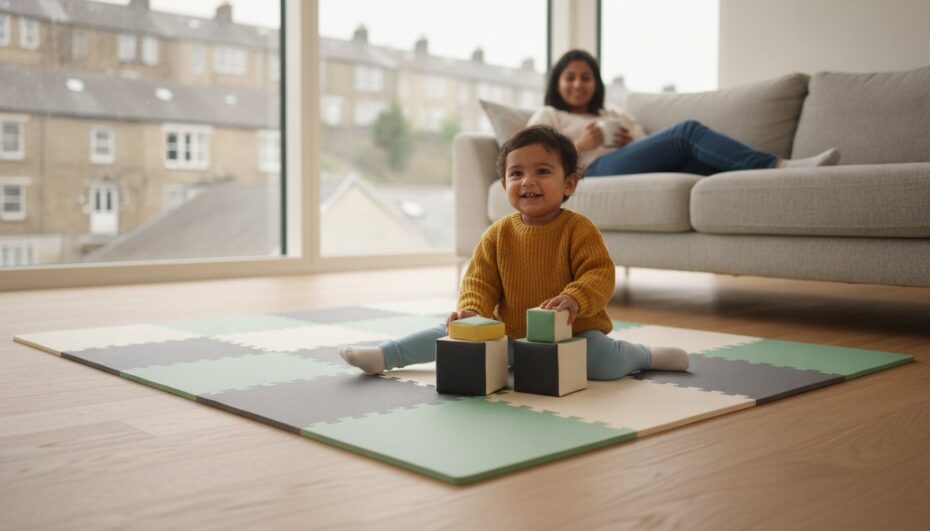
Have you ever watched your toddler take a brave first step, only to have the entire play area slide out from under them like a cartoon banana peel? It’s a heart-stopping moment that every parent and nursery manager dreads. You bought those mats to create a haven of safety, but if you don’t know how to secure a foam play mat on slick laminate or polished wood, they can quickly turn into a trip hazard. We understand that your child’s safety is your absolute priority, and you shouldn’t have to choose between a soft landing and a stable floor.
If you’re tired of constantly kicking interlocking tiles back into place or worrying about sticky residue damaging your expensive flooring, we’ve got the solutions you need. This guide reveals the most effective, floor-safe methods to stop foam mats from sliding for good. We’ll show you how to achieve a rock-solid play surface that stands up to the most energetic toddlers. Discover how to transform your nursery or living room into a secure, trip-free environment, giving you the ultimate peace of mind while your little ones explore and grow.
Key Takeaways
- Understand the physics behind “mat slip” and how to eliminate dangerous trip zones to keep your little ones safe during active play.
- Discover how to secure a foam play mat on hard floors using silicone-based grippers and specific cleaning steps that protect your flooring.
- Learn the “Velcro Trick” and other effective methods to stop foam tiles from “walking” or creeping across low-pile carpets.
- Identify hidden culprits like dust and floor wax buildup that compromise stability and learn simple maintenance tips to keep your play area stationary.
- Explore the benefits of high-density, UK-manufactured foam mats that provide superior floor-grip and durability compared to cheaper alternatives.
Why Securing Your Foam Play Mat is Non-Negotiable for Safety
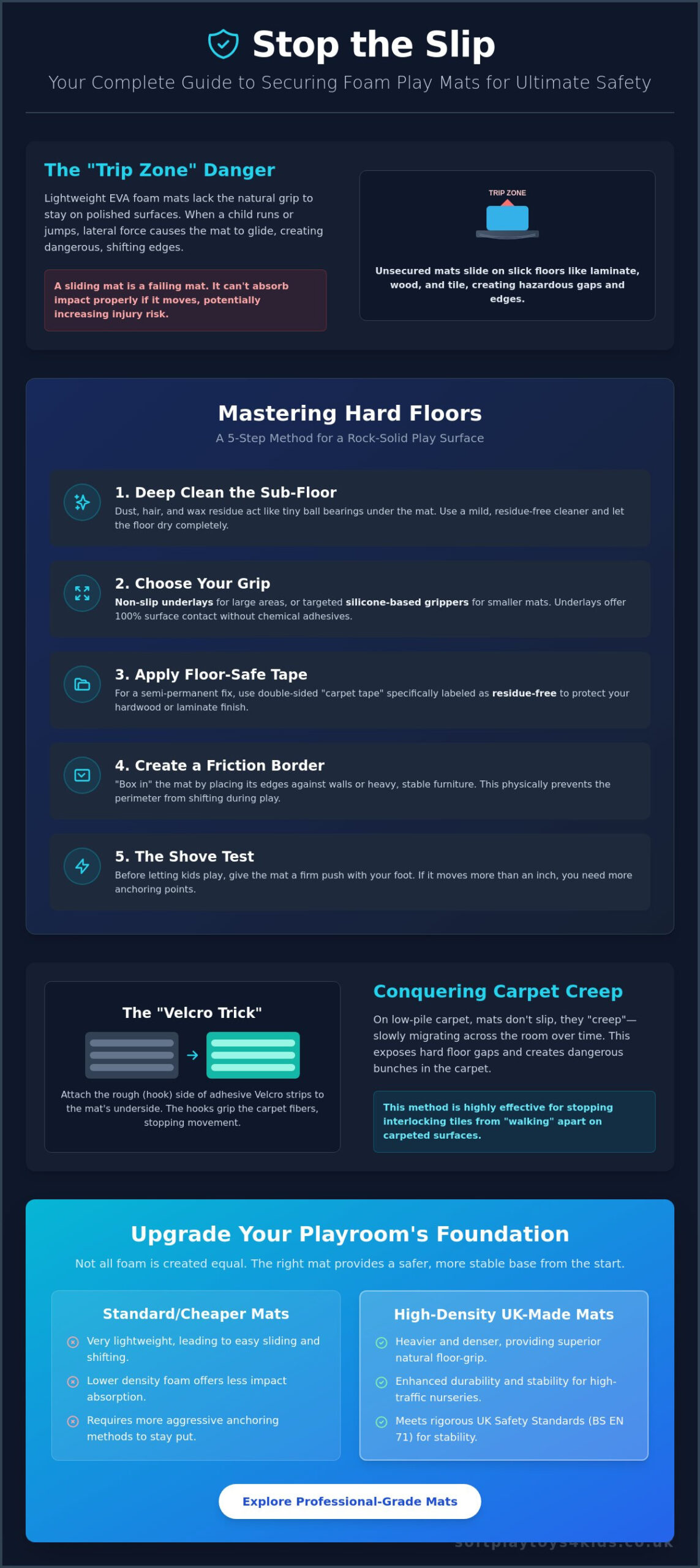
Safety isn’t just about having a soft surface; it’s about that surface staying exactly where you put it. Most play mats are crafted from Ethylene-vinyl acetate (EVA) foam, a material loved for its cushioning and durability. However, because EVA is incredibly lightweight, it lacks the natural “grip” required to stay put on polished surfaces. When a child runs or jumps, they apply lateral force. Without proper anchoring, the mat simply glides across the floor. Learning how to secure a foam play mat is the difference between a safe landing and a nasty slip.
We call the edges of an unanchored mat the “Trip Zone.” In busy nurseries or active homes, these edges can lift or shift, creating a lip that catches small feet. Beyond the trip hazard, there’s the issue of impact protection. A safety mat’s job is to absorb energy during a fall. If the mat surface slides upon impact, it fails to dissipate that force properly. This can actually increase the risk of injury as the child’s momentum isn’t stopped, but redirected. To meet UK Safety Standards like BS EN 71, play equipment must be stable and secure. A sliding mat is a failing mat, and we believe your children deserve better than a “near miss.”
Identifying Common Slip Hazards in the Playroom
Laminate, hardwood, and polished tile are the primary culprits for playroom accidents. These surfaces offer almost zero friction for foam tiles. You should pay extra attention to “launch points,” such as the areas in front of a sofa or a slide where children are likely to jump onto the mat with significant force. Even on low-pile carpets, you might notice “mat creep.” This is where the foam slowly migrates across the room over time. Eventually, this movement exposes hard floor gaps or creates dangerous bunches in the carpet fabric that are easy to trip over.
The Difference Between Residential and Commercial Security
While residential play areas often rely on simple adhesive solutions, commercial environments—from nurseries to professional training facilities—require a more robust approach to equipment stability. Just as we focus on securing play mats, strength specialists like The Gym Company highlight the importance of integrated rack systems to ensure absolute safety and performance in high-intensity settings. Whether it’s a toddler’s playroom or a professional gym, the goal is the same: creating a foundation that stays exactly where it belongs.
How to Secure Foam Mats on Hard Floors: Laminate, Wood, and Tile
Hard floors are the biggest challenge when it comes to playroom safety. If you’ve spent time meticulously interlocking your tiles only to have them drift apart, you need a strategy that actually sticks. Polished laminate and wood are naturally slick, which means your mats need extra help to stay put. Follow these five essential steps to master how to secure a foam play mat on any hard surface.
- Step 1: Deep clean the sub-floor. Dust, pet hair, and wax residue act like tiny ball bearings. Use a mild, residue-free cleaner to strip away oils and let the floor dry completely before laying your mats.
- Step 2: Choose your grip. Decide if you need the broad coverage of a non-slip underlay or the targeted sticking power of silicone-based grippers. Underlays are better for large zones, while grippers work perfectly for smaller mats.
- Step 3: Apply floor-safe tape. For a semi-permanent fix, use double-sided “carpet tape” specifically labelled as residue-free. This provides a strong bond without ruining your expensive hardwood finish.
- Step 4: Create a friction border. Place your mat edges against walls or heavy furniture. This “boxing in” method prevents the perimeter from shifting during high-energy play.
- Step 5: The Shove Test. Before letting the kids loose, try to push the mat with your foot. If it moves more than an inch, you need more anchoring points.
Anti-Slip Underlays: The Gold Standard for Hard Floors
Mesh-style rubber underlays are often superior to adhesive tapes because they provide 100% surface contact. They don’t rely on chemicals that might degrade your floor’s finish over time. Always trim your underlay so it sits about two inches inside the mat’s perimeter; this prevents the mesh from peeking out and becoming a trip hazard itself. These underlays also provide a “breathability factor,” allowing air to circulate and preventing moisture from being trapped against your wood or laminate.
Adhesive Solutions That Won’t Ruin Your Flooring
If you prefer a modular approach, “hook and loop” systems or gel-based reusable pads are fantastic. Gel pads are particularly clever because they can be washed and reused if they get dusty. When considering material compatibility, it’s vital to choose products that won’t react with the foam. You can learn more about picking the right materials in our The Ultimate Guide to Baby Play Mats. We’ve spent years perfecting our manufacturing to ensure our soft play mats pair perfectly with these safety solutions, giving you a setup that is as durable as it is secure.
Securing Foam Mats on Carpet: Preventing ‘Mat Creep’
Have you noticed your play area slowly migrating across the room? It’s called “mat creep,” and it’s a unique headache for carpeted spaces. Unlike hard floors where mats slide, carpet fibers actually “walk” the foam. Because carpet pile has a natural direction or nap, every jump and crawl pushes the lightweight tiles along those fibers. If you’re wondering how to secure a foam play mat on a soft surface, the approach is very different from the hard floor methods we’ve already discussed.
Many online forums suggest pinning mats down with heavy furniture like sofas or toy chests. We strongly advise against this. Putting heavy weight on EVA foam causes permanent indentations, ruining your investment. Even worse, it only secures the corners. The middle of the mat can still bunch up, creating a dangerous ripple that leads to falls. You need a solution that grips the entire surface without damaging your home’s carpet. For specialized carpet-on-carpet stability, felt-backed grippers are a fantastic alternative, providing a layer of friction that doesn’t rely on aggressive adhesives.
The Hook and Loop Method for Carpet
For low-pile or industrial carpets, the “Velcro Trick” is a game-changer. You only need the hook side of adhesive-backed Velcro strips. Apply these strips to the underside of your foam tiles, especially around the edges and center. The tiny plastic hooks latch onto the carpet loops, creating a firm bond that stops lateral movement instantly. It’s an affordable way to master how to secure a foam play mat without messy glues. To prevent damage to your primary carpet, don’t use this on high-pile or shag rugs, as the hooks can pull out the delicate fibers during removal.
Wall-to-Wall Fitting: The Ultimate Anchor
In professional nurseries or dedicated playrooms, a wall-to-wall installation is the gold standard for safety. By “wedging” the mats between the four walls of a room, you create a self-securing surface that physically cannot move. This requires a “compression fit.” Measure your room precisely and cut the final row of tiles to be about 5mm wider than the remaining gap. When you press them into place, the tension keeps the entire floor locked. For commercial spaces looking to create these high-performance environments, our guide on indoor playground equipment offers deeper insights into professional layout planning. This setup ensures a flat, trip-free zone that stays perfect no matter how many kids are running around.
Maintenance Tips to Keep Your Play Area Stationary
You’ve done the hard work of setting up a safe space, but the job doesn’t end there. Even the most secure setup can lose its grip over time if you neglect basic maintenance. One of the biggest hidden culprits for a sliding floor is the buildup of floor wax or polish. While these products make your wood or laminate look stunning, they create a slick barrier that defeats even the best grippers. Over months of use, a fine layer of household dust also settles on the underside of the tiles. This dust acts like millions of tiny ball bearings, causing the mat to glide with the slightest touch. If you want to know how to secure a foam play mat for the long haul, you must keep the “contact zone” pristine.
Don’t forget to inspect the interlocking “teeth” of your tiles every few weeks. In high-traffic areas, these joints can stretch or fray, leading to separation during active play. When tiles don’t fit snugly together, they lose their collective weight and stability. You should also keep an eye on your adhesive or friction-based grippers. Depending on the activity levels in your home or nursery, these solutions usually need replacing every 6 to 12 months. Once the adhesive becomes brittle or the silicone loses its tackiness, it’s time for a fresh set to ensure total safety.
The Best Cleaning Routine for High-Grip Floors
Most parents reach for standard household cleaners, but many of these sprays contain silicone or oils that actually make the floor slipperier. Instead, use a simple mixture of white vinegar and water to strip away oily residue and restore natural friction. It’s a cheap, non-toxic way to keep your floors “grippy” rather than “zippy.” Always allow the floor to dry completely before putting the mats back down. A slightly damp mat is a major sliding hazard because the moisture creates a lubricated surface that can lead to sudden, dangerous slips.
Inspecting Your Soft Play Mats for Structural Integrity
Heat is a major factor that many people overlook. If your mats sit in direct sunlight or over intense underfloor heating, the foam can warp or “curl” at the edges. Once those edges lift, they become instant trip hazards and reduce the amount of foam actually touching the floor. High-density EVA foam is significantly more resistant to warping and maintains a flatter, more secure profile over time compared to low-density alternatives. If your current mats are starting to curl or separate, it’s time for an upgrade. Explore our range of premium, UK-manufactured play mats that are designed to stay flat, secure, and safe for years of play.
Upgrade Your Playroom with SoftplayToys4kids Professional Mats
Are you tired of settling for thin, flimsy tiles that refuse to stay in place? The foundation of a safe play area starts with the quality of the mat itself. While we’ve discussed various methods on how to secure a foam play mat, the most effective solution is choosing a product designed for stability from the outset. Our UK-manufactured mats offer a superior floor-grip that mass-produced imports simply can’t match. By using high-density foam, we ensure each mat has the necessary weight and structural integrity to remain flat and firm against the sub-floor, drastically reducing the risk of sliding or separation.
We take immense pride in our craftsmanship. Every mat we produce comes from our Bradford factory, where we combine British engineering with a deep understanding of early childhood development. This local focus allows us to offer custom-fit solutions that cheap retailers can’t provide. Whether you have a uniquely shaped nursery corner or a sprawling commercial play zone, we can manufacture mats to your exact specifications. This ensures a perfect “wall-to-wall” fit that naturally anchors the play surface, providing the ultimate peace of mind for parents and caregivers alike.
Why Choose UK-Made Foam Mats?
The “curling” effect common in thin, mass-produced foam tiles is a major safety hazard that often goes ignored until a child trips. Our high-density mats are engineered to resist warping, even in high-traffic environments. At our West Yorkshire facility, we put every product through a rigorous testing process to ensure it meets the highest safety standards. When you choose our products, you aren’t just buying a play surface; you’re supporting local manufacturing and investing in a durable, professional-grade solution that outlasts and outperforms the competition. Compare our density and grip to any international alternative, and you’ll see why we remain the preferred choice for UK nurseries.
Beyond Mats: Creating a Complete Safe Play Zone
A truly secure environment involves more than just a single mat. It’s about how your entire setup works together. For example, integrating our ball pits with our high-grip flooring creates a cohesive system where the equipment helps anchor the mats in place. All of our soft play equipment is designed to be stable, durable, and easy to maintain, ensuring that your “Trip Zone” remains a “Safe Zone.” Don’t risk your child’s safety with inferior products that slide at the first sign of active play. Take the first step toward a more secure, professional playroom today. Browse our range of professional-grade soft play mats today!
Build a Trip-Free Haven for Your Little Explorers
Creating a secure environment for play is all about using the right tools for your specific floor type. Whether you’re applying the “Velcro Trick” on carpets or using silicone grippers on laminate, the goal is a stationary surface that absorbs every jump and tumble. You now have the expert knowledge on how to secure a foam play mat to prevent “mat creep” and dangerous trip zones. A stable foundation is the first step toward worry-free development and pure childhood joy.
Don’t settle for flimsy alternatives that slide at the slightest touch. Our play mats are handmade in the UK at our West Yorkshire facility, ensuring you get factory-direct prices and premium British craftsmanship. Every mat we produce meets all BS EN 71 safety standards, providing the durability and peace of mind you need for a busy home or nursery. Shop our range of high-density, UK-made soft play mats today and take the guesswork out of playroom safety. It’s time to let them play with total confidence!
Frequently Asked Questions
How do I stop my foam play mats from sliding on laminate flooring?
The most effective way to stop mats sliding on laminate is to use a non-slip rubberized underlay or silicone grippers. These provide the necessary friction that lightweight EVA foam lacks. Before laying them down, ensure you’ve stripped away any floor wax or polish with a vinegar solution. This simple maintenance step is a key part of how to secure a foam play mat on polished surfaces, ensuring a stable environment for your little ones.
Can I use double-sided tape on my hardwood floors to secure mats?
You can use double-sided tape, but only if it’s specifically labeled as residue-free or floor-safe to protect your hardwood finish. Cheap tapes often leave a sticky residue that can permanently mar expensive wood. For a safer alternative, consider using gel-based pads that grip without aggressive glues. This ensures your play area remains stationary while keeping your flooring in pristine condition. Always test a small, hidden area before applying tape to the entire floor.
What is the best non-slip underlay for foam tiles?
A mesh-style rubber underlay is widely considered the best choice for foam tiles on hard surfaces. These underlays provide 100% surface contact, which prevents the mats from gliding when children run or jump. They’re also breathable, which is crucial for preventing moisture buildup between the foam and the floor. Simply trim the mesh to be slightly smaller than your play area to keep it hidden and prevent it from becoming a trip hazard itself.
How do I secure interlocking play mats so they don’t pull apart?
To keep interlocking mats from pulling apart, you should aim for a wall-to-wall compression fit or frame the perimeter with heavy furniture. High-density mats, like those we manufacture in our Bradford factory, feature tighter teeth that resist separation better than cheaper, thinner alternatives. If a full-room fit isn’t possible, using a friction border against a wall helps maintain the structural integrity of the tiles during high-energy play. This keeps the surface flat and secure.
Will securing foam mats to my carpet damage the carpet fibres?
Securing foam mats to your carpet won’t cause damage if you use the right methods, such as hook-side Velcro on short-pile industrial carpets. The tiny hooks latch onto the fibres without tearing them. However, avoid this method on plush or shag rugs, as it can pull the delicate loops. For thicker carpets, felt-backed grippers are a safer solution. They provide enough friction to stop mat creep without risking any permanent damage to your home’s flooring.
Are there any ‘floor-safe’ adhesives for nurseries and schools?
Yes, gel-based reusable pads and specialized silicone grippers are excellent floor-safe adhesive options for professional settings. These products are designed to be non-toxic and residue-free, meeting the high standards required for nurseries and schools. They provide a semi-permanent bond that holds up against heavy group play while remaining easy to remove for deep cleaning. Using these professional-grade solutions is a smart way to ensure your play area meets BS EN 71 safety requirements for stability.
How often should I check the security of my soft play area?
You should perform a quick safety check of your soft play area daily in a commercial nursery or weekly in a home environment. Look for any curling at the edges or gaps opening between interlocking tiles. These are early warning signs that your securing method needs adjustment. Regular inspections help you identify trip hazards before accidents happen, giving you total peace of mind that your how to secure a foam play mat strategy is working perfectly.
Can underfloor heating affect how I secure my foam mats?
Underfloor heating can definitely impact your setup because excessive heat may cause EVA foam to expand or warp over time. If you have active heating, leave a small 5mm gap at the walls to allow for thermal expansion. Also, ensure your non-slip underlays are heat-resistant so they don’t bond to the floor. Choosing high-density, UK-made mats is beneficial here, as they’re more structurally stable and less likely to distort under varying temperature conditions.
Leave a Reply