
Vinyl Soft Play vs Fabric: Which Material is Best for Your Play Area?
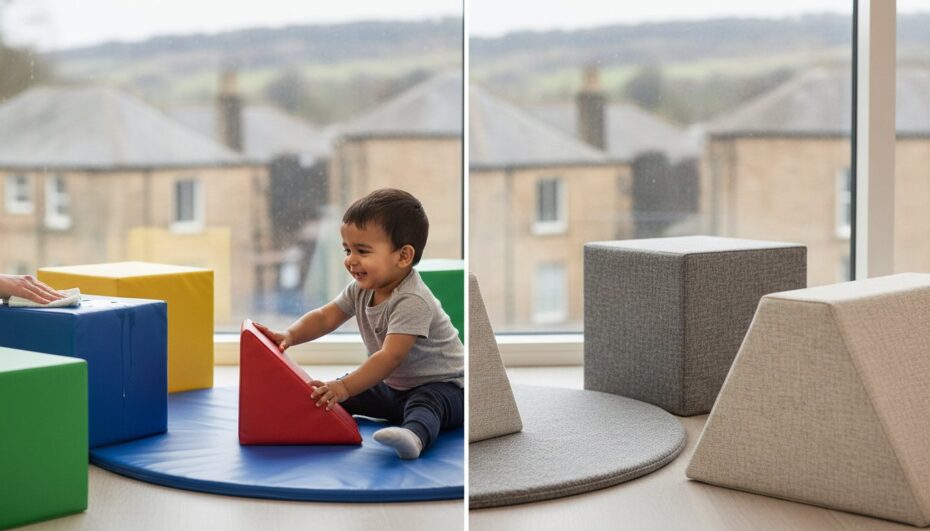
Could that trendy fabric-covered play set actually be the biggest risk to your child’s playroom hygiene? While velvet and cotton covers look stunning in a living room, they often hide a secret world of trapped bacteria and allergens that a simple wipe won’t fix. When choosing between vinyl soft play vs fabric, the decision impacts more than just aesthetics; it’s about durability, fire safety, and your peace of mind. We know you want a play area that sparks joy while keeping your little ones protected from germs and spills.
You deserve to feel proud of the equipment you provide, whether it’s for a home nursery or a busy commercial center. We promise to give you a clear, expert comparison that highlights exactly how these materials perform under pressure. This guide breaks down the essential facts on hygiene, longevity, and BS EN 1176 compliance to help you make the right investment for your space. It is time to stop guessing and start building a play area that is as tough as it is fun.
Key Takeaways
- Learn the core differences between vinyl soft play vs fabric to choose the material that best matches your environment, from busy nurseries to quiet home corners.
- Discover how commercial-grade vinyl allows for 30-second sanitisation, saving you the hidden time-costs and hassle of machine-washing fabric covers.
- Ensure your play equipment meets essential UK safety standards, including fire retardancy and lead-free, phthalate-free certifications.
- Compare the sensory benefits of “warm” fabric textures against the long-term colour vibrancy and “toddler-proof” durability of industrial vinyl.
- Get the 2026 expert verdict on which material offers the best hygiene levels and return on investment for your specific play space.
Understanding the Basics: What is Vinyl vs Fabric Soft Play?
Have you ever wondered why some play areas look brand new after years of use while others seem to sag and fade within months? The answer usually lies in the “skin” of the equipment. When you’re weighing up vinyl soft play vs fabric, you’re looking at two completely different philosophies of play. One is built for industrial-strength durability and high-volume fun; the other is designed for domestic aesthetics and tactile softness. Making the right choice now ensures your investment doesn’t just look good on day one, but stays safe and supportive for years to come.
PVC Vinyl is the gold standard for professional environments. It is a non-porous, reinforced plastic coating that wraps around high-density foam. Because it’s waterproof, it acts as a total barrier against spills, sweat, and accidents. Fabric covers, on the other hand, are typically made from polyester, cotton blends, or faux-suede. These materials are breathable and soft to the touch, which makes them popular for “Scandi-style” home nurseries where the play area needs to blend in with the living room furniture.
The material you choose directly impacts the life of the foam inside. If a cover is porous, moisture and bacteria seep into the foam core, causing it to break down and lose its “bounce.” A high-quality cover keeps the internal structure dry and firm. This is vital for items like ball pits and play mats, where the cover’s tension is what maintains the product’s shape. Much like playground surfacing materials used in outdoor parks, the outer layer of your soft play is your first line of defence against wear and tear.
Common Fabrics in the Soft Play Market
- Polyester and Nylon: These are the most durable fabrics. They offer a “soft-touch” feel while resisting some staining, making them a common middle ground for home use.
- Jersey and Cotton: Often found in trendy, minimalist ball pits. While they feel lovely against a baby’s skin, they have lower durability and can stretch out of shape over time.
- Faux Suede: Frequently used in specialist sensory rooms. The unique texture provides excellent tactile feedback for children with specific sensory processing needs.
The Anatomy of High-Quality PVC Vinyl
Not all vinyl is created equal. When we talk about vinyl soft play vs fabric in a commercial context, we mean industrial-grade PVC. Here is what makes a premium vinyl cover stand out:
- Reinforced Mesh Layers: High-quality vinyl features an internal “scrim” or mesh that prevents the material from tearing, even in the busiest nurseries.
- Phthalate-Free Composition: We ensure our vinyl is safe for teething babies who might decide to have a chew on the edge of a mat.
- UV-Stabilised Coatings: This prevents the vibrant colours from fading or the material from becoming brittle when placed near sunny windows.
Durability and Maintenance: The Practical Battle
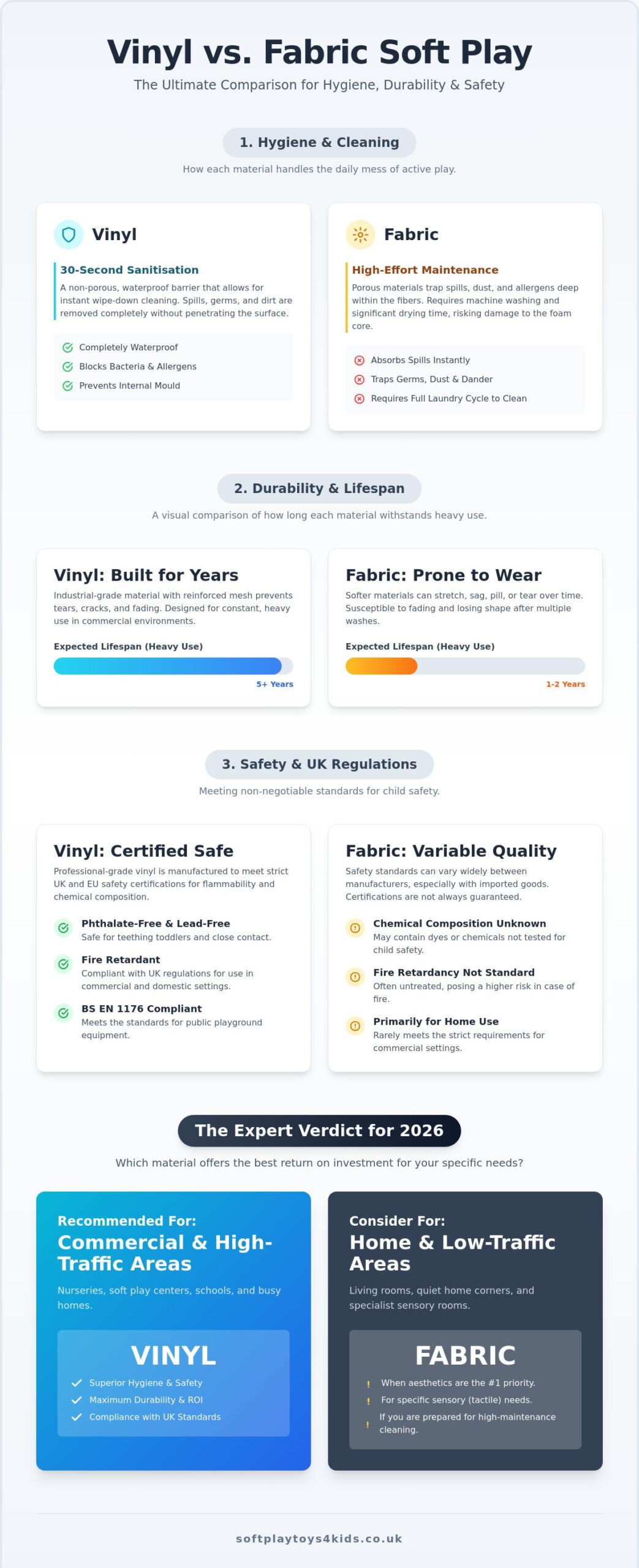
How much time do you actually want to spend cleaning up after a busy play session? When comparing vinyl soft play vs fabric, the most immediate difference is how they handle the inevitable spills. Imagine a carton of blackcurrant juice tips over. On a vinyl surface, you have a 30-second fix. A quick spray and a wipe with a cloth, and the area is sanitised and ready for the next child. On fabric, that juice is already deep in the fibres, heading straight for the foam core. You’re no longer looking at a quick wipe; you’re looking at a full laundry cycle and hours of drying time.
The hidden time-cost of fabric covers is often the biggest regret for new play area owners. While you can throw most fabric covers in a washing machine, the process of stripping the covers off the foam and wrestling them back on is exhausting. Even worse, if the foam inside gets damp, you risk the “stink factor” where trapped moisture leads to internal mould. Industrial-grade PVC prevents this entirely by acting as a waterproof seal. This is why official child care cleaning and sanitizing guidelines often distinguish between porous and non-porous surfaces when setting safety benchmarks.
Some people worry about vinyl splitting or cracking over time. This is usually a symptom of cheap, imported materials that aren’t designed for the UK climate. Our UK-manufactured PVC is formulated to stay supple and strong. It won’t become brittle or flake away after a few months of use. If you want a play space that stays looking professional, check out our range of durable ball pits and mats designed to handle years of heavy footfall.
The 5-Year Wear Test: Vinyl vs Fabric
Fabric covers often suffer from “pilling” after repeated washes, where tiny bobbles of thread make the equipment look old and worn. Vinyl doesn’t have this problem. It excels in abrasion resistance, which is the ability of a material to withstand surface wear caused by friction or rubbing during active use. Whether children are sliding, jumping, or dragging toys across the surface, vinyl maintains its smooth finish far longer than woven textiles.
Cleaning Protocols for Nurseries and Schools
- Sanitising for OFSTED: Inspectors look for hygiene. Non-porous vinyl surfaces are much easier to prove as “clean” during an inspection compared to fabric that might harbour deep-seated bacteria.
- Zero Drying Time: Vinyl is dry the moment you wipe it. Fabric can take 24 hours to air dry properly, meaning your play area is out of action.
- Maintenance Habits: For the best results, follow our professional tips for maintaining soft play equipment to ensure your warranty remains valid and your kids stay safe.
Safety and UK Regulations: The Non-Negotiables
Safety isn’t just a checkbox; it’s the foundation of every laugh and jump in your play area. When you’re deciding between vinyl soft play vs fabric, you’re making a choice that directly impacts your compliance with strict UK safety laws. While fabric might feel “cosy”, it often struggles to meet the same rigorous industrial benchmarks that high-grade vinyl clears with ease. You want to know that every mat and block is a safe haven for the little ones in your care.
Fire retardancy is perhaps the most critical factor. In the UK, equipment used in commercial settings, including registered childminder businesses and nurseries, must typically meet BS 5852 (often referred to as Crib 5) standards. Many cheap imports found online bypass these tests entirely, creating a significant fire risk. We take immense pride in our UK manufacturing process, ensuring our materials aren’t just “compliant” on paper but are genuinely built to save lives. As of 2026, all soft play foam must carry permanent labels identifying the manufacturer and the specific fire safety standards met.
Toxicity is another major concern, especially for teething babies who explore the world with their mouths. Our industrial vinyl is 100% lead-free and phthalate-free. This ensures that even if a toddler decides to chew on the edge of a mat, they aren’t ingesting harmful chemicals. Fabric covers, while often marketed as “natural”, can sometimes contain dyes or treatments that aren’t specifically rated for constant mouth contact.
UK Fire Safety Standards Explained
The requirements for a domestic living room are vastly different from those of a commercial play centre. If you’re running a business, you cannot cut corners with domestic-grade fabrics. UK-manufactured PVC is designed to be self-extinguishing, a feature that many decorative fabric covers lack. Always look for the Crib 5 certification to protect your insurance and, more importantly, the children.
Hidden Hazards in Material Choice
- Seam Strength and Fraying: Fabric seams are typically over-locked. Over time, these can fray, creating long threads that pose a serious choking or entanglement hazard. Vinyl seams are double-stitched or welded for maximum strength.
- Zips and Fasteners: In our vinyl designs, zips are concealed behind protective flaps to prevent skin scratches. Fabric covers often have exposed zips that can become hot or catch on delicate clothing.
- Impact Absorption: The tension of the cover affects how the foam reacts. A properly fitted vinyl cover ensures the “give” in our ball pits is consistent, providing the perfect landing every time.
Sealed vinyl seams create an airtight and moisture-proof barrier that prevents liquids from reaching the core, effectively stopping “foam rot” before it starts. This microscopic difference between a woven thread and a sealed surface is what keeps your equipment smelling fresh and staying structurally sound for years.
Aesthetic and Sensory Experience: Home vs. Commercial
Does your play area feel like a clinical space or a warm hug? This is the heart of the vinyl soft play vs fabric debate for many parents and business owners. While we’ve already covered how these materials handle safety and spills, their impact on the room’s “vibe” and a child’s sensory development is just as vital. You want a space that looks stunning in your home or facility while providing the right tactile feedback for growing minds.
Texture plays a massive role in how a child interacts with their environment. Babies often gravitate towards the “warm” feel of fabric for naptime or quiet play because it mimics the softness of clothes and blankets. However, vinyl isn’t the “cold” material it used to be. Modern, high-quality PVC is smooth and inviting, and it won’t irritate sensitive skin. It also wins the battle of visual longevity. Fabric often fades after a few months of sun exposure through a window, looking tired and “washed out.” In contrast, UV-stabilised vinyl retains its “pop” and vibrant colour, keeping your play area looking brand new for years.
Sensory Play Benefits
- Tactile Variation: Using different surfaces helps children distinguish between textures, which is a core part of early brain development. This works beautifully when paired with specific sensory toys that encourage grasping and squeezing.
- Grip and Confidence: Toddlers need a surface that doesn’t slip. Vinyl provides excellent “grip” for knees and palms, making it much easier for them to master crawling and climbing than on “slicker” woven fabrics.
- Visual Stimulation: Bright, high-contrast colours are easier for infants to track. Vinyl’s ability to hold deep, saturated pigments makes it superior for creating a stimulating visual landscape.
The “Clinical” vs “Cosy” Debate
Many people assume vinyl looks too “industrial” for a home, but it’s all about the styling. By choosing softer pastel tones or matching your mats to your room’s accent colours, you can create a professional-grade play zone that complements modern UK interior design. Most parents who choose fabric for its “cosy” look end up regretting the decision after the first bout of nursery germs hits the household. Once you’ve experienced the ease of a 30-second sanitisation, the “clinical” argument disappears in favour of pure, healthy convenience.
Ready to build a vibrant, safe, and sensory-rich environment for your little ones? Explore our range of premium soft play mats and ball pits today and see why UK parents trust our craftsmanship.
The Final Verdict: Which Should You Buy in 2026?
So, where do you land on the vinyl soft play vs fabric debate? By now, it’s clear that the “best” material depends entirely on your lifestyle and the little ones who’ll be using the space. If you’re a hygiene-conscious parent or a nursery manager, vinyl is the undisputed champion. It offers a level of protection, safety compliance, and durability that fabric simply can’t touch. On the flip side, if you’re creating a quiet, low-traffic sensory corner specifically for reading and relaxation, the softness of fabric might be your niche choice.
At SoftplayToys4kids, we’ve spent years refining our manufacturing process to ensure our equipment stands up to the toughest “toddler tests.” We choose high-grade, industrial PVC for our indoor playground equipment because we believe play should be stress-free. You shouldn’t have to worry about a spilled juice box or a bout of nursery germs ruining your investment. Our vinyl is designed to be wiped, sanitised, and ready for action again in seconds.
Before you hit the “buy” button, run through this final 5-point checklist to ensure you’re making the right choice for your space:
- Usage: Will this be used by multiple children every day, or is it for a single child’s bedroom?
- Hygiene: Do you have the time and energy for stripping covers and waiting 24 hours for fabric to air dry?
- Safety: Does the product explicitly meet UK Crib 5 fire safety standards for your specific setting?
- Longevity: Are you looking for a 5-year investment or a temporary “fast-fashion” play item?
- Environment: Will the equipment be near windows where UV-resistance is needed to prevent fading?
Why UK-Made Vinyl is the Gold Standard
We take immense pride in being a local manufacturer. Every ball pit, mat, and wedge we sell is handmade right here in our West Yorkshire factory. This hands-on approach means we don’t just ship boxes; we deliver craftsmanship. Because we control the production line, we can offer customisation options that international competitors simply can’t match. Whether you need a specific colour to fit your brand or a unique size for a tricky corner, our team is ready to build it for you. When you buy from us, you’re supporting domestic manufacturing and getting a product that hasn’t spent months sitting in a shipping container.
Making Your Decision
When you look at the long-term cost-per-use, the choice between vinyl soft play vs fabric becomes clear. Fabric might have a lower entry price, but the cost of replacements and the “time-tax” of cleaning makes it the more expensive option over time. We want you to feel 100% confident in your purchase. If you’re still undecided, get in touch to request material swatches so you can feel the premium quality of our PVC for yourself. Ready to transform your play area into a safe, vibrant, and durable wonderland? Explore our range of durable, UK-made soft play today and experience the difference that quality makes.
Ready to Build Your Dream Play Space?
Choosing between vinyl soft play vs fabric doesn’t have to be a headache. We’ve shown that while fabric has its place in quiet corners, industrial-grade vinyl is the clear winner for safety, hygiene, and long-term value. You want a play area that stays vibrant and germ-free even after years of heavy use. By choosing our UK-manufactured PVC, you’re investing in equipment that meets the highest fire safety standards and protects your children from bacteria buildup.
We take immense pride in our craftsmanship. Every piece is handmade in West Yorkshire and trusted by UK schools and nurseries across the country. We’re so confident in our quality and value that we offer a price match promise on all play equipment. Don’t settle for cheap imports that compromise on safety. It’s time to create a world of joy and development that you can trust. We invite you to compare our quality with anyone else; we know you’ll see the difference in every stitch.
Browse our range of high-quality, UK-made soft play equipment and start building your perfect play area today!
Frequently Asked Questions
Is vinyl soft play safe for babies who are teething?
Vinyl soft play is perfectly safe for teething babies provided it is certified phthalate-free and lead-free. Because our industrial-grade PVC is non-porous, it won’t absorb saliva or bacteria like woven fabrics do. You can simply wipe it clean after a session of exploratory chewing. This makes it a hygienic choice for infants who explore the world with their mouths. We take safety seriously so you don’t have to worry.
Can I put fabric soft play covers in the washing machine?
Most fabric soft play covers can go in the washing machine on a cool cycle, but you should always check the manufacturer’s label first. The real challenge is the drying time and the effort required to wrestle the foam back into the cover. If the foam gets damp during the process, it can lead to mould growth. This is a major factor when comparing vinyl soft play vs fabric for busy households.
Does vinyl soft play get too hot in the summer?
High-quality vinyl doesn’t typically get too hot for use, though it can feel warm if left in direct sunlight for hours. Our UV-stabilised coatings help reflect some heat and prevent the material from becoming brittle or uncomfortable. If your play area is in a conservatory or near a large window, we recommend using blinds during peak sun hours. It’s often cooler than the heavy, heat-trapping textiles used in some designer play sets.
Why is fabric soft play often more expensive than vinyl?
Fabric soft play is often more expensive because textiles like velvet or faux-suede carry a higher raw material cost than industrial PVC. The manufacturing process is also more labour-intensive, requiring complex over-locking and precision stitching. While vinyl is built for scale and durability, fabric is often positioned as a premium aesthetic choice for modern UK interiors. You’re often paying for the specific look rather than industrial-grade longevity.
How long does a typical vinyl ball pit last in a commercial setting?
A typical vinyl ball pit will last between 5 and 10 years in a commercial setting if it’s maintained correctly. The secret lies in the combination of high-density foam and reinforced PVC skins that resist tearing under pressure. Unlike fabric, which pills and thins after repeated use, vinyl maintains its structural integrity over thousands of play sessions. It is the smartest investment for nurseries and play centres looking for long-term equipment.
What is the best way to disinfect vinyl soft play mats without damaging them?
The best way to disinfect your mats is with a mild solution of warm, soapy water or a specialised soft play sanitiser spray. Avoid using harsh bleach or abrasive chemicals, as these can strip the protective coating and cause the vinyl to crack over time. A quick 30-second wipe after each play session keeps the surface hygienic without damaging the material. It’s the fastest way to stay compliant and germ-free.
Does fabric soft play meet UK fire safety regulations?
Many fabric soft play items sold online are domestic-only and don’t meet the strict BS 5852 regulations required for UK commercial settings. Always check for a permanent fire safety label before buying for a nursery or childminder business. We ensure our vinyl products are fully compliant with these standards. It’s a non-negotiable part of our manufacturing process because your child’s safety is our top priority.
Can I buy replacement covers if my vinyl or fabric gets damaged?
Yes, you can usually buy replacement covers if your equipment gets damaged. Since we manufacture our products right here in West Yorkshire, we can often supply new skins for our specific ball pits and mats. This is a huge advantage over buying cheap, imported sets where a single tear means the whole item has to be binned. We’re here to help your play area last for years, not just months.
Leave a Reply