
11 Foam Activity Set Ideas for Active Play
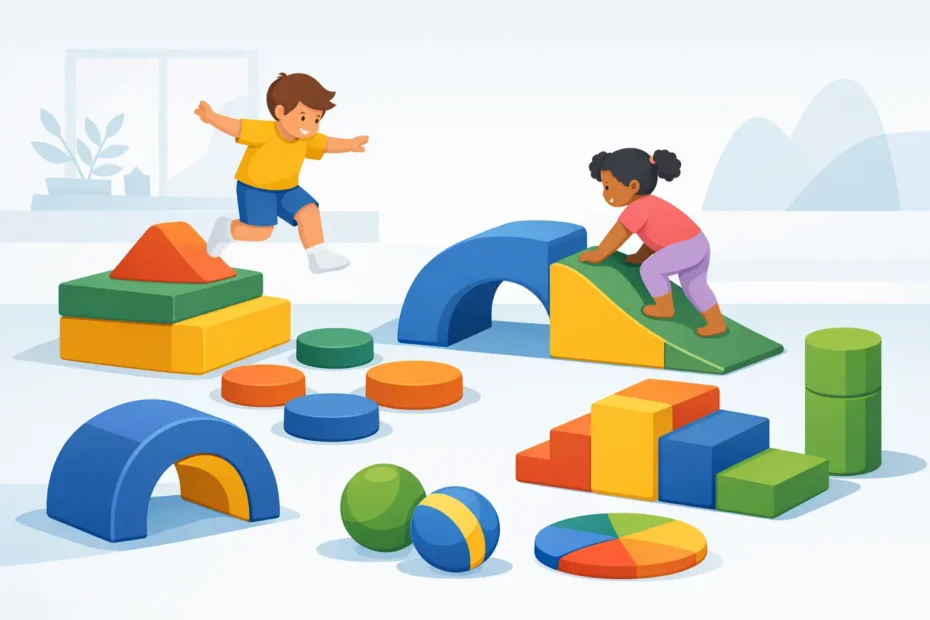
A good soft play setup gets used when it does more than fill a corner. The best foam activity set ideas turn one set of shapes into climbing, crawling, balancing, building and quiet learning without needing a huge room or a huge spend. That matters whether you are a parent trying to keep a toddler moving at home or a nursery manager buying for daily group use.
The smart approach is simple. Choose pieces that work hard, clean easily and stand up to regular use. Foam activity sets do exactly that when you plan around how children actually play, not just how the set looks in a product photo. Below are practical ideas that help you get more value, more engagement and more developmental use from every piece.
Foam activity set ideas that work at home and in settings
Some play equipment looks impressive for a week and then gets ignored. Foam activity sets are different when you rotate the layout and give children a clear reason to use each shape. A step, wedge, cylinder or block can become a climbing route one day and a role play prop the next.
That flexibility is why these sets suit both domestic buyers and commercial settings. Parents want safe indoor activity that does not take over the whole house. Nurseries and schools need reliable equipment that supports movement, coordination and confidence while offering solid value for money. A well-made foam set covers both.
1. Build a mini obstacle course
This is the easiest win and usually the most popular. Use wedges for climbing, blocks for stepping, beams for balance and a tunnel or arch for crawling through. Keep the route short for younger children and add turns, stops and simple instructions for older ones.
The benefit is not just active play. Obstacle courses help with listening, body awareness and sequencing. In a nursery, they also encourage turn-taking. At home, they are a practical way to burn off energy indoors when the weather is doing what British weather does best.
2. Create a soft climbing challenge
Children love to test what their bodies can do. A low foam climbing setup gives them that challenge without the hard edges and worry that come with makeshift furniture courses. Stack pieces to create gentle climbs, a raised platform or a two-step route up and down.
The trade-off here is space. If you are buying for a smaller home, you may want shapes that stack neatly away after use. In a commercial setting, larger modular pieces make more sense because they cope better with repeated use and allow for wider layouts.
3. Use sets for colour and shape matching
Not every foam activity session has to be high energy. Blocks, steps and wedges in different colours can support early learning just as well as movement. Ask children to find the blue shape, stack matching colours or place circles next to squares if your set includes mixed forms.
This works especially well with toddlers who are still learning to follow short instructions. It also helps buyers get more educational value from the same equipment rather than seeing it as movement-only stock.
4. Turn foam pieces into a balance path
Balance work is one of the strongest uses for foam activity sets. Arrange beams, flat blocks and low pads in a line or zig-zag and encourage children to walk heel to toe, stretch their arms and move carefully from one section to the next.
For younger children, keep everything low and wide. For older users in schools or playgroups, add small gaps or changes in height. The point is not to make it difficult for the sake of it. The point is to build confidence safely and progressively.
Educational foam activity set ideas for everyday play
The strongest setups blend movement with imagination. When children can climb on the same pieces they use for counting, sorting or storytelling, you get longer play sessions and better value from your equipment.
5. Make a role play scene
A few foam shapes can become a bus, a castle, a shop counter or a mountain. Cylinders work as stepping stones or tree trunks. Wedges can be hills, ramps or roofs. Large blocks become seats, walls or market stalls.
This matters because not every child joins in physical play in the same way. Some are drawn in by story first. Once they are engaged, they move more naturally and confidently. That is useful at home and even more useful in shared settings where mixed ages and personalities need different entry points into play.
6. Set up a counting and sorting game
If you already have numbered cards, beanbags or simple classroom resources, foam pieces can become targets and stations. Ask children to jump to number three, crawl to the red wedge or place two toys on the blue block.
This is one of the most practical foam activity set ideas for nurseries and preschools because it supports early maths without needing specialist kit. It also keeps sessions active, which is often the difference between children staying focused and drifting off.
7. Create a quiet sensory corner
Not every use needs to involve speed. Foam sets are useful for calmer moments too, especially in homes with babies and toddlers or settings supporting children who benefit from gentler transitions. Arrange soft blocks and wedges as a low enclosed area for sitting, leaning, turning pages or playing with sensory toys.
The key is choosing foam that is supportive, wipe-clean and properly made for regular child use. Cheap, poorly finished items may save money upfront but often let buyers down on durability, finish and long-term appearance.
8. Build a safe stepping challenge for early walkers
Babies and young toddlers need different layouts from older children. Keep pieces low, stable and close together so they can pull up, step across and sit down safely. A simple mix of mats, low blocks and shallow wedges gives them enough challenge without overwhelming them.
For parents, this is often where foam activity sets really prove their value. Instead of buying one-use toys, you are investing in equipment that adapts as your child grows. For commercial buyers, it means one category of equipment can support several age stages when planned properly.
How to choose the right foam activity set ideas for your space
The best setup is not always the biggest one. It is the one that fits your room, your users and your budget without compromising safety or quality.
Think about age range first
A toddler group and an after-school setting need different heights, sizes and routes. Younger children benefit from lower builds and wider surfaces. Older children can handle more complexity, but the layout still needs to stay age-appropriate and properly supervised.
Measure the usable area, not just the room
This catches plenty of buyers out. A room might look large enough until furniture, storage or walkways reduce the actual play zone. Measure the active area carefully and leave proper clearance around the set. If you are buying for a nursery or soft play business, think about staff movement and line of sight as well.
Prioritise wipe-clean durability
A foam activity set should work hard every day. That means strong stitching, quality covers and foam that keeps its shape. Commercial buyers especially need equipment that handles repeat use without looking tired too quickly. Home buyers benefit too, because durable pieces hold up better to regular climbing, dragging and stacking.
Choose pieces with more than one use
This is where value really comes in. A wedge should be a climber, a slide support, a seat and a role play prop. A block should be a step, a table, a wall and a sorting station. Multi-use pieces stretch your budget much further than novelty designs with one fixed purpose.
Bespoke often makes better financial sense
If your space is awkward, standard sizes are not always the smartest buy. Custom sizing or colour choices can help you use every inch properly and keep the look consistent with your home, nursery or play venue. It is also a strong option for commercial buyers who want equipment that fits a clear floorplan rather than forcing the space to fit the stock.
Getting better value from foam activity sets
The biggest mistake buyers make is thinking the set itself does all the work. In reality, how you use it matters just as much. Rotate layouts weekly, change the play goal and mix active sessions with quieter educational use. That keeps the equipment fresh without extra spending.
It also pays to buy from a supplier that understands both domestic and commercial use. Softplay Toys4Kids focuses on UK-made soft play equipment that is built for real environments, with practical options for homes, nurseries, schools and larger soft play spaces. When quality, safety and price all matter, that kind of direct support makes buying easier.
If you want foam activity sets that earn their keep, think beyond one layout and one age stage. The right pieces should grow with the child, work across different play styles and give you a safer, stronger return on every pound spent.
Leave a Reply