
15 Creative Home Soft Play Area Ideas for 2026: Design Your Kids’ Dream Space
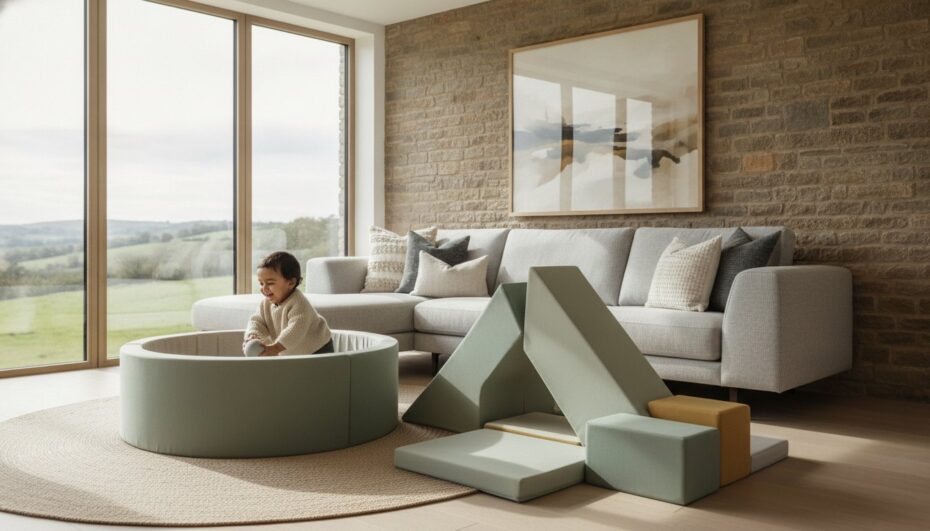
What if your living room didn’t have to look like a primary school explosion just to keep your toddler entertained and active? We know the struggle. You’re likely tired of tripping over cheap, flimsy imports that clash with your decor and worry you every time your little one takes a tumble. You want a space that encourages independent play without sacrificing your home’s style or safety. Finding the right home soft play area ideas is about more than just buying a few mats; it’s about investing in your child’s physical development while keeping your sanity intact.
As proud West Yorkshire manufacturers, we believe your home deserves commercial-grade quality. In this guide, you’ll learn how to transform any corner into a professional-standard zone using equipment that meets the latest BS EN 71-1:2026 safety standards. We’ll show you how easy-to-clean, REACH-compliant materials and fire-retardant foam can create a durable environment that actually grows with your child. From modular ball pits to bespoke sensory setups, here are 15 creative ways to design a dream space that’s safe, stylish, and built to last right here in the UK.
Key Takeaways
- Learn why UK-manufactured, commercial-grade equipment is significantly safer and more durable than cheap international imports.
- Discover clever home soft play area ideas that maximize limited floor space, including corner nooks and modular setups.
- Understand how high-density foam and professional-grade mats support your child’s physical development and core strength.
- Master the art of maintenance with simple cleaning tips for PVC covers to keep your play zone hygienic and fresh.
- Get the checklist for essential safety standards, ensuring your home setup meets the same rigorous benchmarks as schools and nurseries.
Why Create a Home Soft Play Area? Benefits for Development
A home soft play area is a curated safe-zone designed specifically for high-energy growth. We define it as a dedicated space built from professional-grade, high-density foam and durable, wipe-clean PVC covers. While modern playgrounds offer great outdoor exercise, a home setup brings that same level of physical challenge into a controlled, domestic environment. It’s the ultimate solution for the unpredictable UK weather. When the rain starts pouring, your little ones still need a high-energy outlet to burn off steam and stay active without wrecking the sofa.
The physical benefits are immediate. Climbing over wedges, crawling through tunnels, and balancing on thick mats builds essential core strength and gross motor skills. It’s not just about keeping them busy; it’s about providing the resistance and support they need to master their own movements. Sensory integration also plays a massive role here. Immersing themselves in a ball pit provides deep pressure input, while the varied textures of our handmade equipment help children process sensory information in a calm, familiar setting. When you explore home soft play area ideas, you’re looking at a developmental investment that pays off every single day.
The Developmental Power of Playground Therapy
Soft play equipment is a secret weapon for developing proprioception, which is your child’s ability to understand where their body is in space. This body awareness is a fundamental building block for early childhood milestones like walking and jumping. For many families, particularly those navigating SEN (Special Educational Needs) requirements, these zones provide a therapeutic space for sensory regulation and physical therapy. We believe that soft play should be accessible to every child, which is why we focus on commercial-grade durability that stands up to intensive, daily use in any home or clinical setting.
Encouraging Independent and Imaginative Play
Soft Play Layout Ideas for Every UK Home
Finding space for active play in typical UK homes can feel like a puzzle. Whether you’re in a city flat or a detached house, your home soft play area ideas should focus on smart zoning. A critical rule for any layout is maintaining a 1.5-metre clearance zone from hard furniture, radiators, or walls to avoid Playground Hazards like bumps and bruises. We recommend starting with a firm foundation of safety mats before adding your larger pieces to ensure the entire fall zone is protected.
Every home has different potential, so we’ve broken down the best layout strategies based on your available square footage:
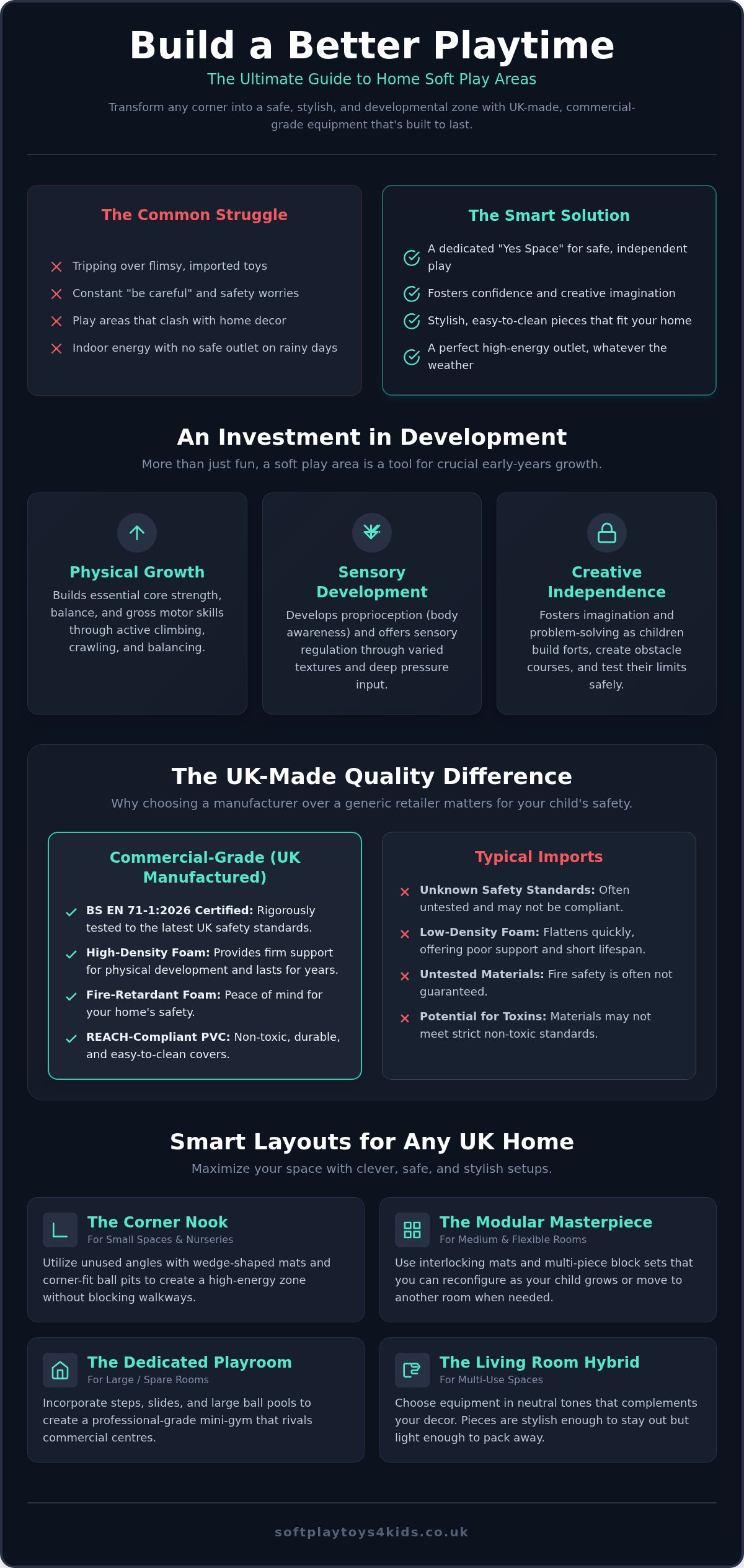
- The Corner Nook (Small Spaces): Perfect for bedrooms or small nurseries. Use wedge-shaped mats and a corner-fit ball pit to turn an unused angle into a high-energy zone without blocking walkways.
- The Modular Masterpiece (Medium Rooms): For spaces that need to stay flexible. Use interlocking mats and multi-piece block sets that you can reconfigure as your child grows or move to another room when needed.
- The Living Room Hybrid: Choose equipment in neutral tones that complements your decor. These pieces are stylish enough to stay out, and when paired with bespoke framed art from First4Frames Gallery, they help maintain a sophisticated home environment that transitions seamlessly from playtime to guest-ready.
Maximising Small Spaces with Multi-Use Mats
Even the tightest floor plans can accommodate play when you use the right equipment. High-quality baby play mats work double duty by providing a cushioned surface for tummy time and acting as a safety barrier against cold, hard floors. Look for foldable equipment that slides under the sofa or tucks into a cupboard when the day is done. We offer bespoke sizing to ensure every inch of your space is used efficiently, so don’t feel limited by standard dimensions. You can explore our full range of UK-made soft play mats to find the perfect dimensions for your home.
Creating a Safe Sensory Zone
Layout isn’t just about floor space; it’s about the atmosphere you create for your child. Integrate sensory toys like textured blocks or light-up balls into your setup to engage all the senses during play. Adding soft wall padding or column protectors can turn a simple corner into a calming retreat, especially for children who need a quiet space to regulate after a long day. Use warm lighting and soft textures to make the area feel inviting rather than overstimulating, creating a balanced environment for both high-energy movement and quiet reflection.
Manufacturer vs. Retailer: Why Quality Matters for Safety
When you’re browsing home soft play area ideas, it’s easy to get distracted by flashy colours and low price tags. But have you considered what’s actually inside those mats? Cheap, mass-produced imports often use low-density foam that “bottoms out” within weeks. This means when your child lands on the mat, the foam compresses so much they hit the hard floor underneath. It’s a safety hazard masquerading as a bargain. We don’t take those risks with your children. Choosing professional-grade equipment means you’re investing in materials that maintain their shape and protective qualities for years, not just days.
True safety comes from materials that meet rigorous UK standards. Every piece we manufacture complies with BS EN 71-1:2026 for physical properties and BS 5852 for fire retardancy. We also use REACH-compliant PVC, ensuring no harmful phthalates or heavy metals touch your child’s skin. By choosing the factory-direct route, you’re cutting out the retailer markup. This allows us to put that value back into superior stitching and higher-grade materials that high-street retailers simply can’t match. We invite you to compare our build quality with any international competitor; the difference is in the durability.
Understanding Foam Density and Safety Padding
We don’t believe in one-size-fits-all solutions. At SoftplayToys4kids, we use specific foam grades tailored to different developmental stages. For toddlers, the foam must be firm enough to support their first wobbly steps but soft enough to cushion a tumble. High-quality soft play equipment acts as a vital buffer against domestic injuries, especially in homes with hardwood or tiled floors. Our commercial-grade stitching is designed to withstand thousands of “jump and crash” cycles without splitting or exposing the foam core inside.
Handmade in West Yorkshire: A Quality Guarantee
Every ball pit and mat we sell is handmade right here in our West Yorkshire factory. This “built to last” philosophy isn’t just a marketing slogan; it’s our heritage. Because we control the entire manufacturing process in Bradford, we can guarantee the quality of every seam and zip. Supporting a local UK manufacturer also means you get real, accessible customer service. If you ever need a part replacement or a custom-sized mat for a specific room corner, we’re just a phone call away. You aren’t just buying a toy; you’re partnering with a local team dedicated to your child’s safety.
Essential Equipment for Your Home Soft Play Kit
The ball pit is often the heart of the play zone. It’s where balance meets pure joy. Unlike flimsy inflatable versions that puncture easily and require constant refilling, our foam-walled pits offer structural integrity and safety. They won’t collapse when your child leans against the side, providing a stable environment for sensory immersion. For help with dimensions and capacity, check out our Ultimate Ball Pit Guide. It covers everything you need to know about choosing the perfect size for your room.
Selecting the Right Ball Pit for Your Space
Vertical play is crucial for building confidence and spatial awareness. Adding soft play steps and slides encourages children to climb and slide in a safe environment, helping them master heights without the risk of hard-surface injuries. You can also incorporate balance beams or stepping stones into your home soft play area ideas. These are excellent for building coordination through active games like “the floor is lava.” These modular pieces allow you to create an ever-changing obstacle course that keeps your child engaged for hours.
The Importance of Safety Padding and Mats
Ready to build your child’s dream space? Explore our full range of handmade soft play equipment today and see why UK parents trust our quality.
Setup, Maintenance, and Safety Checks
Setting up your dream space is straightforward, but doing it correctly ensures long-term safety. Start by clearing the designated zone entirely. Remember that 1.5-metre clearance rule from earlier; it’s the most important step in preventing bumps. Lay your home soft play area ideas on a foundation of thick, professional-grade play mats first. This creates a uniform safety surface before you add “hero” pieces like ball pits or slides. Ensure every corner is snug and there are no gaps where small feet could trip or get trapped.
Consistency in maintenance keeps the environment as safe as the day it arrived from our factory. We recommend a quick weekly inspection to stay ahead of wear and tear. Run your hands along the seams to check for any loose stitching. Press firmly into the foam; it should bounce back instantly. If it feels soft or stays compressed, the foam may have “bottomed out” and lost its protective value. Check ball pit balls for cracks or splits, as crushed plastic can have surprisingly sharp edges that scratch sensitive skin.
Keeping Your Soft Play Area Hygienic
Busy households need equipment that doesn’t soak up spills or odours. Professional-grade PVC is the gold standard for a reason. You can sanitise these surfaces easily with a simple solution of mild detergent and warm water. Avoid harsh bleach or abrasive scrubbers, as these can dull the finish and weaken the fabric over time. For the ball pit, don’t just wipe the top layer. Every few months, gather the balls into mesh net bags and wash them in a tub of soapy water. It’s a simple, effective way to keep the play zone fresh and healthy for your family.
Transitioning the Space as Your Child Grows
To keep engagement high without cluttering the room, try a toy rotation. Don’t put every sensory toy or block out at once. Swap smaller items every two weeks—such as the educational toys, books, and learning aids found at WonderKiddos—to make “old” toys feel brand new again, preventing the space from becoming overstimulating while keeping your child’s curiosity sparked.
Creating a dedicated space for active play is one of the best investments you can make for your child’s physical and sensory growth. We’ve explored how the right home soft play area ideas can turn even the smallest corner into a high-energy zone that’s both safe and stylish. By prioritising high-density foam and wipe-clean PVC, you ensure that your play area isn’t just fun, but hygienic and built to last through every milestone. Don’t settle for flimsy imports when your children deserve the best protection available.
At SoftplayToys4kids, we take pride in every seam. All our equipment is handmade in our West Yorkshire factory, meeting rigorous commercial-grade safety standards. You get professional quality at manufacturer-direct prices without the high-street markup. It’s time to stop worrying about rainy days and start enjoying a “Yes Space” where your little ones can climb, crash, and explore to their heart’s content. Explore our handmade UK soft play range today! We’re excited to help you design a dream space that brings joy and safety into your home for years to come.
Frequently Asked Questions
How much space do I need for a home soft play area?
You can start with as little as one square metre for a corner ball pit, but layout is key. Always maintain a 1.5-metre safety clearance from hard furniture or radiators to prevent bumps. Many home soft play area ideas focus on modular mats that you can stack away when they aren’t in use. Whether you have a tiny flat or a large playroom, our bespoke design service helps you maximise every inch of available floor space safely.
Is soft play equipment safe for babies under 6 months?
Yes, soft play equipment is excellent for babies under 6 months, particularly for supported tummy time. High-density foam mats provide a firm but cushioned surface that helps newborns build neck and shoulder strength. Always ensure active adult supervision and choose REACH-compliant materials to protect their sensitive skin. Our handmade mats are designed to be non-toxic and supportive, making them a perfect foundation for your baby’s very first physical milestones.
How do I clean foam play mats and ball pits?
Cleaning is simple thanks to our professional-grade PVC covers. Use a solution of mild detergent and warm water to wipe down the surfaces after play. For ball pits, we recommend placing the balls into mesh net bags and washing them in a tub of soapy water every few months. This routine keeps your home soft play area ideas hygienic and fresh, preventing the buildup of dust or bacteria in your child’s favourite play zone.
Can I use soft play equipment outdoors?
We don’t recommend leaving soft play equipment outdoors permanently. While our PVC is incredibly durable and water-resistant, prolonged exposure to UV rays can fade the colours, and dampness can eventually affect the foam core. You can certainly take mats or ball pits onto the grass for a sunny afternoon, but always bring them back inside once play is finished to maintain their commercial-grade quality and extend their lifespan.
What is the difference between domestic and commercial soft play gear?
The main difference lies in the foam density and stitching quality. Many high-street domestic sets use low-density foam that “bottoms out” under pressure. In contrast, our gear is manufactured to commercial standards used in nurseries and schools. This means we use high-impact foam and reinforced stitching that withstands thousands of play cycles. You’re getting professional-grade durability at manufacturer-direct prices, ensuring a safer environment that grows with your child over several years.
How many balls do I need for a standard home ball pit?
For a standard home ball pit, you typically need between 200 and 500 balls to provide adequate depth for sensory immersion. A smaller corner pit might only require 150 balls, while larger modular pools can easily take 1,000 or more. It’s better to start with a base layer and add more as your child grows. This depth allows for the deep pressure input that is so beneficial for sensory integration and balance development.
Is home soft play worth the investment compared to play centres?
Absolutely. While the initial cost is higher than a single trip to a play centre, the cost-per-use over several years is significantly lower. You also gain total control over hygiene and safety, avoiding the germs often found in public facilities. Plus, having a high-energy outlet available 24/7 is a lifesaver during the UK’s rainy seasons. It’s a developmental investment that supports physical milestones while providing a safe “Yes Space” in your own home.
Leave a Reply