
Softplay Durability Review for UK Buyers
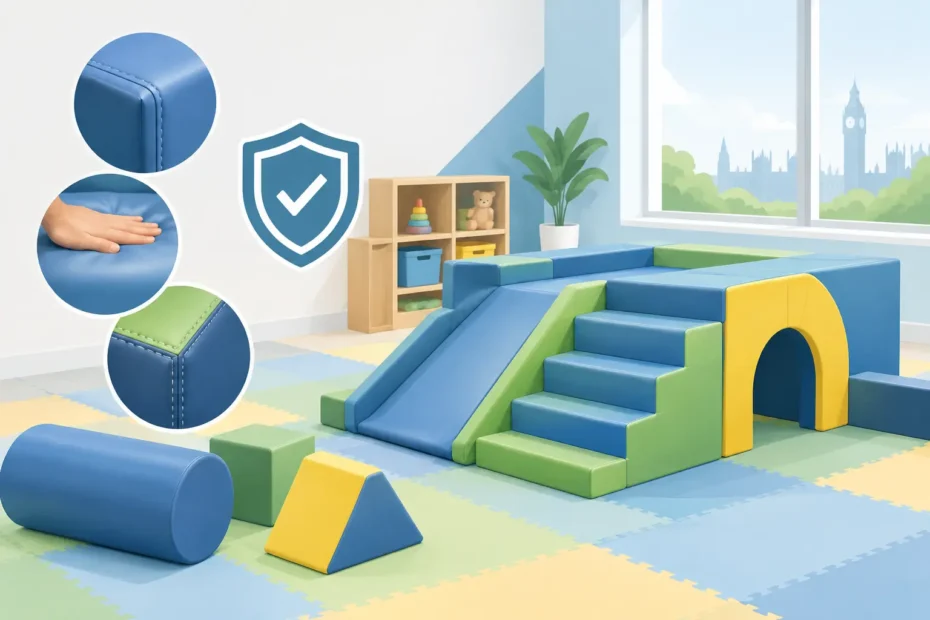
A cheap soft play set can look excellent on delivery day, then lose its shape, split at the seams or become difficult to keep clean after a few busy weeks. This softplay durability review is for parents, nurseries, schools and play-centre operators who want equipment that earns its place – not foam shapes that need replacing before the children have had their fill of climbing, crawling and rolling.
Durability is not one single feature. It comes from the quality of the foam, the strength of the covers, how the pieces are joined, how the equipment is used and whether it is cleaned properly. For a home play corner, the right set may be very different from the equipment needed in a high-footfall nursery room or commercial venue. Buying for the job matters.
What durability really means in soft play
Good soft play should keep its supportive feel, retain its shape and remain safe and presentable through regular use. A toddler who climbs the same step ten times a day creates a different kind of wear from a class of children using an activity set all morning. Ball pits, slides, balance beams and safety pads each have their own pressure points too.
The first thing to assess is recovery. Foam should spring back after children sit, jump, kneel and climb on it. If a piece quickly develops dips, rounded-off edges or a permanently flattened surface, it is no longer giving the stable play experience you paid for. Firm, supportive foam helps children move with confidence while still providing the cushioned surface expected from quality soft play.
Then look at the outer cover. The cover takes the daily punishment: shoes, spills, dragged toys, enthusiastic climbing and repeated wiping down. It needs to be hard-wearing, wipe-clean and properly fitted. Loose material can bunch up, while weak stitching is often the first sign that a set was built down to a price rather than made for regular play.
Softplay durability review: the parts that wear first
Not every product ages in the same way. Knowing where wear is likely to show helps buyers compare like for like and plan a sensible setup.
Seams, corners and handles
Seams work hardest where children pull, scramble or land. Steps and wedges often show wear around the front edge, while larger blocks can be dragged across the floor by staff or parents repositioning a room. Strong, tidy stitching and reinforced stress points make a visible difference over time.
Handles are useful on larger or heavier pieces, but they need to be securely attached. A handle should make moving equipment easier, not become a weak point after a few months of rearranging your play area.
Foam density and shape retention
Foam that is too soft may feel inviting at first but can compress too quickly under constant use. For domestic play, moderate use may suit a lighter setup perfectly well. For nurseries, schools and commercial environments, firmer foam with reliable shape retention is the better long-term choice.
This is especially relevant for step-and-slide units, climbing frames, ramps and balance equipment. These pieces guide movement and need to stay stable. When foam loses structure, children can find climbing less predictable and staff may need to replace individual pieces sooner than planned.
Fastenings and joined activity sets
Multi-piece sets should sit together securely during play. Where pieces use hook-and-loop fastenings, check that the joining areas are generous and positioned sensibly. A set does not need to be permanently fixed in place, but it should not separate every time an energetic child crawls over it.
For busy settings, modular equipment remains a smart buy because individual components can be moved, reconfigured or replaced where necessary. The trade-off is that more joins mean more areas to inspect and clean. A simple layout with the right number of pieces is often more durable in practice than an overcomplicated layout with endless moving sections.
Home use versus commercial use
A parent creating a soft play area in the lounge, spare room or garden room does not always need commercial-scale equipment. Choosing a practical ball pit, baby play mat or compact activity set can deliver years of enjoyable use when it is used by one family and stored correctly.
Commercial buyers should be stricter. Nurseries, preschools, playgroups and soft play centres need equipment able to cope with repeated sessions, different age groups and routine cleaning. The initial price matters, but the cost per month of safe, presentable use matters more. Equipment that stays supportive and easy to maintain can be better value than a cheaper alternative that looks tired quickly.
Space also affects lifespan. A set squeezed into a narrow room is more likely to be pushed against walls, dragged across flooring and used in ways it was not designed for. Measure carefully, allow room for adults to supervise, and choose pieces that suit the age and number of children using them.
How to make soft play last longer
Regular care protects your investment and keeps the play area looking inviting. Wipe covers after use with a suitable mild cleaning solution, following the product care guidance. Avoid harsh chemicals that may damage the surface or leave residues where babies and toddlers play.
Check equipment frequently, particularly in shared settings. Look for loose stitching, tears, damaged fastenings, flattening foam and parts that no longer sit securely together. Small issues are easier to deal with before they become a reason to take a whole piece out of use.
Storage matters as much as cleaning. Keep soft play dry and away from persistent damp, direct heat sources and sharp-edged furniture. Do not stack very heavy items on lighter foam shapes for long periods, as this can affect their form. If equipment is used outdoors for a party or event, bring it back inside after use unless it has been specifically supplied for outdoor conditions.
For ball pits, clean the pit itself and the balls as part of the routine. A ball pit with hundreds of loose balls needs a realistic cleaning plan, particularly for nurseries and commercial venues. Choosing an appropriate size prevents the pit from becoming harder to manage than it needs to be.
When bespoke soft play is the stronger investment
Standard sets are ideal for many homes and small rooms, but bespoke soft play can be the more durable choice when a space has awkward dimensions or heavy use. Equipment built to fit the room can reduce gaps, stop pieces shifting unnecessarily and make better use of available floor area.
Custom sizing also lets commercial buyers design for their actual users. A baby room needs lower, gentler components than an active toddler area. A school sensory space may need safety padding and calm colours, while a play centre may need a larger, more energetic arrangement. Getting the layout right from the start reduces the temptation to force unsuitable equipment into a role it cannot sustain.
At Softplay Toys4Kids, handmade UK production gives customers the option to choose practical sizes, colours and configurations rather than settle for a one-size-fits-all setup. That matters when you need a play area that works hard, looks professional and fits a defined budget.
What to ask before you buy
Before comparing prices, ask how and where the equipment will be used. Find out what the cover is made from, how the seams are finished, whether pieces attach together and what cleaning is recommended. For institutional or commercial purchases, ask for the relevant product information and ensure the equipment suits your own safety procedures, supervision levels and intended age range.
It is also worth asking whether individual parts can be ordered later. Children do not wear every part of a set evenly. Being able to add compatible pieces or replace a heavily used component can extend the value of the whole play area.
The best soft play purchase is not automatically the thickest, biggest or most expensive option. It is the one made for your children, your room and your level of use. Choose well-made foam, durable wipe-clean covers and a layout that is easy to inspect, clean and enjoy – then give it the care that keeps the fun going for years.
Leave a Reply