
What Thickness Should Play Mats Be?
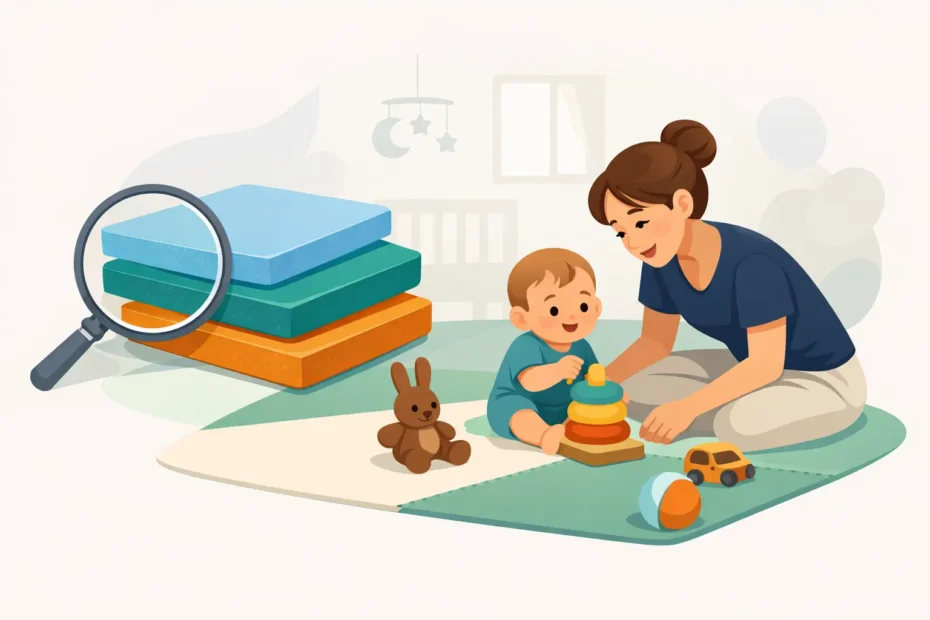
A 10mm mat and a 40mm mat might both be sold as play mats, but they do very different jobs. If you are asking what thickness should play mats be, the real answer depends on who is using them, what they are being used for, and how much impact protection you actually need. Buy too thin and you may not get the comfort or safety you expected. Buy too thick and you can end up paying for padding you do not need.
For parents, nurseries and commercial operators alike, getting the thickness right matters because it affects safety, stability, cleaning, durability and value for money. A crawling baby on a lounge floor has very different needs from a toddler climbing soft play shapes or a nursery setting up a daily activity zone. The best choice is not the thickest mat on the market. It is the one that fits the space, the age group and the level of activity.
What thickness should play mats be for everyday use?
For light home use, many play mats sit comfortably in the 10mm to 20mm range. That is usually enough to soften hard flooring, add comfort for tummy time, crawling and seated play, and create a warmer surface on wood, tile or laminate floors. If the mat is mainly there to make floor play more comfortable, rather than to cushion climbing or falls from height, this thickness often does the job well.
Once children become more active, thickness starts to matter more. For toddlers who are rolling, jumping, climbing over foam shapes or using a mat under small indoor play equipment, 20mm to 40mm is usually a better fit. This gives more impact absorption and feels more substantial underfoot, while still being practical for home use.
In commercial or institutional settings, thicker mats are often the safer and longer-lasting option. Nurseries, preschools and soft play centres usually need mats that can cope with repeated use, heavier traffic and more energetic movement. In these spaces, 30mm to 50mm is often the more sensible range, especially where the mat is being used as part of a broader soft play or activity area.
Why thicker is not always better
There is a common assumption that more padding automatically means better protection. In practice, it is not that simple. A mat that is too thin can be disappointing, but a mat that is too thick for the job can create its own problems.
Very thick mats can feel less stable for younger children who are still finding their balance. If the surface gives too much, toddlers may wobble more when standing or walking. In some settings, thicker mats can also make transitions awkward around doors, furniture or play frames. They take up more storage space as well, which matters if you need to pack them away daily.
Cost is another factor. If you only need a soft, hygienic surface for a baby to crawl on, paying for heavy-duty crash-style padding is rarely the best use of your budget. Smart buying is about matching the mat to the activity, not simply choosing the biggest number.
Choosing the right thickness by age group
For babies, the priority is usually comfort, insulation from cold floors and a clean, cushioned place to move. A mat around 10mm to 20mm thick is often enough for tummy time, rolling, crawling and early play. If the baby is using the mat in a dedicated play corner on a hard floor, going towards the upper end of that range can give better comfort without making the surface feel too soft.
For toddlers, especially those who are climbing on and off low equipment or taking the occasional topple, 20mm to 40mm is usually the better choice. This thickness provides more reassurance for active play and can cope better with toys, movement and repeated use. It also tends to hold its shape better over time if the quality of the foam is good.
For older children in soft play environments, school activity areas or commercial centres, the right answer often depends on the equipment involved. If mats are being used near climbing blocks, balance beams, step-and-slide units or soft play shapes, you typically need a thicker and more durable product than you would for simple floor play.
What thickness should play mats be in nurseries and schools?
Nurseries and schools have to think beyond basic comfort. They need mats that support group play, regular cleaning, daily wear and a wider mix of ages and activities. In most cases, 25mm to 40mm is a strong all-round range for these environments.
That level of thickness usually strikes a good balance. It offers enough cushioning for active sessions and story time on hard floors, but it still keeps the surface usable for movement-based learning and play. If children are likely to be climbing, tumbling or using soft play apparatus, moving up towards 40mm or beyond may be the safer choice.
The quality of construction matters just as much as depth. A poorly made 40mm mat can underperform compared with a well-made 25mm mat if the foam density is low or the cover is weak. Commercial buyers should always think in terms of overall build quality, wipe-clean surfaces, stitching, durability and suitability for the intended use, not thickness in isolation.
The floor underneath changes the answer
One of the biggest buying mistakes is ignoring the floor below the mat. Thickness that works perfectly on carpet may not be enough on tile or concrete. A mat on a thick carpet already has some extra give, while the same mat on a hard floor has to do all the cushioning work itself.
If you are placing mats over laminate, wood, vinyl, tiles or concrete, it often makes sense to choose a thicker option than you would over carpet. This is especially true in nurseries, church halls, schools and commercial venues where flooring is often harder and less forgiving.
That is also why bespoke advice can be useful. The right thickness for a home lounge, a baby room, a preschool reading corner and a soft play centre will not be identical, even if the children are a similar age.
Thickness, safety and real-world play
Play mats are there to reduce bumps and improve comfort, but they are not a replacement for proper supervision or sensible equipment choices. If a child is using taller apparatus or engaging in more adventurous play, the mat needs to be part of a wider safety plan.
For general floor play, a thinner mat may be perfectly adequate. For low-level climbing and active movement, a medium thickness is usually more suitable. For higher-impact environments, specialist safety padding or thicker crash-style protection may be needed instead of a standard play mat.
That distinction matters for commercial buyers. A nursery may need one type of mat for circle time and another for a soft play corner. A parent may want a folding baby mat for daily use in the lounge, while a dedicated home playroom could justify thicker padded flooring. The safest buying decision comes from being honest about how energetic the play will be.
Practical buying advice before you choose
Before ordering, think about four things together: the child’s age, the type of play, the hardness of the floor and whether the mat will stay down permanently or be moved around. Those details usually tell you more than any single product description.
It also pays to think about maintenance. Thicker commercial-style mats can be excellent for busy environments, but they need to be practical to handle, clean and store. If you are a parent using the mat every day in a shared room, something lighter and easier to reposition may be the better option. If you are fitting out a nursery or soft play area, heavier-duty mats may offer better long-term value because they cope with wear far more effectively.
This is where buying from a specialist manufacturer makes a difference. A supplier that understands domestic and commercial soft play can help you choose the right depth for your setup, rather than pushing a one-size-fits-all answer. Softplay Toys4Kids works with parents and trade buyers across a wide range of mat sizes, colours and bespoke requirements, which is exactly what many buyers need when standard options do not quite fit the space.
So, what thickness should play mats be?
If you want a simple rule of thumb, 10mm to 20mm suits baby floor play and light domestic use, 20mm to 40mm is often ideal for active toddlers and home soft play, and 30mm to 50mm is better suited to nurseries, schools and commercial settings where impact, durability and regular use are bigger concerns.
That said, the best mat is not chosen by thickness alone. Foam quality, cover material, stability, finish and intended use all matter. A well-made mat in the right thickness will always outperform a cheaper product that looks good on paper but falls short in daily use.
Choose for the way children actually play in your space, not for the biggest number on the label, and you will usually get the safety, comfort and value you were looking for.
Leave a Reply