
How to Maintain Commercial Soft Play Equipment: The Professional Guide
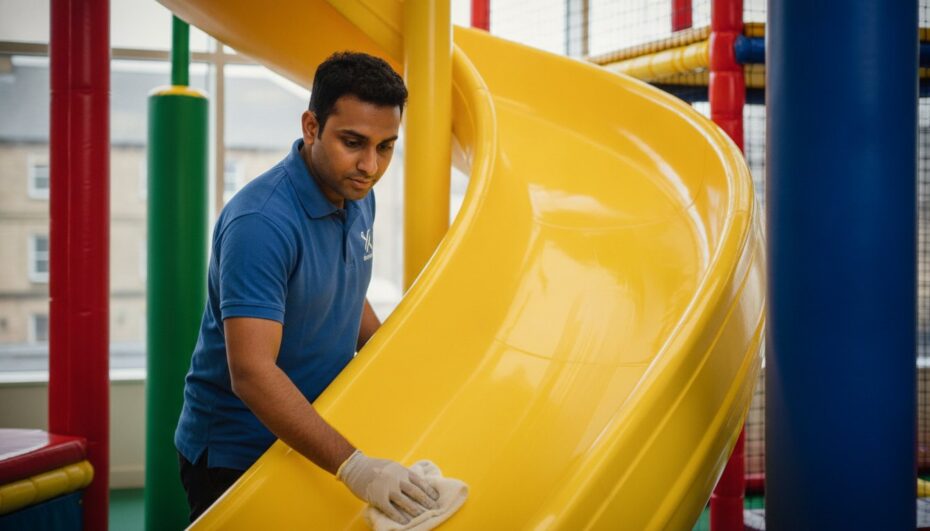
Could your commercial play area pass a surprise health and safety inspection right this second? It’s a question that keeps many business owners awake at night, especially when you’re trying to figure out how to maintain commercial soft play equipment amidst constant high footfall. You’ve invested a lot of heart and capital into your facility, so seeing your ball pits or play mats wear down prematurely is both frustrating and expensive. We understand that your priority is keeping children safe while ensuring your business remains profitable and reputable.
That’s why we’ve put together this expert guide to help you protect your investment for years to come. By following our professional maintenance strategy, you’ll master everything from managing daily hygiene schedules to meeting strict UK safety standards. We’ll show you how to spot structural issues before they become hazards and how to keep your West Yorkshire-crafted equipment looking brand new. This roadmap provides a clear, actionable schedule to help you maximise your equipment’s lifespan and ensure every child enjoys a safe, premium play experience.
Key Takeaways
- Implement a proactive maintenance system to stop the deterioration curve and protect your facility’s long-term ROI.
- Establish daily sanitisation protocols for high-touch areas like entry ramps and handles using safe, non-toxic cleaners.
- Learn how to maintain commercial soft play equipment to ensure full compliance with BS EN 1176 safety standards.
- Tackle the logistical challenge of ball pit hygiene with efficient cleaning methods designed for thousands of individual balls.
- Discover why handmade UK equipment from West Yorkshire offers superior durability and easier access to genuine replacement parts.
The Business Case for Rigorous Soft Play Maintenance
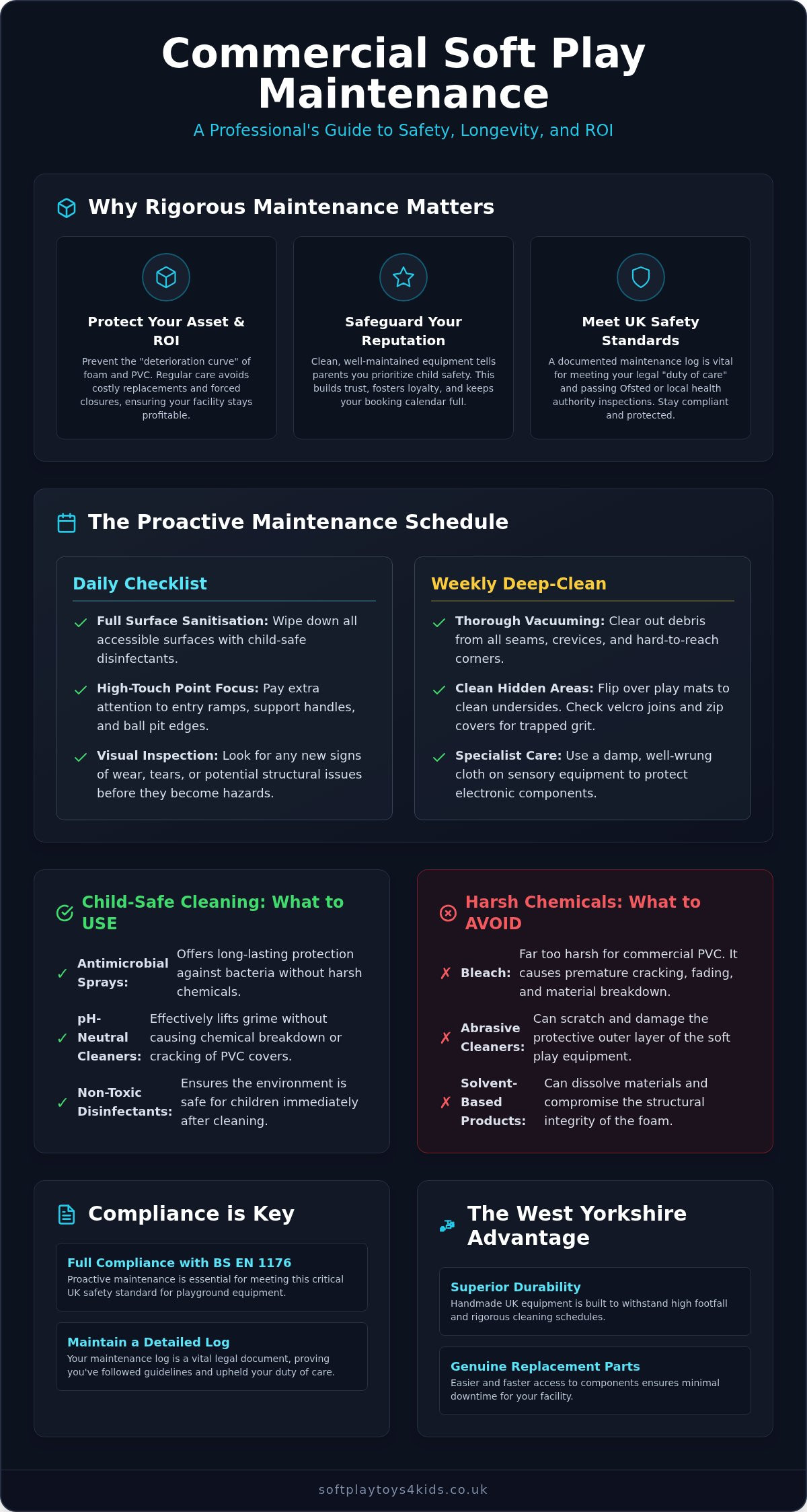
What does it actually mean to maintain your gear? It’s far more than a quick wipe down at the end of a busy Saturday. Professional commercial soft play maintenance is a proactive, disciplined system of hygiene and structural checks. When you master how to maintain commercial soft play equipment, you aren’t just cleaning; you’re protecting the very foundation of your business. It’s about ensuring every ball pit and play mat stays as vibrant and safe as the day it left our West Yorkshire workshop.
Asset protection is the smartest move any play centre owner can make. High-density foam is the resilient heart of your equipment, but it isn’t invincible. Without a regular care routine, foam can hit a “deterioration curve” where the internal structure breaks down under the weight of thousands of tiny feet. Once that support goes, the safety of the unit is compromised. Regular checks catch these shifts early, keeping your equipment firm, bouncy, and compliant with the high standards parents expect.
Your reputation is your most effective marketing tool. Families notice when equipment looks tired, smells musty, or feels neglected. In an industry built on trust, clean and well-maintained gear speaks volumes about your commitment to child welfare. It tells parents that you value their children’s safety as much as they do. This emotional connection is what builds loyalty and keeps the booking calendar full.
Protecting Your Investment and ROI
Think about the numbers for a moment. The cost of daily sanitisation and weekly inspections is a tiny fraction of the price of replacing prematurely worn equipment. By conditioning your PVC covers properly, you preserve their “like-new” appearance and prevent the material from becoming brittle or cracked. This level of care helps you avoid the “closure trap.” Nothing hurts your bottom line like turning away customers because a safety hazard forced an unscheduled shutdown. Preventative care ensures your facility stays open and profitable.
Meeting UK Safety and Hygiene Standards
In the United Kingdom, schools, nurseries, and play centres have a strict legal “duty of care.” Local health authorities and Ofsted inspectors look for documented proof of your cleaning and safety regimes. Following our expert-led strategy on how to maintain commercial soft play equipment ensures you stay on the right side of these regulations. Keeping a detailed “Maintenance Log” acts as a vital legal defense document. It proves you’ve followed manufacturer guidelines to uphold your warranty and have taken every reasonable step to guarantee a safe environment for every child.
Daily and Weekly Cleaning Protocols for High-Traffic Areas
High footfall is the pulse of any successful nursery or play centre, but it also means your gear works overtime. Mastering how to maintain commercial soft play equipment starts with a rock-solid daily routine. Every single morning or after closing, your team must perform a full surface sanitisation. Use non-toxic, child-safe disinfectants to keep the environment sparkling and safe for the next wave of little explorers.
Focus your energy on high-touch points where germs love to linger. This includes entry ramps, support handles, and those popular ball pit edges. Once a week, break out the vacuum. It’s the only way to clear out the debris that hides in seams and crevices. Always ensure the play area is well-ventilated during these cleaning sessions to keep the air fresh and healthy for your staff and guests alike.
Choosing Child-Safe Cleaning Agents
Avoid bleach at all costs. It’s far too harsh for commercial PVC and will lead to premature cracking and fading. Instead, opt for antimicrobial sprays that offer long-lasting protection against bacteria without the chemical sting. pH-neutral cleaners are balanced solutions that effectively lift grime without causing the chemical breakdown or cracking of protective PVC layers and internal foam.
Weekly Deep-Clean Checklist
Deep cleaning is the secret to longevity when learning how to maintain commercial soft play equipment effectively. A thorough deep-clean isn’t complete until you’ve checked the spots nobody sees. Flip over your play mats to clean the undersides where dust and moisture often collect. Pay close attention to ‘hidden’ dirt trapped in velcro joins and zip covers; these are magnets for grit that can degrade materials over time. When it comes to sensory equipment, use a damp, well-wrung cloth rather than a direct spray to avoid damaging sensitive electronic components.
If you’re finding your current setup hard to scrub or keep up with, upgrading to durable soft play gear designed for high-frequency cleaning can save your team hours of effort and keep your facility looking brand new.
Structural Inspections: Ensuring Safety Compliance
While sanitisation keeps your facility fresh, structural integrity is what truly keeps your doors open. In the United Kingdom, the benchmark you must live by is BS EN 1176. This isn’t just a technical suggestion; it’s the gold standard for safe indoor play. When you’re learning how to maintain commercial soft play equipment, you must understand these regulations inside and out. They dictate everything from entrapment hazards to the specific spacing required between play units to prevent accidents.
Every month, your team should perform “Stress Tests” on your high-traffic zones. You’re looking for foam bottoming-out, which happens when the internal structure loses its ability to rebound under weight. If a child can feel the hard floor through a mat or step, that unit has failed its safety check. Check every seam for splits or loose threads. A tiny tear today becomes a major hazard tomorrow if left unchecked. Don’t forget to inspect your anchorage points. Wall-mounted units and heavy frames must remain rock-solid to prevent any shifting or tipping during peak play times.
Even with your diligent internal checks, an annual professional audit is essential. We recommend hiring an RPII-qualified inspector to conduct a thorough review of your entire setup. These specialists see the tiny details your staff might miss during a busy shift. It provides an extra layer of protection for your business and total peace of mind for the parents who trust you with their children’s happiness.
Identifying Wear and Tear in Foam and PVC
“Foam fatigue” is a real threat to your equipment’s longevity. It’s that subtle softening that happens before the PVC actually cracks. Are your shapes still holding those crisp, handmade lines we’re so proud of in our West Yorkshire workshop? If they look saggy or misshapen, it’s time to assess. While a patch kit can fix a small surface nick, it won’t solve a structural foam failure. Exposed internal foam poses a significant hygiene risk as it absorbs bacteria and moisture while failing to provide the necessary impact protection for active children.
Maintaining Safety Flooring and Crash Mats
Your safety surfacing is your last line of defense. You must ensure your indoor playground equipment hasn’t shifted away from its designated safety mats over time. Check the critical fall heights regularly to ensure they meet the requirements for your specific frame height. If a crash mat feels “dead” or fails to bounce back when pressed, the internal foam has likely collapsed. High-use areas require mats with superior rebound quality to handle constant impact. By mastering how to maintain commercial soft play equipment at this structural level, you ensure your gear continues to perform at its peak for years.
Specialist Care for Ball Pits and Sensory Zones
Ball pits are the undisputed champions of any play centre. They bring endless joy to children, but they also present the most significant logistical hurdle when you’re figuring out how to maintain commercial soft play equipment effectively. Cleaning thousands of individual balls isn’t just a chore; it’s a strategic operation. Many high-traffic venues now invest in specialised ball-washing machines that can process up to 10,000 balls per hour. If you’re running a smaller facility, manual soaking in mesh bags with child-safe disinfectant is a budget-friendly alternative that still gets the job done right.
Sensory “Dark Rooms” require a different level of finesse. Dust is the silent killer of expensive fibre optic equipment and light projectors. You’ll need a strict dust management plan to keep these high-value assets functioning. Beyond the routine, every venue needs a clear emergency protocol for “biological incidents.” If a sickness event occurs, the area must be cordoned off immediately. For ball pits, this means a total evacuation of the balls for sanitisation and a deep scrub of the pit base before anyone is allowed back in.
This focus on technical precision and specialized care is a principle shared across many industries. If you are interested in how professionals maintain high-performance gear and technical components in other fields, check out Socom Tactical Airsoft for their expert guides on equipment maintenance.
Ball Pit Hygiene and Maintenance
How often should you empty a commercial ball pit for a full base clean? For busy UK centres, we recommend a complete empty every four to six weeks. This is your chance to clear out the “lost property” and debris that inevitably settles at the bottom. During this process, inspect every ball. Cracked or crushed balls are the number one cause of minor scratches and should be discarded instantly. To avoid downtime, many savvy owners use the “Rotation Method.” By keeping a spare set of balls in storage, you can swap out the dirty set for a fresh one in minutes, keeping the fun going while the cleaning happens behind the scenes.
Maintaining Sensory and Soft Play Blocks
Sensory toys often feature textured fabrics and “fiddle” elements that require careful handling. When you sanitise soft play blocks, the goal is to clean the surface without saturating the internal foam. A damp cloth with a pH-neutral cleaner is usually all you need. If you’re looking for a high-tech edge, UV-C light sanitisation is an emerging trend. It provides a chemical-free way to kill bacteria on complex surfaces that are hard to reach with a wipe. By mastering how to maintain commercial soft play equipment at this specialist level, you protect both your patrons and your bottom line. If your sensory zone is looking a bit tired, you can browse our latest sensory toy collection to find durable, easy-clean replacements handmade right here in West Yorkshire.
The SoftplayToys4kids Advantage: Built for Longevity
Why settle for flimsy imports when you can have the strength of British craftsmanship in your play centre? When you understand how to maintain commercial soft play equipment, you quickly realise that the quality of the initial build is half the battle. Our handmade products from our West Yorkshire factory are designed specifically to withstand the rigours of high-traffic commercial use. By choosing gear that’s built to last, you significantly reduce the daily stress of repairs and deep cleaning.
One of the biggest headaches in maintenance is dealing with ‘dirt traps’. These are the awkward corners, loose seams, and poorly finished edges that collect grime and bacteria. Our professional design service eliminates these flaws at the source. We create streamlined, high-performance layouts that make your sanitisation routine faster and more effective. It’s about working smarter, not harder, to keep your facility in peak condition.
UK Manufacturing Quality
Every piece of equipment we produce in our Bradford facility uses heavy-duty, reinforced PVC. This material isn’t just durable; it’s designed to stay supple and resist cracking even under constant pressure from active children. If you ever face a mishap, you have the unique advantage of direct support. You can talk to the very craftsmen who built your equipment for specific care advice. Because we manufacture everything locally, we offer a fast turnaround on replacement covers and safety padding. You won’t be waiting weeks for an international shipment while your equipment sits out of use. We help you minimise downtime and keep your business running smoothly.
Custom Solutions for Your Business
Is your current play area starting to look tired? You don’t always need a full overhaul to revitalise your space. We specialise in upgrading aging equipment with our latest sensory modules or active-play blocks. This modular approach allows you to refresh your offering while maintaining the high standards your customers expect. Our expert installation teams ensure that every new piece is fitted perfectly, providing the stable foundation necessary for easy long-term maintenance. Don’t let your investment fade away. Contact us today for a custom quote on commercial play solutions that are built to thrive in the busiest UK environments. We’re proud to be your partner in creating safe, joyful, and profitable play spaces.
Secure Your Facility’s Future and Safety
Mastering how to maintain commercial soft play equipment is the most effective way to protect your business investment while ensuring every child stays safe. By implementing rigorous daily cleaning and monthly structural checks, you transform maintenance from a chore into a strategic asset. You aren’t just meeting BS EN 1176 standards; you’re building a reputation for excellence that parents and inspectors trust. Remember that the easiest equipment to maintain is the gear built with durability in mind from the very start.
We take immense pride in our handmade craftsmanship in West Yorkshire. Our products are trusted by UK schools and nurseries because they’re built to survive the high-energy demands of commercial play. Why settle for less when you can have premium quality that’s designed for longevity? If you’re ready to upgrade or install a new area that’s built for easier upkeep and maximum ROI, we’re here to help. Request a custom quote for durable UK-made commercial equipment and let’s create a vibrant, safe space that thrives for years. Your journey toward a world-class play facility starts with the right partner.
Frequently Asked Questions
How often should commercial soft play equipment be cleaned?
You should perform surface sanitisation daily and a deep clean weekly to maintain high standards. High-traffic touchpoints like entry ramps and handles require attention after every busy session to keep germs at bay. This consistent routine prevents the buildup of grime and keeps the environment fresh for every child. Establishing a clear schedule is the first step in learning how to maintain commercial soft play equipment effectively while protecting your long-term investment.
What are the UK safety standards for indoor soft play maintenance?
The primary UK safety standard is BS EN 1176, which governs the structural integrity and layout of indoor play equipment. You must also adhere to BS EN 1177 for impact-attenuating surfacing like safety mats. These regulations ensure that your facility provides a safe environment and meets the legal duty of care required for commercial venues. Regular inspections are mandatory to remain compliant and avoid failing official health and safety audits or insurance reviews.
Can I use household disinfectants on soft play PVC?
You must avoid standard household bleach or abrasive chemicals as they cause commercial PVC to become brittle and crack. Instead, use pH-neutral, non-toxic disinfectants specifically designed for vinyl surfaces. These gentle but effective cleaners lift grime without damaging the protective coating or the internal foam. Using the correct agents ensures your equipment stays vibrant and safe for children’s sensitive skin while extending the lifespan of your handmade West Yorkshire gear.
How do I professionally clean a large commercial ball pit?
Professional cleaning involves using a specialised ball-washing machine for high-volume pits or manual soaking in mesh bags for smaller areas. You should also empty the pit entirely every four to six weeks to scrub the base and remove hidden debris. This process is essential for hygiene and allows you to inspect for cracked balls that could cause minor injuries. It’s a key part of how to maintain commercial soft play equipment in busy UK centres.
What should I look for during a daily safety inspection?
Your daily inspection should focus on identifying immediate hazards like split seams, exposed foam, or loose anchorage points. Check that all play mats are correctly aligned and haven’t shifted away from equipment bases during play. Look for any debris or lost property that could cause trips or choking hazards. Catching these minor issues before you open your doors prevents accidents and ensures your facility remains a safe, welcoming space for every family.
How do I know when soft play foam needs replacing?
You’ll know foam needs replacing when it bottoms out, meaning it no longer provides a firm cushion against the floor. If a unit looks saggy or fails to bounce back quickly after being pressed, the internal structure has likely collapsed. This fatigue compromises safety and comfort for the children. Replacing these aging modules with our durable gear ensures your play area returns to the premium standards your customers expect and deserve.
Are there specific rules for maintaining sensory room equipment?
Maintaining sensory equipment requires a focus on dust management and gentle cleaning to protect sensitive electronic components. Use a damp, well-wrung cloth rather than direct sprays on fibre optics or projectors to avoid moisture damage. Textured sensory toys and fabrics should be sanitised with child-safe antimicrobial sprays that don’t saturate the internal foam. These specialised care steps keep your high-value sensory assets functioning perfectly for therapeutic and developmental play sessions every single day.
Do I need a professional certificate for my maintenance log?
While you don’t need a certificate for your daily internal logs, you should have an annual inspection conducted by an RPII-qualified professional. Your daily and weekly logs serve as a vital legal defense document, proving you’ve upheld your duty of care. Combining these diligent internal records with a yearly professional audit provides the highest level of safety assurance. It also ensures you remain fully compliant with UK insurance and regulatory requirements for indoor play.
Leave a Reply