
Padded wall panels sized for SEN classrooms

Wall padding is intended to reduce impact, not change a child’s behaviour. Padded wall panels for SEN classrooms can help reduce the risk of injury from bumps, falls or unsafe behaviour. They are used to support autistic pupils and people who may self-injure or display behaviours that challenge, including in sensory rooms, safe spaces and other settings where a softer wall surface may help.
Choosing padding requires care: the right coverage depends on how the room is used, where impact risks arise and how panels fit around doors, windows and other features. This guide explains when wall padding may suit your setting, how to plan panel sizes and finishes, and when adding floor padding may be useful in more active spaces. You’ll find practical considerations for creating a room that feels safer and works for the children who use it.
Key Takeaways
- Match wall padding to the room’s purpose and the areas where impact is most likely, rather than assuming every wall needs the same coverage.
- Plan panel sizes and layout around the room’s measurements, including openings and awkward corners, for a more practical fit.
- Choose a finish that suits the room’s cleaning needs and expected level of use.
- Consider how wall coverage, floor mats and sensory resources can work together to support the space’s intended use.
Is wall padding suitable for autistic children or challenging behaviour?
Wall padding may suit sensory rooms, safe spaces and bedrooms where bumps, falls or self-injury are concerns. The best layout depends on the room, the pupils and the areas most exposed to impact.
Padding for Autistic Children
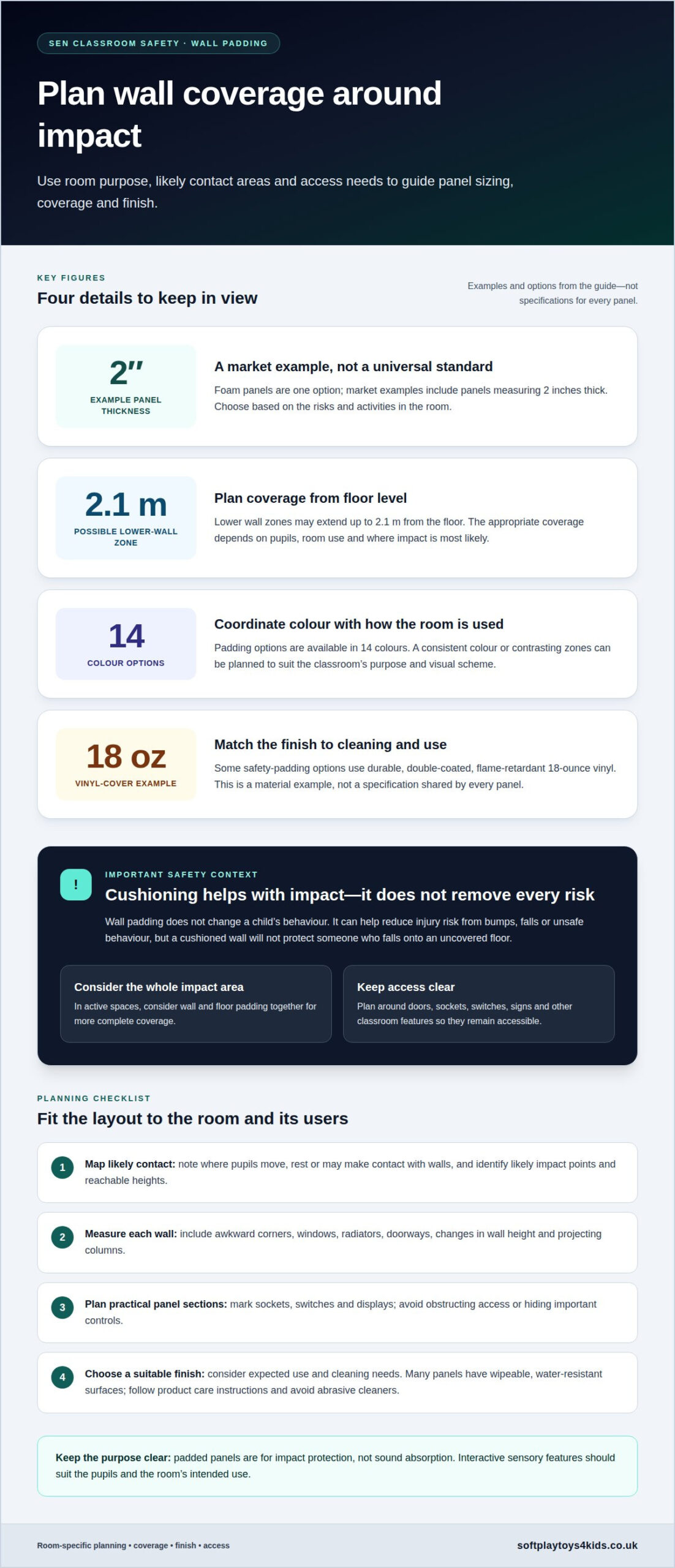
Schools use padded walls to support autistic children and people who may self-injure or display behaviours that challenge. Foam panels are one option; market examples include panels measuring 2 inches thick. Unlike a bare wall, padding provides a cushioned surface, while floor mats cover impact areas below. The choice depends on the risks and activities in each environment.
Reducing Injury Risks in Sensory Rooms
Wall padding can help reduce injury risk from bumps, falls or unsafe behaviour in sensory rooms. It is also used in soft play rooms, de-escalation rooms and bedrooms. For active users, consider the full impact area when planning padding. Combining wall and floor padding can provide more complete coverage in a soft play space.
Choosing Padding for Rooms and Users
Start by mapping where pupils move, rest or may make contact with the walls. Room padding can be designed around exact measurements, including awkward corners, windows, radiators and doorways. Lower wall zones may extend up to 2.1 m from floor level, which can reduce the risk of pupils pulling panels away. UK schools can source padded panels from specialist safety-padding suppliers; fitting is a separate consideration when planning the work.
Interactive Padding and Sensory Features
Interactive padding can combine impact protection with sensory activities, but its features should suit the pupils and the room’s purpose. Multi-sensory resources can support creative play, tactile exploration and fine motor skills. For example, a school might pair a padded wall area with sensory toys for hands-on activities. Padded panels differ from acoustic panels: their purpose here is impact protection, not sound absorption.
Custom sizing, colours and layouts
Panel sizes and colours affect how padding fits the room and its everyday use. Plan the layout around the areas that need protection, then choose a finish that works with the classroom.
Custom Panel Sizing
Start with a measured drawing of each wall and the coverage you want. Mark fixed features such as sockets, switches and classroom displays so panel edges do not obstruct access or hide important controls. Then divide the wall into practical sections, taking account of where pupils move, sit or take part in activities.
Use the same plan to note unusual shapes and changes in wall height. For example, a narrow return beside a doorway may need its own panel section rather than a standard-sized piece. Where the layout allows, keep joins away from busy activity areas, and make the final arrangement easy for staff to understand and maintain.
Colour and Layout Choices
Colour can help distinguish activity zones, create a calmer visual scheme or coordinate padding with existing classroom features. Padding options are available in 14 colours, giving schools a range of choices for planning a cohesive room. Decide whether one consistent colour suits the space, or whether contrasting areas would make different zones easier to recognise.
Sketch the proposed layout before choosing colours. For instance, a school could use one colour around a quiet area and another beside an active zone, while keeping the overall scheme balanced. Consider the lighting, wall finishes and nearby furnishings. A sample viewed in the room may look different from the same colour on a screen.
Include projecting columns in the layout rather than treating them as ordinary flat wall sections. Column padding can address these surfaces as part of the room’s protection plan. A clear drawing helps bring panel positions, colour choices and column coverage together before the final arrangement is set.
Impact resistance and surface durability
Padded wall panels provide a cushioned layer where pupils may strike walls during movement or distress. When planning placement, account for impact, dirt build-up and access, including cleaning routines, doorways and classroom controls.
Impact Resistance
Assess likely contact before choosing padding. A wall beside an active movement area may need different coverage from one behind a quiet reading space. Identify likely impact points, the height pupils can reach and any nearby furniture that creates additional hard edges.
Panel thickness and construction affect how a wall feels on impact, but padding does not remove every risk. Cushioning a wall, for example, will not protect a pupil who falls onto an uncovered floor. Consider the whole activity area and keep routes to doors and essential classroom features clear.
Surface Durability
The outer finish matters in schools, where hands, toys and repeated cleaning meet daily. Some safety padding options use a durable, double-coated, flame-retardant 18-ounce vinyl cover. This describes a material option, not a guarantee that every panel has the same specification. Match the surface to the room’s use and cleaning needs.
Many padded panels have a wipeable, water-resistant surface. Warm soapy water or a suitable non-abrasive cleaner can be used for cleaning. Avoid abrasive products that could damage the finish, and follow the product’s care instructions. Regular cleaning helps maintain hygiene and can help wall and floor padding last longer.
Check the surface during routine room checks. Look for tears, peeling edges, loose joins or dirt caught around seams, especially in busy areas. Damaged covering can make cleaning harder and expose the material beneath. Also make sure panels do not cover sockets, switches, signs or door hardware. Keeping these features accessible helps staff and pupils use the classroom.
Panel dimensions, weight and wall coverage
Panel dimensions determine how much wall each piece covers and how well the layout fits the room. Measure the space and plan coverage around its use, safety needs and access requirements.
Panel Dimensions and Weight
Record each wall’s width and height, then mark doors, windows and fixed features on a simple plan. This helps estimate panel quantities and identify where different sizes may be needed. A tailored layout can account for awkward corners without leaving gaps or obstructing access.
Weight matters when handling and fitting larger panels. Consider how panel size and construction affect weight, then plan how to move them safely through school corridors and doorways. Accurate measurements also help align panel edges and joins with the wall without covering switches or signs.
Wall Coverage and Padding Thickness
Choose coverage by mapping where pupils move and where impact is most likely. A quiet corner may need a different layout from an active area. The thickness should suit the expected contact and intended use; thicker padding is not automatically the best choice for every wall.
For lower wall zones, panels can extend up to 2.1 m from floor level to reduce the risk of pupils pulling them off. Keep routes, controls and doorways accessible. This balances protection with the practical needs of pupils and staff.
UK school wall materials must meet at least Class 1 surface spread of flame under BS 476 Part 7, or Class C-s2,d0 under EN 13501-1. Include the relevant fire classification when specifying materials, and consider accessibility when placing panels near switches, signs or door hardware.
There is no single price for padded wall panels for SEN classrooms. The total depends on the measured area, panel dimensions, thickness, finish and layout complexity. A plan with wall measurements and fixed features helps define the coverage and specification needed.
Installation depends on the panel system and wall surface, so fitting should follow its instructions. For upkeep, clean regularly with warm soapy water or a suitable non-abrasive cleaner, then inspect joins and surfaces for damage. Explore safety padding options when planning coverage for your space.
SoftplayToys4kids
SoftplayToys4kids can help you consider how sensory resources fit into a child-focused space. As a UK-based manufacturer and supplier of children’s soft play equipment, the business offers sensory toys that can complement activities in a sensory room or classroom. These resources support the broader play environment, alongside your decisions about wall coverage, room use and safety priorities.
Consider how pupils will use the space: a planned sensory activity may call for different resources from an open play area. Keeping the room’s purpose in mind helps you choose items that fit the overall design.
For support with sensory toys for your setting, contact SoftplayToys4kids.
Plan the next step for your classroom
A room plan can give staff and families a practical starting point for discussion. Note the activities the space needs to support, who will use it and any changes you hope to make. Sharing this information helps keep decisions about padded wall panels for SEN classrooms connected to everyday routines.
SoftplayToys4kids offers Soft Play Ball Pits, Soft Play Mats and Sensory Toys that can complement child-focused play and sensory environments. These products serve different purposes, so consider how each could fit your setting rather than treating them as substitutes for wall protection.
Ready to discuss your room’s needs and wall-padding plans? Contact SoftplayToys4kids about wall padding. A clear idea of the space and its intended use is a good place to begin. With thoughtful planning, you can shape an environment that supports the children who use it every day.
Frequently Asked Questions
Why is wall padding used in sensory rooms?
Wall padding is used in sensory rooms to soften contact with hard wall surfaces when pupils bump, fall or engage in unsafe behaviour. It can help make a room more suitable for movement, calming or supported activities. For example, a school planning a quiet retreat can identify where pupils sit or move, then align the padding with those contact areas.
Can the padding be customised for specific spaces and needs?
Yes. A tailored layout can suit the room’s measurements and users’ needs instead of forcing a standard arrangement. Share a plan showing wall lengths, openings, fixtures and areas used for different activities. For example, a classroom with a window recess and a doorway near an active zone needs panel placement that preserves access while protecting the relevant wall surfaces.
Can wall and floor padding be made to fit my room?
Yes, wall padding and floor mats can be planned around the dimensions and layout of your room. Treat them as connected parts of the same activity area: note where activity begins and ends, which floor sections are exposed, and how wall coverage meets the floor. A room sketch showing corners, door swings and transitions can help avoid a piecemeal arrangement.
How long does installation take per classroom?
Installation time for padded panels depends on the wall area, panel layout, wall surface and fixing method. A simple, uninterrupted wall takes less preparation than a room with corners, openings or multiple transitions. Installation generally involves preparing surfaces, positioning and securing panels, then checking joins and access points before use. Allow for any curing time specified for the fixing system.
What are padded wall panels for SEN classrooms used for?
Padded wall panels for SEN classrooms create cushioned wall surfaces where pupils may bump, fall or display behaviour that challenges. Schools may use them in sensory rooms, safe spaces, soft play rooms or bedrooms. Their purpose is to reduce injury risk from wall impacts, not to guarantee that accidents or challenging behaviour will stop.
What types of padded wall panels are available for schools in the UK?
Schools can choose foam panels, including options that are 2 inches thick, with bespoke sizing and layouts for room features. Finishes include durable, wipeable vinyl, and options are available in 14 colours.
Leave a Reply