
Soft Play for Children with Disabilities: The Ultimate Guide to Inclusive Play (2026)
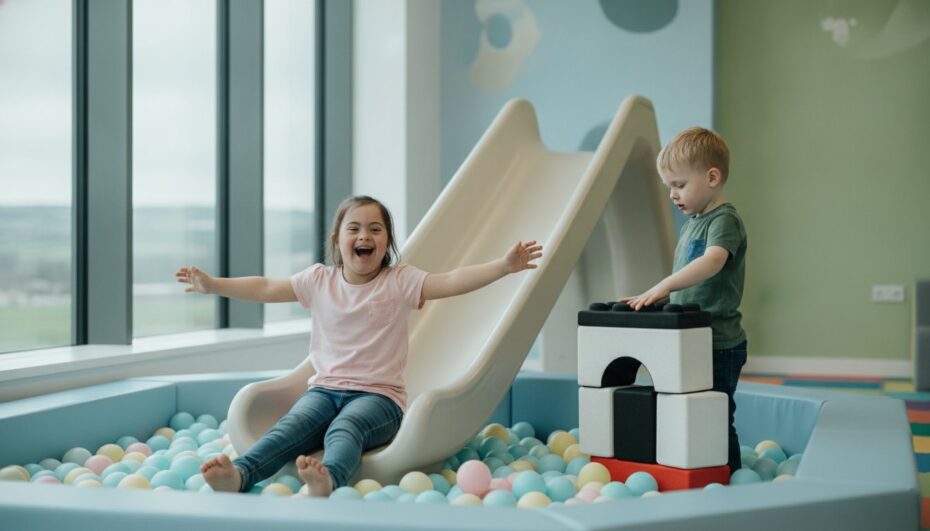
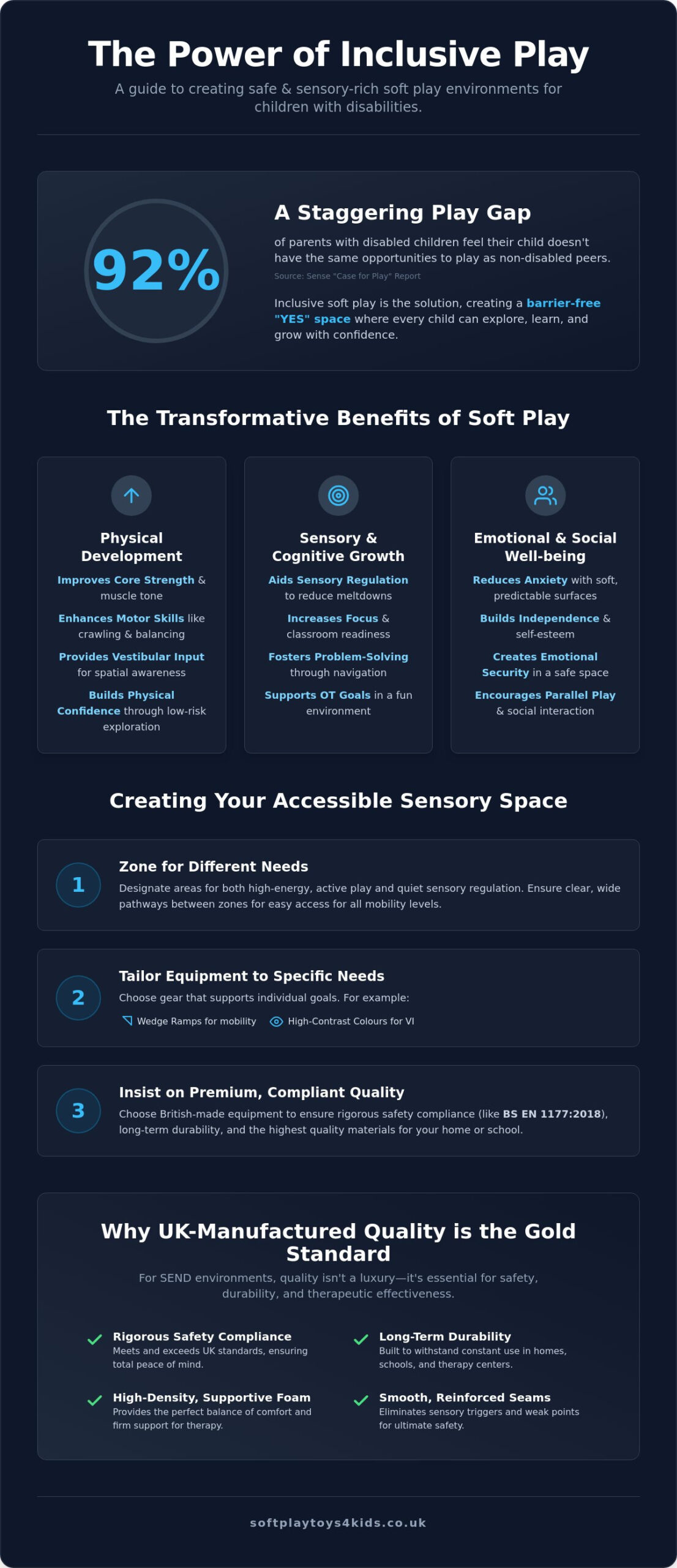
Did you know that 92% of parents of children with multiple needs feel their child doesn’t have the same opportunities to play as their non-disabled peers? It’s a staggering figure from the Sense “Case for Play” report, and it highlights a gap that simply shouldn’t exist in 2026. You want your child to explore, climb, and laugh without the constant fear of non-compliant equipment or the “specialist” price tags that often follow disability-friendly gear. We understand that finding the right soft play for children with disabilities often feels like a minefield of safety regulations and developmental jargon.
We agree that every child deserves a space that supports their unique sensory and physical needs while offering total peace of mind for the grown-ups. This guide is your ultimate roadmap to designing an inclusive environment that fosters motor skills and sensory regulation. We’ll walk you through choosing the best equipment, understanding current UK safety standards like BS EN 1177:2018, and seeing why British-made quality is the gold standard for your home or school. Get ready to discover how the right foam shapes and ball pits can transform daily playtime into a therapeutic, joy-filled adventure.
Key Takeaways
- Learn how to create a barrier-free environment that promotes low-risk exploration and physical confidence for children of all mobility levels.
- Discover the physiological benefits of soft play for children with disabilities, from improving core strength to providing essential vestibular input.
- Master the art of zoning your space to accommodate both high-energy play and quiet sensory regulation while maintaining clear, accessible pathways.
- Find out how to select the right gear for specific needs, such as using high-contrast colours to support children with visual impairments.
- See why choosing premium, British-made equipment ensures the long-term durability and rigorous safety compliance your school or home requires.
The Power of Inclusive Play: Why Soft Play is Essential for Children with Disabilities
Inclusive play isn’t just a buzzword; it’s a fundamental right. When we talk about soft play for children with disabilities, we’re describing a barrier-free environment where physical and cognitive exploration happens without the “no” or “be careful” that usually limits a child’s world. For a child with limited mobility, the concept of “Low-Risk Exploration” is life-changing. It means they can test their boundaries, roll off a mat, or tumble into a ball pit without the risk of injury. This freedom builds a level of confidence that hard-plastic playgrounds simply can’t offer.
This dedicated safe space provides a unique psychological sanctuary. In a world that often feels rigid or inaccessible, a soft play area is a “yes” space. Key benefits include:
- Unrestricted Movement: High-density foam absorbs every impact, allowing for brave new movements.
- Physical Mastery: Children practice crawling, reaching, and balancing at their own pace.
- Cognitive Growth: Problem-solving through navigating soft obstacles and sensory textures.
Many parents and educators now use our equipment as a primary tool for Occupational Therapy (OT) at home or in the classroom. It’s much easier to practice core stability and grasping when the environment is welcoming and colourful. You don’t have to hover; you can let them lead, knowing our UK-manufactured pads and mats are there to catch them.
Breaking Down Barriers with Adaptive Equipment
What is soft play if not the ultimate equaliser? For children with physical impairments, adaptive equipment like wedge ramps and firm support mats level the playing field. If a child struggles with balance, “soft” is the safest starting point to build muscle memory. Our West Yorkshire factory ensures every seam is smooth and every foam density is perfect, providing the stability needed for those first brave steps or crawls. It’s about creating an environment where the equipment adapts to the child, not the other way around.
The Social and Emotional Benefits of Accessible Play
Creating an inclusive environment with soft play for children with disabilities isn’t just about physical safety; it’s about emotional security. For children on the autism spectrum, predictable and soft environments help reduce anxiety by removing sharp noises and hard impacts. This setting is perfect for encouraging parallel play, where children play near each other before they’re ready for direct interaction. By grounding our designs in Sensory Integration Theory, we create spaces that help children regulate their emotions and build independence in a controlled, loving setting. We’re proud to be a trusted partner in turning these developmental goals into pure, uninhibited joy.
Sensory Regulation and Motor Skill Development: How the Right Gear Supports Growth
Movement is the primary language of childhood. For children with Special Educational Needs and Disabilities (SEND), specific equipment serves as a vital bridge to physical and cognitive milestones. High-quality soft play for children with disabilities provides the resistance and support needed to build muscle tone and core strength in a way that feels like pure fun. It’s not just about keeping a child occupied; it’s about using physiological progress to unlock new potential. When a child crawls over a firm foam block or pushes against a padded wall, they’re engaging in deep-tissue work that builds the foundation for more complex movements.
The link between physical activity and cognitive focus is undeniable. A child who has had their sensory needs met through vigorous play is often more regulated and ready to engage in classroom learning or social interaction. By providing the right vestibular and proprioceptive input, you’re helping them find their “just right” state of arousal. This regulation is the key to reducing meltdowns and increasing a child’s ability to concentrate on the world around them.
Proprioceptive Input: Deep Pressure and Ball Pits
Proprioception is the body’s ability to sense its own position in space. For many sensory seekers, the world can feel overwhelming or “floaty” without constant feedback. This is why the “hug” of a ball pit is so incredibly calming. As a child sinks into a pool of colourful balls, they receive deep, consistent pressure across their entire body. This tactile stimulation helps ground them and improves body awareness. Our ball pools are manufactured with high-density foam walls, ensuring they provide enough resistance for a child to pull themselves up, further building their upper body strength.
Vestibular Development: Balance and Coordination
The vestibular system is responsible for balance and spatial orientation. Our sensory toys, including balance boards and textured stepping stones, are specifically designed to build equilibrium in a safe environment. Foam wedges are another essential tool, allowing children to practice rolling and tumbling without the fear of a hard landing. These activities support gross motor skills by encouraging children to climb, crawl, and navigate obstacles. If you’re looking to create a professional-grade therapy space at home, you can explore our full range of British-made play mats and pads to ensure every tumble is a safe one.
Interactive soft elements also introduce the concept of “Cause and Effect” play. When a child knocks over a tower of soft blocks or sees how their weight shifts a balance beam, they’re learning how their actions impact their environment. This cognitive growth is just as important as the physical gains. By choosing gear that challenges both the mind and the body, you’re providing a truly holistic developmental tool.
Choosing the Right Equipment: Tailoring Your Play Area to Specific Needs
Choosing the right gear shouldn’t be a guessing game. When you’re investing in soft play for children with disabilities, you need to know exactly how each piece of equipment serves your child’s unique profile. Is the goal to build muscle tone or to provide a calming sensory retreat? By categorising your needs into sensory versus physical, you can build a space that truly works. For children with visual impairments, high-contrast colours like black and yellow or blue and white are essential for depth perception and navigation. Meanwhile, for those who need extra physical stability, firm, high-density foam is the only choice. It provides the necessary resistance for weight-bearing exercises without the sinking feeling of cheaper, low-quality alternatives.
Hygiene is another non-negotiable factor. If you’re managing a multi-user setting like a school or therapy centre, you need wipe-clean, medical-grade PVC. Our covers are designed to withstand heavy use and frequent sanitisation without cracking or fading. This durability is a hallmark of our British craftsmanship. We take pride in our West Yorkshire factory, where every seam is double-stitched for maximum longevity. Why settle for flimsy imports when you can have professional-grade equipment built to last?
Best Soft Play for Physical Disabilities and Limited Mobility
For children with limited mobility, the floor is where the magic happens. High-quality baby play mats and thick crash mats provide a safe foundation for stretching and rolling. We recommend low-profile ball pits for these environments. These feature lower side walls to make entry and exit much easier for children who might struggle with higher barriers. Don’t forget the “invisible” safety features. Custom column padding and safety pads protect against accidental impacts with hard surfaces, allowing for total freedom of movement in any room.
Best Soft Play for Autism and Sensory Processing Disorder (SPD)
Sensory regulation often requires a balance between stimulation and sanctuary. Creating chill-out zones with soft play blocks and dens gives children a place to retreat when the world gets too loud. While vibrant primary colours are great for engagement, many children with SPD benefit from muted colour palettes to prevent overstimulation. We also use various textured surfaces on our mats and shapes to encourage tactile exploration. This helps children process different sensations in a controlled, predictable way. It’s about giving them the tools to navigate their environment with confidence and joy.
To complement these sanctuary spaces, educators often incorporate quiet activities from resources like MakingFriends.com, which offers creative ideas and supplies for youth organizations seeking to build inclusive programs.
Creating an Accessible Sensory Space: A Step-by-Step Guide for Parents and Schools
Are you ready to turn a spare room or a classroom corner into a world of possibility? Designing an inclusive environment doesn’t have to be overwhelming. When you’re setting up soft play for children with disabilities, the goal is to balance freedom of movement with structured safety. Whether you’re a parent creating a home sanctuary or a teacher upgrading an SEN provision, following a logical setup ensures every penny of your budget works toward your child’s development. Let’s break down the essential steps to get your space up and running.
Step 1: Measure and Assess. Accessibility starts with the floor plan. If your child uses a wheelchair, you must account for a minimum 1.5m turning circle to ensure they don’t feel trapped. Clear pathways between equipment are non-negotiable. Step 2: Zone the Area. Sensory regulation is about balance. Separate your high-energy zones, like ball pits, from quiet sensory corners where a child can decompress. Step 3: Choose Your Foundation. The base determines the safety of the entire room. Selecting the right thickness of soft play mats is your most important decision. High-density foam provides the impact absorption needed for falls while remaining firm enough for stable crawling.
Step 4: Layer in Sensory Elements. This is where the magic happens. Add tactile blocks, mirrors for self-awareness, and a ball pit for deep-pressure input. Step 5: Safety and Maintenance. We’re proud to be a hands-on UK manufacturer, and we recommend a daily check of all equipment. Look for seam integrity and ensure the medical-grade PVC is wiped down with child-safe sanitiser to keep the environment hygienic. Ready to start building? You can view our full range of safety-tested equipment to find the perfect fit for your project.
Designing for Small Spaces at Home
Don’t let a small floor plan stop you. Corner ball pits are incredible space-savers that provide the same therapeutic benefits as larger models. We also manufacture modular soft play sets and folding mats that can be tucked away when not in use. If you’re setting up on laminate or wood floors, ensure your mats have a non-slip base to prevent the equipment from sliding during active play. It’s about being clever with your layout to maximise every square inch of joy.
Commercial and Educational Installations
Integrating indoor playground equipment in SEN schools requires a different level of durability. Commercial-grade safety is our bread and butter at our West Yorkshire factory. We work closely with educators to customise designs that fit specific classroom or therapy room layouts. Professional installation ensures that column padding and safety pads are perfectly fitted, removing any gaps where little fingers or toes could get stuck. When you choose British-made quality, you’re investing in equipment that stands up to the rigours of a busy school day.
Premium UK-Manufactured Soft Play: Why Quality Matters for SEND Environments
When you’re creating a space for a child with specific needs, “good enough” simply isn’t good enough. Choosing soft play for children with disabilities means looking beyond the bright colours and focusing on the engineering underneath. Cheap imports often cut corners with low-density foam that loses its shape or PVC covers that tear under pressure. We do things differently. By manufacturing every piece in our West Yorkshire factory, we maintain total control over the craftsmanship and materials. This hands-on approach ensures that every mat, ball pit, and safety pad is built to withstand the high-energy demands of a SEND environment.
Safety isn’t just a checkbox for us; it’s our foundation. We use only medical-grade, non-toxic PVC that’s as kind to skin as it is tough on wear and tear. Our high-density foam provides the consistent resistance needed for therapeutic exercises, ensuring it won’t bottom out during a fall. Every product we create features fire-retardant materials, meeting the strict requirements necessary for both home and commercial installations. Buying direct from a UK manufacturer doesn’t just mean better quality; it means having a partner who understands the specific safety landscape of the British market.
The SoftplayToys4kids Commitment to Safety
Our rigorous testing process ensures that every item in our range is ready for real-world play. When you’re browsing our soft play equipment, you’re looking at products designed with reinforced stitching and heavy-duty zips. These details matter in SEND environments where gear is used more intensely for sensory feedback and physical support. All our products meet or exceed current UK safety regulations for children’s play, including the critical BS EN 1176 and BS EN 1177:2018 standards for impact-absorbing surfaces.
Custom Solutions for Your Unique Needs
Every child is different, and their play space should be too. We don’t believe in a one-size-fits-all approach. Whether you need a bespoke ball pool size to fit a specific alcove or custom-shaped safety padding for a therapy room, our design team is here to help. We work directly with parents and therapists to create environments that perfectly match a child’s developmental goals. Customising soft play for children with disabilities is our specialty, and we take pride in being a trusted partner for families across the UK.
We’re so confident in our British-made quality that we invite you to compare our standards and value with any international competitor. You’ll find that our commitment to local manufacturing provides a level of durability and support that others simply can’t match. Don’t settle for flimsy alternatives when you can have professional-grade equipment built to last. Let’s work together to create a space where your child can thrive, explore, and play with total confidence.
Build Your Inclusive Play Sanctuary Today
Creating a world without barriers starts with the right environment. We’ve explored how a thoughtful setup supports sensory regulation, builds physical confidence, and provides the “yes” space every child deserves. From selecting high-contrast colours for visual support to zoning your room for both high-energy play and quiet retreat, you now have the tools to design a truly inclusive area. Choosing soft play for children with disabilities shouldn’t be about compromise; it’s about providing the absolute best for your child’s development and joy.
As proud suppliers to UK schools, nurseries, and parents, we handle every stitch and seam in our West Yorkshire factory. We use heavy-duty, medical-grade materials to ensure your equipment stands up to years of enthusiastic use. Why settle for generic imports when you can have handmade quality designed specifically for your child’s needs? It’s time to turn your vision into a reality. Explore our range of UK-made inclusive soft play equipment and discover why we’re the trusted partner for families across the country. Let’s create a space where your child can flourish and play without limits!
Frequently Asked Questions
Is soft play safe for children with physical disabilities?
Yes, soft play is exceptionally safe because it uses high-density foam and impact-absorbing surfaces to prevent injury. Unlike traditional hard playgrounds, it provides a “low-risk” environment where children can roll, crawl, and fall without the danger of hard landings. We use medical-grade PVC and reinforced stitching to ensure every mat and pad stays secure. It’s the ideal starting point for building physical confidence in a protected setting.
How does soft play help a child with autism?
Soft play provides a predictable and calming environment that helps children with autism manage sensory overload. It offers specific tactile and proprioceptive feedback that can reduce anxiety and help with regulation. By using “chill-out” zones and soft dens, you give the child a safe place to retreat when they feel overwhelmed. It’s a vital tool for both emotional regulation and practicing social play at their own pace.
What is the best soft play equipment for sensory seekers?
Ball pits and textured soft play mats are the top choices for sensory seekers. These items provide the deep pressure and tactile stimulation that many children crave for regulation. Our soft play for children with disabilities includes high-density foam shapes that offer the resistance needed for vigorous vestibular input. Mirrors and high-contrast colours also add a vital visual sensory layer to the play experience.
Can soft play equipment be used for physical therapy at home?
Absolutely, many parents use our equipment to support Occupational Therapy (OT) goals in a comfortable home setting. Foam wedges and balance boards are perfect for practicing core stability and gross motor skills. Because our gear is professional-grade, it provides the same support as clinical equipment. It’s a brilliant way to turn therapeutic “work” into a joyful and motivating play session for your child.
How do I clean soft play equipment used in high-need environments?
You should use a mild, child-safe sanitiser and a soft cloth to wipe down the medical-grade PVC covers daily. Our materials are specifically chosen for their durability and “wipe-clean” properties, meaning they won’t crack or fade with frequent cleaning. For high-need environments, regular sanitisation is essential to maintain a hygienic space. Always avoid abrasive chemicals that could damage the protective coating or irritate sensitive skin.
What safety certifications should I look for when buying soft play in the UK?
You must look for compliance with BS EN 1176 for playground equipment and BS EN 1177:2018 for impact-absorbing surfaces. These are the gold standards for safety in the UK. All our products are manufactured to meet or exceed these regulations at our West Yorkshire factory. We also ensure all materials are fire-retardant and non-toxic for total peace of mind for parents and educators.
Are ball pits suitable for children with limited mobility?
Yes, but we recommend choosing low-profile ball pits with lower side walls for easier access. These designs allow children who struggle with higher barriers to enter and exit with much more independence. The deep-pressure “hug” of the balls provides incredible sensory feedback and can help significantly with body awareness. It’s an inclusive favourite that supports a wide range of physical abilities and mobility levels.
Can you customize soft play equipment for specific room sizes?
We certainly can, as we are a direct UK manufacturer with full control over the design process. Whether you need a bespoke ball pool to fit a tight corner or custom-shaped safety pads for an awkward classroom layout, our team can help. This flexibility is a huge advantage of soft play for children with disabilities, ensuring your space is perfectly tailored to your child’s specific developmental needs.
Leave a Reply