
Hidden Costs of Cheap Play Equipment: What to Check Before You Buy

What if the cheapest play equipment ends up costing more once it’s in use? The hidden costs of cheap play equipment can include delivery, installation, repairs, replacement and time when the equipment isn’t available for play. A low quote is tempting, especially when you’re creating a fun space for children, but it doesn’t always show what ownership will involve.
A product listing alone can make it difficult to judge durability and suitability. Equipment needs to fit its users, setting and frequency of play, whether it’s for a family home, nursery, school or indoor play business. A poor fit may mean extra upkeep or disruption just when children are ready to play.
This guide will help you compare options by more than the upfront price. We’ll look at delivery, installation, maintenance, repairs and potential downtime, with practical steps for assessing each. SoftplayToys4kids is a UK-based manufacturer and supplier of play mats, ball pits and other soft play equipment for household and commercial customers.
Key Takeaways
- Look beyond the headline price: the hidden costs of cheap play equipment may include extra work or expenses that only become clear after purchase.
- Compare products like for like, including what each proposal covers and any stated exclusions.
- Review care instructions and cleaning routines alongside the intended users and frequency of play.
- Lower-priced equipment can be a sensible choice when it suits your setting and planned use.
- Use a checklist to define your needs, review the scope, compare upkeep and assess the full proposal.
Hidden Costs of Cheap Play Equipment: Look Beyond the Purchase Price
A low price can be a sensible starting point, but it doesn’t tell you everything about owning play equipment. The hidden costs of cheap play equipment are expenses or practical demands that become clear after purchase. They can include frequent cleaning, repairs, replacement or disruption while equipment is unavailable. These are possibilities to assess, not inevitable results of choosing an inexpensive option.
The purchase price is what you pay to buy the equipment. Total ownership cost also includes the money, time and disruption involved in caring for it and keeping it usable. That distinction helps you compare options fairly. A straightforward purchase that fits its setting may involve few additional demands. A low quote that excludes something essential to your plans may leave you with extra work or decisions later.
Consider the wider effect of equipment being out of use. At home, it may disrupt play; in an educational setting, staff may need to adapt activities; in a play business, it can interrupt the planned customer experience. Start by matching the equipment to its users and setting, then consider routine care and potential replacement. Playground safety and injury statistics offer wider context on why thoughtful design and suitable materials matter in play environments.
Which buyers should assess whole-life value?
Whole-life value matters to anyone who wants play equipment to work well beyond the day it arrives. The practical questions vary by buyer:
- Families: Consider how often children are likely to use the equipment, where it will sit at home and who will supervise play. A compact option for occasional use has different demands from equipment used as part of everyday family life.
- Schools and nurseries: Think about repeated use, cleaning routines and the staff time needed for care. The equipment should fit both the setting and the way the team manages its day.
- Play businesses: Consider availability and customer experience. If equipment needs attention, could its absence affect activities visitors expect or interrupt trading?
Why low-price comparisons can miss important context
Two items may look similar in a listing but suit different users or levels of use. Size, intended age group, available space and frequency of play all affect whether an option is a good fit. A simple product can be excellent value when it meets the need. The issue isn’t low cost itself, but comparing a complete, suitable option with one that leaves out something your project depends on.
Look beyond the product image and headline figure. Check what’s included, how the equipment will be used and what its care instructions mean for your household or team. For help thinking through suitability, size and purchase priorities, explore this guide to buying soft play equipment. A clear comparison can help you choose confidently, without assuming the cheapest option is poor quality or that a higher price guarantees a better fit.
Where Cheap Play Equipment Can Create Extra Work or Expense
A lower-priced item doesn’t automatically need more attention or wear out sooner. The useful question is what it takes to keep the equipment clean, ready for play and suitable for its setting. Potential demands range from staff time spent following care instructions to arranging a repair or managing a temporary gap in play. These are considerations to plan for, not guaranteed consequences of buying cheaper equipment.
Maintenance needs depend on the product, how often it’s used and how it’s cared for. That’s why the hidden costs of cheap play equipment can differ for a family, a busy nursery and an indoor play business. Read the care information alongside the purchase details, and decide who will handle routine tasks.
Repairs, replacement and interruptions to play
Damage can happen to play equipment at any price point. Before buying, consider how you’d respond if an item needed attention or couldn’t be used temporarily. Would other play options be available? Could you pause use while arranging a repair or replacement? Thinking this through helps you assess the practical impact without assuming a cheaper product will fail.
For commercial settings, availability is part of the customer experience. If a piece of equipment is unavailable, planned sessions may need to change, or visitors may miss part of the play experience they expected. Schools and nurseries may also need to adapt activities. These interruptions don’t always have a simple monetary value, but they can require staff time and extra coordination.
As a general reference, the US CPSC Public Playground Safety Handbook discusses public playground safety, including inspection and maintenance considerations. It’s a US resource, not UK-specific guidance. Use information relevant to your equipment and setting when planning care.
Cleaning, delivery and installation considerations
Cleaning can be another everyday demand. Requirements depend on the product, its setting and the manufacturer’s care instructions. A routine that works for occasional home use may not suit equipment used repeatedly by different children. For a school, nursery or play business, consider whether the recommended care fits existing staff routines and decide who will be responsible.
Next, review the arrangements for getting the equipment ready to use. A quote may cover the product but list delivery, assembly or installation separately. Don’t assume these are included: write down what the proposal covers and note any stated exclusions. For a larger project, design and installation planning are separate considerations that can affect what needs organising before play begins.
SoftplayToys4kids manufactures and supplies soft play equipment for households and commercial settings, and provides design and installation support for larger projects. Explore soft play equipment from a UK-based manufacturer as you plan for your space and intended use.
Is Cheap Play Equipment Really a False Economy? Compare Like for Like
Not necessarily. Inexpensive play equipment can be a sound choice when its size, features and care requirements suit the people who’ll use it. A higher upfront price doesn’t automatically mean better value, either. The aim isn’t to choose the cheapest or most expensive option, but to compare the details that matter for your setting.
Start with the product information and written quote, not assumptions about price, appearance or where an item was made. For example, a simple play mat for occasional home use may fit better than a larger setup with features your family won’t use. For a nursery or play business, the same item may need to suit more frequent use and established cleaning routines.
Compare product details, suitability and care information
Check the dimensions against the space available, and make sure the stated age or user group matches your intended use. Then compare proposals item by item. If delivery, installation or another element isn’t explicitly included, don’t count it as part of the quoted scope. Read the care instructions and product information to understand what routine upkeep may involve.
Use a simple table to keep the comparison fair:
| What to compare | Option A | Option B |
|---|---|---|
| Initial scope | Record products, dimensions and what the quote says is included. | Record the same details, including any stated exclusions. |
| Suitability | Note intended users, available space and expected frequency of play. | Check those same needs against the product information. |
| Care needs | Summarise the manufacturer’s cleaning and care instructions. | Compare the instructions and consider who will do the work. |
| Repairs | Record any information provided about repair arrangements or parts. | Note what’s stated, and what remains unspecified. |
| Expected use | Describe how often and for how long you plan to use it. | Apply the same use pattern, without assuming a product lifespan. |
Balance upfront spend against practical ownership needs
Your plans are a better guide than a generic lifespan estimate. Think about the period you expect to use the equipment, how regularly it’ll be in play and whether you could manage a repair or temporary replacement if needed. A household buying for occasional play may prioritise different features from a commercial setting where regular availability shapes the customer experience.
For commercial buyers comparing public-play equipment, ASTM International’s ASTM F1487 Playground Equipment Safety Standard is a US reference. It isn’t a substitute for checking the guidance and requirements applicable to a UK product and setting. Don’t infer safety, durability or performance from price alone. Review the relevant product details and evidence for the intended use, then weigh the stated scope and ongoing demands against your budget. That’s a more useful test of value than choosing by headline price.
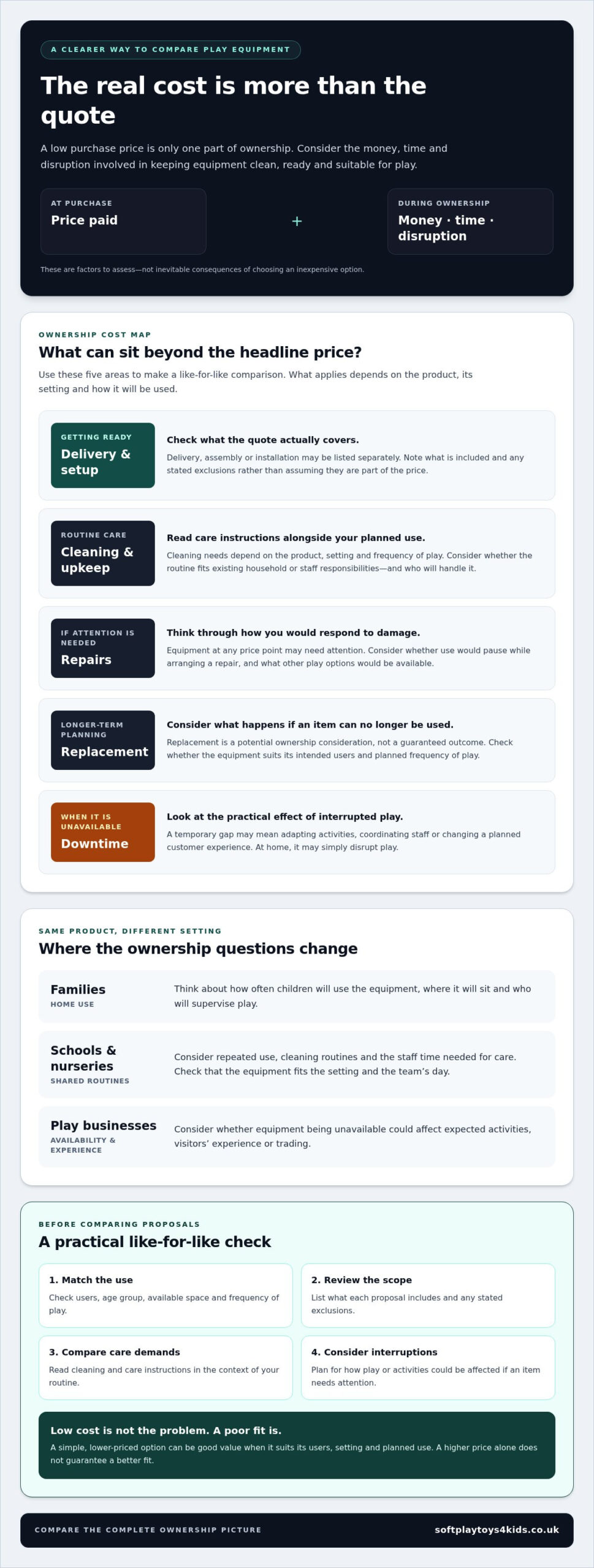
A Practical Checklist for Comparing Play Equipment Quotes
A quote is easier to assess when every option is measured against the same needs. Work through the steps in order: define how the equipment will be used, check what the proposal covers, compare care requirements, then review the full picture. This makes the hidden costs of cheap play equipment easier to identify without treating assumptions as confirmed expenses.
Questions to answer before comparing quotes
Start with the setting and the people who’ll use the equipment. Are you planning for occasional family play, daily use in a nursery or school, or a commercial play space? Note the expected frequency and available space. Include practical details such as room access and any setup requirements the proposal should address.
Next, review the product information and quote. Record what’s explicitly stated about cleaning, repair and replacement arrangements. If something isn’t described, mark it as “not stated” rather than assuming it’s included or presenting an estimated cost as fact. Commercial buyers planning a larger indoor space can use this indoor playground equipment buyer’s guide for additional project context.
Build a realistic ownership checklist
Use the same checklist for every proposal. Keep confirmed details separate from your estimates, such as staff time or expected frequency of use. This makes it easier to compare like with like and identify points that need more consideration.
- Use: Intended users, setting, expected frequency and available space.
- Purchase scope: Each product included, with sizes or descriptions as stated.
- Delivery and setup: Delivery, assembly or installation details, plus any stated exclusions.
- Routine care: Manufacturer’s cleaning and care instructions, and who will manage them.
- Repairs and replacement: Any arrangements described in the product information or proposal.
- Downtime: Your estimate of how an unavailable item could affect home routines, school activities or customer experience.
- Safety and compliance: Questions to verify against current official UK guidance for the equipment and setting.
For schools and nurseries, consider how care and frequent use fit existing routines. This guide to durable soft play for schools and nurseries can help inform that planning. Label assumptions clearly, then review the proposal as a whole rather than judging by its headline figure alone.
Use the checklist to compare your options for the space and planned use. Explore soft play equipment for your setting.
Choose Soft Play That Fits Your Budget, Setting and Plans
A confident choice comes from matching the equipment to its users, checking exactly what the proposal covers and considering the care it may need. Price still matters, but it’s most useful when weighed against the space, play patterns and practical requirements of your household or venue. The hidden costs of cheap play equipment aren’t inevitable. A well-chosen, straightforward option can be right for your plans.
Match the equipment to the way children will play
For home use, think about the available space, how play will be supervised and what will engage your children. A ball pit or play mat should fit the room and the way your family expects to use it, rather than simply looking appealing in a product listing. Consider where it will go and how it fits around everyday routines.
Schools, nurseries and playgroups have a different rhythm. Consider how often equipment will be used, how it fits into activities and how its care instructions can sit alongside existing routines. For an indoor play business, think about the experience you want children and families to enjoy, and how the equipment contributes to the wider setup.
Planning a larger indoor project? Design and installation support can help commercial buyers consider the arrangement and setup as part of the overall project. Set out the space, intended users and priorities so the planning can reflect how the venue is meant to operate.
Turn your comparison into a confident next step
SoftplayToys4kids is a UK-based manufacturer and supplier serving households, schools, nurseries, playgroups and indoor play businesses. Its handmade product range includes ball pits, play mats, sensory toys and larger soft play equipment. UK manufacture and handmade production provide context as you consider product details and suitability, but they aren’t a promise of lower ownership costs. Compare the stated information with your needs and choose based on fit, not assumptions about price or origin.
Before deciding, bring your priorities together: the children who’ll use the equipment, the space you have, how frequently it’ll be used, and the care or setup considerations that matter to you. For a commercial project, include your space and project requirements when seeking guidance. A clear brief makes it easier to discuss what could suit the setting and what needs to be planned.
Explore soft play equipment from SoftplayToys4kids for your home or commercial setting. View the range and find equipment that fits your plans.
Make Your Next Play Space a Confident Choice
Picture what successful play looks like in your setting. Is it a cosy corner for shared family fun, a flexible resource for everyday activities, or a welcoming feature of a larger indoor venue? Keeping that vision in mind can help you make choices that work for the children and the people who care for the equipment.
The hidden costs of cheap play equipment are easier to weigh when your priorities are clear. Separate essentials from optional extras, and let your intended use guide decisions about products and project needs. The right next step isn’t necessarily the biggest setup or the lowest quote. It’s finding an option that fits your plans and gives children a space to enjoy.
SoftplayToys4kids supplies soft play equipment for homes, schools, nurseries, playgroups and indoor play businesses. Explore the range and choose soft play equipment for your setting.
Frequently Asked Questions
What are the hidden costs of cheap play equipment?
They’re extra expenses or demands that emerge after purchase, such as arranging delivery separately, spending staff time on cleaning, or managing repairs and temporary loss of use. They don’t automatically come with a lower-priced item. For a clearer estimate, separate money you expect to spend from time or disruption you may need to manage, then distinguish confirmed product information from your own estimates.
Is cheap play equipment always lower quality?
No. Price alone can’t establish quality, suitability or how a product will perform in your setting. A simple item may be appropriate for occasional home play, while a more complex option could better fit a busy venue’s needs. Review the product’s stated purpose, construction details, care instructions and relevant supporting information. Don’t assume that a low price signals poor quality or that a higher price guarantees a better choice.
How can I compare play equipment quotes fairly?
Compare proposals against the same written brief. Check that each describes equipment for the same users, space and intended use, then review the exact items and services included. Check whether totals include VAT, where applicable, and whether delivery or setup charges are separate. Mark unclear points as unanswered instead of filling gaps with assumptions. This gives you a more reliable comparison than lining up headline prices alone.
Can cheap soft play equipment be suitable for a nursery or school?
Yes, if the particular equipment is appropriate for the setting and its intended users. A lower price doesn’t rule it out, but a nursery or school should consider planned frequency of use, supervision, cleaning routines and available product information. Check that the stated use fits your needs, and review relevant safety guidance for the product and setting before deciding. Suitability depends on the specific equipment, not price alone.
What should I check before buying second-hand soft play equipment?
Ask for the original product details and care instructions, then inspect the item carefully before use. Look for visible damage, loose or missing components, worn seams, compromised covers and areas that may be difficult to clean. Consider whether you can identify the product’s intended use and whether its condition suits your setting. Don’t assume that previous use or a seller’s description establishes current safety or suitability. Assess the item against your needs and relevant guidance.
Does a low equipment price include delivery and installation?
Not necessarily. A listed price or quote may cover the equipment only, with delivery, assembly or installation specified separately. Read the written proposal and check what its total includes, including stated exclusions and VAT where applicable. For a larger project, look for separate details on design and installation planning. If an item or service isn’t mentioned, treat it as unspecified rather than assuming it’s included.
How do I estimate the long-term cost of play equipment?
Start with the confirmed purchase and setup costs, then estimate ongoing care using the product’s instructions and your expected use. Include likely staff time, potential repair or replacement planning, and the impact of temporary unavailability. Use a time period that matches your plans rather than relying on a generic lifespan. Keep estimates distinct from quoted amounts, and update them if your intended use or operating routine changes.
What safety standards apply to soft play equipment in the UK?
Relevant standards depend on the equipment and its setting, so there isn’t one reference that applies to every soft play purchase. Potentially relevant standards include BS EN 1176-10 for fully enclosed play equipment, BS EN 71-1 for toys, and BS EN 1177 for impact-absorbing surfacing. BS 8409 covers management of indoor play areas. Check current official UK guidance to establish which references apply to your specific equipment and use.
Leave a Reply