
Calming Sensory Toys for Toddlers: Quiet Play Ideas for 2026

What if the best quiet play idea isn’t the one that makes every toddler sit still? Calming sensory toys for toddlers can offer gentle ways to explore touch, movement and colour, but each child responds differently. A soft, low-noise activity may feel inviting to one toddler and too much for another.
If busy or noisy play feels overwhelming, it’s understandable to want simple ideas you can try at home. The aim isn’t to guarantee a calmer mood. Instead, notice what your toddler enjoys and make room for their individual preferences.
In this guide, you’ll find quiet play ideas using familiar household materials, along with practical tips for choosing sensory toys to suit your child and surroundings. You’ll also learn about a handmade sensory toy from SoftplayToys4kids, made in Bradford, West Yorkshire. Try one idea at a time, keep the experience flexible, and let your toddler’s cues guide what happens next.
Key Takeaways
- Quiet play doesn’t need to make every toddler still. Notice which sensory experiences your child seems to enjoy or avoid.
- Explore calming sensory toys for toddlers and simple activities involving touch, movement, sight and sound.
- Use the activity comparison to weigh setup, noise and how much caregiver involvement feels practical.
- Keep play flexible: prepare a calm space, offer one idea, observe your toddler’s cues and adapt or finish.
- Consider Sensory Toys For Babies Toddlers in Rainbow Colours, handmade in Bradford, as one option for play, not a guaranteed way to change your toddler’s mood.
What makes sensory play calming for some toddlers?
Toddlers don’t all experience play in the same way. One may happily explore a new texture, while another prefers watching first or moving away. A child’s response can depend on the activity, their mood and what else is happening around them. There isn’t one sensory toy or activity that will feel calming to every toddler.
Sensory play is simply play that lets a child explore through their senses, using sights, sounds, textures, movement and awareness of their body. For a plain-language overview, see What is sensory play? It doesn’t need specialist equipment or a developmental goal. A toddler noticing the feel of a soft mat, looking at colours or changing position while seated is exploring sensory information through everyday play.
“Calming” describes an individual response, not a guaranteed result of a particular toy. A familiar, gentle activity may feel comfortable to one child and uninteresting or overwhelming to another. Quiet play isn’t enforced silence or a request to sit still. It’s an opportunity to explore at an unhurried pace in a less-busy space.
How sensory preferences shape quiet play
Tactile play involves touch, such as patting a soft surface or handling a familiar toy. Visual experiences include looking at colours or watching slow movement. Auditory play involves sounds, while movement-based play might include swaying, stretching or changing position. Body awareness can come from noticing how the body feels against a cushion or mat.
A toddler may seek one sensation and avoid another. They might reach for a soft toy but turn away from a sound, or enjoy moving while preferring a simple visual scene. Notice what they choose, repeat or leave aside. These are clues about what suits them in that moment, not labels or proof of a fixed preference.
Signs an activity may feel comfortable or overwhelming
Look for small, observable cues. A toddler who stays nearby, explores willingly or returns to an activity may be comfortable with it at that time. Turning away, withdrawing, becoming tense, losing interest or asking to stop can suggest the experience isn’t working for them just then. No single reaction tells the whole story.
If your child seems uncomfortable, pause rather than encouraging them to push through. Reduce one source of stimulation, such as background noise or extra materials, or give them more space. If they re-engage, follow their lead. If not, finish and try another time. One response doesn’t diagnose a need or predict how they’ll feel next time.
Use these observations to choose calming sensory toys for toddlers thoughtfully: start with what your child appears to welcome, keep the surroundings simple and stay ready to adapt. Their cues matter more than whether an activity looks quiet from the outside.
Calming sensory toys for toddlers: quiet activities to try
Start with one simple idea, a familiar space and time to see how your toddler responds. You don’t need a collection of equipment. Ordinary household materials and your attention are enough to get started. Keep instructions short, offer rather than insist, and let your child set the pace.
Tactile and visual activities with a quiet setup
Choose familiar textures and a clear surface, such as a play mat or table. Keep the area uncluttered, introduce one idea at a time and don’t ask your toddler to touch or look at anything they don’t want to.
- Soft-texture exploring: Offer a familiar soft toy or piece of fabric for your toddler to handle, pat or simply look at. Stay close and follow their lead. Start with one texture and put away anything they ignore.
- Quiet colour sorting: Place a few large, familiar toys in two colour groups and invite your toddler to move or match them. Demonstrate once, then let them explore. Use fewer items if the choice feels busy. Keep small objects and activity materials under close adult supervision.
- Picture-book pauses: Sit together with a familiar picture book. Pause on a page your toddler seems interested in, name one detail, then leave space for them to point, look or turn the page. There’s no need to read every word or finish the book.
Gentle movement and body-awareness play
Movement can be part of quiet play too. Make sure there’s clear floor space, stay close and keep the pace gentle. If your toddler signals discomfort, stop or adapt rather than encouraging them to continue.
- Gentle action song: Hum or sing a familiar tune softly and offer simple actions, such as reaching up or patting knees. Follow your toddler’s movements instead of adding more instructions. Lower the volume or sing without music if sound feels like too much.
- Stretch-and-reach pretend play: Invite your toddler to reach for an imaginary star or curl up like a sleepy cat. Join in slowly, keeping movement small and playful. Use a clear floor space and pause if they pull away or lose interest.
Sound and pretend play at an easy pace
Some toddlers enjoy quiet sounds or simple make-believe; others prefer no sound at all. Keep both optional, and let your child’s response guide how much you add.
- Soft sound listening: Make one gentle sound, such as a quiet hum, then pause. Notice whether your toddler listens, joins in or moves away. Skip the sound or make it softer if they seem uncomfortable.
- Gentle pretend play: Use a familiar toy for a calm routine, such as pretending to tuck a doll in or give a toy animal a rest. Keep the story simple and let your toddler choose what happens next.
A calm activity should be an invitation, not an expectation. Your toddler can join in, change it or walk away. Try one idea at a time, and remember that a quiet setup doesn’t have to mean a silent child.
If you’d like to add a toy to these home ideas, explore handmade sensory toys from Softplay Toys4Kids. The company makes them in Bradford, West Yorkshire. A toy is one option for play, not a promise of a particular response.
Which quiet sensory play idea might suit your toddler?
Use your toddler’s choices as clues, not a checklist to complete. The comparison below can help you choose a starting point based on the materials you have, the amount of sound involved and how much you’d like to join in. Noise levels are approximate: an activity can feel different depending on the room, the child and what else is happening around them.
| Activity type | Materials | Typical noise level | Caregiver involvement | Quieter adjustment |
|---|---|---|---|---|
| Soft-texture exploring | One or two familiar soft items | Very low | Stay nearby; follow your toddler’s lead | Offer one item and keep the area clear |
| Colour matching | A few large toys in different colours | Low | Show a simple match, then observe | Use fewer items and skip sorting prompts |
| Picture-book pause | A familiar picture book | Very low | Sit together; name a detail if welcome | Turn pages slowly and leave quiet pauses |
| Pretend play | A familiar toy or play figure | Low to variable | Join the story or let your toddler lead | Keep the story simple and use a soft voice |
| Gentle movement | Clear floor space | Variable | Stay close and move at your toddler’s pace | Try one slow stretch without music |
Match activities to observed interests
Notice what your toddler chooses, how long they stay with it and whether they seem comfortable. If they return to a book or reach for a familiar soft item, that may be a useful starting point today. Offer one activity at a time so it’s easier to see what catches their interest. Don’t assume they’ll enjoy something because of their age or a diagnosis. Children’s preferences vary.
You can adjust an activity rather than replace it. If colour matching feels busy, offer two items and let your toddler look without asking them to sort. If pretend play grows loud or energetic, slow the story down or pause. A response can change with mood, familiarity and setting, so treat each moment as new information rather than a fixed verdict.
Adapt the room, pace and adult involvement
Make the space manageable where you can: turn down background sound, clear away extra toys and choose a comfortable spot with room to move. Give your toddler time before adding another instruction. You might demonstrate once, watch quietly or join in. There’s no need to keep the activity going if they’ve moved on.
Keep an easy exit. Let your toddler put the materials aside, move away or choose something else without pressure. A quieter version of a favourite activity can be useful, but calming sensory toys for toddlers won’t suit every child or every moment. Follow your toddler’s cues and adapt the setup to what you observe.
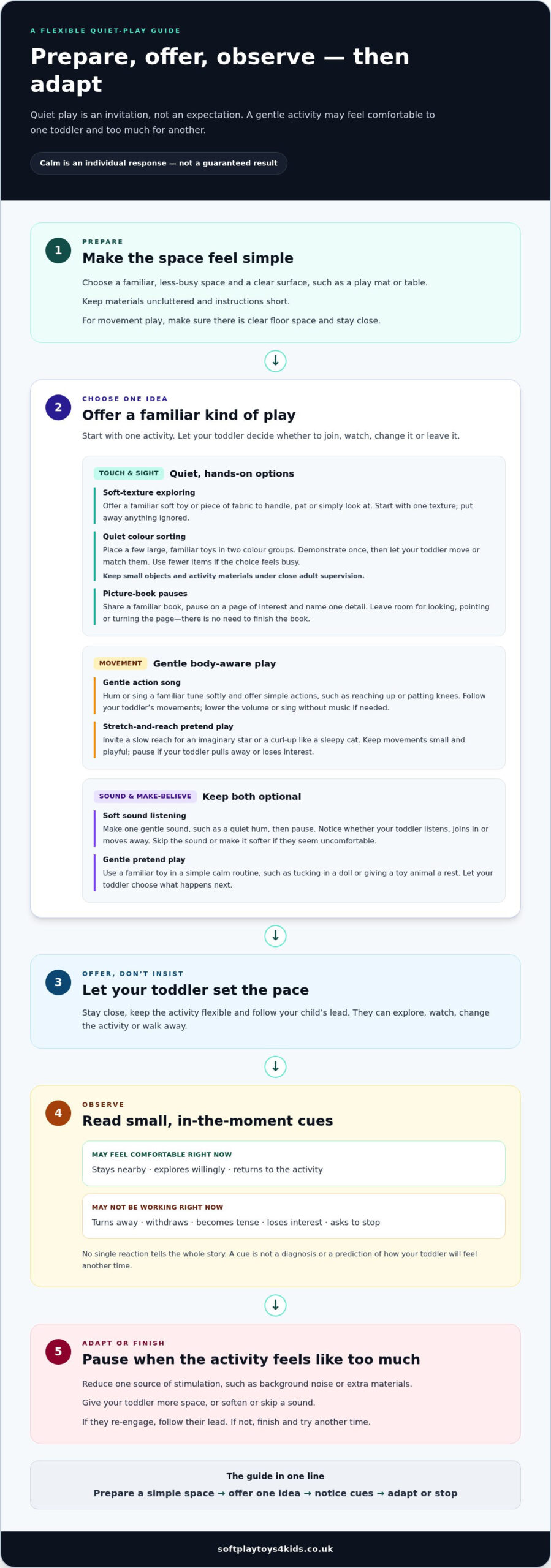
How to introduce calming sensory toys and quiet play
A predictable start can make a new play idea easier to approach, but there’s no need for a perfect script. Choose a moment when you can stay nearby without rushing, then use this flexible routine. Your toddler can take part, pause or finish whenever they choose.
A simple routine for a quieter play moment
- Prepare the space. Choose a familiar, comfortable spot and clear away distractions where practical. Set out materials for one activity, such as a familiar soft toy or picture book.
- Offer one idea. Place the activity within reach and invite your toddler to explore. Demonstrate briefly if helpful, but don’t turn the invitation into instructions they have to follow.
- Observe. Give your child time to look, touch or move towards the activity. Notice whether they engage, turn away, pause or communicate that they want to stop.
- Adapt if needed. If the activity seems too busy, remove an item, reduce background sound or step back from leading. If your toddler is comfortable, let them continue in their own way.
- Finish gently. Follow their cues rather than aiming for a set amount of play. Putting the materials away together can signal that the activity has ended.
Keep play brief and flexible, especially when an idea is new. The goal isn’t to make your toddler stay with a toy or produce a particular response. It’s to offer a manageable opportunity and respect their choice. For broader context on sensory toys and play, explore this guide to sensory toys and child development.
Make quiet play easy to repeat
A small selection of familiar materials makes it easier to offer an activity without crowding the play area. Keep a few suitable options accessible and rotate them if your toddler seems ready for something different. Predictable transitions can help too: you might say, “First we’ll look at the book, then you can choose what’s next.” Keep the choice genuine, and accept “no” or a change of direction.
Simple notes can help you remember what you’ve noticed. After play, jot down what your toddler chose, what they seemed to avoid and whether anything in the room affected the experience. Keep these observations informal. A preference on one afternoon isn’t a test result or a permanent rule. Mood, setting and familiarity can all change how an activity feels.
A clear, comfortable surface can help keep play materials in one place. For ideas on setting one up, see this baby play mat guide. If you’re ready to explore options for your play space, browse sensory toys and soft-play products from Softplay Toys4Kids. Its sensory toys and soft-play products are handmade in Bradford, West Yorkshire.
Choosing calming sensory toys for toddlers from Softplay Toys4Kids
Start with your toddler, not a promise about what a toy will do. Notice what they choose to handle, look at or return to, then consider whether that experience suits your space and the kind of play you have in mind. A toy can invite exploration, but it can’t guarantee that a child will feel calm or respond in a particular way.
What to consider when choosing a sensory toy
Before choosing calming sensory toys for toddlers, think about your child’s observed interests and where the toy will be used. A toddler who often reaches for soft items may welcome a tactile option, while a child drawn to colour may prefer looking first. These are clues, not rules. Preferences can shift with mood, surroundings and familiarity, so let your child show you how they want to engage.
Consider how you’ll supervise play and whether the toy suits the space. A simple, uncluttered area can make it easier to focus on one item. Keep the number of materials manageable, especially if several toys or colours at once seem busy for your toddler. Stay close enough to notice when your child wants a pause or a change. Choose for the play experience you can offer, rather than expecting a particular therapeutic or behavioural result.
Think about the toy alongside the activity. Is your toddler more interested in looking, touching or moving? Will the play space allow them to explore comfortably? These practical questions can help you select an option that fits your child and your routine without treating a toy as a fix.
Explore handmade sensory play options
Softplay Toys4Kids makes sensory and soft-play products by hand in Bradford, West Yorkshire. Its Sensory Toys For Babies Toddlers in Rainbow Colours is one option to add to quiet play. Offer it and see whether your toddler is interested. Product size and colour can be customised on order, so you can choose details to suit your preferences.
For more background before choosing, the complete sensory toys guide provides broader context on sensory play. Keep your choice grounded in what you’ve observed: offer one toy, give your toddler time to explore and let their response shape what you try next.
Ready to find an option for your play space? Explore sensory toys and soft-play products from Softplay Toys4Kids.
Make room for your toddler’s next discovery
Choose one small next step: notice which play moments your toddler returns to, then offer a simple option that fits the space and their interest. There’s no need to find a toy that works every time. A gentle invitation, the freedom to stop and your attentive presence can make room for curiosity without pressure.
As your child’s interests change, your play ideas can change too. Keep following their cues, and let shared moments matter more than a particular outcome. If you’re ready to find an option for your home or early-years setting, explore handmade sensory toys and soft-play products from Softplay Toys4Kids. Its sensory toys and soft-play products are handmade in Bradford, West Yorkshire, and product size and colour can be customised on order.
Explore the range from Softplay Toys4Kids and choose calming sensory toys for toddlers that suit your child’s interests and your play space.
Frequently Asked Questions
Can sensory toys help calm a toddler?
Some toddlers may find a sensory toy enjoyable or reassuring, but no toy can guarantee a calmer response. A child might choose a familiar object during a quiet moment, while another may prefer space or a different activity. Offer one option without pressure and notice what your toddler does. If they turn away or seem unsettled, put it aside rather than expecting them to keep playing.
What are the best calming sensory toys for toddlers?
The best choice is one that suits your toddler’s current interests and can be used comfortably in your setting. A child who likes looking may respond to colour, while one who enjoys handling familiar objects may prefer a tactile option. Keep age suitability and supervision in mind, especially around small parts. Softplay Toys4Kids’ Sensory Toys For Babies Toddlers in Rainbow Colours is one option, not a promised solution.
Are sensory toys suitable for every toddler?
A sensory toy may suit one toddler and not another. Some children are curious straight away; others may watch, ignore it or move away. Follow the product’s age guidance and supervise play, especially if materials include small parts. Let your toddler’s response guide whether to continue. Preferences can differ between children and change from one day to another.
How can I create a quiet sensory play area at home?
Choose a spot where your toddler can play with you nearby, away from a television or other avoidable noise. A clear section of floor or a small table can work; choose a surface that suits the activity. Keep the materials you need within reach, and put away anything that could be mouthed or scattered unsupervised. Make sure your child can leave the space easily if they want a break.
What quiet activities can I do with my toddler indoors?
Try a familiar book, a simple pretend-play routine or sorting a few clean, large household items by colour. For example, your toddler could place folded socks beside one another while you name their colours. Keep small items out of reach, supervise closely and avoid materials that aren’t suitable for your child. If the activity becomes noisy or your toddler loses interest, pause or switch to something simpler.
How long should a toddler play with a sensory toy?
There’s no set amount of time that suits every toddler. Let your child’s attention and cues guide the session rather than setting a target. They might explore briefly, return to the toy later or be ready to stop quickly. Keep play flexible, and end if your toddler turns away, becomes uncomfortable or asks to move on. A short, willing interaction is enough; continuing isn’t necessary.
Can sensory toys help an autistic toddler with sensory differences?
A sensory toy may offer an autistic toddler an experience they enjoy, but responses and preferences vary widely. One child may seek a particular colour or texture, while another may avoid it or prefer a different kind of play. Offer choices without pressure and observe the child’s own cues. A toy isn’t a treatment or a guaranteed way to change behaviour, so focus on comfort, interest and safe, supervised play.
Leave a Reply