
Cost of a Sensory Room UK 2026: A Practical Buying Guide

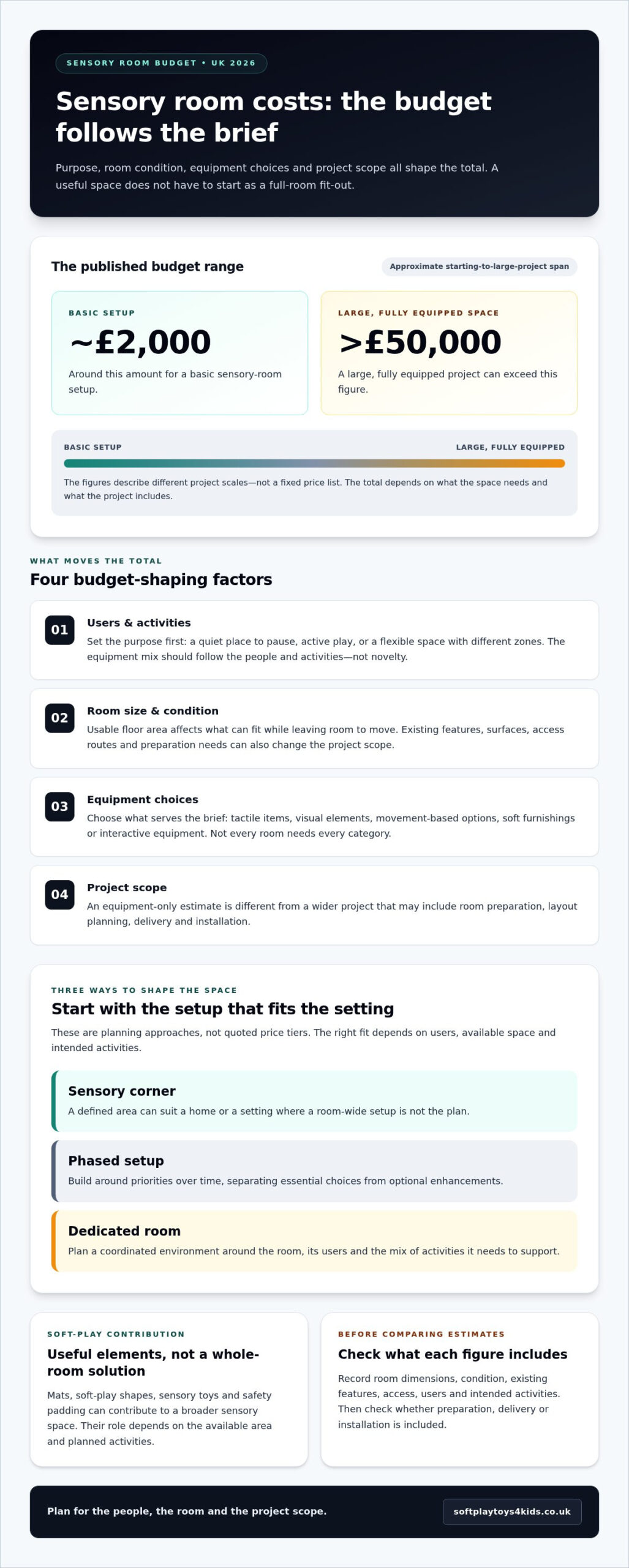
What if the most useful sensory room isn’t the one with the most equipment? The cost of a sensory room uk 2026 can range from around £2,000 for a basic setup to more than £50,000 for a large, fully equipped space. The right budget depends on who will use it, what the room needs to do and what the project includes. Packages, individual items and room preparation can all affect the total.
A practical space doesn’t have to start with a full-room fit-out. A sensory corner, a phased setup or a dedicated room may each suit different homes and organisations. Start by identifying the users’ needs, measuring the available space and deciding how durable the equipment needs to be. That gives you a clearer basis for choosing what to buy.
This guide explains the main factors that shape a budget, compares different setup approaches and outlines potential costs, from equipment to installation. It also shows how soft-play mats, shapes and sensory toys can contribute to a broader sensory space without making up a complete room on their own. By the end, you’ll have a focused shortlist and practical next steps for planning.
Key Takeaways
- The cost of a sensory room uk 2026 depends on its purpose, scale, chosen equipment and any room preparation, not a one-size-fits-all checklist.
- Separate essential choices from optional enhancements so you can prioritise features that suit the people using the space.
- Compare a sensory corner, a coordinated room and a comprehensive environment to find an approach that fits your setting and plans.
- Record room dimensions, existing features, access and preparation needs before shortlisting equipment and planning delivery.
- Soft-play mats, shapes, sensory toys and safety pads can contribute to a broader sensory space as part of a wider plan.
What does the cost of a sensory room in the UK depend on?
The budget depends on the room’s purpose and scope, the equipment selected and the practical requirements of the project. A sensory room is a space planned around the sensory needs of the people who use it and the activities they’ll do there. That might mean a quiet place to pause, an area for active play or a flexible space with different zones. The Sensory Room Wikipedia overview gives helpful background on different types of sensory rooms.
Be clear about what an estimate covers. An equipment-only estimate includes selected items. A wider project budget may also cover room preparation, delivery and installation. The room’s condition and any work needed before equipment can be set up may change the scope, even before you choose products.
In short, sensory room costs are shaped by the users, planned activities, room size and condition, equipment mix, and any preparation or installation required.
Which decisions shape a sensory room budget?
Start with the room. Measure its usable floor area and note any existing features, access routes and preparation needs. The dimensions affect how much equipment can fit while leaving space to move around; the room’s condition affects what needs to happen before setup. A clear, usable room may need little adjustment, while a space requiring changes adds another project consideration.
Next, choose between a few carefully selected elements and a coordinated environment with several features. Base priorities on the intended activities and the people who’ll use the space. A plan focused on quiet breaks will differ from one designed for a mix of calming and active play. More equipment doesn’t automatically make the space more useful.
Who is planning the sensory space?
At home, available floor space, household routines and the needs of the person using the area may guide the plan. A defined corner might work better than a room-wide setup. In a nursery, school or other organisation, the space may need to suit different users and fit around everyday routines.
When several people will share the space, a clear purpose helps keep decisions focused. Write down what the space should support, who will use it and when. This brief helps distinguish priorities from extras, instead of letting the shortlist grow into a collection of equipment without a clear role.
Before estimating the cost of a sensory room uk 2026, note the room’s dimensions and condition, existing features, delivery access and any preparation needs. Record the intended users and activities too. This project outline makes it easier to compare equipment choices and estimate the full scope.
Which sensory room components affect the overall project cost?
A sensory room project can include more than the equipment itself. Build a realistic budget by separating the room into cost categories, then decide which items serve the space’s purpose and which would simply be extra. Not every sensory room needs lighting effects, interactive technology, soft-play equipment and specialist controls at the same time.
An equipment-only purchase covers selected items; a designed and installed project may also include room preparation, layout planning, delivery and installation. This distinction matters when comparing estimates, as two figures may cover different scopes. The cost of a sensory room uk 2026 depends on what the project includes, not just the number of products on a list.
Room preparation, lighting, and sensory equipment
First, consider the room layout. Usable floor area, existing surfaces, delivery access and preparation needs can all affect the equipment plan and what happens before setup. Leave enough clear space for the planned activities rather than filling every corner. Lighting choices also depend on the intended atmosphere and the room’s existing setup.
Choose equipment for its role, not its novelty. Tactile items offer textures to explore; visual elements can add colour or changing light; movement-based choices can support active play. One user may enjoy a small selection of tactile and visual options, while another space may need a broader mix. Interactive projection or equipment with integrated controls requires different planning from a selection of individual items, so include it only if it fits the brief.
Soft furnishings, padding, and installation
Seating, mats, soft-play shapes and safety padding can help make an area comfortable and define how it’s used. A mat might mark out a floor-play zone, for example, while soft shapes can create a distinct play area. Treat these as options, not a mandatory checklist. The right selection depends on available space, users and planned activities.
Dimensions and colour can matter too. A soft-play element made to suit a particular space may fit the plan more neatly than choosing around standard room measurements. SoftplayToys4kids makes handmade soft-play equipment in Bradford, West Yorkshire, and offers size and colour customisation on order. Its mats, shapes and sensory toys can form part of a wider sensory space, rather than a complete room solution.
Delivery and installation are further project considerations, especially for a larger, coordinated layout. Planning how equipment will reach the room and where each element will go helps clarify the scope. For larger soft-play projects, SoftplayToys4kids provides design and installation support. If soft-play elements are on your shortlist, browse customisable soft-play equipment as one part of your wider plan.
How do sensory room setups compare for different UK budgets?
There’s no single setup that suits every home, nursery or school. A sensory corner uses part of an existing room, a coordinated room brings several choices together, and a comprehensive environment may include more specialist or interactive features. Compare the scope and planning involved, not just the number of items. Actual budgets depend on the room, site conditions and selected components.
The table is a starting point, not a fixed specification. A coordinated package can bring complementary items together, while selected individual products offer flexibility to build a space in stages. Either approach can work when it follows a clear purpose.
| Setup | Scope and likely equipment | Planning needs | Suitable setting | Delivery, setup and additions |
|---|---|---|---|---|
| Sensory corner | A defined area in an existing room with a limited selection, such as a mat, comfortable seating or a few tactile or visual items. | Plan the footprint, how the area fits around other activities, and which items serve its intended use. | Homes or organisations with limited space, or those creating a focused area within a shared room. | Selected items can be purchased separately and added over time; the buyer plans how they fit and are set up. |
| Coordinated room | A dedicated space with a considered mix of equipment, which may include soft-play elements, sensory items and lighting choices. | Map zones, access and equipment together so the room works as a whole. | Homes or settings with a room to dedicate to planned sensory activities. | A package or coordinated project can bring choices together; future additions should suit the layout and purpose. |
| Comprehensive environment | A broader, multi-feature setup that may include interactive technology or integrated controls alongside other selected equipment. | Plan the room, equipment and technical requirements as a joined-up project. | Organisations or other settings needing a larger, deliberately specified environment. | Design and installation planning may be part of the project; allow for future additions in the overall layout. |
A focused sensory corner versus a dedicated room
A corner can make purposeful use of space that already serves other activities. Keep the selection limited and leave room for people to move through the area. A dedicated room gives you more opportunity to separate activities into zones and choose equipment around those uses. Consider available space, who will use it and how often before deciding which format fits.
Individual equipment versus a coordinated installation
Buying individual items in stages gives you control over what comes first and lets the plan develop over time. A coordinated project can bring layout, equipment selection and installation planning together, which may suit a larger space. Neither option is automatically better. Compare what each includes, who will manage delivery and setup, and how later additions could fit.
For the cost of a sensory room uk 2026, compare like with like. Check whether each estimate covers selected equipment only or a wider project, and note what remains for you to organise. This makes the trade-offs clearer before you commit.
How can you plan a sensory room budget step by step?
A clear plan turns a broad idea into a shortlist you can price and phase. Before choosing products, write down who’ll use the space, what it should support and what the room can accommodate. This gives you a practical way to manage the cost of a sensory room uk 2026 while keeping the needs of the people using it at the centre of your decisions.
Set priorities before choosing products
Define the users and activities first. Consider how often the space will be used, whether it’s for one person or a group, and which routines it needs to fit around. Then separate must-haves from desirable extras. Plan storage, supervision and clear movement routes too, so equipment doesn’t make the room harder to use.
- Write the purpose. Describe the activities the room should support and who will use it. Keep the brief focused enough to guide choices.
- Record the room details. Measure the space and note existing features, delivery access, clear routes and any preparation needed before equipment arrives.
- Set priorities. List the functions and equipment that directly serve the brief as essential. Put appealing but non-essential additions in a separate “later” list.
- Shortlist by role. Group possible items by what they contribute, such as tactile exploration, visual interest, movement or soft-play activity. Avoid adding a feature just because it’s available.
- Plan delivery and setup. Record how each option will reach the room, who will arrange setup and whether installation planning is part of the project.
- Review future phases. Identify additions that could fit later, while keeping the first stage useful and coherent on its own.
Use this worksheet to keep decisions visible. Fill in one entry for each shortlisted item, then compare options on the same basis.
Scope: Which room area or project phase does this belong to?
Item: What equipment or preparation are you considering?
Priority: Is it essential now or a possible later addition?
Delivery: What delivery arrangements are included or needed?
Installation: Is setup or installation planning part of the option?
Future phase: Could this be added later, and would it fit the planned layout?
Build a phased plan and compare like with like
For a staged approach, group choices into an initial setup and potential later additions. Start with the functions that matter most, then review what else would genuinely improve the space. When comparing product options or project quotes, make sure the scope matches. Equipment, delivery, preparation and installation assumptions should be clear and equivalent. A package may bring selected items together, while individual purchases let you build the plan gradually.
Once your shortlist is ready, explore sensory and soft-play products that could suit the space, including handmade options with customisable size and colour.
How can SoftplayToys4kids help with sensory room equipment?
Soft-play equipment can create a welcoming place for floor play, movement or hands-on exploration within a sensory space. It’s one part of a wider room plan, not a complete sensory room solution. The right choices depend on who’ll use the space, its layout and the activities you want to support. Keeping that purpose in view also helps you decide where soft-play items fit within the overall cost of a sensory room uk 2026.
Where soft-play products can fit into a sensory space
A mat can help define a floor-play area, while soft-play shapes may add a distinct zone for movement or play. Safety pads can also be considered as part of the wider layout. Sensory toys offer different opportunities for tactile exploration; choose them for how they fit the intended use, rather than expecting a particular clinical outcome. For more ideas, read the guide to sensory toys.
Think about how each item will work with the rest of the room. For example, a mat and a small selection of shapes could define a dedicated play area, while toys can be chosen separately to suit the activities planned there. This focused approach helps the space feel intentional without assuming every soft-play category belongs in every room.
Choosing products and taking the next step
Home users and organisations such as nurseries, schools and playgroups can choose soft-play products to suit their available space and intended use. SoftplayToys4kids makes its products by hand in Bradford, West Yorkshire. Product size and colour can be customised on order, helping soft-play elements fit a particular room plan.
As you shortlist, consider:
- Which area the product will serve, and how much room it needs.
- Whether a mat, soft-play shape, sensory toy or safety pad supports the planned activity.
- How the item fits alongside other sensory equipment and the room’s everyday use.
- Whether you’re buying selected pieces or planning a larger soft-play project.
For larger projects, SoftplayToys4kids offers free consultations, soft-play design and installation support. These services can help bring product choices and the planned layout together. The guide to soft-play equipment can also help you think through the options as you shape your shortlist.
Explore handmade soft-play products for your space to find options for your planned area, or discuss a larger soft-play project.
Take the next step towards a space that feels right
A sensory space doesn’t have to be perfect on day one. What matters is that it feels welcoming and works for the people who use it. As routines and preferences become clearer, review how the space is being used and decide whether anything needs changing. That keeps future choices grounded in experience rather than guesswork.
Keep your brief close as you explore the cost of a sensory room uk 2026. Use it to guide product choices, make sure each item has a purpose and leave room for the plan to grow at a pace that suits your home or setting. Thoughtful decisions can make even a modest space feel considered and inviting.
Ready to plan your space? Explore handmade soft-play products for your space and choose options to help shape a welcoming area.
Frequently Asked Questions
Can you create a sensory room in a small space?
Yes. A small space can work if you give it a clear role and keep the layout uncluttered. For example, a quiet corner in a bedroom or classroom might use a defined floor area and a small number of carefully chosen items. Keep doors, walkways and everyday furniture usable, and consider where equipment can be stored when the space returns to its other uses.
Does a sensory room need specialist equipment?
No, specialist equipment isn’t essential for every sensory space. Familiar objects selected around the user’s preferences may be a sensible place to begin, especially if you’re learning which textures, colours or activities they enjoy. Focus on suitability and safe use in your setting rather than buying equipment because it looks impressive. A specialist item is worth considering when it fills a clear need that everyday objects can’t meet.
Can a sensory room be created at home?
Yes. A home sensory space can be created in a bedroom, playroom or shared living area, depending on what suits the household. Choose a spot that’s easy to access and can be used as intended without disrupting essential family routines. For example, a portable selection of toys and a mat could be put away after use, while a dedicated corner may suit regular activities better.
What should schools consider when budgeting for a sensory room?
Schools should account for the room’s intended users, how staff will supervise it and how it fits into the school day. Include preparation, equipment, delivery and installation in the budget brief, and make clear whether figures include VAT. Consider durability and storage alongside the initial purchase. Schools should also identify any setting-specific safety requirements and include relevant checks in their planning. This makes the cost of a sensory room uk 2026 easier to assess against the project’s full scope.
Is a sensory room package better value than buying equipment individually?
Not automatically. A package may suit buyers who want selected items brought together, while individual purchases let you choose what the room needs and add pieces over time. Compare the contents, delivery and setup arrangements, and any room preparation included. A lower headline figure may cover a narrower scope, so judge value by how well each option fits your plan, not by the product count alone.
Can sensory room equipment be added in stages?
Yes. A phased plan can start with items that support the room’s main purpose, leaving optional additions for later. Before buying, note the available floor area and where each item will go, so future purchases don’t block routes or make the space feel crowded. Keep a record of what you have and what you may add; this helps each new choice fit the room rather than duplicate an existing function.
Who can help plan a soft-play area within a sensory room?
SoftplayToys4kids can help with soft-play choices for a wider sensory space. For larger soft-play projects, the company offers free consultations, design and installation support. Before discussing the layout, note the room dimensions, who will use the area and the activities it should accommodate. That gives the planning conversation a useful starting point and keeps the soft-play element connected to the wider room plan.
Leave a Reply