
How to Stop Your Toddler Climbing the Furniture: Safer Strategies

What if the answer to “how to stop my toddler climbing the furniture” isn’t saying “no” more often? If you’re worried about falls, sharp edges or a bookcase tipping, that concern is understandable. When your toddler returns to the same chair or table moments after you redirect them, it can feel exhausting.
Climbing is a normal part of toddlers’ curiosity and movement. The goal isn’t to shame that instinct or expect your child to sit still. Instead, make risky furniture harder to reach, set calm and consistent boundaries, and offer supervised ways to move. These steps can help reduce everyday hazards while still making room for active play.
In this guide, you’ll find practical ways to secure tempting spots, respond when your toddler climbs and create supervised movement activities suited to their abilities. We’ll also look at how soft-play mats and activity equipment can fit into play when used as intended and according to their instructions. Small changes to your space and routine can make repeated climbs easier to manage.
Key Takeaways
- Repeated climbing can be tiring. Notice what your toddler is trying to reach or practise so you can choose a useful response.
- Use a short, steady sequence: approach, stop the unsafe action, state the boundary, then redirect with simple words.
- Learn how to stop my toddler climbing the furniture by combining reduced access with consistent redirection and supervised movement, rather than relying on “no” alone.
- Check furniture stability, tempting objects, access routes and nearby hazards. Secure furniture to the wall according to the manufacturer’s instructions.
- Try supervised floor-based play and age-appropriate soft-play options, using equipment as intended and following its instructions.
Why does my toddler keep climbing the furniture?
It can be exhausting to guide your toddler down from the sofa, only to see them climbing again moments later. Repeated climbing doesn’t automatically mean your child is being naughty or deliberately ignoring you. Toddlers are learning what their bodies can do, practising new movements and exploring the spaces around them. Their reasons may change from one moment to the next.
Toddlers may climb to explore, practise movement, copy someone nearby or get closer to something that has caught their eye. This is one part of a much broader process of child development, but no single explanation fits every child. Look for patterns to work out what you can change, while keeping your response focused on safety rather than blame.
What might be motivating your toddler to climb?
Notice what happens before a climb. Does your toddler head for a favourite toy that’s out of reach, climb after watching an older sibling, or start moving around after sitting for a while? They may be curious about an object on a table, imitating an adult or simply looking for a chance to move. These are possibilities, not a diagnosis.
For a few days, note where and when climbing happens, what your child was doing beforehand and what they seem to want. If they repeatedly climb towards toys on a low shelf, for example, you have a clear place to start: move the toys and change the access route. Climbing by itself doesn’t show that your toddler has a sensory, developmental or behavioural condition.
When does climbing become a safety concern?
The setting matters. Climbing towards a high surface, a window or unstable furniture carries different risks from moving around on a clear floor. Consider the height, what your toddler can reach, what might shift or tip, and what they could fall onto. Hard or sharp objects nearby can make a tumble more dangerous.
Act immediately if your child is climbing furniture that could tip, reaching a window or moving near an edge or hazardous object. Stay close enough to intervene, but don’t rely on supervision alone. Toddlers can move quickly, and an adult may be briefly distracted.
- Check whether furniture wobbles or could shift if climbed.
- Look for toys and other tempting objects on high surfaces.
- Notice whether chairs, drawers or other items create an easy route upwards.
- Move hard or sharp objects away from likely climbing and landing areas.
If you’re asking how to stop my toddler climbing the furniture, identifying a trigger is a useful first step, not a way to remove every urge to climb. Separate normal curiosity from immediate danger: respond promptly to a hazard, then use what you’ve noticed to make the risky route less accessible. This can make repeated incidents easier to handle calmly.
How to set a calm, consistent boundary when your toddler climbs
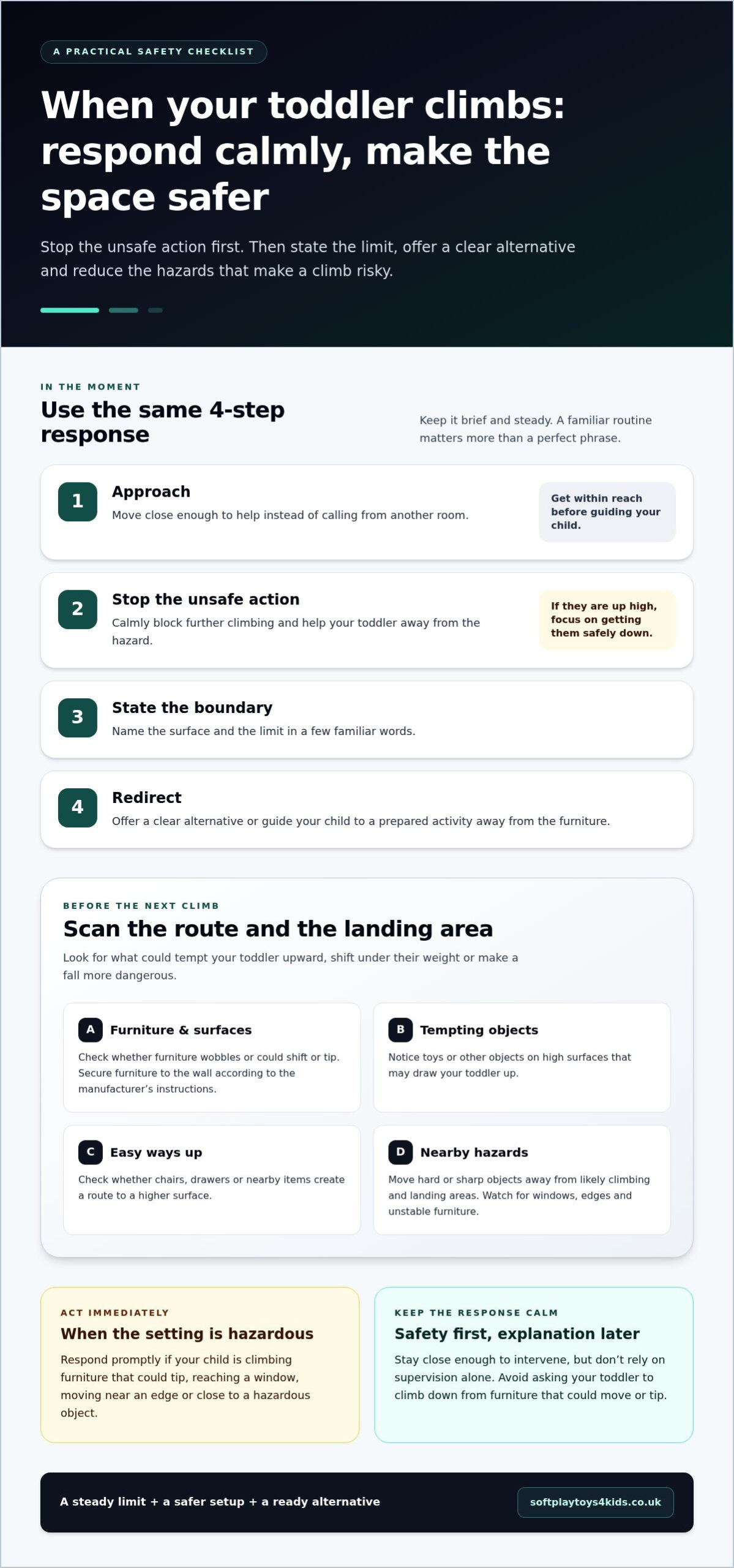
In the moment, you don’t need a long explanation or a debate. Your toddler needs you to stop the unsafe action and show them what to do instead. Keep your voice steady, use a few familiar words and repeat the same boundary each time. A consistent routine matters more than finding a perfect phrase.
- Approach. Move close enough to help instead of calling from another room.
- Stop the unsafe action. Calmly block further climbing and help your child away from the hazard.
- State the boundary. Use a short phrase such as “Feet on the floor” or “Tables are not for climbing.”
- Redirect. Offer a clear alternative: “Climb here with me,” or guide them to a prepared activity away from the furniture.
If your toddler is already up high, focus first on getting them safely down. Only practise climbing down when the situation is stable and you’re right beside them. Don’t ask them to climb down from furniture that could move or tip. Advice on preventing furniture and TV tip-overs also underlines why a quick, clear response should go hand in hand with a safer home setup.
Consistent boundaries help your toddler hear the same limit and the same alternative, rather than having to guess which rules apply. Consistency doesn’t mean sounding stern. You can be warm and reassuring while still stopping the climb. If climbing on a chair is sometimes allowed and sometimes forbidden, your toddler may find the rule harder to understand, especially when excited or focused on reaching something.
What should I say when my toddler climbs on a chair or table?
Name the surface and the limit: “Feet on the floor. We don’t climb on the table.” Then offer an option your child can act on: “You can climb here with me.” Keep your explanation brief while there’s an immediate hazard; save longer conversations for later. Notice when your child stops, asks for help or chooses the agreed alternative: “You got down when I asked. Thank you.”
How can I redirect climbing without turning it into a game?
Go to your child and guide them calmly instead of shouting instructions from another room. Keep your reaction low-key. Chasing, laughing or repeatedly calling out may make the moment more exciting. Redirect promptly to an activity you’ve prepared, such as a floor-based game. A simple choice can help: “Would you like to build here or look at a book with me?”
When you’re thinking about how to stop my toddler climbing the furniture, have the alternative ready before you need it. If supervised movement play is part of your routine, soft-play mats and activity equipment can be one option for age-appropriate play. Stay with your child and follow the equipment’s instructions.
Which responses help most: removing access, redirecting, or offering movement?
There isn’t one response for every climbing moment. If a toy on the table draws your toddler to the same chair, changing the setup may help more than repeating a reminder. If your child is already climbing, calmly stop the action and redirect them. If they seem eager to move, supervised play can offer another outlet. These strategies often work best together.
| Strategy | Useful situation | Adult action | Limitation |
|---|---|---|---|
| Reduce access | A particular object or route repeatedly draws your toddler to the same spot. | Move tempting items and climbable objects away; make the route less accessible. | Curiosity may shift to another surface, so keep observing and supervise. |
| Consistent verbal redirection | Your toddler is climbing now and needs a clear boundary. | Move close, stop the unsafe action, state the limit and guide them to an agreed alternative. | A reminder alone may not prevent another attempt, especially if the temptation remains. |
| Supervised movement | Your child is looking for an active way to play. | Offer an age-appropriate activity in a suitable space, staying close and following instructions. | It’s an additional play option, not a guaranteed substitute for climbing furniture. |
One strategy may not stop repeated climbing straight away. That doesn’t mean you’ve failed or that your toddler is ignoring you on purpose. To decide how to stop my toddler climbing the furniture, match your response to the moment: change what’s drawing them in, set the boundary when climbing starts, and make a suitable movement activity available when you can supervise.
When should you remove the temptation rather than redirect?
If your toddler keeps climbing towards the same toy, book or other appealing object, remove the temptation as well as redirecting them. Put attractive items somewhere they can’t reach from furniture, and move objects that could serve as steps away from the area. These changes reduce opportunities, but they don’t replace supervision. Your child may find another target or route.
Can a safe climbing option replace furniture climbing?
Think of movement play as another option, not a cure or guaranteed replacement. Choose an activity that suits your child’s age and abilities, fits the available space and is used according to its instructions. Soft-play mats, wedges and activity equipment may suit supervised play when appropriate, but they don’t make climbing risk-free or guarantee injury prevention. Stay close, watch how your toddler uses the setup, and stop if the space or play becomes unsafe.
How to make your home less tempting and safer for a climbing toddler
A safer room starts with the setup, not just the rule you repeat when your toddler climbs. Get down to their level and look around: what can they reach, pull, step on or use to get higher? A chair beside a table, for example, can become a route to something tempting even if the object itself seems out of reach.
A quick furniture and room safety check
Check chairs, tables, drawers and shelves for movement when pulled or leaned on. Secure furniture to the wall according to its manufacturer’s instructions, and keep toys and appealing objects off high or unstable surfaces. For parents updating family living areas, exploring sturdy homeware and furniture collections on sites like livingchic.co.uk can help you plan stable, practical layouts that minimise climbing hazards. Look for nearby hard edges, sharp items and anything your child could reach or fall against. Recheck the room as your toddler’s mobility and reach change.
- Stability: Look for furniture that could shift, slide or tip if pulled or climbed.
- Temptations: Move toys and other attractive objects from high surfaces.
- Access routes: Notice chairs or other items your toddler could use as steps.
- Nearby hazards: Clear hard or sharp objects from likely climbing areas.
Windows, stairs and other elevated areas need appropriate safety measures too. Consider access to them as part of the whole room, not as a separate issue from furniture climbing. A clear route to a window or stairway can create risk even when the furniture itself is stable.
How can supervision fit into everyday routines?
Climbing can happen during busy moments, such as preparing a meal, carrying items between rooms or getting ready to leave. If your toddler is in a room with furniture they might climb, stay nearby and position yourself to respond quickly. When you need to step away, consider whether the room is safe for your child to remain in, or take them with you.
Supervision complements a safer setup, but it can’t replace one. Adults can be briefly distracted, and toddlers may move quickly. A consistent room check helps reduce avoidable hazards before play begins. Watching your child also helps you spot new routes or changing interests.
Checklist to remember: remove hazards and tempting access first, secure furniture as instructed, then use verbal reminders and supervision to support the safer setup. This is a practical starting point if you’re working out how to stop my toddler climbing the furniture. It won’t prevent every attempt, so review the space whenever your child starts reaching higher or using furniture in a new way.
For supervised movement play in a suitable space, explore soft-play mats and activity equipment. Use equipment as intended and follow its instructions, with an adult present.
How to give your toddler supervised movement play instead
If your toddler is keen to move, a planned floor-based activity can give them something engaging to do without turning furniture into a climbing route. Keep play low, choose movements that suit your child’s current abilities and stay close enough to respond. This is an additional outlet, not a guaranteed way to stop furniture climbing or prevent falls.
What supervised movement activities can you try at home?
Start with a clear patch of floor and a simple idea. Invite your toddler to crawl to a familiar toy, step over a low, stable soft item or follow you along a short route. You could play a gentle “find the teddy” game, placing the toy on the floor rather than on a chair or table. Let your child set the pace and keep the route clear of hard or sharp objects.
Choose activities to suit your toddler, not the other way round. If stepping over an item feels unsteady, change the activity to crawling or walking around it. Avoid stacking household objects into unstable obstacles or encouraging jumps from furniture. Pause or adjust the setup if your child becomes tired, frustrated or starts using the activity in a way that feels unsafe.
A play mat can provide a defined floor space for play. For ideas about selecting one, see this guide to choosing a baby play mat. A mat alone doesn’t guarantee protection from injury, so consider the surrounding space and supervise throughout.
How can soft-play equipment fit into a safer play routine?
Age-appropriate soft-play equipment can add variety to supervised movement. Soft-play mats, wedges and step-slide activity equipment can suit different kinds of play, but use each item only for its intended purpose and follow its instructions. Stay close as your toddler explores the equipment, and stop play if the setup shifts or the activity becomes unsafe.
Soft-play equipment doesn’t make every activity risk-free, and it isn’t a reason to leave a toddler climbing or playing alone. Match the space and activity to your child’s abilities, keep the route clear, and adapt the play if your child isn’t comfortable with a movement. For a little more context on what soft play can involve, read this beginner’s guide to soft play.
Movement play can support your wider plan for how to stop my toddler climbing the furniture, alongside clear boundaries and a safer home setup. Try a simple activity together and see what holds your child’s interest, without expecting it to eliminate climbing. If you’d like to explore options for supervised family play, explore handmade soft-play equipment from SoftplayToys4kids, made in Bradford, West Yorkshire.
Make the next play session a safer one
You don’t need to change every room or create an elaborate activity plan today. Choose one climbing hotspot and one supervised movement activity to try. Notice what your toddler enjoys and where they need more support. Small, steady adjustments can help you build a routine that respects their curiosity while keeping safety in view.
If you’re still wondering how to stop my toddler climbing the furniture, remember that the aim isn’t to switch off your child’s urge to explore. It’s to shape the space and play around them, one thoughtful step at a time. An age-appropriate activity can be part of that routine, with an adult present and equipment used as intended.
SoftplayToys4kids makes handmade soft-play equipment in Bradford, West Yorkshire, including soft-play mats, wedges and activity equipment. Explore handmade soft-play equipment for supervised play and find a movement option to enjoy together. With patience, clear limits and close supervision, you can help make active play more manageable for everyone.
Frequently Asked Questions
Is it normal for toddlers to climb furniture?
Yes, climbing is common for many toddlers as they explore and practise movement, though every child develops differently. Common doesn’t mean safe: a sofa, dining chair and tall bookcase each present different risks. Notice what your toddler is climbing and what seems to draw them there. That context can help you decide whether to move an appealing object, change the room setup or make the boundary clearer.
How do I stop my toddler climbing on the dining table?
Where practical, make the table less accessible by moving chairs away and clearing anything enticing from the tabletop. Stay close enough to intervene, especially while preparing food or clearing dishes. Say, “Tables are not for climbing,” then guide your toddler towards an activity you’ve agreed on. Check for hot drinks, cutlery or other hazards nearby. Repeat the same response calmly; learning a new limit can take repeated practice.
Should I punish my toddler for climbing furniture?
No. Focus on stopping the immediate risk and teaching the boundary rather than punishing normal curiosity. Your toddler may not understand why climbing is dangerous or remember the rule every time. Keep your response brief, then notice safer choices, such as waiting for help or moving to another activity. If you’re feeling overwhelmed, ask a trusted caregiver to use the same simple rule so your child hears a consistent message.
Can I let my toddler climb sofa cushions instead?
Cushion play can be a movement activity, but it isn’t automatically safe. Think about whether the cushions could slide, how high your toddler might climb and what furniture or hard flooring is nearby. Stay beside your child and stop the activity if the setup shifts or becomes difficult to manage. Cushions aren’t a guaranteed safe climbing structure, so choose play that matches your toddler’s abilities and keep supervising.
What should I do if my toddler keeps climbing even after I say no?
Keep the limit brief and predictable, then act instead of relying on words alone. Move your toddler away from the furniture and offer a ready alternative, such as a floor game or a book together. Look for a reason the same spot keeps attracting them: perhaps a toy is visible or a chair provides easy access. If you’re wondering how to stop my toddler climbing the furniture, combine the boundary with changes to the setup.
When should I speak to a health professional about my toddler’s climbing?
Climbing by itself doesn’t establish a developmental or health problem. If you’re also concerned about your toddler’s movement, development, behaviour or ability to stay safe, talk through what you’ve noticed with your health visitor or GP. Share when the climbing happens and any other changes you’ve observed. If your child is injured or faces immediate danger, seek appropriate urgent help rather than waiting for a routine appointment.
Leave a Reply